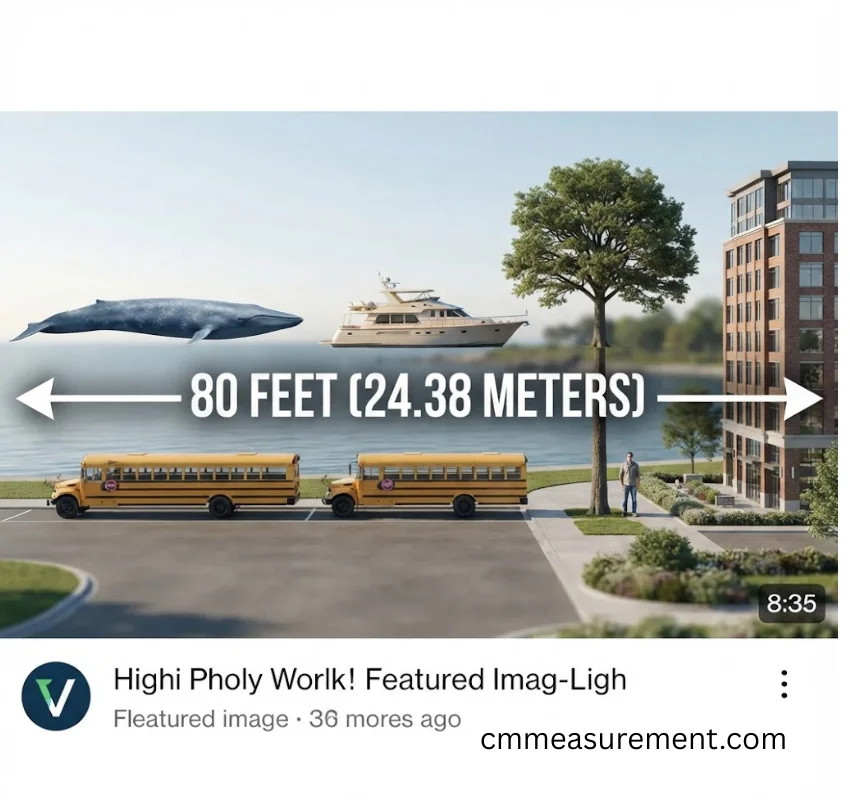
Eighty feet is one of those numbers that sounds big on paper but hard to picture in real life. Is it the size of a house? A tree? A whale?
This guide breaks it down simply. Below, you’ll find the exact 80 feet conversions, eight vivid real-world comparisons, and quick answers to the most common questions people ask about this length.
Table of Contents
How Long Is 80 Feet? (Quick Conversion Guide)
Let’s start with the numbers, since they’re the foundation for everything else.
80 feet equals 960 inches. This comes from the basic rule that 1 foot = 12 inches, so multiplying 80 by 12 gives you 960 inches exactly.
80 feet equals 24.38 meters. Since one foot equals 0.3048 meters under the International System of Units (SI), multiplying that by 80 gives the precise metric value.
80 feet equals 26.67 yards. Since 1 yard equals 3 feet, dividing 80 by 3 lands you at this figure.
Here’s a quick-reference table:
| Unit | Value |
|---|---|
| Feet | 80 ft |
| Inches | 960 in |
| Meters | 24.38 m |
| Centimeters | 2,438 cm |
| Yards | 26.67 yd |
Feet and inches belong to the US customary system, the standard most Americans use daily. Meters and yards, meanwhile, are common in the metric system and in international sports and science. Knowing both makes it easy to switch between a US tape measure and a global spec sheet.
How Big Is 80 Feet Visually? 8 Real-Life Comparisons
Numbers only go so far. These eight comparisons turn 80 feet into something you can actually picture.
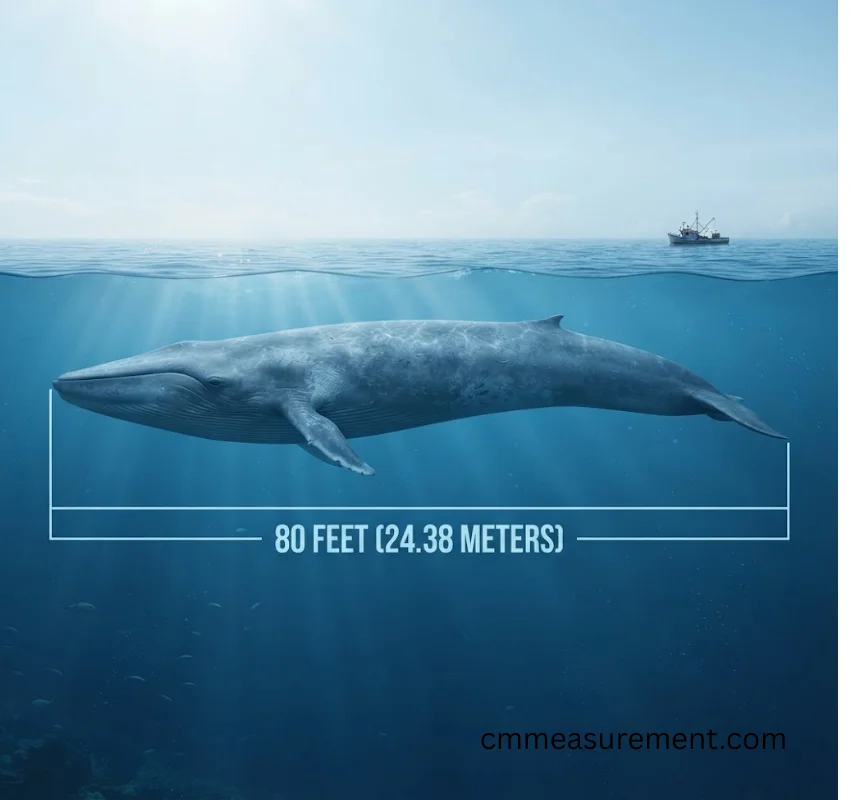
An adult blue whale. The blue whale, the largest animal ever known to exist, typically measures between 70 and 100 feet long, with many mature adults landing close to 80 feet. Marine biologists track these giants using satellite tags to study migration patterns across ocean basins.
A 7- to 8-story building. Most mid-rise buildings use roughly 10 to 12 feet per floor, so a structure in the 7- to 8-story range often reaches close to 80 feet tall. Architects rely on this range when designing apartment complexes and office buildings that fit local height zoning limits.

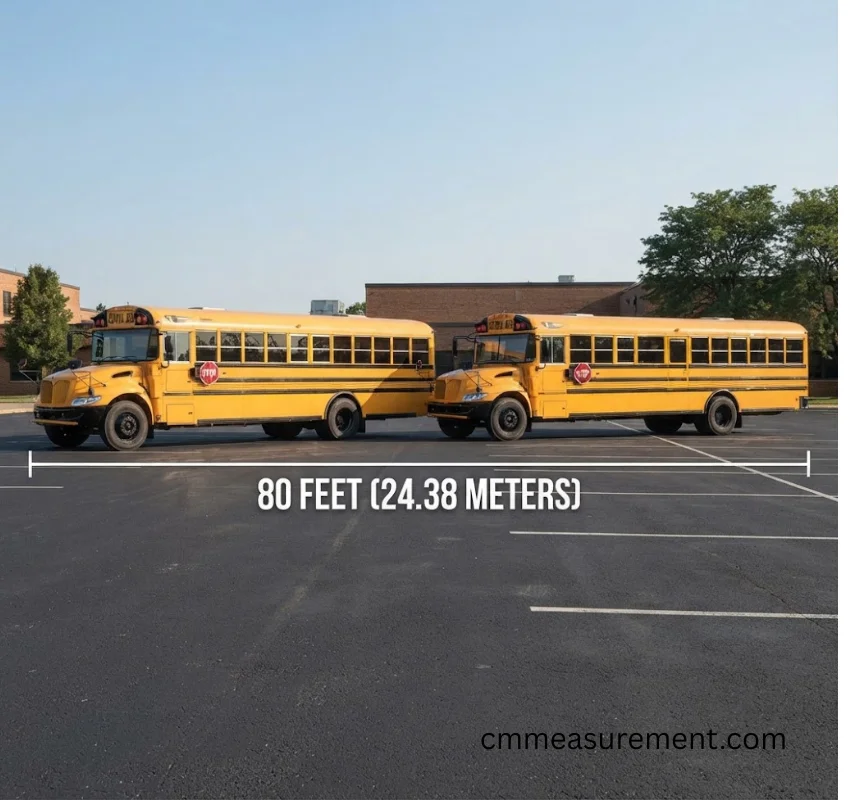
Two school buses parked end-to-end. A standard yellow school bus runs about 35 to 40 feet long, so parking two nose-to-tail gets you remarkably close to 80 feet. Transportation directors use this kind of spacing math when planning bus lot layouts and loading zones.
Must Visit: How Long Is 40 Feet? 6 Amazing Real-Life Comparisons to Easily Visualize This Impressive Length
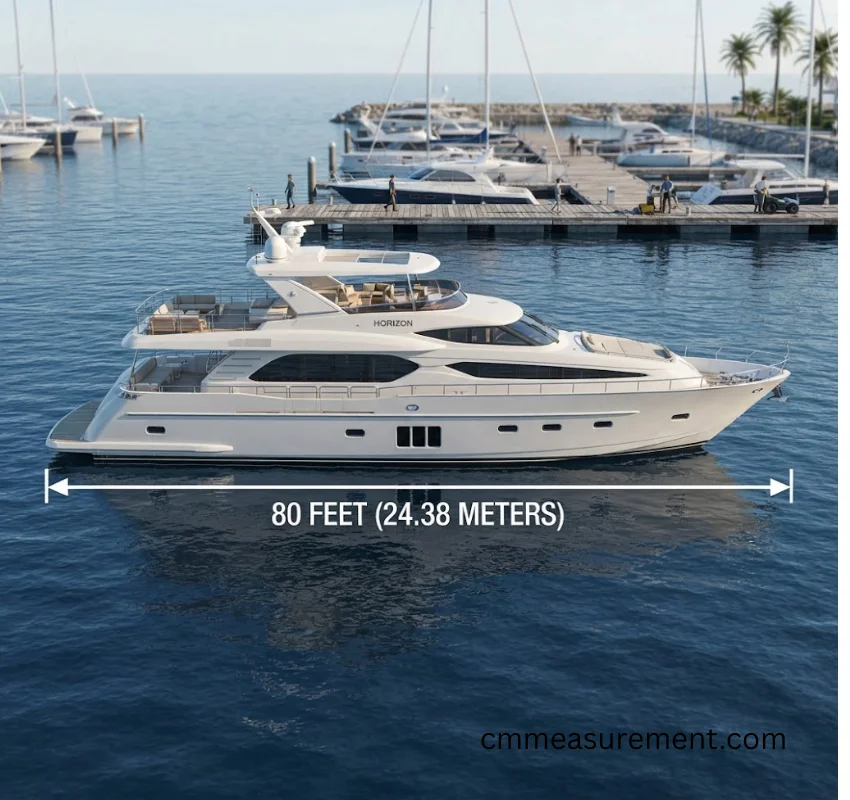
A large recreational yacht. Luxury motor yachts commonly range from 70 to 90 feet, placing plenty of them squarely at the 80-foot mark. Yacht brokers often describe this size as the sweet spot between spacious living quarters and manageable dockside handling.
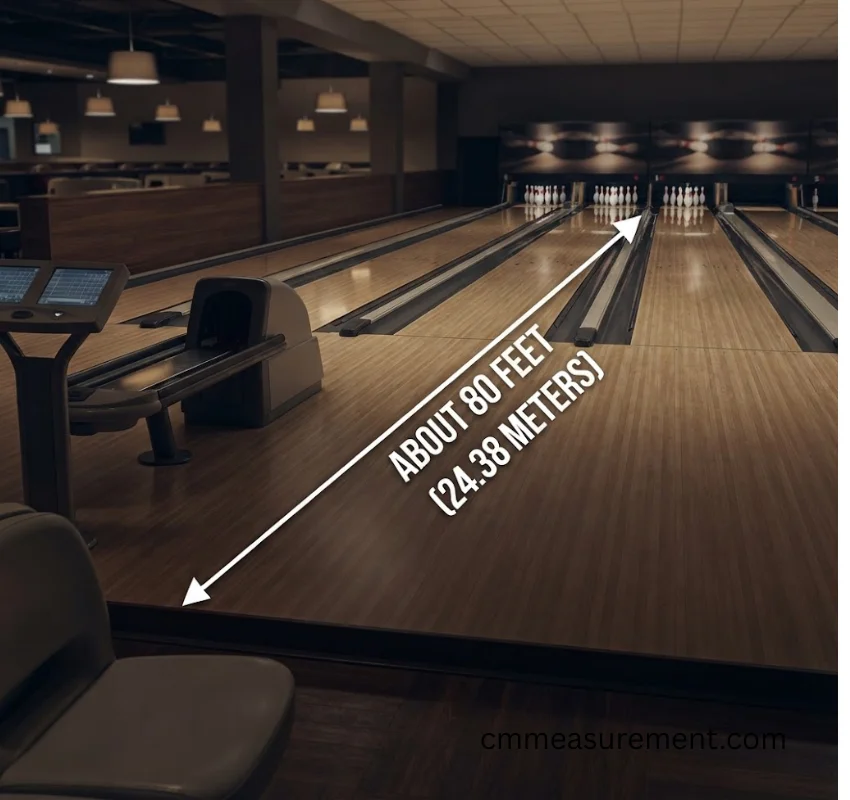
A bowling lane, approach included. A regulation tenpin lane measures about 60 feet from foul line to headpin, but once you add the player approach area and pin-deck space, the total stretches close to 80 feet. Bowling center operators build to these exact specifications to meet certification standards.
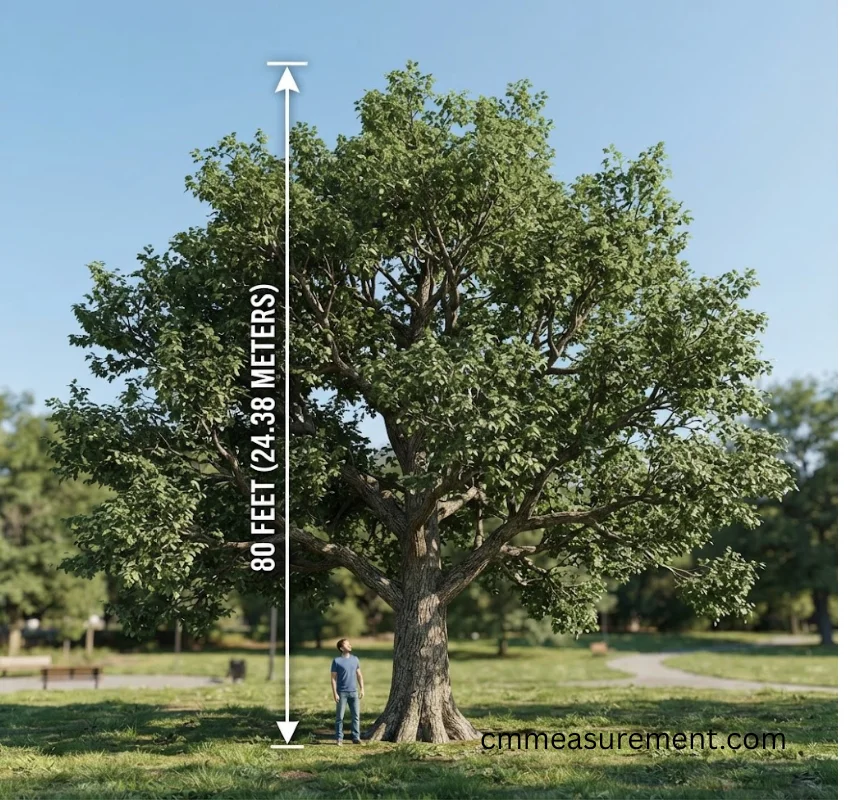
A mature oak or young redwood tree. Healthy oak trees can reach 60 to 100 feet at full maturity, with many hitting 80 feet in favorable growing conditions. Arborists measure tree height regularly to assess storm risk and overall canopy health.
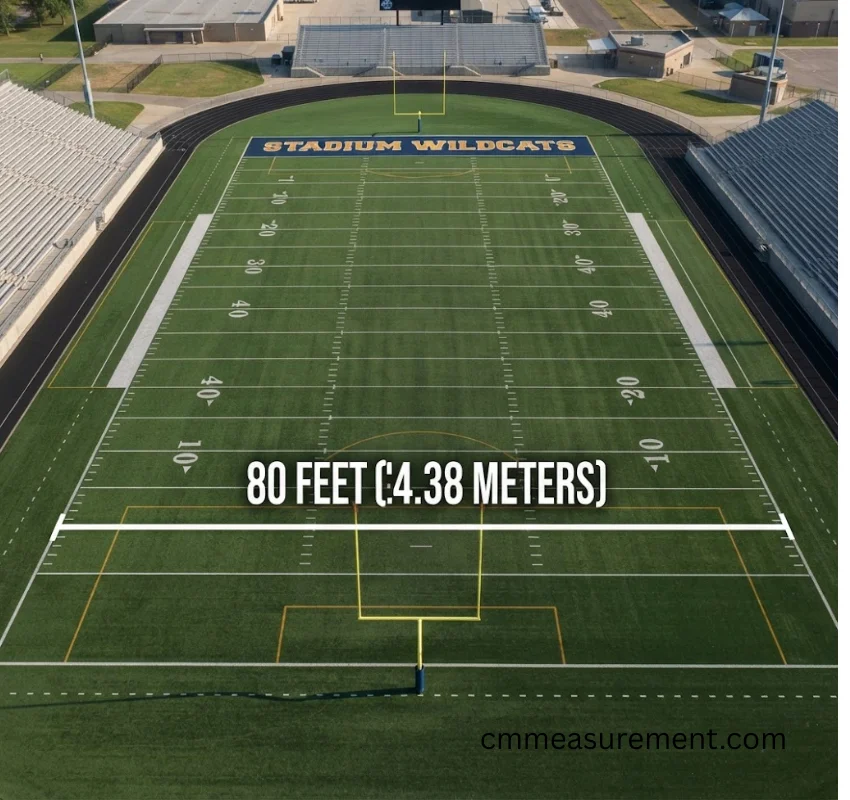
About one-third of a football field. A regulation American football field stretches 360 feet from end zone to end zone, meaning 80 feet covers a little over one-fifth of that distance, roughly the span from the goal line past the 25-yard mark. Fans watching from the stands can use this stretch as a natural gauge for the length.
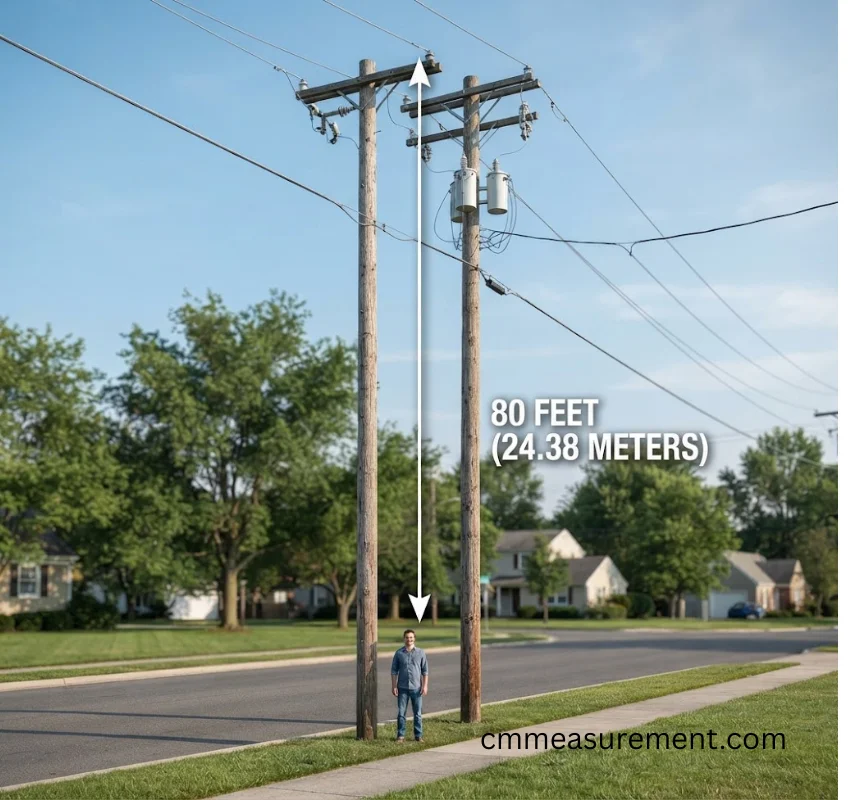
Two telephone poles stacked in height. A standard utility pole stands about 35 to 40 feet tall above ground, so two stacked vertically would come close to the 80-foot mark. Utility crews work with these exact pole heights daily when planning line clearance and repairs.
How Tall Is 80 Feet Compared to a Human?
This comparison makes the scale feel personal.
According to the Centers for Disease Control and Prevention (CDC), the average American man stands about 5 feet 9 inches tall, and the average American woman stands close to 5 feet 4 inches. That means 80 feet is roughly 14 times taller than the average adult man, and even more dramatic against the average woman.
Put another way, you’d need to stack about 14 average-height adults directly on top of one another, head to foot, just to match this single length. Even the tallest documented humans in history, standing close to 8 feet, would need to be stacked ten times over to reach it. Eighty feet isn’t just tall by human standards, it’s a scale that belongs to buildings, whales, and machinery rather than people.
How Many Steps Is 80 Feet to Walk?
Walking distance adds another layer of everyday context.
The average adult stride covers roughly 2.5 feet per step. Dividing 80 by 2.5 means most people need about 32 steps to cross this distance on foot.
At a normal, relaxed walking pace, that translates to roughly 15 to 20 seconds of walking. Picture the length of a school hallway, a long driveway, or a parking aisle stretching between two rows of cars. It’s short enough to walk without thinking twice, yet long enough to feel like a real distance rather than a quick step or two.
FAQs
How big is 80 feet visually?
Visually, 80 feet looks like an adult blue whale, a 7- to 8-story building, or two school buses parked end-to-end.
How many feet is 80 in long?
80 inches equals 6.67 feet, or 6 feet and 8 inches exactly. This is found by dividing 80 by 12, since there are 12 inches in every foot.
How tall is 80 feet compared to a human?
Eighty feet is about 14 times taller than the average American adult, who stands roughly 5 feet 6 inches tall on average across genders, based on CDC height data.
How many steps is 80 feet?
Most adults need about 32 steps to walk 80 feet, based on an average stride length of 2.5 feet per step.
What is 80 in equal to in feet?
80 inches equals 6.67 feet. Since 1 foot contains 12 inches, dividing 80 by 12 gives this exact decimal value.
How many footsteps is 1 foot?
One foot typically takes less than half a step for most adults, since the average stride length runs about 2.5 feet. It takes roughly 0.4 of a step to cover just 1 foot of distance.
Conclusion
Eighty feet stretches far beyond everyday human scale, matching the length of a blue whale, the height of a mid-rise building, or two school buses parked end-to-end. Whether you’re counting 32 walking steps or picturing 14 people stacked head to toe, this length now has real, memorable reference points attached to it.

Timmy Zeeshan is the founder and lead editor of CM Measurement, where he writes and maintains a growing library of unit conversion tools and practical measurement guides. With a background in engineering and a long-standing interest in everyday math problems, Timmy started CM Measurement after growing frustrated with cluttered, ad-heavy converter websites that made simple conversions harder than they needed to be.