Ever grabbed a can of soup and wondered why it looks different from the one you bought last month? You’re not alone. Soup can dimensions change more than most shoppers realize, and that can throw off a recipe fast.
This guide breaks down real soup can sizes, in plain numbers, so you always know what you’re working with — whether you’re cooking dinner or designing a label.
Table of Contents
Soup Can Dimensions at a Glance
Here’s the short answer: most soup cans in the U.S. fall between 10.5 ounces and 19 ounces, with heights ranging from about 4 inches to 4.6 inches and diameters between 2.6 and 3.4 inches.
The U.S. Department of Agriculture tracks these as standard can sizes, and its Food Buying Guide confirms the two most common soup formats: the No. 1 (Picnic) can, holding 10.5 to 12 ounces, and the No. 3 Cylinder, built specifically for condensed soup at 51 ounces.
Condensed soup cans are the smaller, familiar ones. They measure roughly 2.6 inches wide and 4 inches tall, and they’re meant to be mixed with water or milk before heating.
Ready-to-serve soup cans are bigger. They usually hold 15 to 19 ounces, stand close to 4.5 inches tall, and have a wider 3.4-inch diameter. No dilution needed — you just heat and eat.
How Soup Can Size Codes Work
Ever seen a code like 300 x 407 stamped on packaging paperwork? That’s not random. It’s how the canning industry talks about can dimensions.
The first number is the diameter. The digits after it show inches and sixteenths of an inch. So “300” means 3 and 0/16 inches across.

The second number is the height, written the same way. “407” means 4 and 7/16 inches tall.
Put them together, and 300 x 407 describes a can that’s 3 inches wide and about 4.4 inches tall — a size you’ll recognize as one of the most common soup can measurements on grocery shelves today.
This system dates back over a century, when canners needed a shared language for size across factories. It’s clunky, sure. But once you know the pattern, reading any can spec sheet gets a lot easier.
Soup Can Sizes by Ounce
People rarely search for a can code. They search for “what size is a 12 oz can” or “how tall is a soup can.” Fair enough — here’s the breakdown in terms that actually match the label.
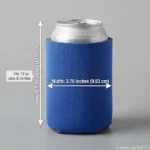
Must Visit: Can Koozie Dimensions: 3 Powerful Size Guide for the Perfect, Easy Fit
10.5 oz can: This is the classic condensed soup size. Expect a diameter near 2.6 inches and a height around 4 inches. It’s the smallest common format still sold nationwide.
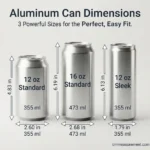
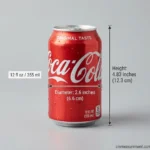
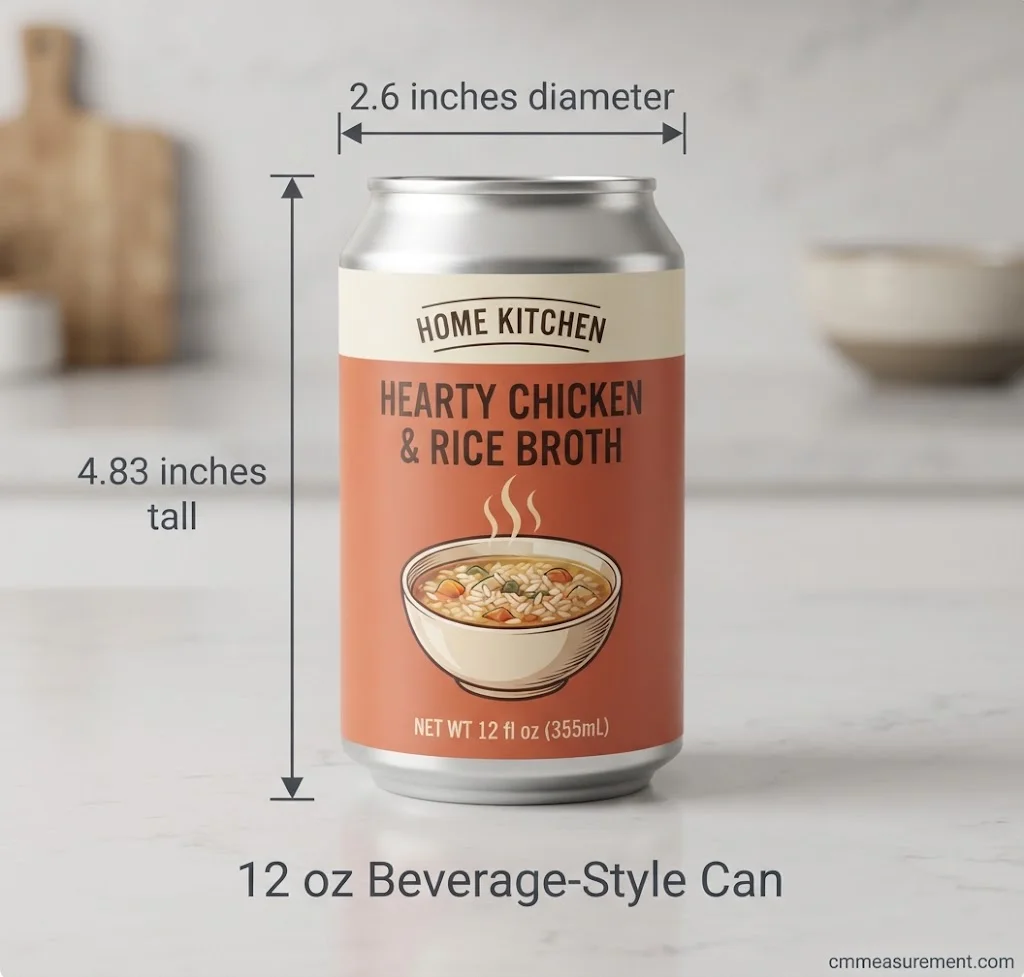
12 oz can: This one gets confusing because two very different containers share the label. A standard beverage can (soda, some broths) measures about 4.83 inches tall and 2.6 inches wide. A 12 oz food can, like vacuum-packed corn or a squat soup format, is shorter and wider — closer to 2 inches tall and 3.4 inches wide. Always check whether you’re dealing with a beverage-style or food-style container.
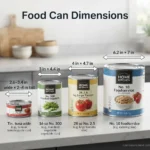
15 oz to 16 oz cans: These sit in the No. 300 range. Picture a can roughly 3 inches wide and 4.4 inches tall. This is the size behind most ready-to-eat soups, beans, and vegetables on a typical U.S. shelf.
Confusing 15 oz with 16 oz is common, and it matters for recipes. A half-ounce difference sounds small, but in a reduction sauce or a tight ratio recipe, it can throw off texture.
Soup Can Label Dimensions
Getting the label to actually fit is its own challenge — one most size charts skip entirely.
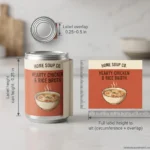
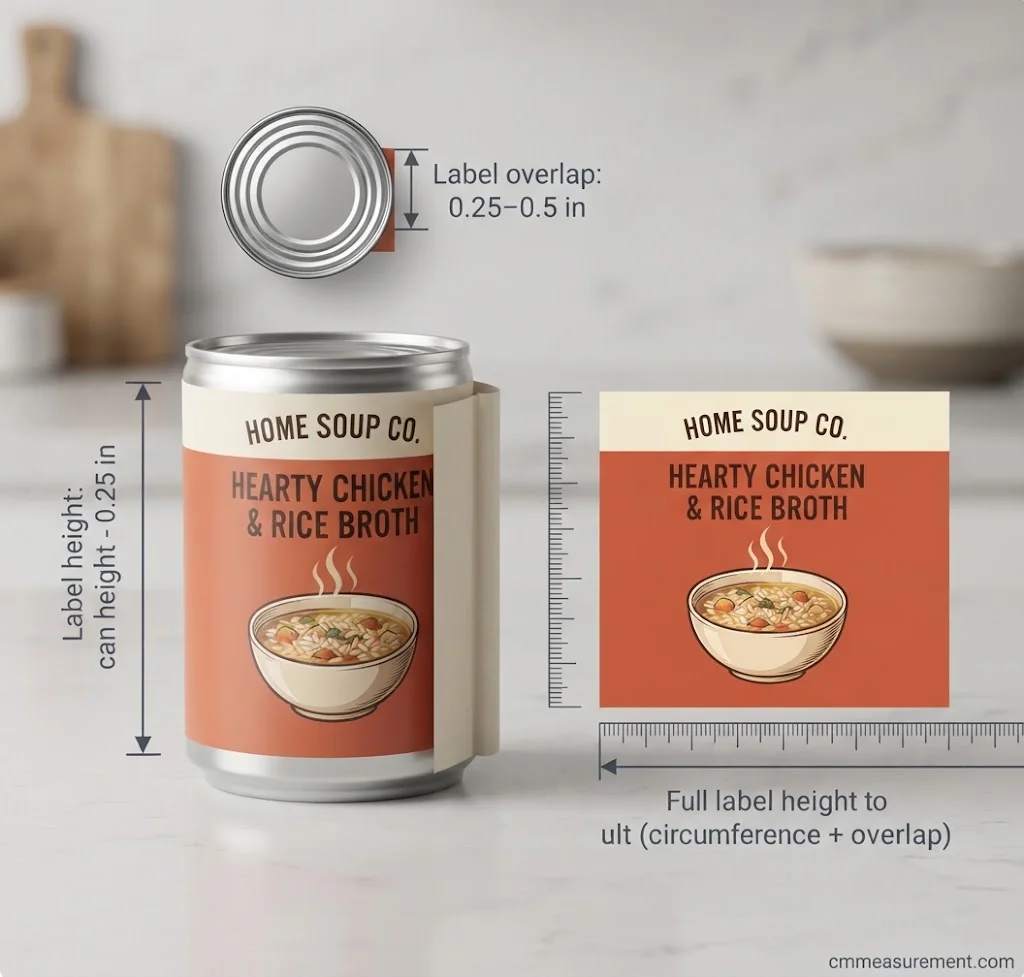
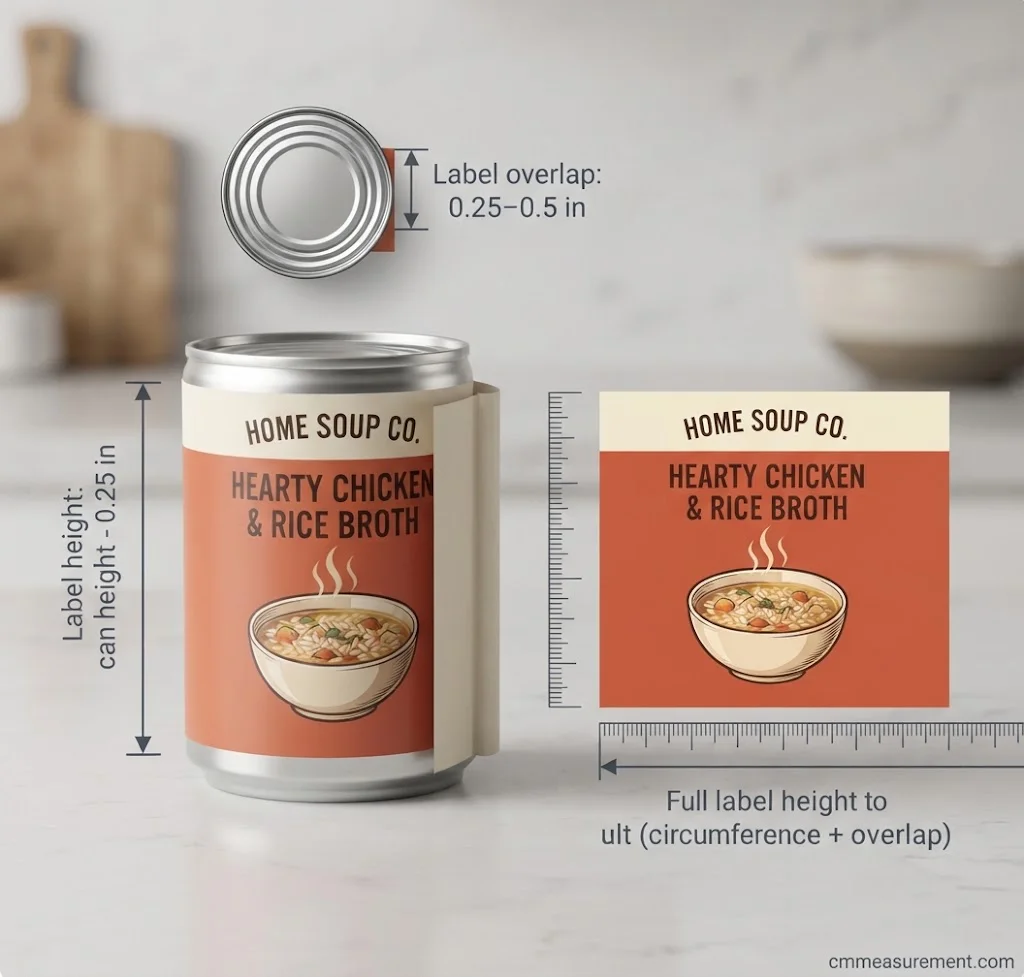
Label height usually sits about 0.25 inches shorter than the can’s total height, top and bottom, so the seams stay visible and the metal edges don’t crush the paper.
Label width needs to wrap the full circumference, plus a small overlap — typically 0.25 to 0.5 inches — so the glued seam doesn’t show a gap.
Bleed and safe zones matter too. Text and logos should sit at least 0.125 inches from any edge. Curved surfaces distort straight lines more than flat packaging, so tight typography near the seam often looks warped once wrapped.
Skipping these allowances is the single most common labeling mistake for small soup brands — the design looks perfect flat, then stretches or misaligns once it’s wrapped around the actual can dimensions.
Choosing the Right Soup Can Size
Not every soup needs the same container. Matching the size to the actual use saves money and reduces waste.
Home cooks and recipe conversions: Older cookbooks often list a “No. 2 can” or “No. 1 can” instead of ounces. Use the size chart above to match the old label to today’s oz measurement before you start cooking.
Small soup brands: A No. 300 can (15–16 oz) tends to fit grocery shelf spacing well and keeps shipping weight manageable per case. Going bigger raises freight cost fast.
Foodservice kitchens: The No. 10 can, at roughly 96 to 117 ounces, is the workhorse size for restaurants and cafeterias. One can typically replaces about seven retail-size cans, cutting down on packaging waste per serving.
FAQs
What are the dimensions of a soup can?
Most soup cans measure between 2.6 and 3.4 inches in diameter and 4 to 4.6 inches tall, depending on whether it’s condensed or ready-to-serve.
What is the standard size of a can?
There’s no single “standard” — but the most common U.S. food can, the No. 300, holds 14 to 16 ounces and measures about 3 inches wide by 4.4 inches tall, according to USDA data.
What are the dimensions of a soup can label?
Labels typically run about 0.25 inches shorter than the can’s height and wrap the full circumference plus a 0.25–0.5 inch overlap for the seam.
What are the dimensions of a 12 oz can?
A 12 oz beverage-style can is about 4.83 inches tall and 2.6 inches wide. A 12 oz food can is shorter and wider, closer to 2 inches tall and 3.4 inches wide.
What is the size of a 16 oz can?
A 16 oz can generally measures about 3 inches in diameter and 4.4 inches tall, matching the No. 300 can format.
How long is a 12 ounce can?
A standard 12 oz beverage can measures about 4.83 inches from top to bottom.
Conclusion
Soup can sizes aren’t guesswork once you know the pattern. Match the ounce count to the right diameter and height, double-check label allowances before printing, and pick the format that actually fits your kitchen or your shelf. That’s the whole trick.

Timmy Zeeshan is the founder and lead editor of CM Measurement, where he writes and maintains a growing library of unit conversion tools and practical measurement guides. With a background in engineering and a long-standing interest in everyday math problems, Timmy started CM Measurement after growing frustrated with cluttered, ad-heavy converter websites that made simple conversions harder than they needed to be.