A jerry can that doesn’t fit your rack, trunk, or storage shelf is a headache you don’t need. Getting the jerry can dimensions right before you buy saves you a return trip and a wasted purchase.
This guide covers the three standard sizes, exact measurements in inches and millimeters, and how to pick the right fit for fuel, water, or storage.
Table of Contents
What Jerry Can Dimensions Are Based On
Jerry cans aren’t a random shape. The design traces back to NATO and, before that, German military engineering — and that history still shapes every can sold today.
The design started in the 1930s. German forces developed a flat, stackable fuel container ahead of World War II. Allied forces later copied the shape because it solved a real problem: standard fuel drums wasted space and were slow to handle in the field.
The rectangular shape wasn’t an accident. Flat sides let cans stack tightly in trucks, storage racks, and holders without wasted air space. Three handles made it possible for one soldier to carry two cans, or two soldiers to carry four.
That shape became a global standard. Today, most metal jerry cans still follow DIN 7274, a German industrial standard, along with UN Dangerous Goods approval for cans used to transport fuel. This is why a 20 liter jerry can bought in the US looks nearly identical to one made in Europe or Pakistan — the dimensions were standardized decades ago and never really changed.
Jerry Can Dimensions by Size: 3 Standard Options
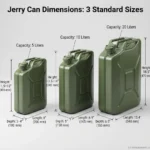
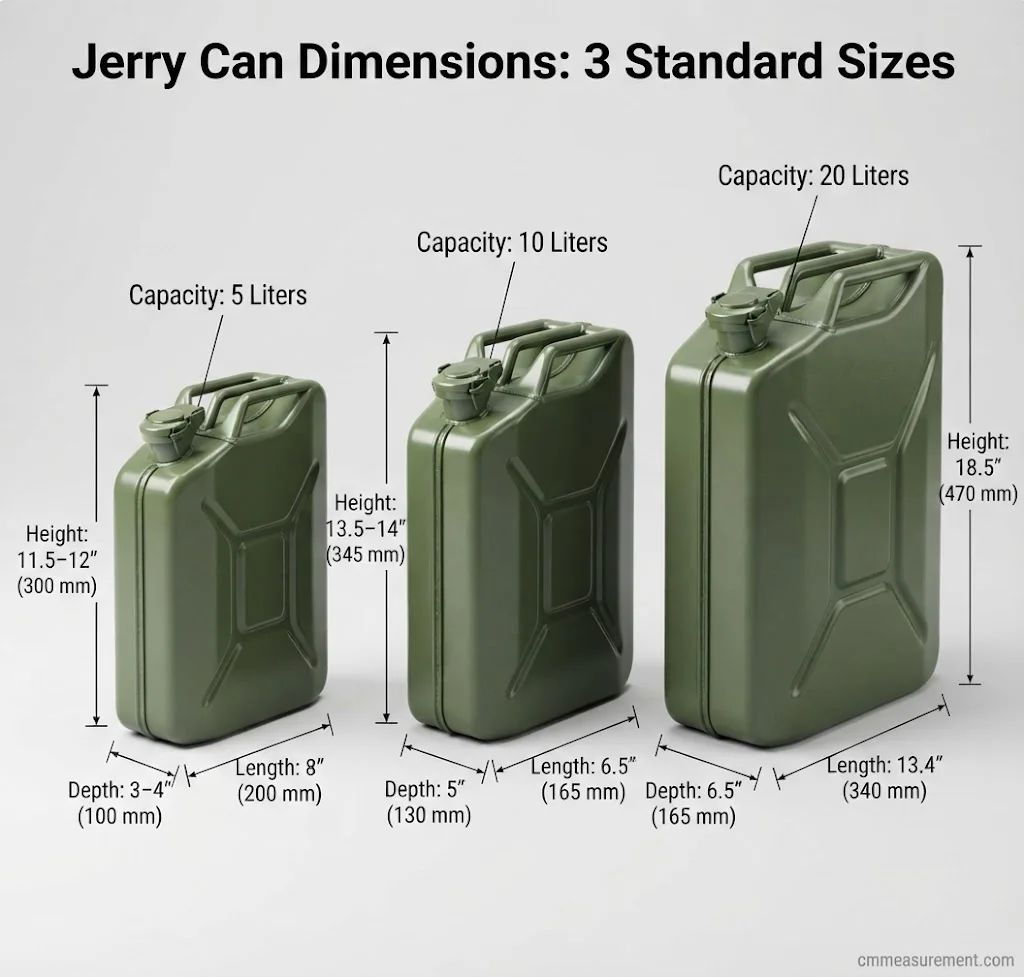
Three sizes cover almost every use case: 5 liter, 10 liter, and 20 liter. Here’s what each one measures.
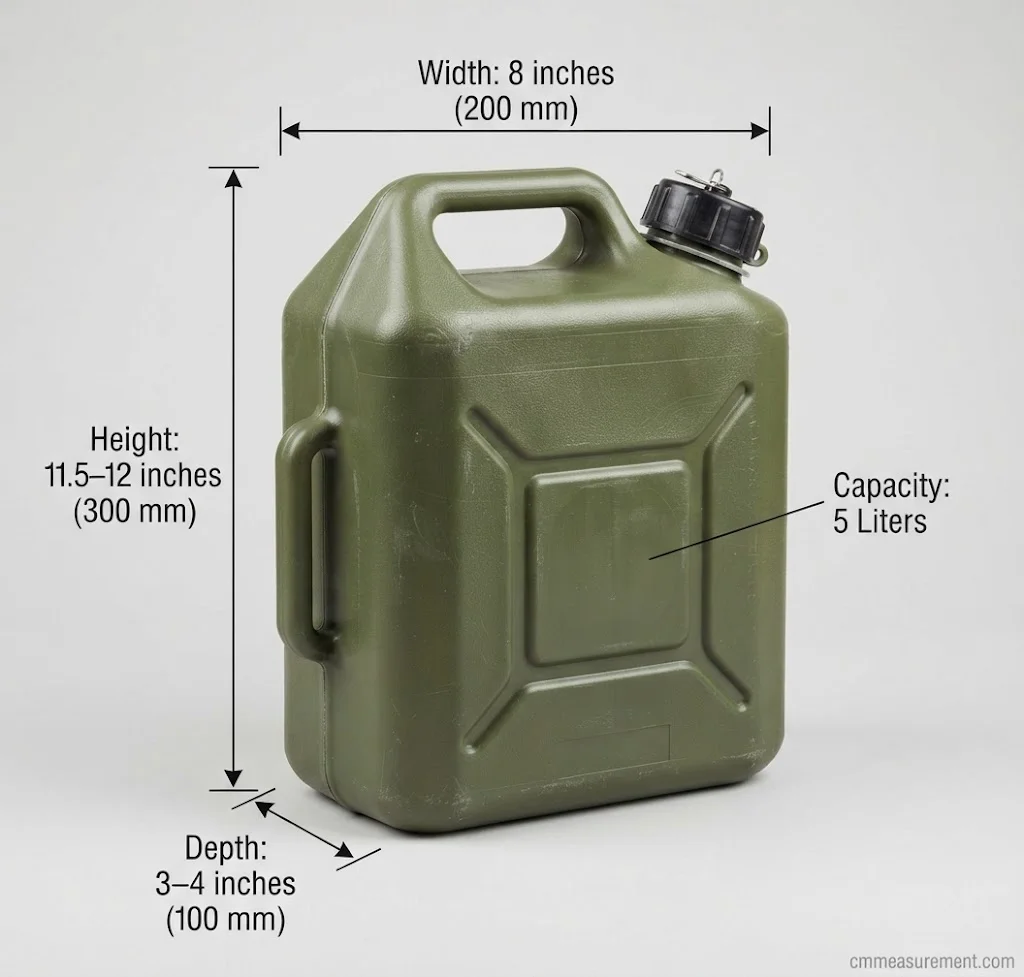
5 liter jerry can dimensions. A 5L can typically measures around 11.5 to 12 inches tall by 8 inches wide by 3 to 4 inches deep (roughly 300 x 200 x 100mm). This is the compact option — easy to store in a small trunk, garage shelf, or emergency kit without taking up much room.
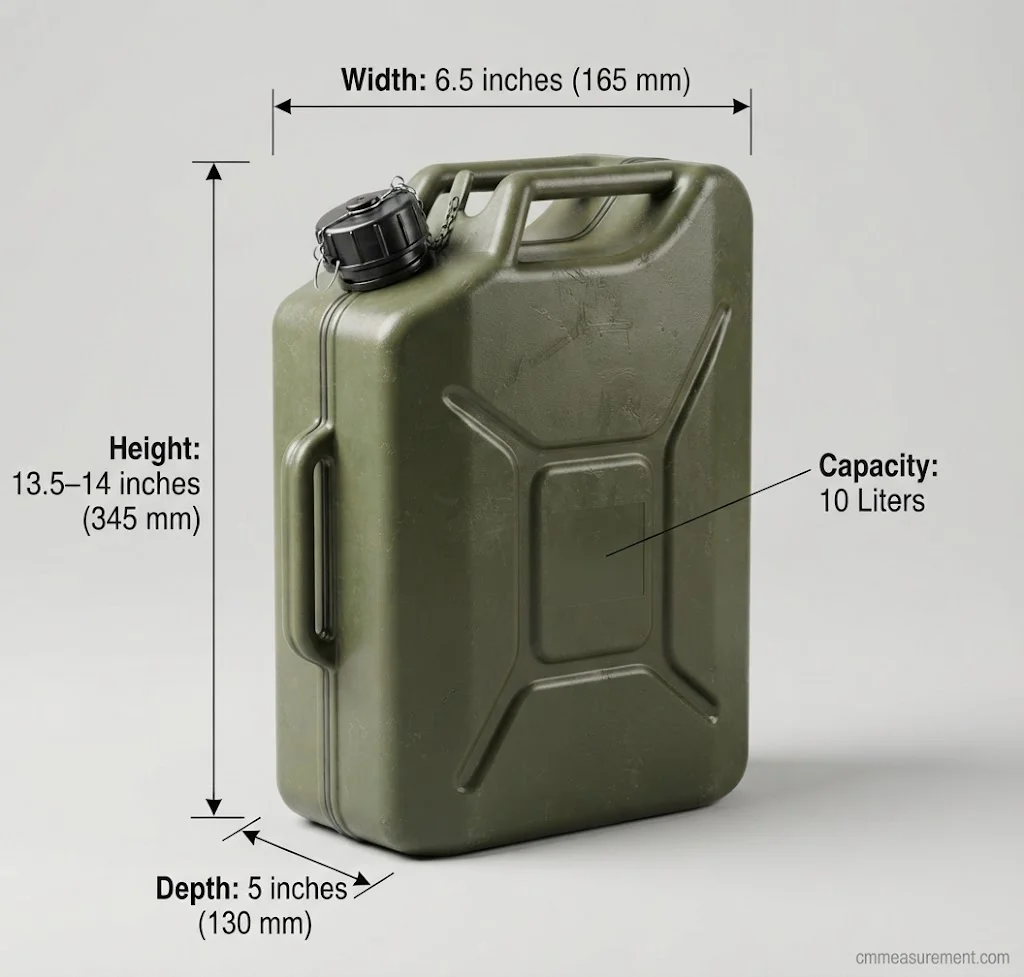
10 liter jerry can dimensions. A 10L can generally runs 13.5 to 14 inches tall by 6.5 inches wide by 5 inches deep (roughly 345 x 165 x 130mm). It’s the middle ground — enough capacity for a weekend trip or backup fuel supply, without the bulk of a full-size can.
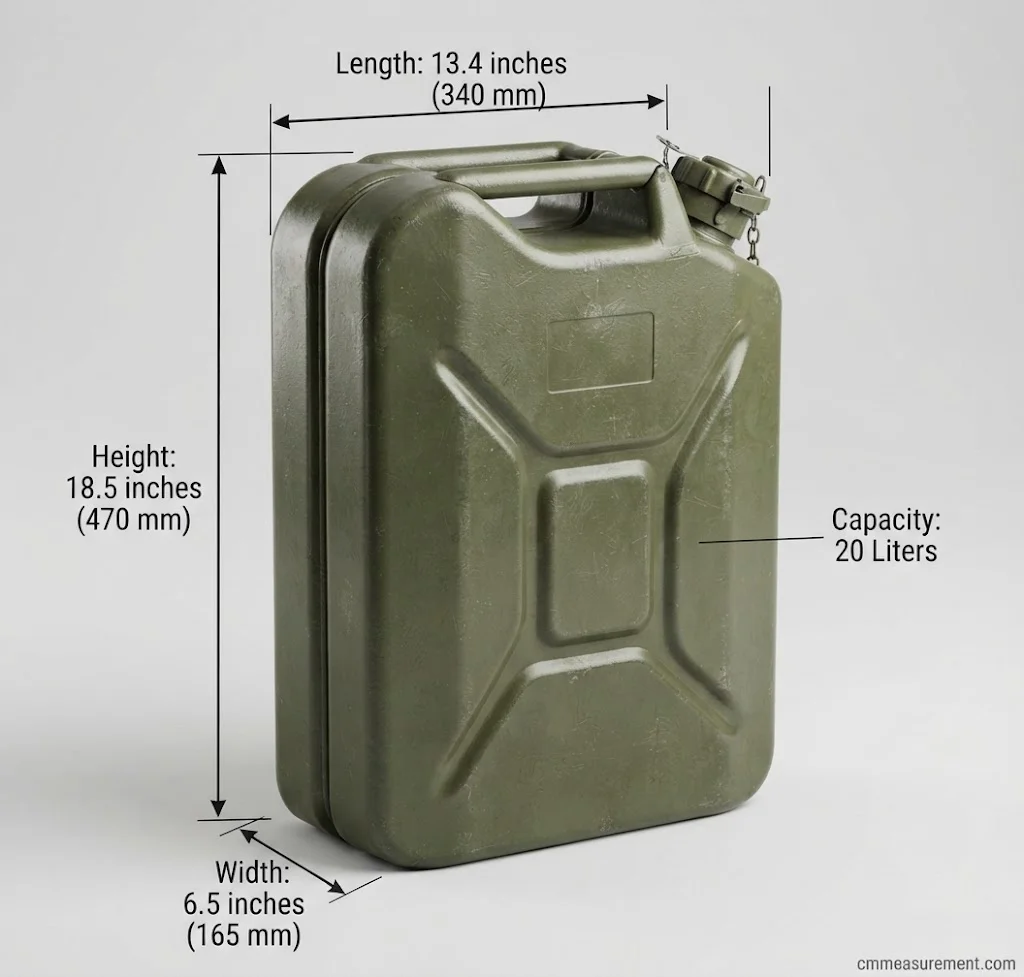
20 liter jerry can dimensions. The full-size, most recognizable jerry can measures approximately 18.5 inches tall by 13.4 inches long by 6.5 inches wide (roughly 470 x 340 x 165mm). This is the classic NATO-style size — the one you’ll see strapped to overlanding vehicles, stored in garages, and sold at most hardware and outdoor stores.
| Size | Dimensions (inches) | Dimensions (mm) | Empty weight (steel) |
|---|---|---|---|
| 5 liter | ~11.5″ x 8″ x 3–4″ | ~300 x 200 x 100mm | ~1.3 kg |
| 10 liter | ~13.5″ x 6.5″ x 5″ | ~345 x 165 x 130mm | ~2.3 kg |
| 20 liter | ~18.5″ x 13.4″ x 6.5″ | ~470 x 340 x 165mm | ~4 to 4.3 kg |
A quick note on variation: exact dimensions shift slightly between manufacturers. A 20 liter steel can might measure 460mm or 480mm tall depending on the maker, so always check the specific product listing if the fit needs to be exact — especially for roof racks or holders with tight tolerances.
Steel vs. Plastic Jerry Can Dimensions
Material changes more than just weight — it affects how the can holds its shape and what it’s safe to store.
Metal jerry can dimensions and build. Steel cans are typically made from 0.8mm to 0.9mm cold-rolled steel, coated with rust-resistant paint outside and a fuel-resistant enamel lining inside. This construction is what makes steel cans the standard choice for gasoline and diesel — the metal won’t degrade from prolonged fuel contact the way some plastics can.
Plastic (HDPE) jerry can dimensions and build. Polyethylene cans use the same general shape and dimensions as steel but weigh far less — often under half the weight of an equivalent steel can. High-density polyethylene (HDPE) resists dents, won’t rust, and is the standard material for water storage since it’s food-safe and won’t corrode.
Which material fits your use case. Fuel storage generally calls for steel, since it holds up better under UN and ASTM transport regulations for flammable liquids. Water, chemicals, and general liquid storage lean toward plastic, since it’s lighter, cheaper, and immune to rust. Always check the can’s rating before filling it with anything other than what it was designed for.
| Factor | Steel | Plastic (HDPE) |
|---|---|---|
| Weight (20L, empty) | ~4 kg | ~2 kg |
| Rust risk | Possible if lining fails | None |
| Best for | Fuel, diesel | Water, mild chemicals |
| Dent resistance | Low | High |
How Jerry Can Size Affects Capacity and Weight
The liter number on the label only tells half the story — what you’re storing changes the total weight you’ll actually lift.
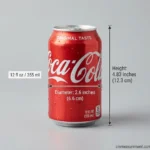
Must Visit: How Big Is a Coke Can?4 Coke Can Dimensions, Height, Width & Size Guide
Empty weight vs. full weight by size. A 20 liter steel can weighs around 4 kg empty. Filled with water, it jumps to roughly 24 kg total, since water weighs almost exactly 1 kg per liter. That’s a meaningful difference if you’re loading it onto a roof rack by hand.
Fuel, water, and chemical weight differences. Gasoline is lighter than water, weighing about 0.74 kg per liter, so a full 20L gas can weighs closer to 19 kg total. Diesel sits in between at roughly 0.85 kg per liter, putting a full 20L diesel can around 21 kg. This matters when you’re planning what a vehicle, rack, or storage shelf actually needs to support.
Choosing the Right Jerry Can Size for Your Needs
Dimensions only matter if the can actually fits where you need it to go.
Best size for vehicle storage and roof racks. Most roof-mounted jerry can holders are built around the standard 20 liter dimensions (470 x 340 x 165mm), since this is the most common size on the market. If your vehicle has a compact rack or limited trunk space, a 10 liter can is often the better fit without sacrificing too much capacity.
Best size for home, camping, or emergency use. A 5 liter can is easy to tuck into a closet, camping bin, or car trunk for emergency backup fuel or water. Families stocking up for storms or off-grid trips often keep a mix — a couple of 5L cans for portability and one or two 20L cans for bulk reserve.
Compliance and safety ratings to check. Look for UN Dangerous Goods approval if the can will store or transport fuel — this confirms it meets international standards for flammable liquid containers. In the US, cans used for gasoline storage should also meet ASTM and applicable EPA guidelines, since some states restrict which containers are legal for fuel transport on public roads.
FAQs
What are the dimensions of a 20 litre jerry can?
A standard 20 litre jerry can measures approximately 18.5 inches tall by 13.4 inches long by 6.5 inches wide (roughly 470 x 340 x 165mm).
What is the standard size of a jerry can?
The most common standard jerry can size is 20 liters, following the classic NATO-style dimensions of about 470 x 340 x 165mm.
What are the dimensions of a metal jerry can?
A metal jerry can, typically made from 0.8mm to 0.9mm cold-rolled steel, follows the same size range as plastic versions: roughly 300 x 200 x 100mm for 5L, 345 x 165 x 130mm for 10L, and 470 x 340 x 165mm for 20L.
What are the dimensions of a 10 liter jerry can?
A 10 liter jerry can typically measures around 13.5 to 14 inches tall by 6.5 inches wide by 5 inches deep (roughly 345 x 165 x 130mm).
How much is a 20 litre jerry can?
Pricing varies by material and brand, but a standard 20 litre jerry can generally runs from around $30 for basic plastic versions to $90.
What are the dimensions of a 10 litre container?
A 10 litre container, whether plastic or metal, generally measures close to 13.5 inches tall by 6.5 inches wide by 5 inches deep (roughly 345 x 165 x 130mm).
Conclusion
Three sizes — 5L, 10L, and 20L — cover nearly every jerry can need, from emergency backup to full vehicle fuel storage. Match the material to what you’re storing, check the exact dimensions against your rack or storage space, and confirm UN or ASTM compliance before buying a can for fuel. Get those basics right, and the can you buy will fit the first time.

Timmy Zeeshan is the founder and lead editor of CM Measurement, where he writes and maintains a growing library of unit conversion tools and practical measurement guides. With a background in engineering and a long-standing interest in everyday math problems, Timmy started CM Measurement after growing frustrated with cluttered, ad-heavy converter websites that made simple conversions harder than they needed to be.