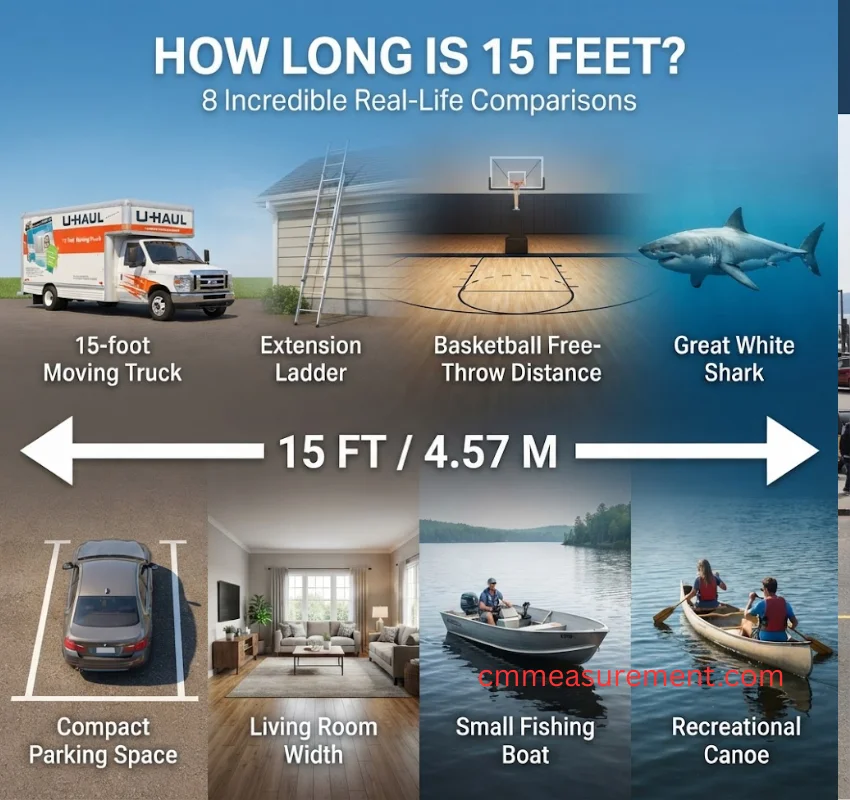
Fifteen feet sounds simple on paper. But once you try to picture it in your head, the number gets fuzzy fast.
This guide breaks down how long 15 feet actually is, using real objects and places you already know. By the end, you’ll be able to picture 15 feet without ever touching a tape measure.
Table of Contents
How Long Is 15 Feet in Feet, Inches, and Meters?
Let’s start with the raw numbers before we get visual.
15 feet equals 180 inches, 4.57 meters, 457.2 centimeters, and 5 yards. It’s also 4,572 millimeters if you’re working in the metric system.
| Unit | Equivalent |
|---|---|
| Feet | 15 ft |
| Inches | 180 in |
| Yards | 5 yd |
| Meters | 4.57 m |
| Centimeters | 457.2 cm |
| Millimeters | 4,572 mm |
These numbers are accurate, but they don’t mean much until you connect them to something you can actually see. That’s where visualizing 15 feet comes in.
How Does 15 Feet Look Like in Real Life?
Numbers on a page rarely stick. Your brain remembers pictures much better than digits.
One easy trick: picture two-and-a-half average adults lying head to toe. Most American adults stand between 5 and 6 feet tall,so stacking two and a half of them gets you close to 15 feet.
Another simple method is counting steps. A typical adult walking stride covers about 2.5 to 3 feet. That means five to six normal steps will carry you roughly 15 feet across a room or yard.
Both tricks work because they use your own body as the measuring tool. No tape measure needed.
8 Incredible Real-Life Comparisons to Visualize 15 Feet
Below are eight everyday and not-so-everyday examples that all measure close to 15 feet. Some you’ll recognize instantly. A few might surprise you.
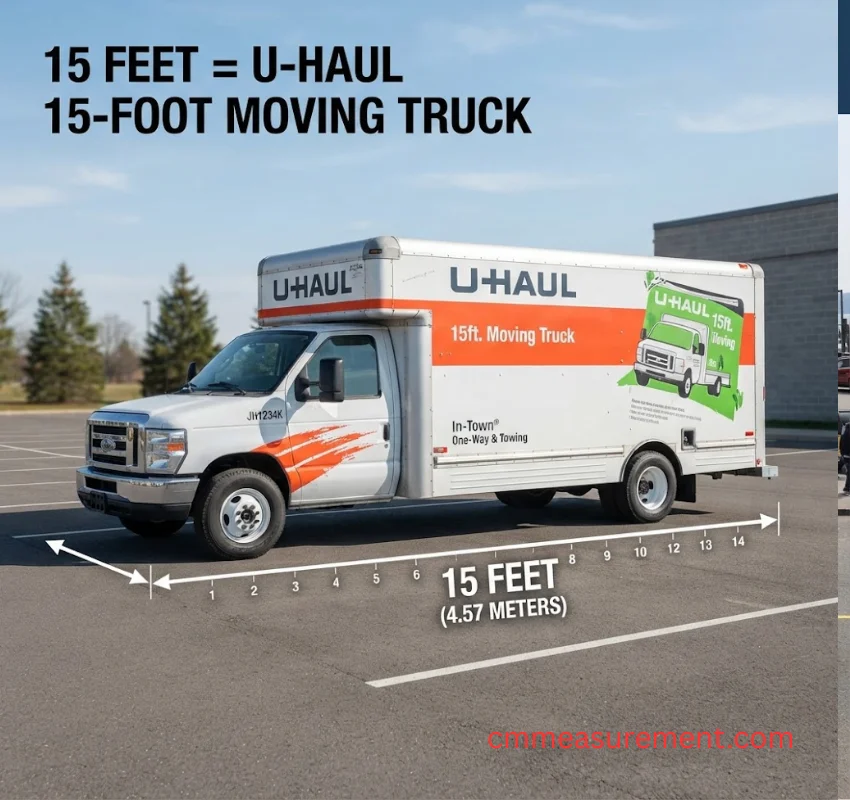
A 15-Foot U-Haul Moving Truck
The floor length inside a standard U-Haul 15-foot moving truck is exactly 15 feet, according to U-Haul’s own official truck specifications. This size is one of the most rented trucks in the U.S. because it’s roomy enough for a two-bedroom apartment yet still easy to drive through city streets. Next time you see one of these trucks parked on your block, you’re looking at a perfect 15-foot reference.
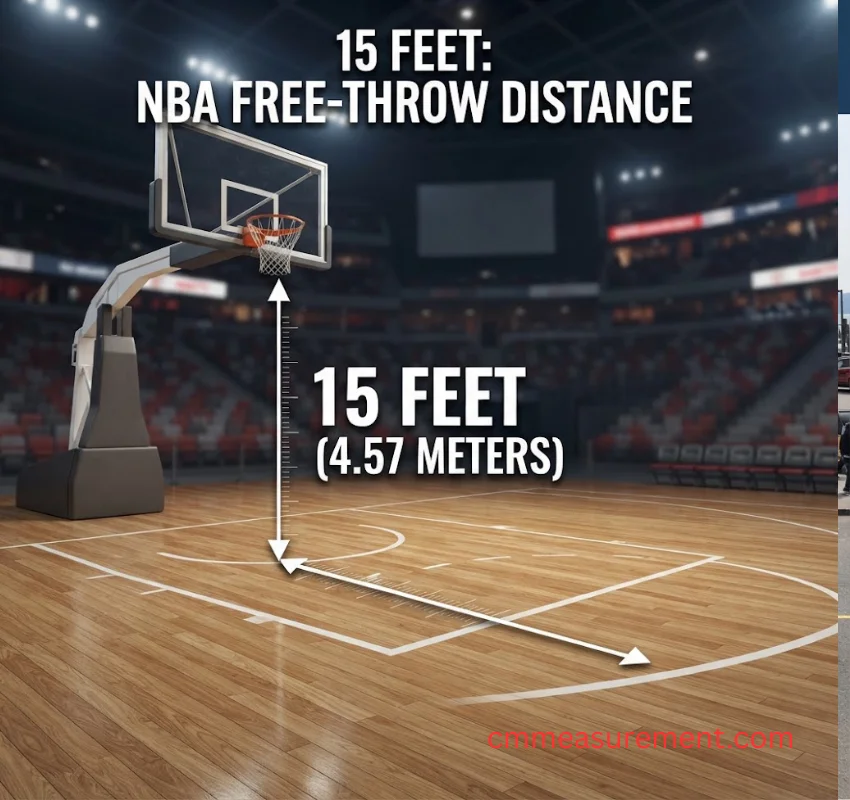
The NBA Free-Throw Line
Basketball fans already know this distance without realizing it. The free-throw line sits exactly 15 feet from the face of the backboard in the NBA, WNBA, NCAA, and FIBA. This measurement has stayed unchanged for decades because it strikes the right balance between a makeable shot and a real test of skill. If you’ve ever watched a player line up for a free throw, you’ve watched someone stand exactly 15 feet away from the hoop.
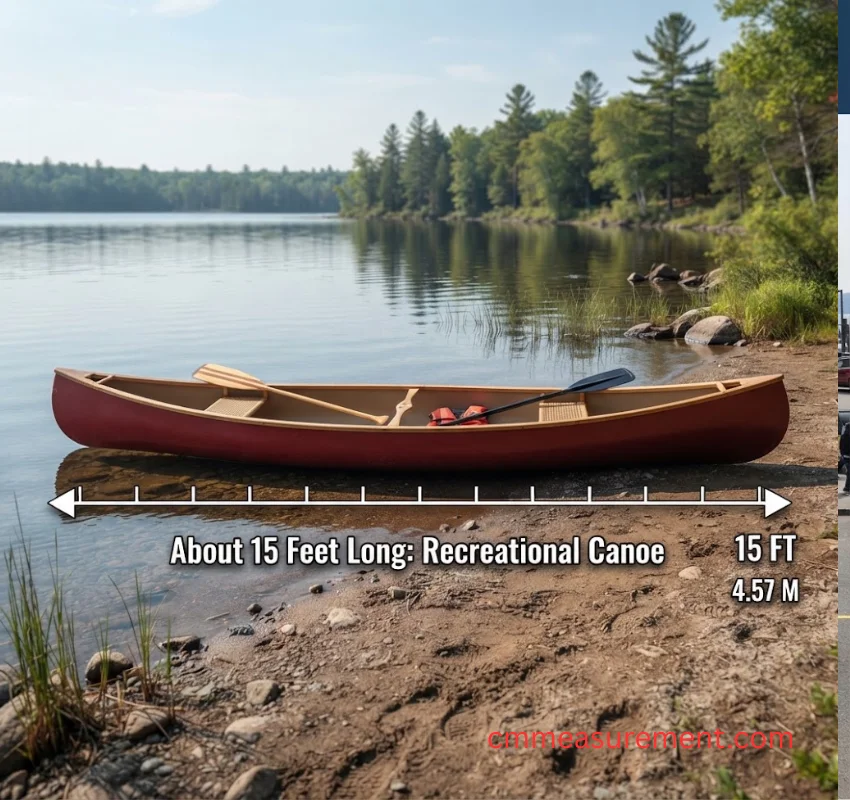
A Standard Recreational Canoe
Most canoes built for lakes and calm rivers measure close to 15 feet from bow to stern. This length gives paddlers enough stability for two or three people while staying light enough to carry and store. If you’ve ever seen a canoe resting on a car roof rack, that’s your 15-foot visual.
Must Visit: How Long Is 40 Feet? 6 Amazing Real-Life Comparisons to Easily Visualize This Impressive Length
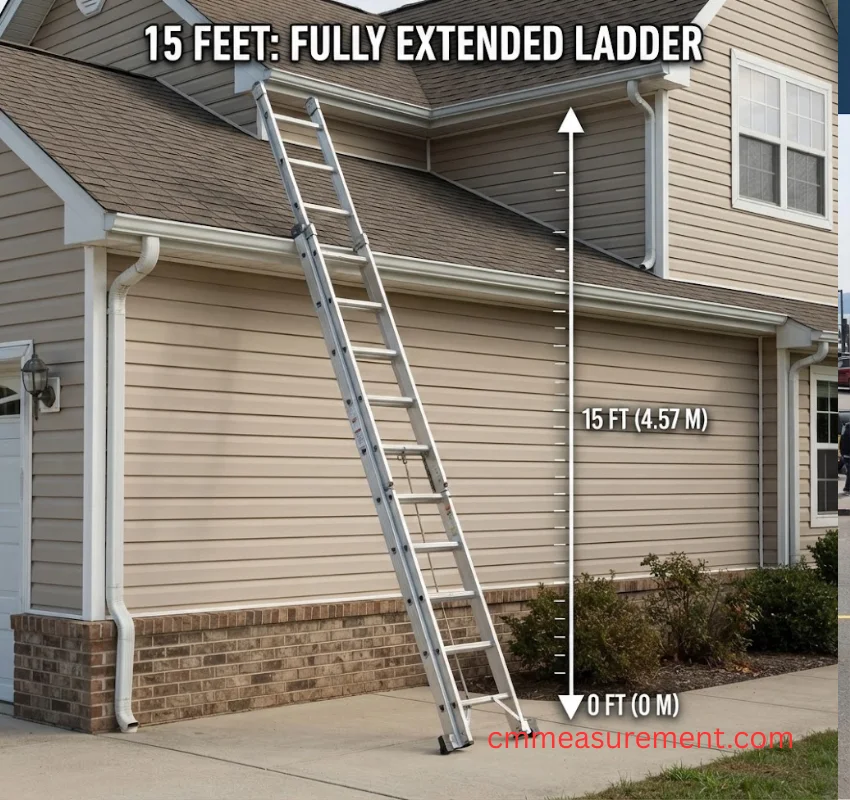
A Fully Extended Extension Ladder
Many home extension ladders reach close to 15 feet when fully opened. Homeowners rely on this length for tasks like cleaning gutters, painting a second story, or reaching a roofline. It’s tall enough to matter but still manageable for one person to carry.
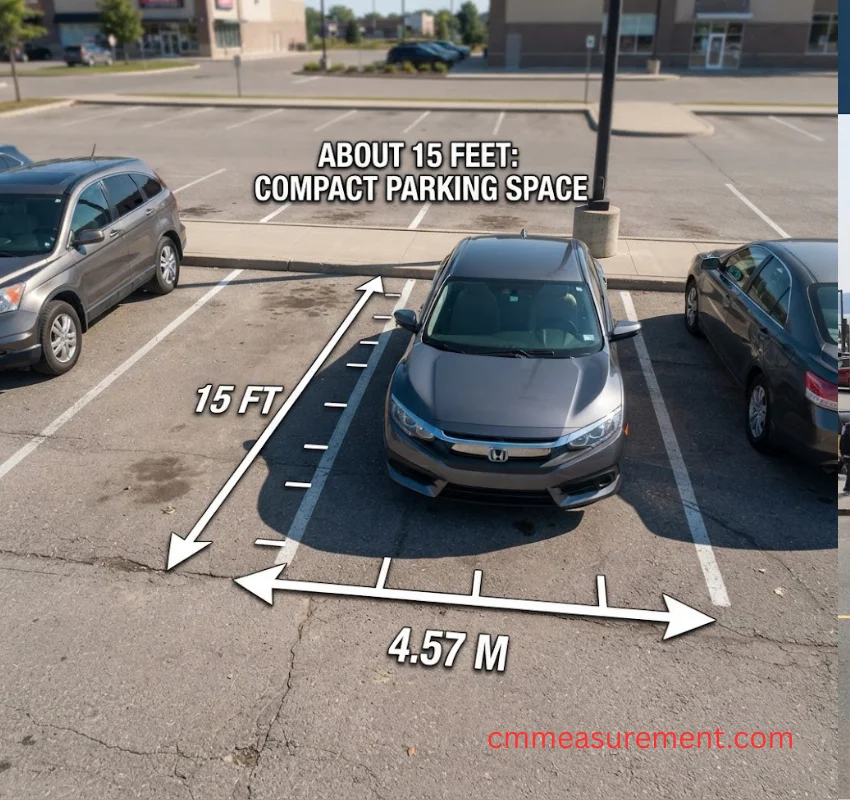
A Compact Car Parking Space
Many compact-car parking spaces measure around 15 feet long, shorter than standard spaces built for full-size vehicles. Next time you park in a “compact” spot, you’re parking inside a space roughly the length we’re talking about here.
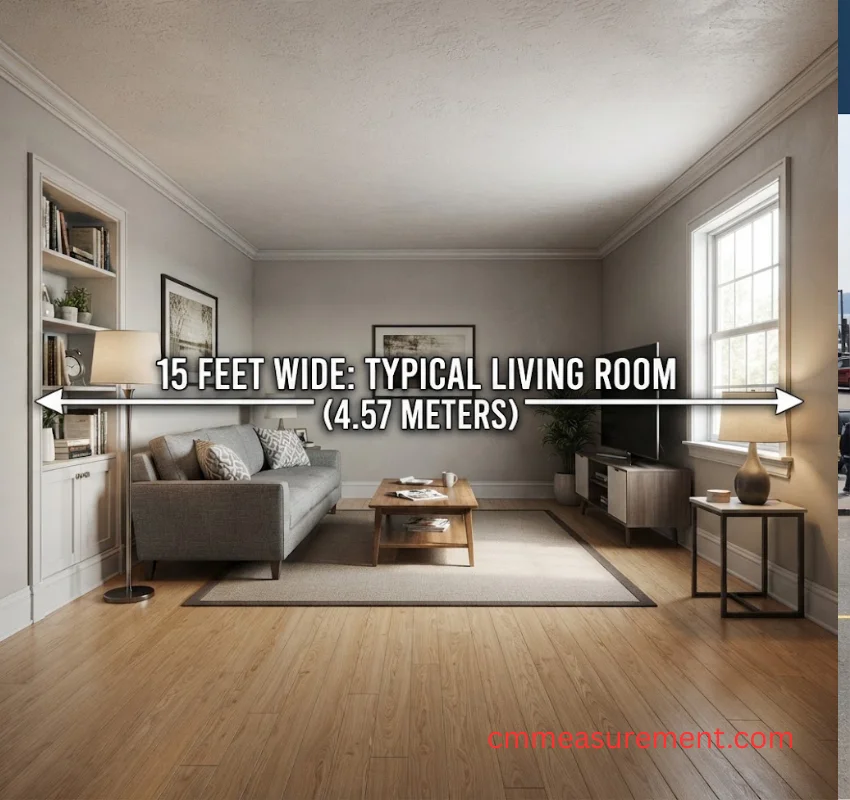
An Average American Living Room Width
Many living rooms in U.S. homes measure somewhere between 12 and 16 feet across. A 15-foot living room sits right in that typical range, giving enough space for a sofa, coffee table, and TV setup without feeling cramped. If your living room feels average-sized, there’s a good chance it’s close to this width.
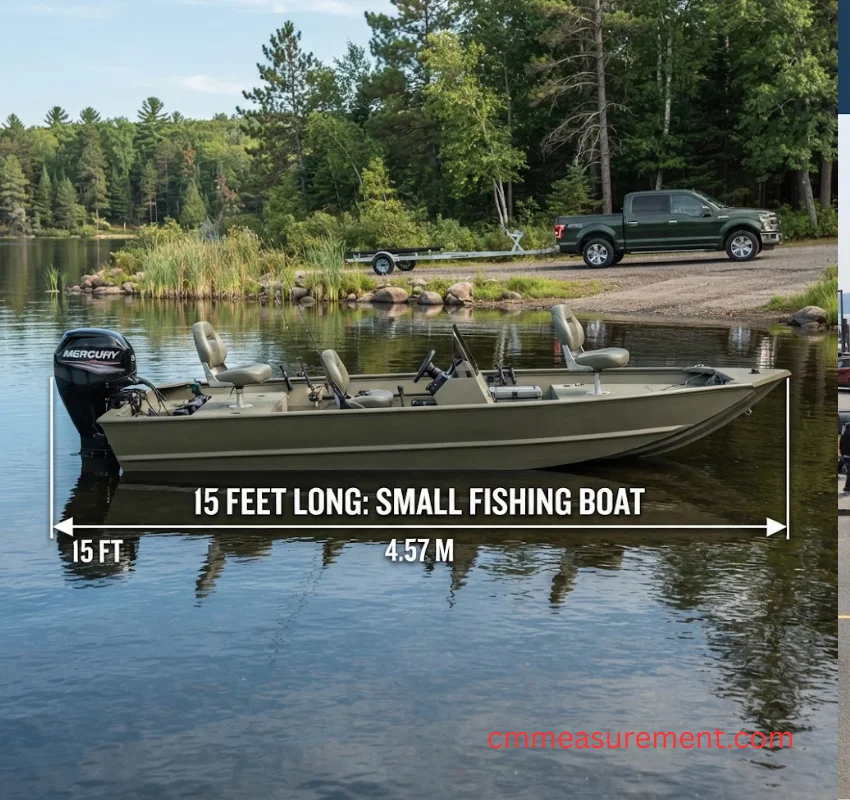
A Small Fishing Boat
Fishing boats built for lakes and calm coastal waters commonly run between 14 and 16 feet. These boats are large enough to hold a couple of anglers and gear but small enough to tow behind a pickup truck. A 15-foot fishing boat is one of the most common sizes sold to weekend anglers.
A Great White Shark
On the wilder end of comparisons, adult great white sharks often measure around 15 feet or more in length, based on data collected by marine researchers. That means a shark swimming past a diver could easily stretch the same distance as that moving truck parked outside your house. It’s a striking way to grasp just how much space 15 feet really takes up.

How Tall Is 15 Feet Compared to a House?
Most single-story homes in the U.S. have ceilings between 8 and 9 feet tall, plus some extra height for the roofline and foundation.
That means 15 feet is roughly one-and-a-half stories of a typical American house. Picture a one-story home with a steep roof, and you’re picturing something close to 15 feet at its peak. It’s tall enough to tower over a single-story rooftop but shorter than most two-story homes, which usually reach 20 feet or higher.
FAQs
How much is fifteen feet visually?
Fifteen feet visually looks like stacking two-and-a-half average adults head to toe, or taking about five to six normal walking steps in a row.
What is 15 feet comparable to?
15 feet is comparable to a U-Haul 15-foot moving truck, an NBA free-throw distance, a standard canoe, or a small fishing boat.
How long is a 15 foot example?
A simple example is the length inside a U-Haul 15-foot moving truck, which measures exactly 15 feet from front to back.
How does 15 feet look like?
15 feet looks like roughly one-and-a-half stories of a house, or the distance an NBA player stands from the hoop during a free throw.
What object is 15 ft?
A recreational canoe, a small fishing boat, and a U-Haul 15-foot moving truck are all common objects that measure close to 15 feet.
How tall is 15 feet compared to a house?
15 feet is about one-and-a-half stories tall on a typical single-story American home, since most ceilings run 8 to 9 feet per level.
Conclusion
Fifteen feet is bigger than most people first assume. It’s roughly the length of a moving truck, the exact distance of an NBA free throw, and about one-and-a-half stories of a house.
Next time someone mentions a 15-foot measurement, you’ll have a real picture in mind instead of just a number.

Timmy Zeeshan is the founder and lead editor of CM Measurement, where he writes and maintains a growing library of unit conversion tools and practical measurement guides. With a background in engineering and a long-standing interest in everyday math problems, Timmy started CM Measurement after growing frustrated with cluttered, ad-heavy converter websites that made simple conversions harder than they needed to be.