Some weights are easy to picture. Others just sit there as a number on a screen. 8 pounds falls into that second group — until you connect it to something real.
This guide breaks down how heavy 8 pounds actually is, using everyday objects most people already have around the house. You’ll see what weighs 8 pounds, what it feels like to hold, and the exact metric conversion, all backed by real reference points instead of guesswork.
How Heavy Is 8 Pounds? A Quick Answer
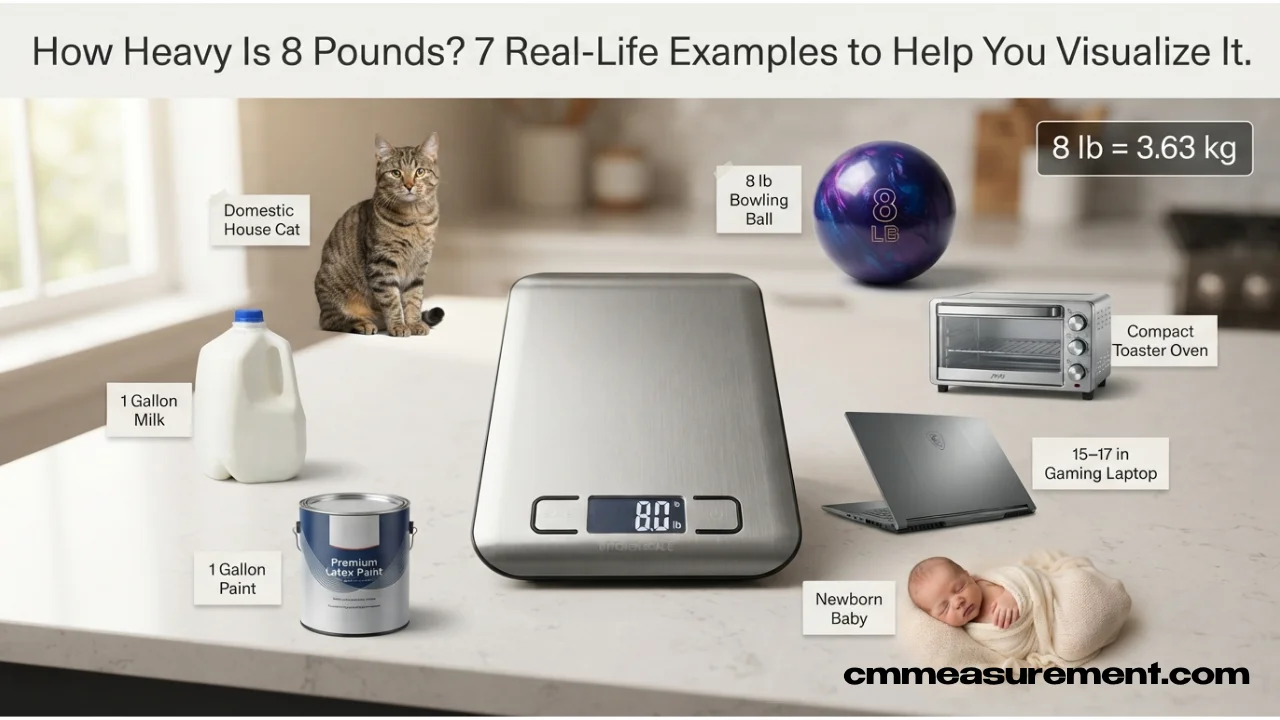
8 pounds equals 3.63 kilograms, or 128 ounces. The exact figure is 3.6287 kg, calculated using the internationally recognized conversion factor of 0.45359237 kilograms per pound — a standard set by the National Institute of Standards and Technology (NIST) and formalized under the 1959 International Yard and Pound Agreement.
Picture it this way: 8 pounds is close to the weight of a healthy house cat or a gallon of milk. It’s noticeably heavier than 5 pounds, but still light enough to carry one-handed for a short distance without much strain.
7 Everyday Things That Weigh 8 Pounds (Real-Life Examples)
Numbers stick better when they’re tied to something tangible. Here are seven objects that weigh close to 8 pounds in real life.
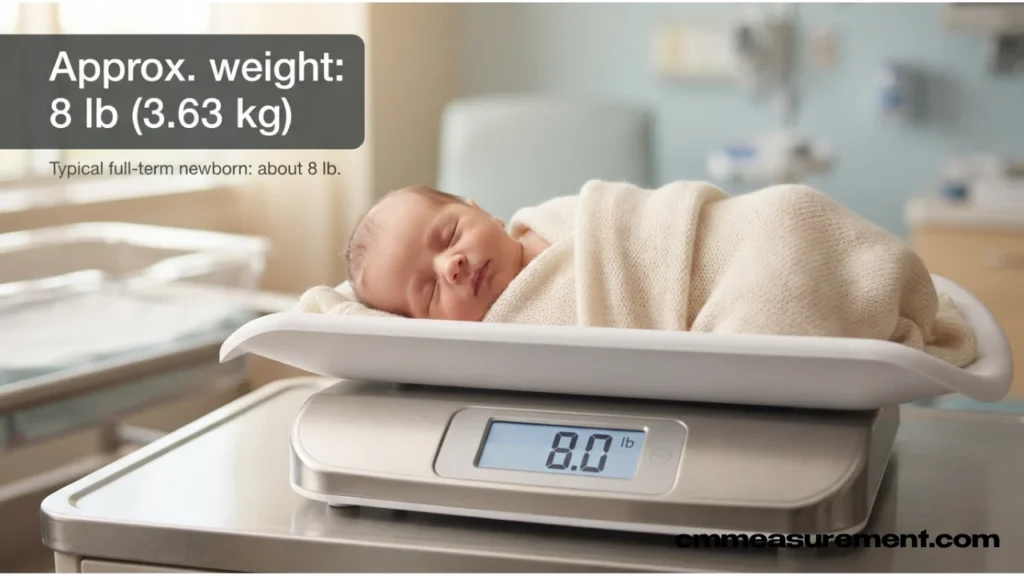
A Newborn Baby on the Higher End of Average
Full-term newborns in the US typically weigh between 5 pounds 8 ounces and 8 pounds 13 ounces, according to pediatric growth data used by the CDC and WHO. A baby near the top of that range lands right around 8 pounds — a size many new parents will recognize instantly.
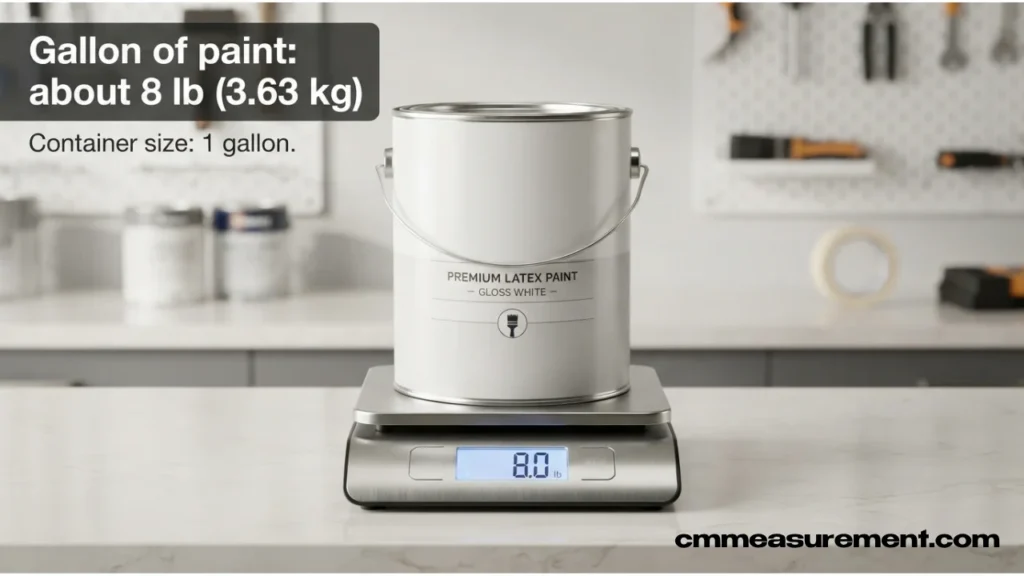
A Gallon of Paint
Paint weight varies by type, but a gallon generally falls between 6 and 12 pounds depending on its formula. Lighter oil-based paints often sit close to 8 pounds per gallon, since oil is less dense than the water base used in latex and acrylic paints.
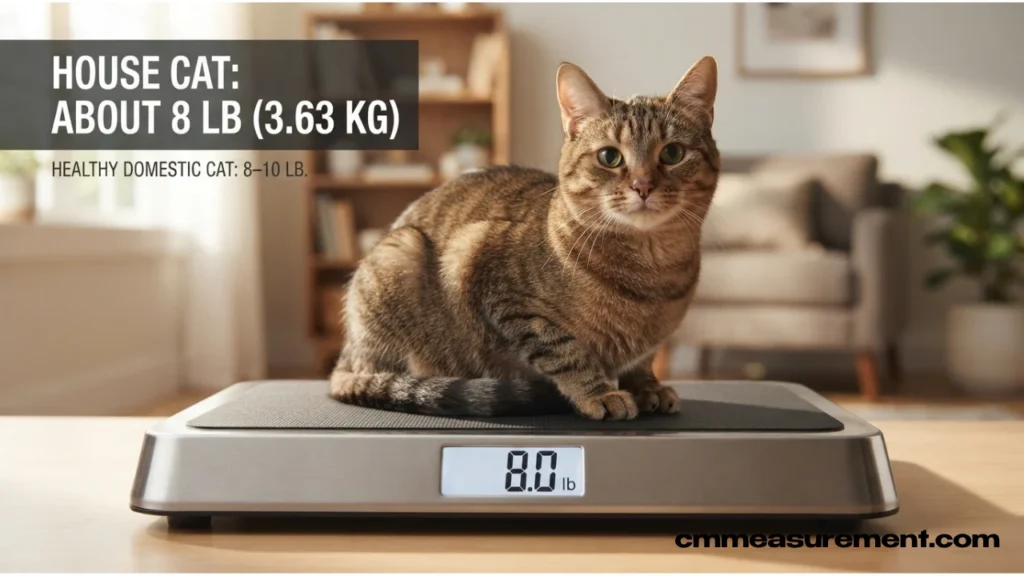
A Domestic House Cat
The average domestic shorthair — the most common house cat breed in the US — typically weighs 8 to 10 pounds, according to veterinary weight charts from PetMD and Purina. An 8-pound cat sits right at the lighter end of that healthy range.
Must Visit: How Heavy Is 4 Pounds? 7 Real-Life Examples
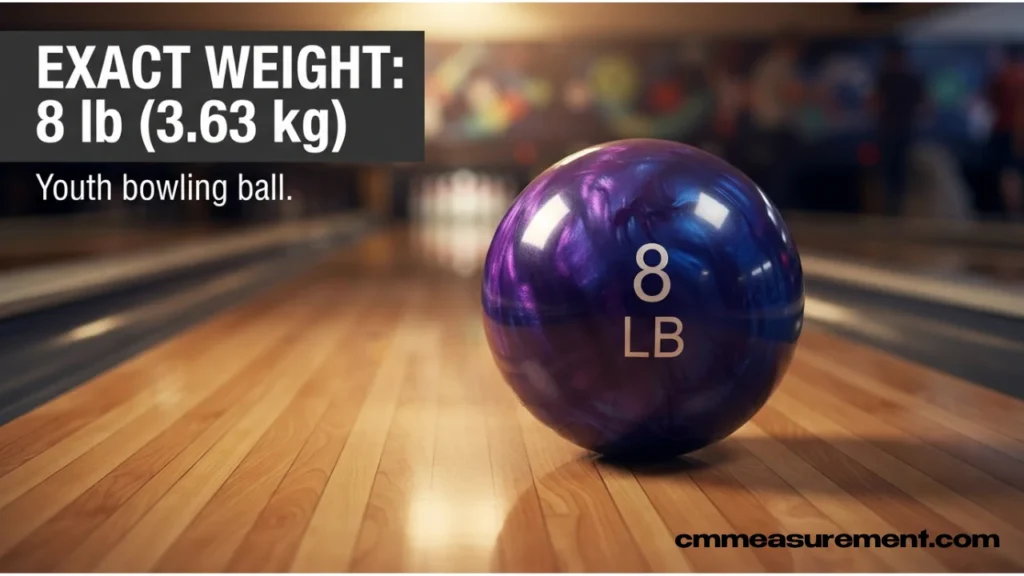
A Youth Bowling Ball
Bowling balls are sized specifically by weight, and lighter models built for younger or newer bowlers commonly weigh 8 pounds. It’s one of the few objects on this list manufactured to hit the number exactly.
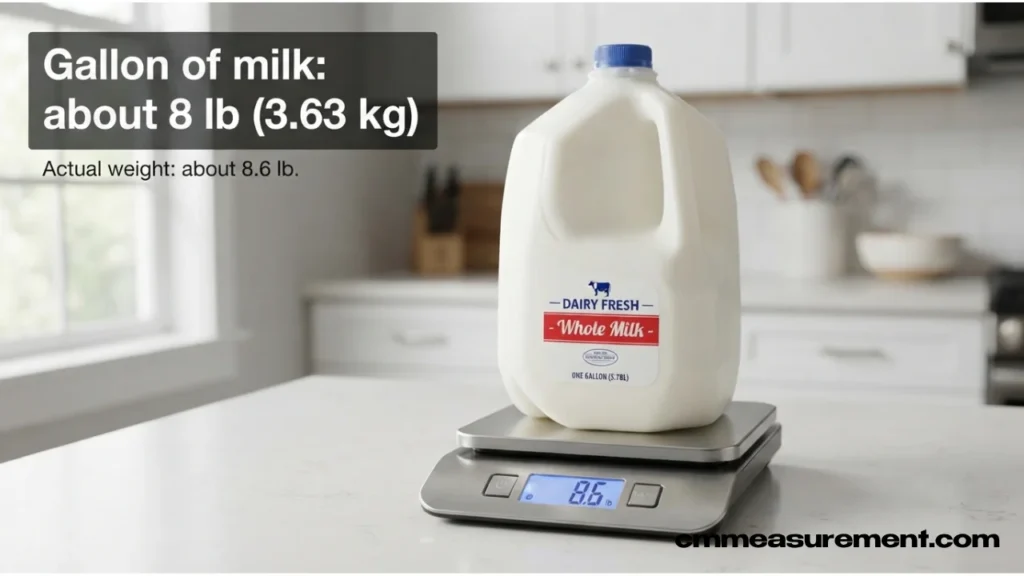
A Full Gallon of Milk
A gallon of whole milk weighs about 8.6 pounds, thanks to its density being slightly higher than water. Round down just a touch, and it’s essentially an 8-pound object sitting in your refrigerator door right now.
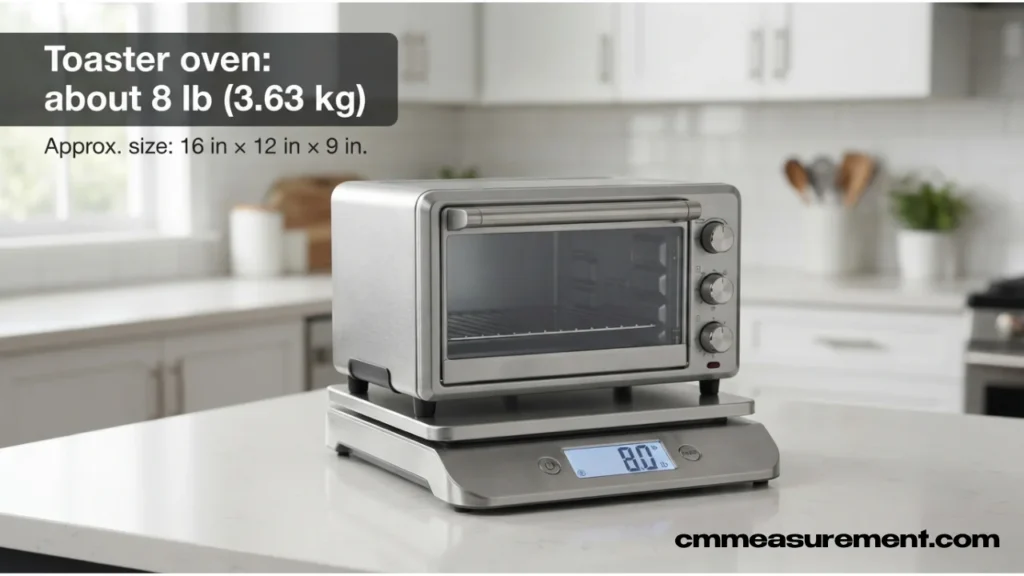
A Compact Toaster Oven
Small countertop toaster ovens, the kind built for a single dorm room or apartment kitchen, commonly weigh between 8 and 10 pounds. That’s enough heft to feel sturdy on a counter but light enough to move with one hand.
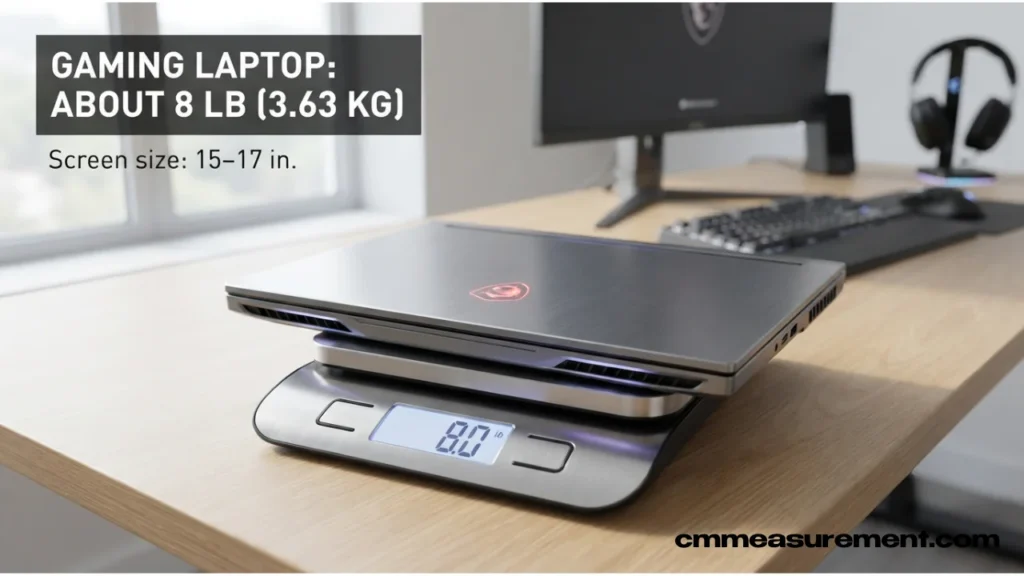
A Gaming Laptop
Laptops built for gaming pack in bigger batteries, dedicated graphics cards, and extra cooling — all of which add weight. Many gaming laptops land right around 8 pounds, noticeably heavier than the 3-to-5-pound range typical of everyday business laptops.
What Does 8 Pounds Feel Like to Carry?
Eight pounds sits at a tipping point. It’s light enough to lift without thinking, but heavy enough to remind you it’s there after a few minutes.
Holding it in one hand, most adults can manage 8 pounds comfortably for a short stretch — carrying a gallon of milk from the car to the kitchen, for example. Extend your arm straight out to the side, though, and fatigue sets in fast, usually within 30 to 60 seconds.
Carrying it in a bag or backpack, 8 pounds barely registers as effort. Your torso and legs share the load instead of a single arm, which is why the same weight feels dramatically different depending on how you carry it.
In a fitness context, 8 pounds sits above the typical beginner dumbbell weight (usually 3 to 5 pounds) but below intermediate ranges. Trainers often introduce 8-pound weights once a client has built some baseline strength in upper-body exercises like presses and rows.
Household Items That Weigh About 8 Pounds
No scale handy? These common household items land close enough to 8 pounds to use as a rough stand-in.
- A full gallon jug of water plus a little extra — a gallon alone weighs 8.34 pounds, essentially an exact match.
- A large bag of potatoes — often sold in 8- to 10-pound bags at US grocery stores.
- A stack of four or five hardcover textbooks — most run 1.5 to 2 pounds each.
- A full 2-liter bottle of soda plus a smaller bottle — combine the two to approximate 8 pounds.
- A standard house brick times two — a single clay brick weighs around 4 to 4.5 pounds.
If you’re substituting these for workout weights, keep the grip secure and the shape manageable — irregular objects like a bag of potatoes shift mid-motion in a way a purpose-built dumbbell won’t.
8 Pounds Compared to Other Common Weights
Seeing 8 pounds alongside nearby weights makes the number easier to place on a mental scale.
| Weight | Kilograms | Everyday Comparison |
|---|---|---|
| 1 pound | 0.45 kg | A block of butter |
| 5 pounds | 2.27 kg | A bag of flour |
| 8 pounds | 3.63 kg | A house cat or gallon of milk |
| 10 pounds | 4.54 kg | A small bowling ball |
| 20 pounds | 9.07 kg | A car tire |
FAQs
What household item weighs 8 pounds?
A gallon jug of water is the closest exact match, weighing 8.34 pounds. A large bag of potatoes and a stack of hardcover books also come close.
What is an example of 8 pounds?
A domestic house cat, a gallon of milk, and a youth bowling ball are all common real-world examples that weigh right around 8 pounds.
How much does 8 pounds weigh?
8 pounds equals 3.63 kilograms, or 128 ounces. It’s the weight of a mid-sized house cat or a gaming laptop.
What weighs 8 pounds in kg?
Anything weighing 8 pounds equals 3.6287 kilograms, using the exact conversion factor of 0.45359237 kg per pound.
Conclusion
8 pounds lands right between “light enough to ignore” and “heavy enough to notice.” Whether you picture it as a house cat, a gallon of milk, or a gaming laptop, these real-world comparisons turn an abstract number into something your hands already know.

Timmy Zeeshan is the founder and lead editor of CM Measurement, where he writes and maintains a growing library of unit conversion tools and practical measurement guides. With a background in engineering and a long-standing interest in everyday math problems, Timmy started CM Measurement after growing frustrated with cluttered, ad-heavy converter websites that made simple conversions harder than they needed to be.