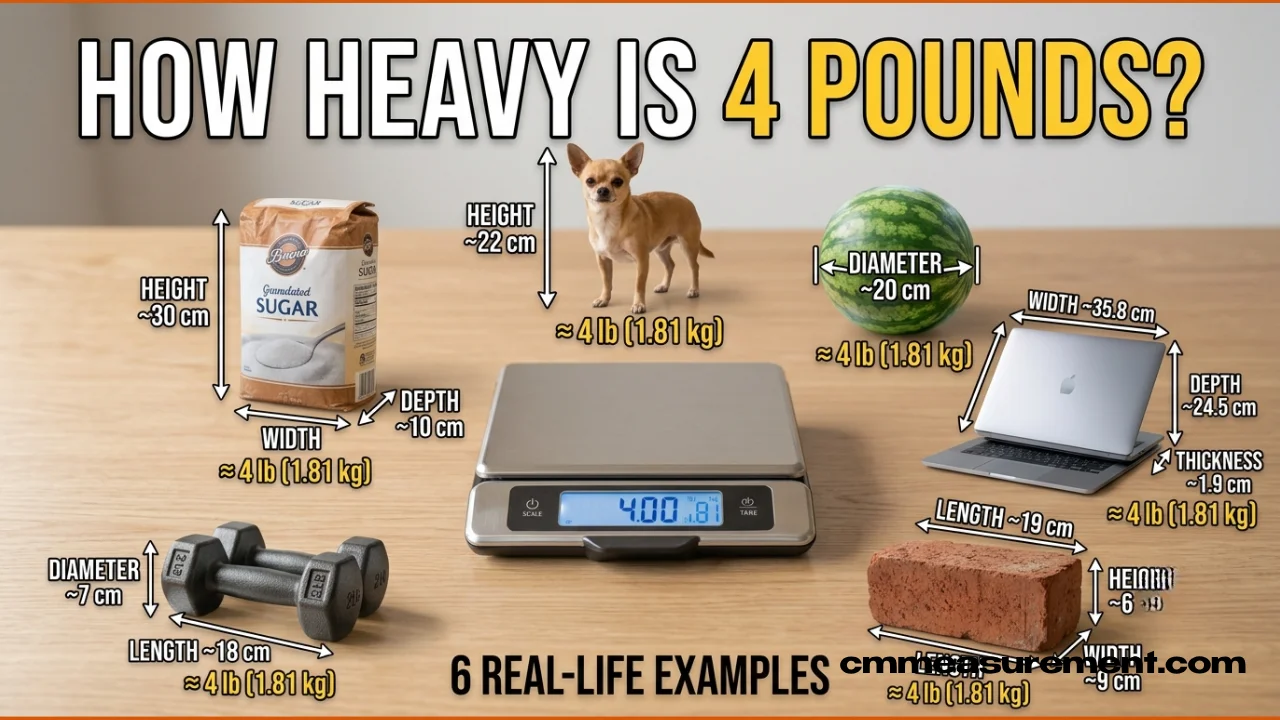
Four pounds doesn’t sound like much until you’re actually holding it. This guide breaks down exactly how heavy is 4 pounds, converts it into weight units you already understand, and shows 7 real-life examples of things that weigh 4 pounds.
Every fact below is backed by a real source, so you’re not just getting rounded-off guesses.
What Is 4 Pounds in Weight? (Quick Conversion)
4 pounds equals 1.81 kilograms (1.8144 kg precisely).
Break that down further, and you get about 1,814 grams, or 64 ounces, since every pound holds 16 ounces.
Here’s the math behind that number: one pound (lb) always equals 0.45359237 kilograms. Multiply that by 4, and you land on 1.81 kg. The pound is part of the US customary system of measurement, still used daily across America for body weight, groceries, and shipping. The kilogram, meanwhile, is the base unit in the International System of Units (SI), used almost everywhere else in the world.
So next time a label, recipe, or fitness app shows 4 lbs, you already know it translates to roughly 1.81 kg. If you are interested to see converter tool then click here.
7 Real-Life Examples of Things That Weigh 4 Pounds
Numbers stick better when you can picture them. Here are seven everyday items that weigh 4 pounds, each one grounded in a real, checkable fact.
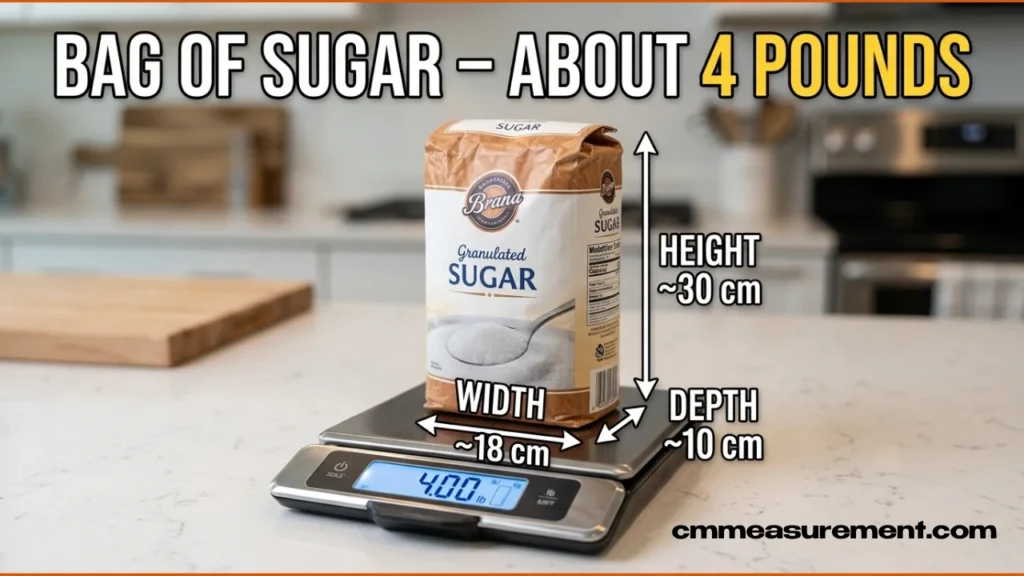
A bag of granulated sugar. Many grocery stores in the US sell sugar in 4-pound bags, making this one of the most literal, hands-on examples of the weight. Pick one up next time you’re at the store, and you’re holding 4 pounds exactly.
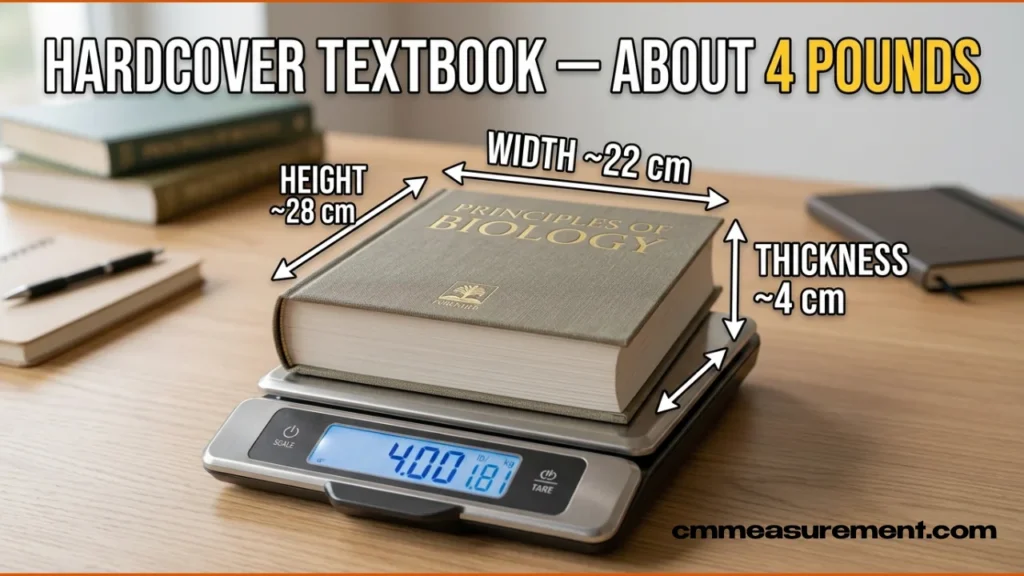
A large hardcover textbook. A large hardcover textbook, like the one shown in the image, can weigh about 4 pounds. This makes it a familiar real-life example of the weight, especially for students and readers who regularly carry textbooks in backpacks. The book shown has approximate dimensions of 28 cm in height, 22 cm in width, and 4 cm in thickness. Its compact but dense shape helps illustrate how 4 pounds (1.81 kg) can feel solid and noticeable when held in your hands.
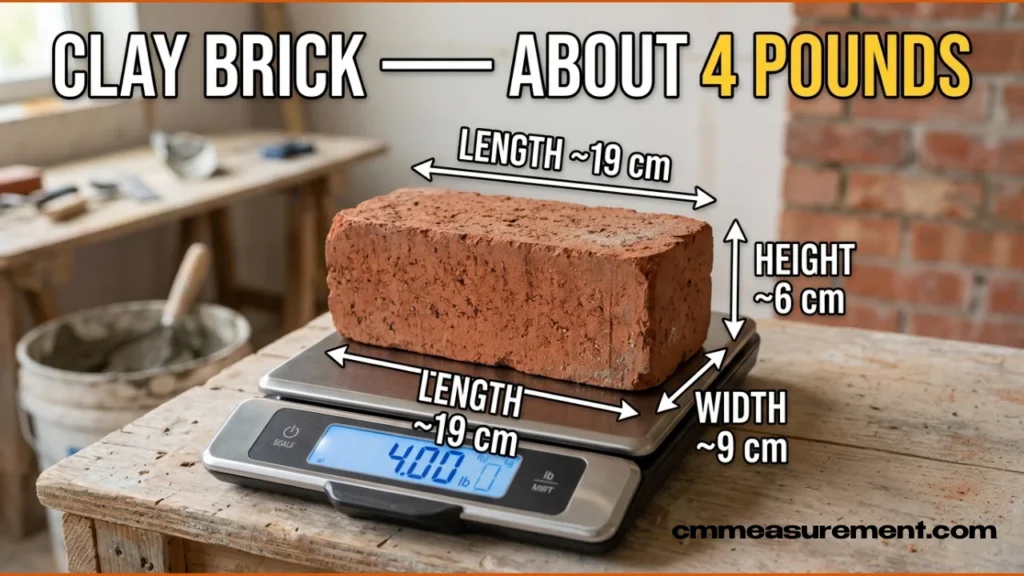
A standard clay brick. A typical red construction brick weighs close to 4 pounds. Builders handle dozens of these daily, so this weight is baked, quite literally, into skilled trade work everywhere.
Must Visit: How Long Is 20 cm? 20 cm in Inches & 7 Real-Life Size Examples
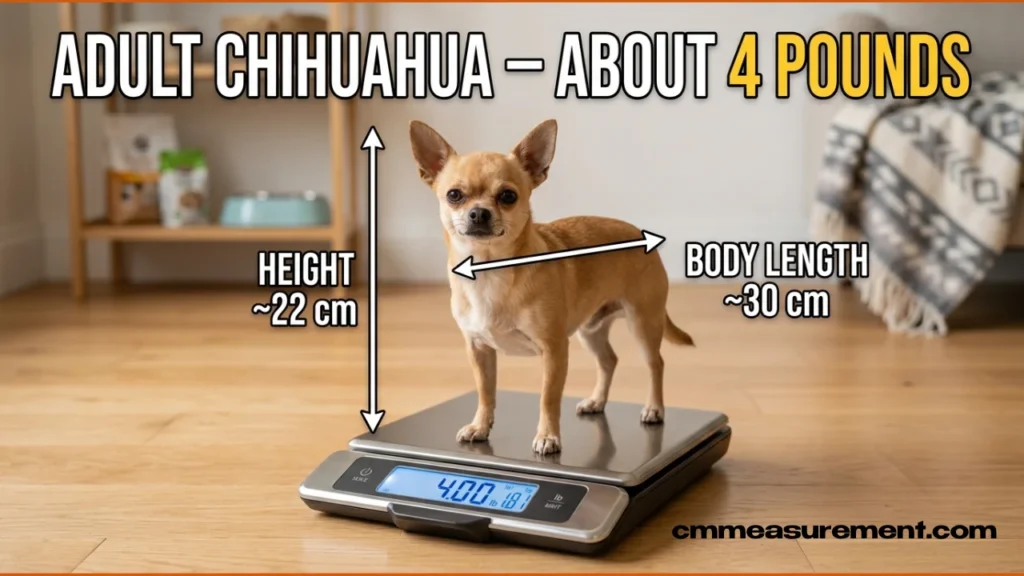
A full-size Chihuahua. The American Kennel Club’s official breed standard caps show-quality Chihuahuas at 6 pounds, and many healthy adult Chihuahuas land right around 4 pounds. That’s a full, mature dog compressed into a weight most people underestimate on sight.
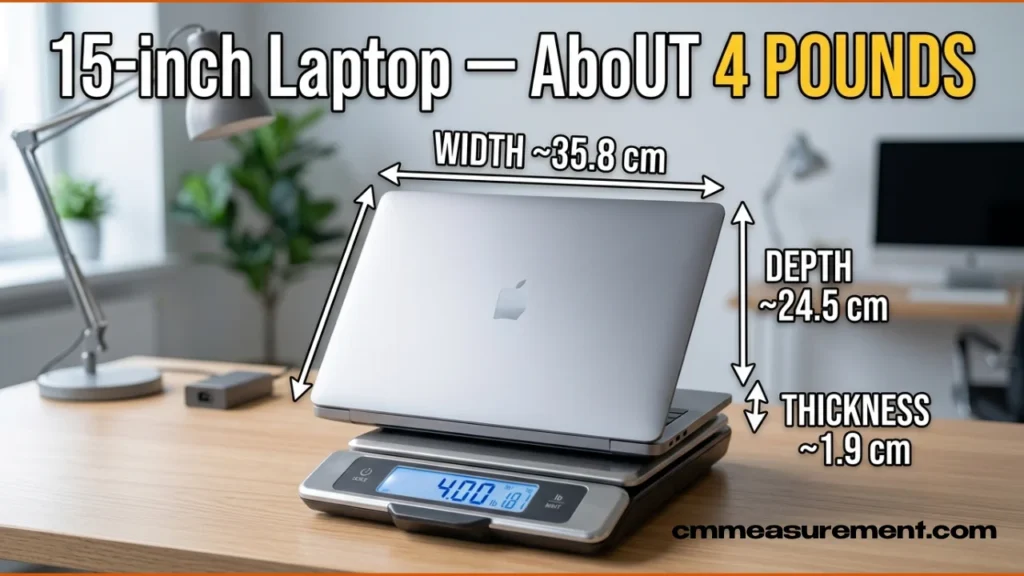
A 15-inch laptop. Larger laptops, especially gaming or workstation models with bigger screens and batteries, often weigh close to 4 pounds. That’s noticeably heavier than the ultralight 3-pound laptops most people carry daily.
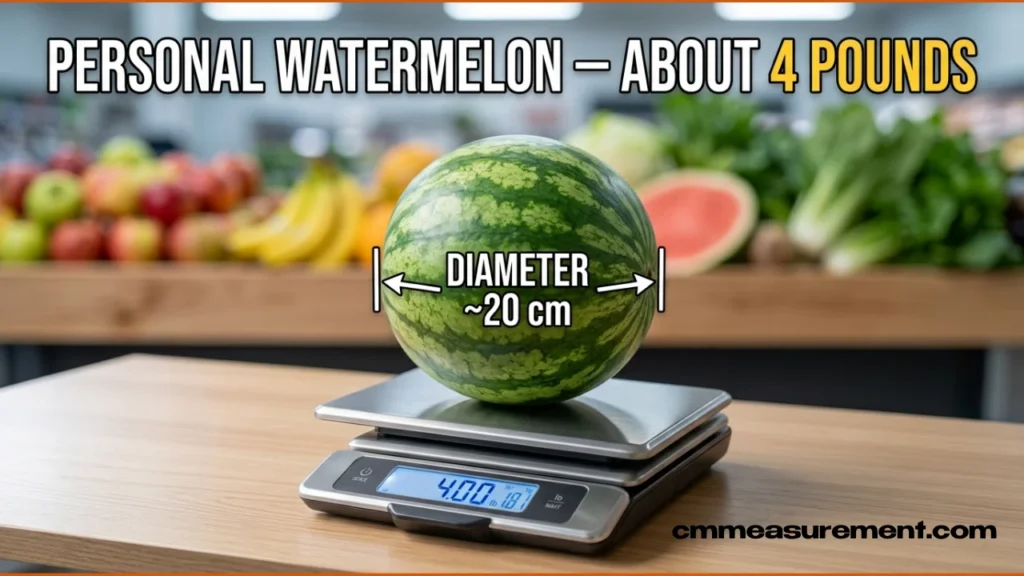
A small personal watermelon. Mini or personal-sized watermelons, the kind meant for one household rather than a whole cookout, typically weigh in the 4-to-6-pound range on the lighter end.
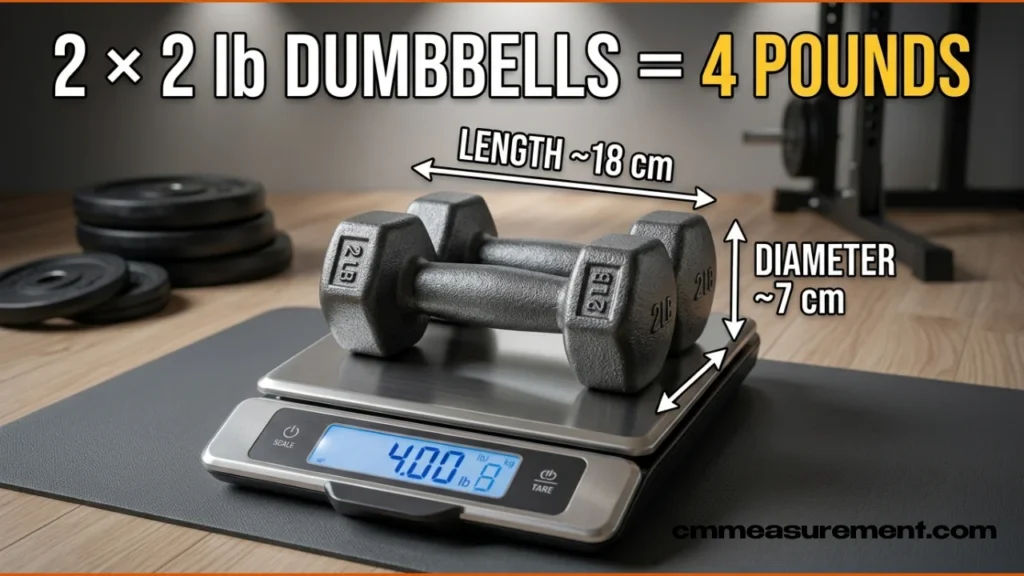
A pair of 2-pound dumbbells. Two 2-pound hand weights, a common beginner set, combine for exactly 4 pounds. It’s a weight plenty of people already lift without realizing the total.
How Does 4 Pounds Feel When You Hold It?
On a scale, 4 pounds is just a number. In your hands, it’s a different story.
Holding 4 pounds feels solid and deliberate, not light. It’s noticeably heavier than a smartphone, a paperback, or even a small dumbbell most beginners start with. Most adults can carry it comfortably with one hand, but holding it with an outstretched arm for more than a minute starts to burn.
Inside a backpack or grocery bag, 4 pounds blends in with everything else you’re carrying. But hand someone a single 4-pound item, like a bag of sugar or a brick, and the weight suddenly feels concentrated and obvious.
Shape changes perception just as much as weight does. A 4-pound bag of loose packing peanuts feels bulky but easy. A 4-pound brick feels small but dense. Same number on the scale, completely different experience in your hand.
Is 4 Pounds a Lot? (4 Pounds Compared to Other Weights)
By itself, 4 pounds sits in the light-to-moderate range — enough to notice, not enough to strain most adults.
Here’s how it compares to nearby weights:
- 1 pound vs 4 pounds: 4 pounds is four times heavier, roughly the jump from a smartphone to a small bag of sugar.
- 5 pounds vs 4 pounds: Just one pound apart, the difference most people can barely detect by feel alone.
- 10 pounds vs 4 pounds: 10 pounds is more than double, closer to a small bowling ball or a large housecat.
- Average adult body weight: 4 pounds is roughly 2.5% of a 160-pound adult, a small slice of total body mass but a meaningful one when it comes to sudden weight change.
For shipping in the US, 4 pounds usually falls into the second-lowest pricing tier most carriers use, just above the 1-to-3-pound bracket. For fitness, a pair of 2-pound weights (totaling 4 pounds) is considered a light, beginner-friendly load, often used for endurance and toning work rather than heavy lifting. For newborn health, 4 pounds is a weight doctors watch closely, since it falls under the CDC’s low-birthweight threshold and often signals a baby needs extra monitoring.
So, is 4 pounds a lot? It depends entirely on what’s being weighed — barely noticeable for an adult, but clinically significant for a newborn, and comfortably light for shipping or fitness.
FAQs
What household item weighs 4 pounds?
A 4-pound bag of sugar is one of the most common household items at this exact weight. A large hardcover textbook, a 15-inch laptop, or a standard brick also land close to 4 pounds.
What is 4 pounds in weight equivalent to?
4 pounds equals 1.81 kilograms, or about 1,814 grams. In ounces, that’s 64 ounces, since one pound always equals 16 ounces.
What is an example of 4 pounds?
A bag of granulated sugar, a full-size adult Chihuahua, or a low-birthweight newborn baby are all real-world examples that weigh close to 4 pounds.
How much is 4 pounds of weight?
4 pounds feels noticeably heavier than a smartphone or paperback, but still comfortable for most adults to carry with one hand for short periods. It converts to roughly 1.81 kilograms.
Conclusion
Four pounds shows up in more places than most people realize, from a bag of sugar in the pantry to a newborn in a hospital nursery. Once you know that 4 pounds equals 1.81 kg, and you can picture it through real, everyday objects, this weight stops being an abstract number and starts making sense.

Timmy Zeeshan is the founder and lead editor of CM Measurement, where he writes and maintains a growing library of unit conversion tools and practical measurement guides. With a background in engineering and a long-standing interest in everyday math problems, Timmy started CM Measurement after growing frustrated with cluttered, ad-heavy converter websites that made simple conversions harder than they needed to be.