Numbers on a scale don’t always mean much until you can feel them. 500 grams is one of those in-between weights — not tiny, not huge, but easy to misjudge if you’ve never held it.
This guide gives you real objects, real comparisons, and real numbers, so the next time you see “500g” on a label, a shipping box, or a recipe, you’ll know exactly what that means in your hands.
Table of Contents
How Heavy Is 500 Grams, Exactly?
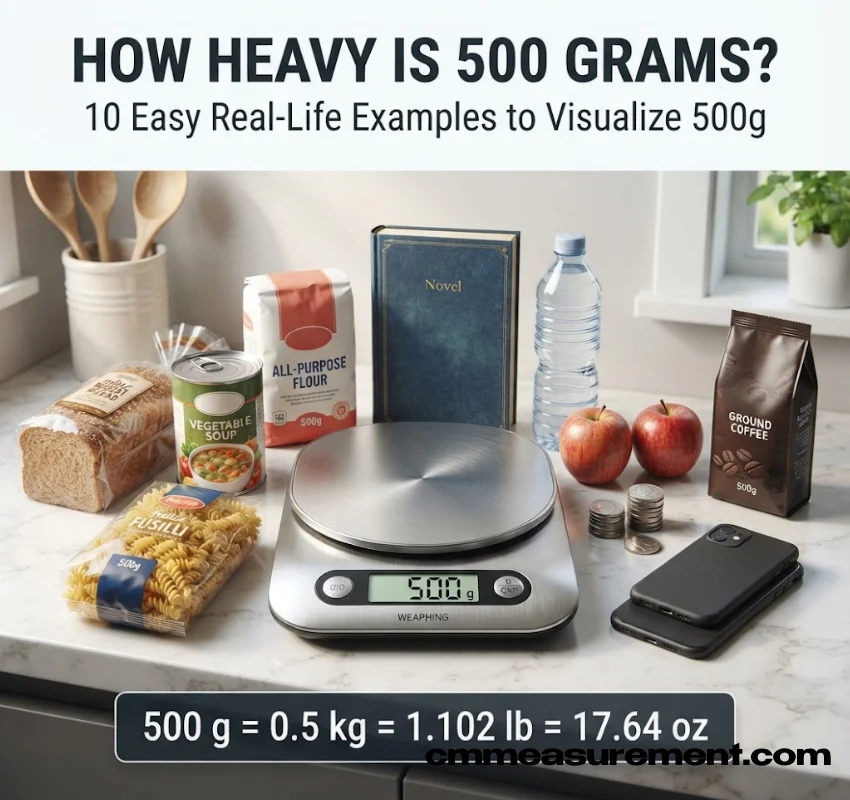
500 grams equals 0.5 kilograms — exactly half a kilo. In everyday US measurements, that’s about 1.1 pounds, or 17.6 ounces.
Here’s the quick breakdown:
- 500 grams = 0.5 kg
- 500 grams ≈ 1.1 lbs
- 500 grams ≈ 17.64 oz
A gram itself is tiny — it’s defined as one-thousandth of a kilogram, the base unit of mass in the International System of Units (SI). According to the National Institute of Standards and Technology, the kilogram is the only SI base unit still tied to a physical reference standard, though it was redefined in 2019 using the Planck constant instead of a physical object. A single gram is roughly the mass of a paperclip, so it takes quite a few of them stacked together to feel like real weight.
That’s why 500 grams — half a thousand of those small units — sits at a weight most people can recognize the moment they hold it.
10 Everyday Things That Weigh 500 Grams
Numbers are abstract. Objects are not. Here are ten common items that hit the 500-gram mark, so you can build a mental reference without ever touching a scale.
A Standard Loaf of Bread
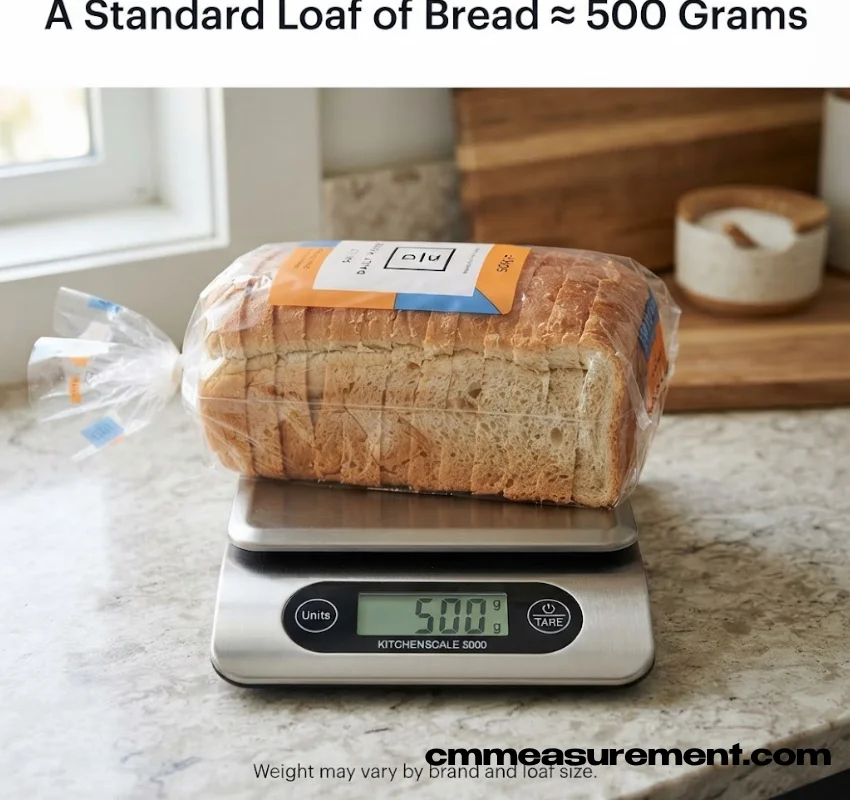
Most sliced sandwich loaves sold in US grocery stores weigh close to 500 grams. Whole wheat tends to run slightly heavier due to denser grain content, while white bread often lands just under the mark. Bakeries settled on this weight decades ago because it matches a practical serving size for a household.
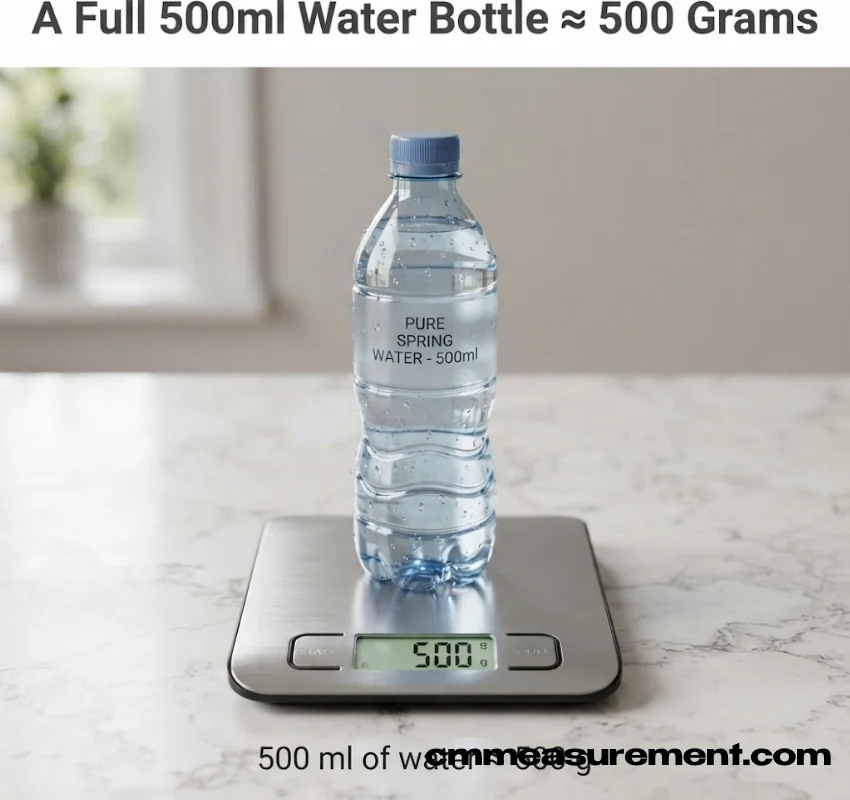
A Full 500ml Water Bottle
This is the most reliable reference point you’ll find. Water has a density of almost exactly 1 gram per milliliter at room temperature, a fact rooted in the original 18th-century definition of the gram itself. That means a 500ml bottle, filled completely, weighs 500 grams — no guesswork required.
Must Visit: How Heavy Is 20 Grams? 8 Useful Real-Life Examples
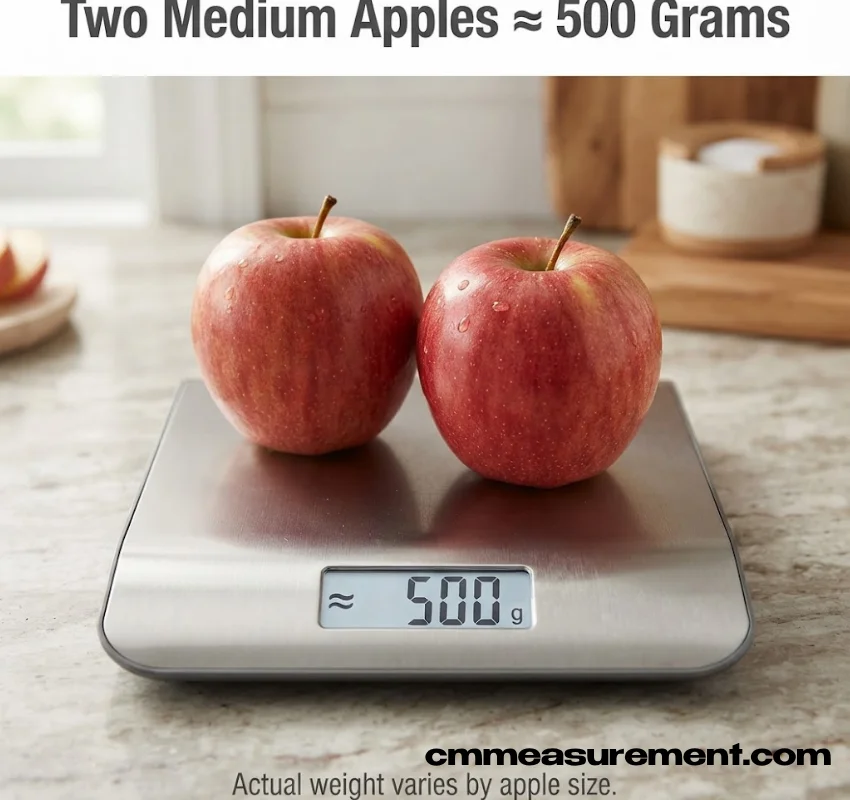
Two Medium Apples
A single medium apple averages around 182 grams, according to USDA FoodData Central. Two of them together land close to 500 grams, which makes apples one of the easiest produce-based comparisons for visualizing this weight at the grocery store.
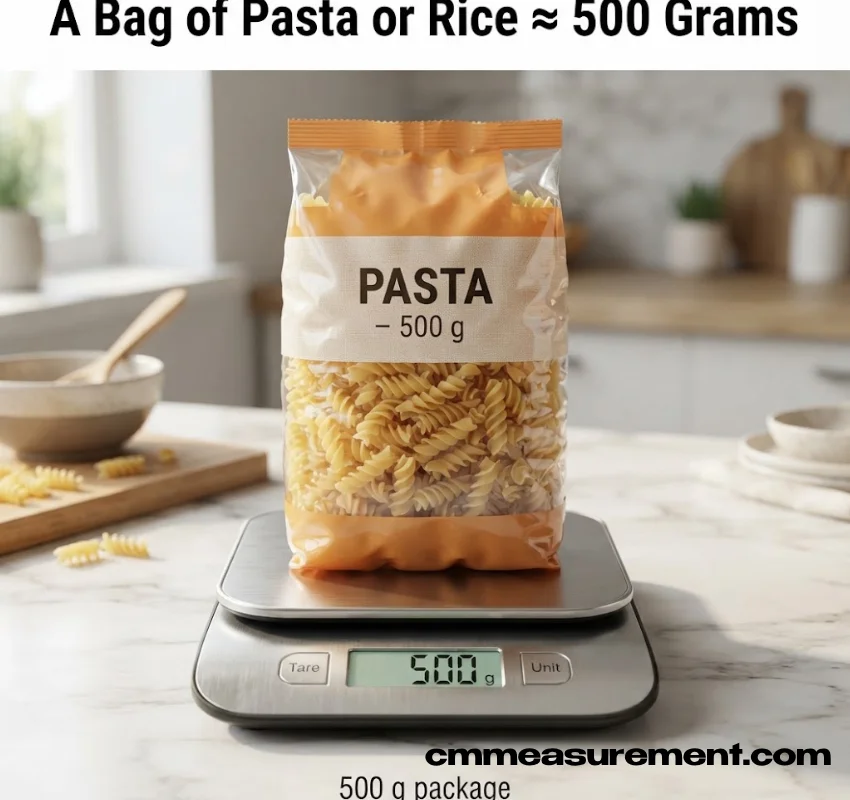
A Bag of Pasta or Rice
Walk down any pantry aisle and you’ll spot 500-gram pasta bags sitting next to 1-pound (454g) versions. The metric size is common because it feeds roughly four to five people as a main dish — a detail food manufacturers calculate carefully when sizing packaging.
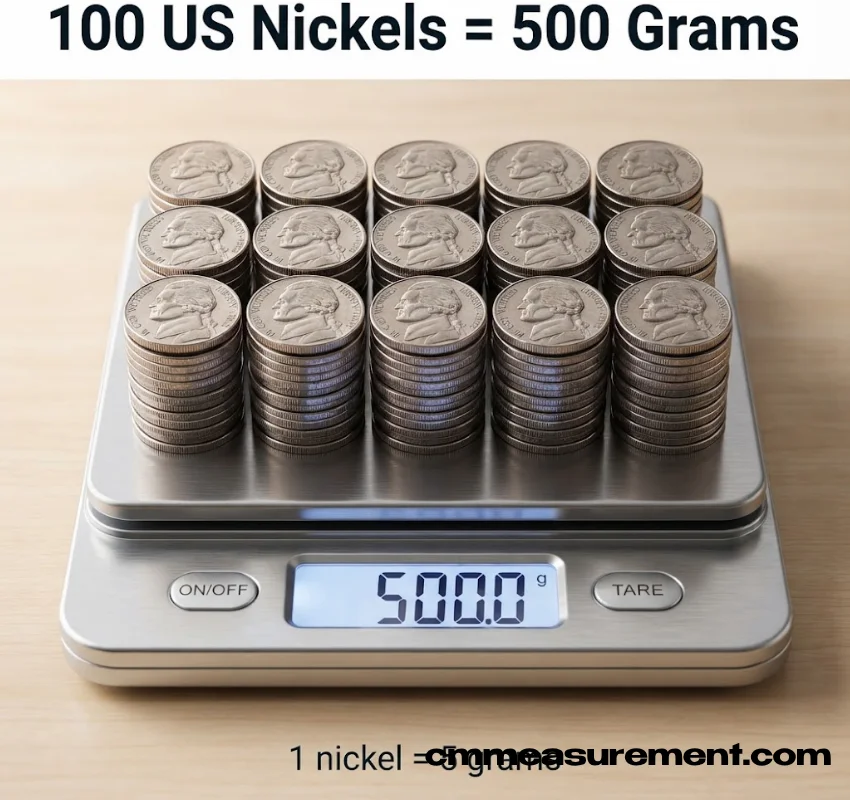
100 US Nickels
Here’s a fact most people don’t know: the US Mint manufactures nickels to a strict specification of 5.000 grams each. Stack 100 of them, and you get a precise, laboratory-grade 500 grams. Pennies won’t work the same way — their post-1982 zinc composition weighs only 2.5 grams each, so you’d need exactly 200 of those instead.
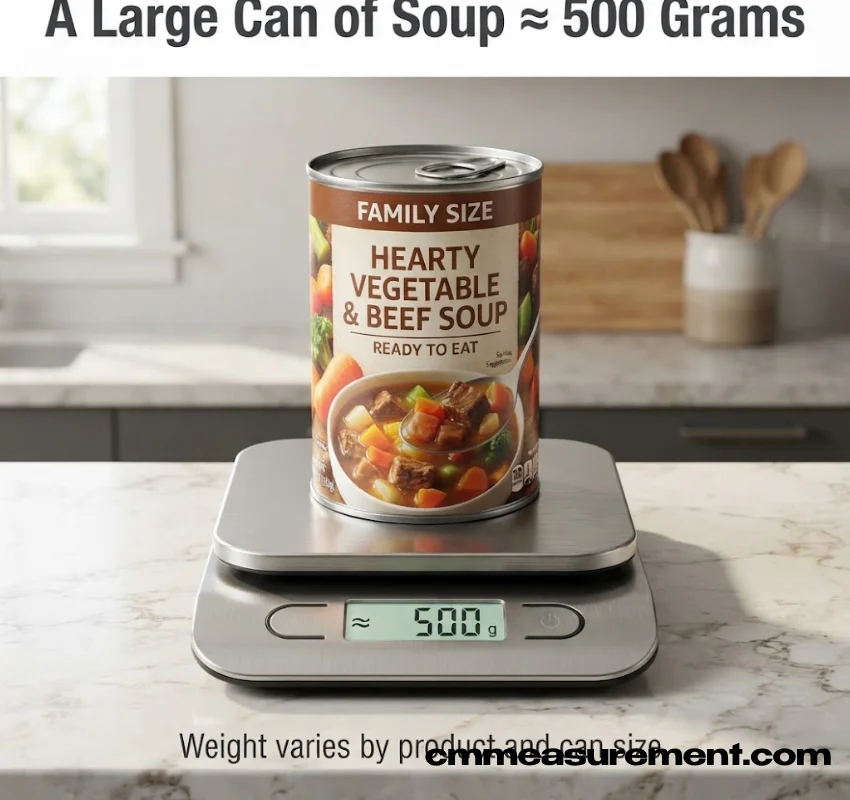
A Large Can of Soup or Vegetables
Family-size soup and vegetable cans — the kind meant for more than one serving — typically weigh in the 500-gram range once you include the metal container itself. Condensed soup cans are much lighter, so this comparison works best with the larger, ready-to-eat varieties.
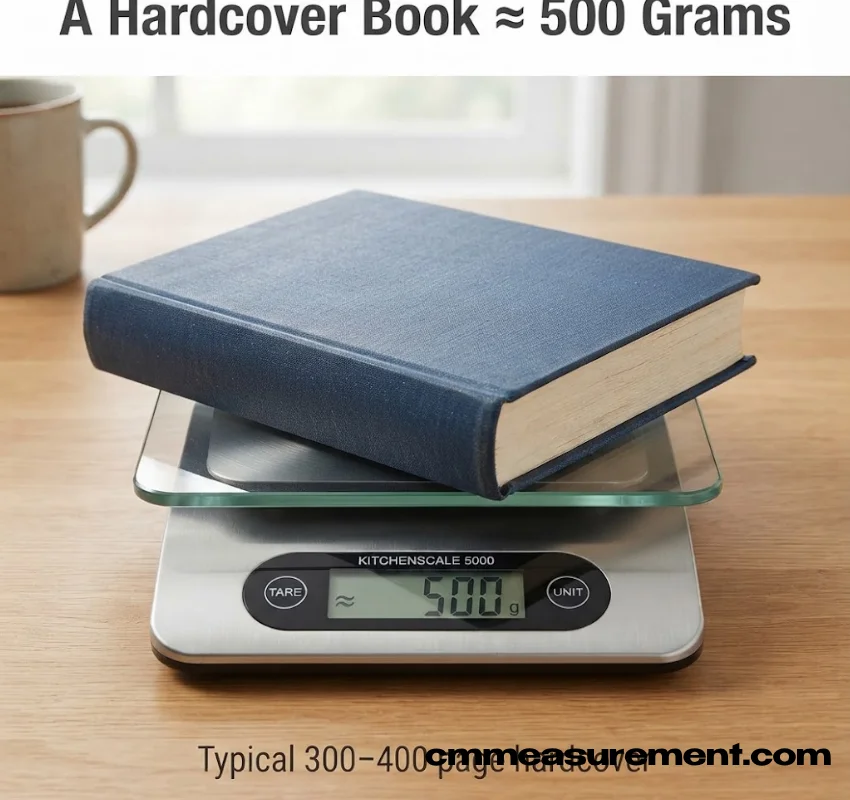
A Hardcover Book
A typical 300-to-400-page hardcover novel weighs close to 500 grams. Paper density, cover board thickness, and binding materials all affect the final number, but most fiction hardcovers land in this range — heavier textbooks with glossy pages will exceed it.
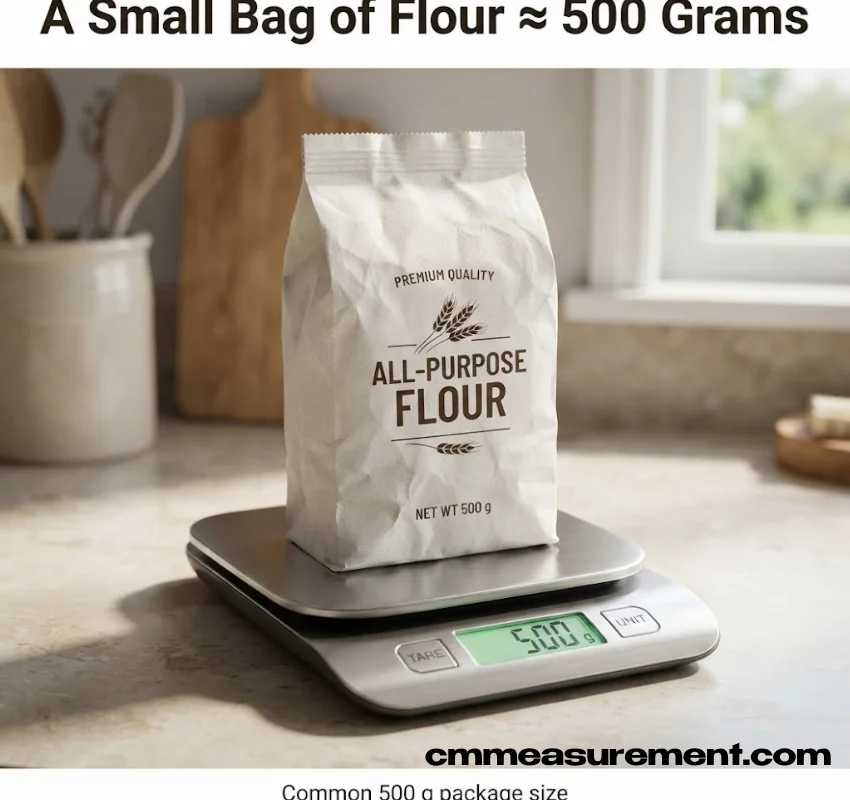
A Bag of Sugar or Flour (Small Pack)
Many baking staples — sugar, flour, powdered sugar — come in 500-gram packages, especially brands that use metric labeling. US shoppers might notice these sitting beside the more familiar 1-pound (454g) bags on the same shelf.
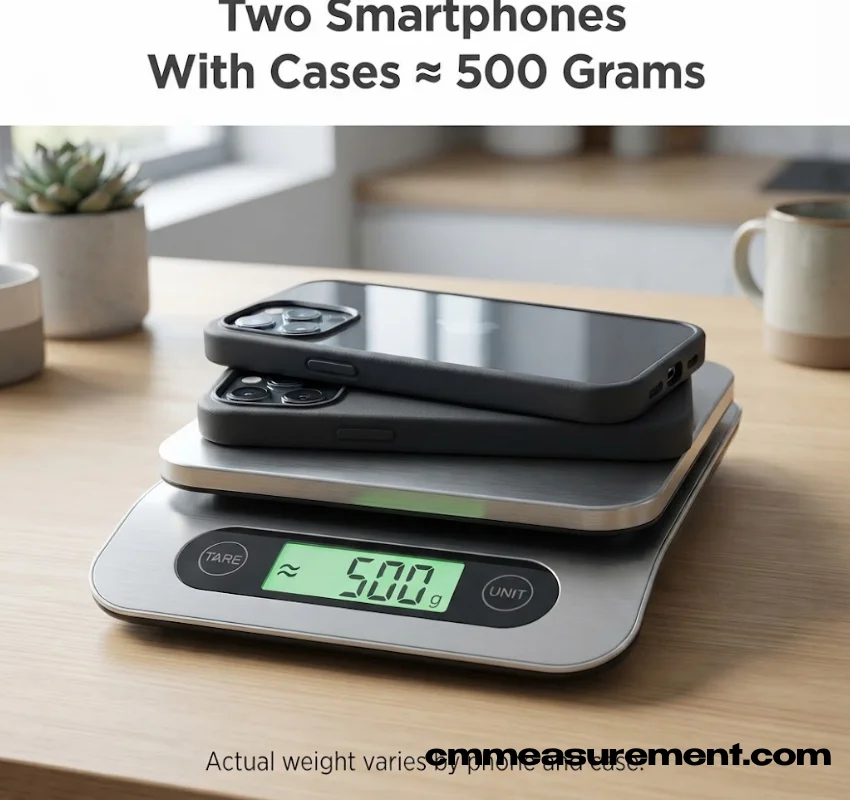
A Smartphone With Its Case
Most modern smartphones weigh between 170 and 240 grams unprotected. Add a rugged case, and two stacked phones with cases can approach the 500-gram mark — a comparison that resonates instantly with anyone who’s ever complained about how heavy their phone feels in a pocket.
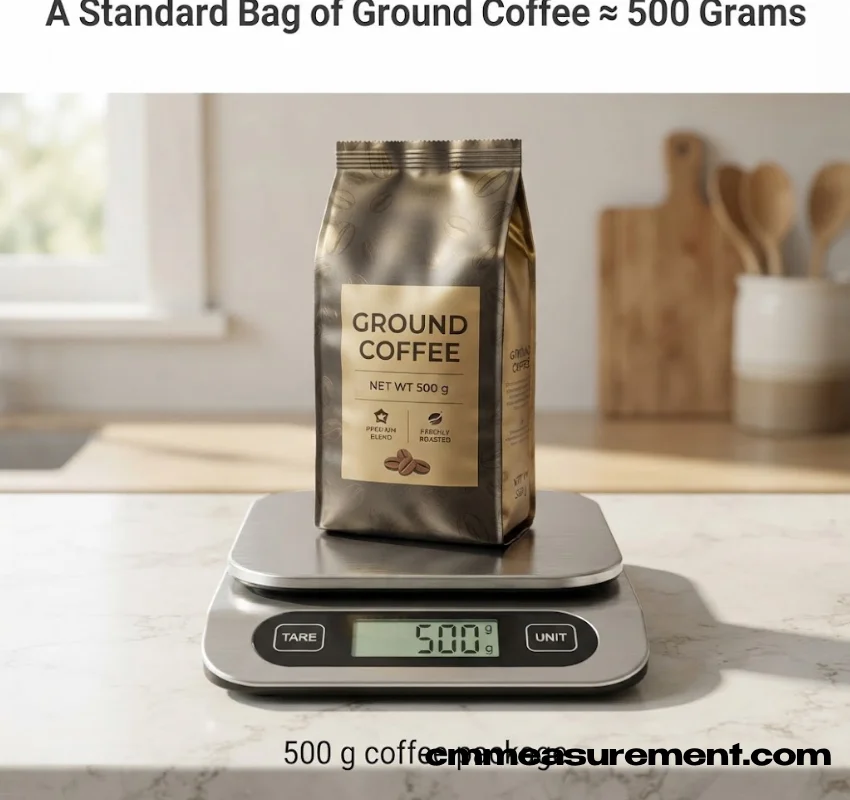
A Standard Bag of Ground Coffee
Many ground coffee bags sold in US stores are labeled at 12 ounces (about 340 grams), but specialty and imported brands often package coffee at the full 500-gram mark instead. If you’ve ever noticed a coffee bag that felt heavier than expected, this is likely why.
How to Measure 500 Grams Without a Scale
Not everyone has a digital kitchen scale nearby, but you can still estimate 500 grams with surprising accuracy using items you already own.
The water method is the most precise option. Fill a measuring cup or bottle to exactly 500 milliliters — since water’s density sits right at 1 gram per milliliter, you’ve got 500 grams the moment it’s full.
The coin method works almost as well. Since US nickels are minted to a fixed 5-gram standard, counting out 100 of them gives you a dependable homemade weight — useful for calibrating a scale you already suspect is inaccurate.
The grocery-stacking method uses labeled packaging. A 500-gram pasta box, a labeled bag of rice, or two 250-gram butter blocks all give you an instant reference without any math at all.
500 Grams Converted: Kilograms, Pounds, Ounces & Cups
Because measurement systems vary across recipes, shipping labels, and product packaging, here’s a side-by-side breakdown:
| Unit | Equivalent |
|---|---|
| Kilograms | 0.5 kg |
| Pounds | 1.1023 lb |
| Ounces | 17.637 oz |
| Cups (water) | ~2.11 cups |
| Cups (flour) | ~4 cups |
| Cups (sugar) | ~2.5 cups |
One correction worth remembering: 500 grams is not the same as 1 pound. This mix-up happens constantly because both numbers feel “close enough.” In reality, 1 pound equals exactly 453.59 grams, according to the National Institute of Standards and Technology, which means 500 grams is about 46 grams heavier than a pound — roughly the weight of a small egg extra.
Why Knowing What 500 Grams Feels Like Is Useful
This isn’t just trivia. Understanding this weight has practical, everyday value.
Cooking and baking often call for precise gram measurements, especially in recipes adapted from European or Asian sources. Misjudging 500 grams of flour versus 500 grams of sugar can throw off texture and rise, since the two ingredients have very different densities.
Shipping and postage costs are calculated by weight brackets. The United States Postal Service prices many parcels using ounce and pound thresholds, so knowing that 500 grams equals about 17.6 ounces helps you estimate costs before you ever reach the counter.
Portion control and nutrition planning also lean on this number. Dietary guidelines from the USDA reference gram-based serving sizes for protein and produce, making 500 grams a useful mental yardstick for meal planning — roughly a pound-plus of raw meat, or four to five medium servings of fruit.
FAQs
What food weighs 500 grams?
A standard loaf of bread, a 500ml bottle of water, and a typical bag of pasta or rice all weigh close to 500 grams. Two medium apples, combined, also land right around this mark.
What’s something that weighs 500 grams?
A filled 500ml water bottle is the most accurate everyday example, since water weighs almost exactly 1 gram per milliliter. 100 US nickels offer an equally precise comparison, since each nickel is minted at exactly 5 grams.
Is 500 grams equal to 1 pound?
No. One pound equals 453.59 grams, so 500 grams is slightly heavier — about 1.1 pounds in total. The two numbers are close, which is why this mix-up happens so often, but they aren’t identical.
What fruit weighs 500 grams?
Two medium apples weigh close to 500 grams combined, since a single medium apple averages around 182 grams. A small bunch of bananas or a medium-sized grapefruit and an orange together can also land near this weight, depending on ripeness and variety.
Conclusion
Half a kilogram doesn’t sound like much until you hold a loaf of bread, a full water bottle, or a stack of nickels in your hand. Once you connect 500 grams to something familiar, the number stops being abstract — and starts becoming a weight you can recognize anywhere, scale or no scale.

Timmy Zeeshan is the founder and lead editor of CM Measurement, where he writes and maintains a growing library of unit conversion tools and practical measurement guides. With a background in engineering and a long-standing interest in everyday math problems, Timmy started CM Measurement after growing frustrated with cluttered, ad-heavy converter websites that made simple conversions harder than they needed to be.