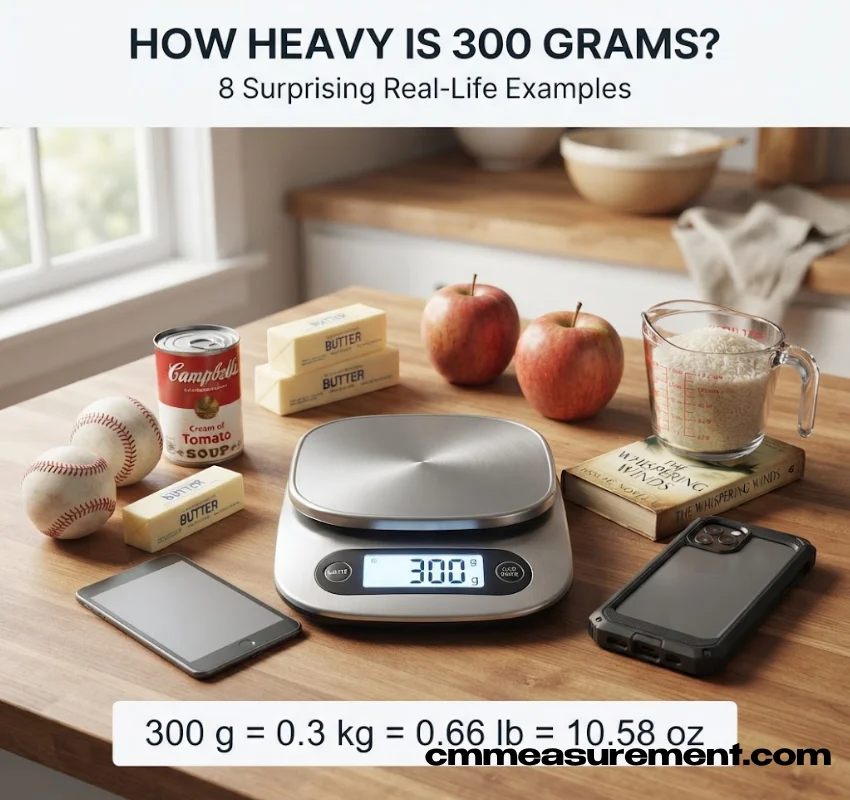
Some weights are easy to picture. Others sit in a strange middle ground. 300 grams is one of those — heavier than a snack, lighter than a full meal’s worth of ingredients.
This guide gives you real objects, quick math, and a few tricks to measure 300 grams without ever touching a scale.
Table of Contents
How Heavy Is 300 Grams, Exactly?
300 grams equals 0.3 kilograms, or roughly 0.66 pounds. In ounces, that’s about 10.58 oz — a bit more than half a pound but noticeably lighter than three-quarters of one.
Quick breakdown:
- 300 grams = 0.3 kg
- 300 grams ≈ 0.66 lbs
- 300 grams ≈ 10.58 oz
The gram is the base building block here — defined by the International Bureau of Weights and Measures as one-thousandth of a kilogram, the SI unit for mass. Three hundred of them together lands right in that “substantial but manageable” zone — heavier than a phone, lighter than a laptop.
8 Everyday Things That Weigh 300 Grams
Numbers alone don’t stick in memory. Objects do. Here are eight familiar items that sit right around the 300-gram mark.
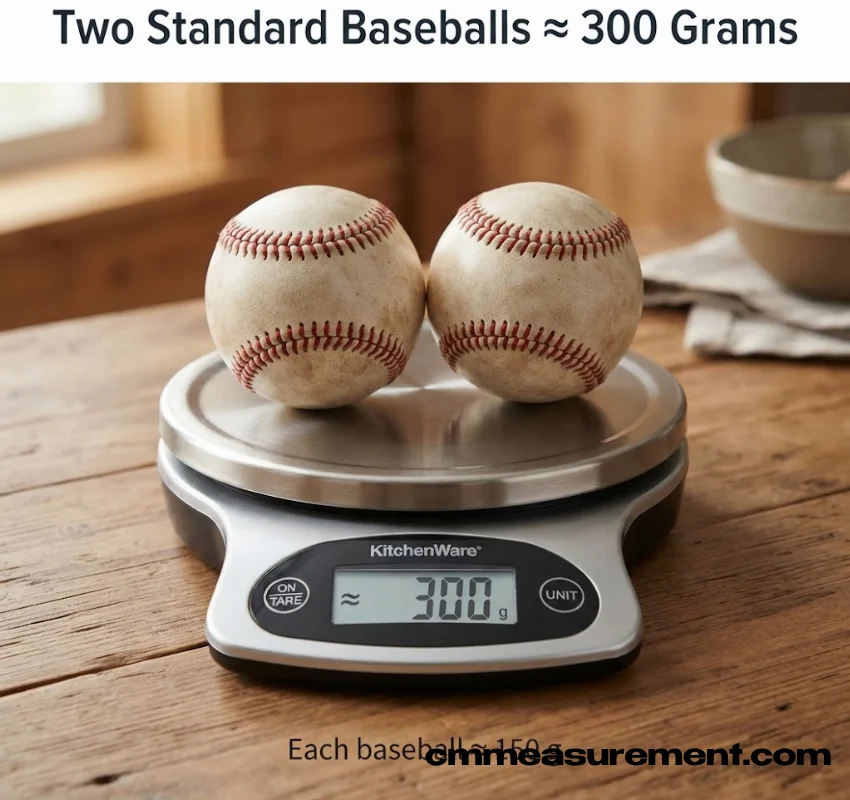
Two Standard Baseballs
A regulation Major League Baseball weighs between 142 and 149 grams, according to official MLB specifications. Two of them together land close to 300 grams, making this one of the most tactile American references for this weight — if you’ve ever tossed a pair of baseballs, you already know the feel.
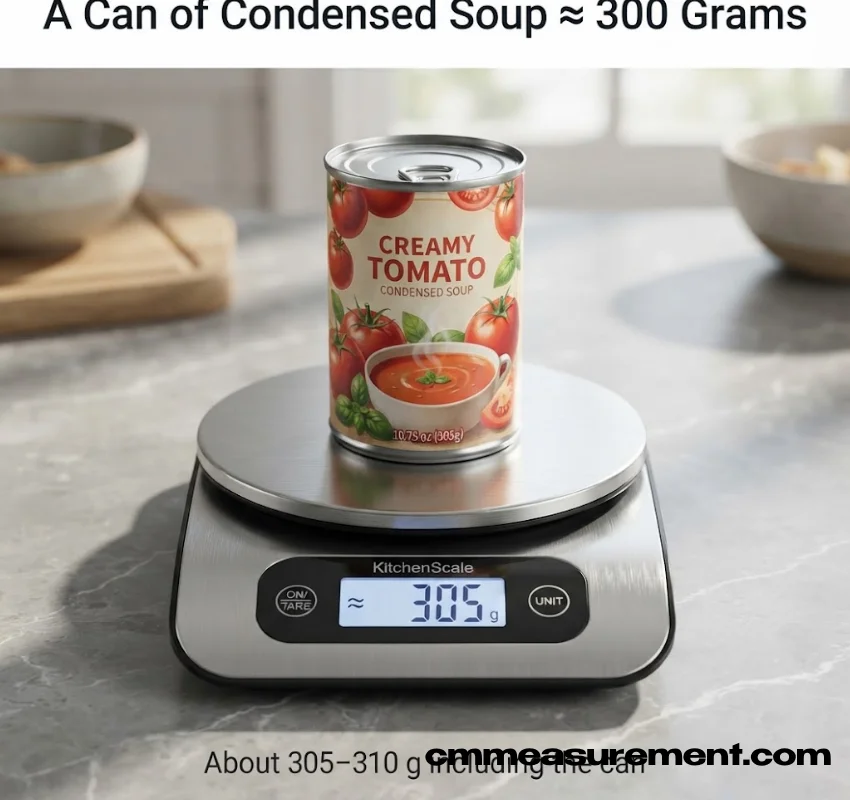
A Can of Condensed Soup
A standard 10.75-ounce can of condensed soup, container included, weighs approximately 305 to 310 grams. This is a pantry staple in most US kitchens, which makes it a genuinely useful kitchen-based reference — no need to buy anything new to test this comparison.
Must Visit: How Heavy Is 500 Grams? 10 Easy Real-Life Examples to Visualize 500g
Three Sticks of Butter
In the US, one stick of butter weighs 113 grams, equal to a quarter pound. Three sticks together total around 339 grams — slightly over, but close enough for quick estimation. Bakers often use this comparison when a recipe calls for gram-based measurements instead of the usual cups or sticks.

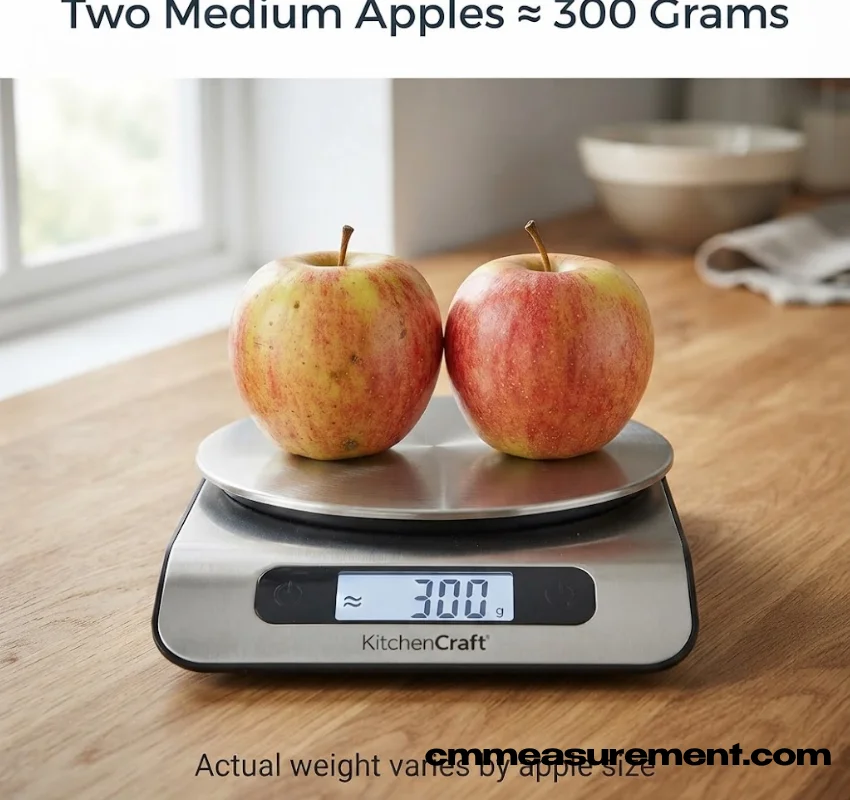
Two Medium Apples
According to USDA FoodData Central, a medium apple typically weighs 150 to 180 grams. Two of them combined land between 300 and 360 grams, depending on variety. Gala and Fuji apples tend to sit on the lighter end, while Honeycrisp runs heavier.
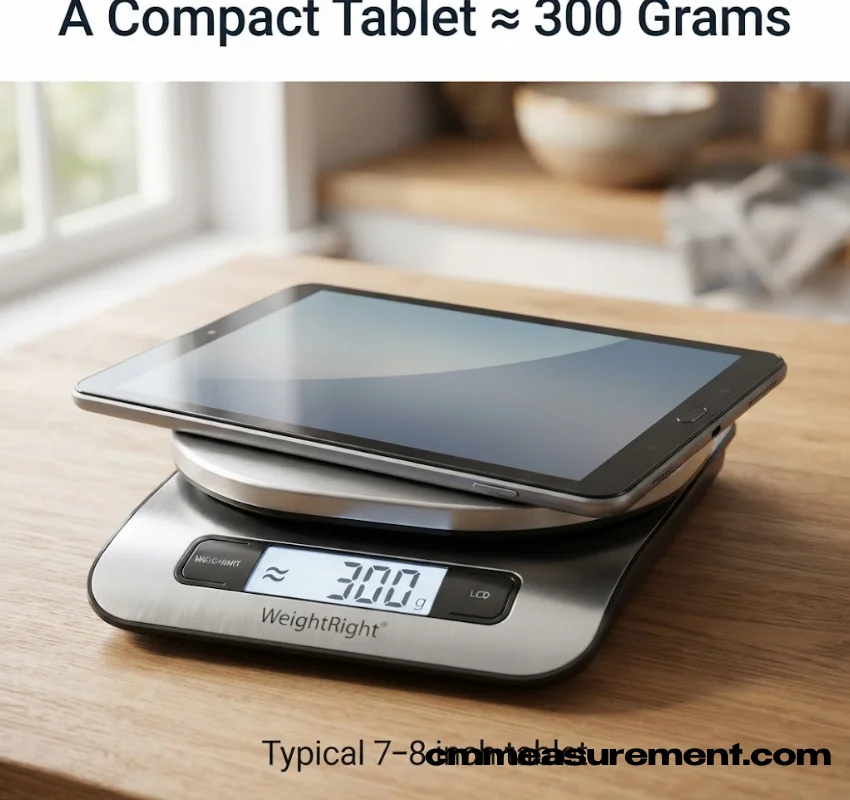
A Compact Tablet Device
Smaller tablets — the 7-to-8-inch category — commonly fall in the 280-to-320-gram range. This makes tech-based comparisons surprisingly accurate: if you own a compact tablet, its listed weight likely sits close to 300 grams.
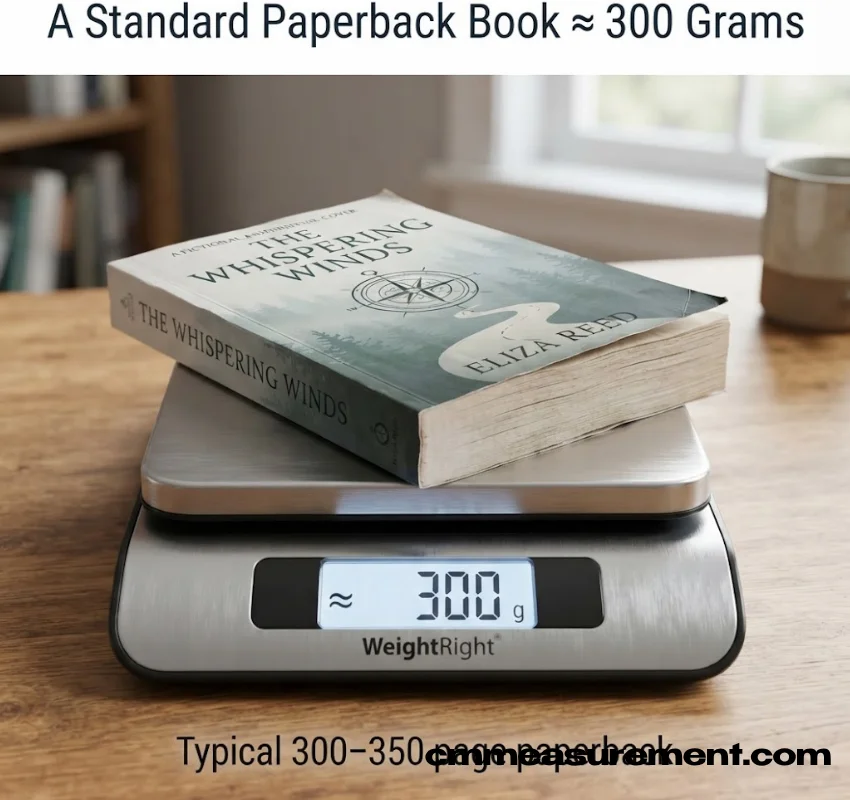
A Standard Paperback Book
Most 300-page paperback novels weigh between 280 and 350 grams, depending on paper stock and binding. This range comes from the combined weight of paper, glue, and cover material — heavier for thicker paper, lighter for mass-market print runs.
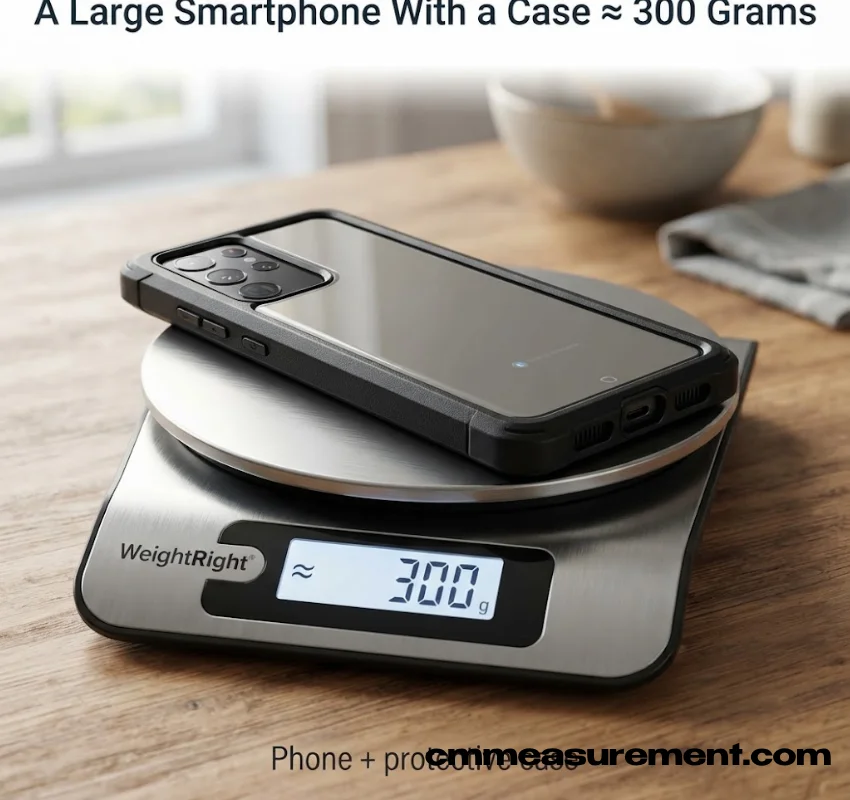
A Large Smartphone With a Case
Flagship phones typically weigh around 200 to 230 grams unprotected. Add a protective case weighing 50 to 80 grams, and the total climbs right up to the 300-gram threshold — a comparison anyone who’s felt their phone get heavier after a case swap will recognize instantly.
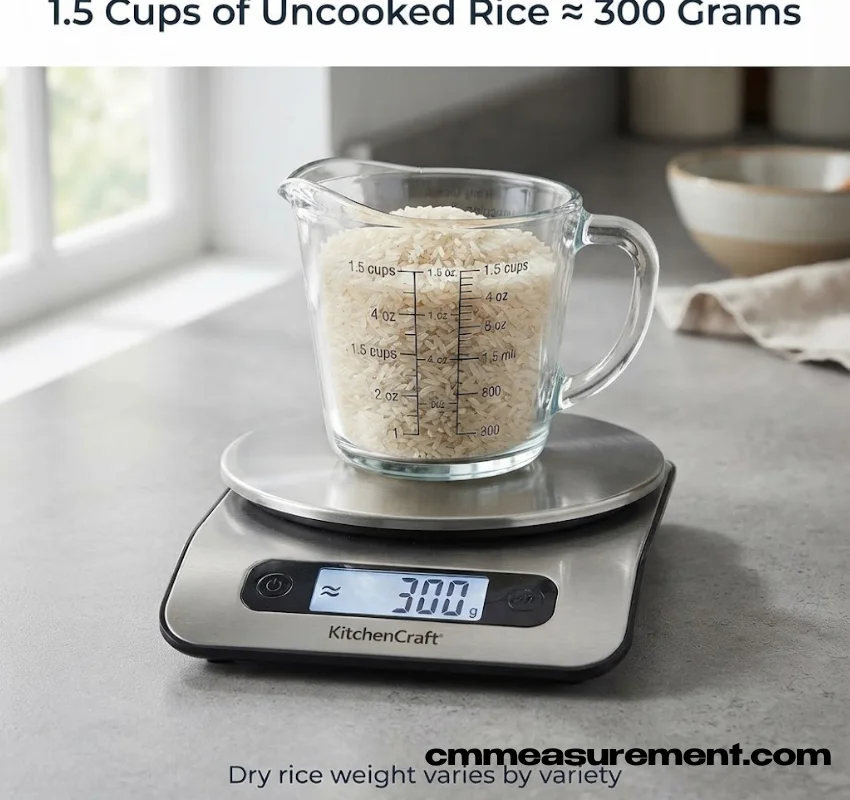
A Cup of Uncooked Rice
One cup of dry, uncooked rice weighs close to 185 to 200 grams, so about 1.5 cups gets you to 300 grams. This comparison is especially useful in the kitchen, since rice is measured by both volume and weight depending on the recipe.
How to Measure 300 Grams Without a Scale
A kitchen scale isn’t always within reach, but a few household tricks get you remarkably close.
The water method relies on density. Water weighs almost exactly 1 gram per milliliter, so filling a measuring cup to 300 milliliters gives you 300 grams with minimal error.
The coin method works because US currency is minted to strict specifications. A US nickel weighs exactly 5 grams, so 60 nickels stacked together equal precisely 300 grams — a dependable trick for calibrating a scale you don’t fully trust.
The packaging method uses labeled food items. A can of soup, a small bag of pasta, or three butter sticks all provide instant references without requiring any calculation at all.
300 Grams Converted: Kilograms, Pounds & Ounces
Different contexts call for different units — recipes, shipping labels, and nutrition apps rarely agree on one system. Here’s the full breakdown:
| Unit | Equivalent |
|---|---|
| Kilograms | 0.3 kg |
| Pounds | 0.6614 lb |
| Ounces | 10.5822 oz |
| Cups (rice, dry) | ~1.5 cups |
| Cups (sugar) | ~1.5 cups |
One important distinction worth clarifying: 300 grams and 300 kilograms are not remotely close. A kilogram is 1,000 times heavier than a gram, so while 300 grams sits comfortably in your hand, 300 kilograms (about 661 pounds) is closer to the weight of a small horse or an adult male lion. Mixing up the two units is a common error, especially when reading international product labels.
Why 300 Grams Matters in Daily Life
This weight shows up more often than people realize, and knowing it well has real, practical value.
Cooking and baking frequently call for gram-based precision, especially in recipes adapted from European sources. A 300-gram chicken breast or a 300-gram flour measurement behaves very differently in a recipe than an eyeballed cup, since gram measurements remove the guesswork tied to ingredient density.
Shipping and postage costs depend heavily on weight brackets. According to USPS pricing guidelines, First-Class Mail covers packages up to 15.999 ounces (about 453 grams), which means a 300-gram parcel falls comfortably within the lower-cost shipping tier — useful knowledge before printing a label.
Fitness and nutrition tracking also lean on this figure. A 300-gram chicken breast provides roughly 60 to 70 grams of protein, according to standard USDA nutritional estimates — a substantial single-meal portion for anyone tracking macros or building a high-protein diet.
FAQs
How much does 300 grams look like?
Visually, 300 grams looks like two baseballs, a can of soup, or three sticks of butter. It’s roughly the size of a compact tablet or a thick paperback novel — noticeable in your hand, but far from bulky.
What household object weighs 200 grams?
A large apple (180–220 grams), an empty ceramic coffee mug, or a small jar of peanut butter all weigh close to 200 grams. This is about one-third lighter than 300 grams — a difference you’d notice holding both side by side.
What weighs 350 grams?
A large can of beans, a medium grapefruit, or a thick 400-page paperback typically weighs close to 350 grams. This sits just above the 300-gram mark, making it a useful upper-reference point for comparison.
What things weigh 300 kg?
300 kilograms is dramatically heavier than 300 grams — about 1,000 times more. Animals near this weight include adult male lions, large gorillas, small horses, and female polar bears, according to wildlife weight data from conservation research groups.
Conclusion
Three hundred grams sits in that useful in-between zone — light enough to hold with one hand, heavy enough to notice. Once you connect it to a couple of baseballs or a can of soup, the number becomes something you can recognize anywhere, no scale required.

Timmy Zeeshan is the founder and lead editor of CM Measurement, where he writes and maintains a growing library of unit conversion tools and practical measurement guides. With a background in engineering and a long-standing interest in everyday math problems, Timmy started CM Measurement after growing frustrated with cluttered, ad-heavy converter websites that made simple conversions harder than they needed to be.