Ten kilograms sounds like just a number until you try to carry it. 10 kg equals 22.05 lbs — about as heavy as a car tire or a full bag of dog food. Once you connect it to something real, it stops being abstract.
This guide breaks down how heavy 10 kg actually is, using everyday objects, animals, and gym gear that most people in the US already recognize. No scale needed — just a clear mental picture.
Table of Contents
How Heavy Is 10 kg in Pounds and Other Units
Before the comparisons, here’s the quick math. 10 kilograms converts to 22.05 pounds, based on the standard rate of 1 kg = 2.20462 lbs, confirmed by the National Institute of Standards and Technology.
| Unit | Equivalent |
|---|---|
| Pounds | 22.05 lbs |
| Ounces | 352.74 oz |
| Grams | 10,000 g |
| Milligrams | 10,000,000 mg |
| Stone | 1.57 stone |
A simple gut-check: if you’ve ever lifted a car tire or a large watermelon, you already know what 10 kg feels like in your hands.
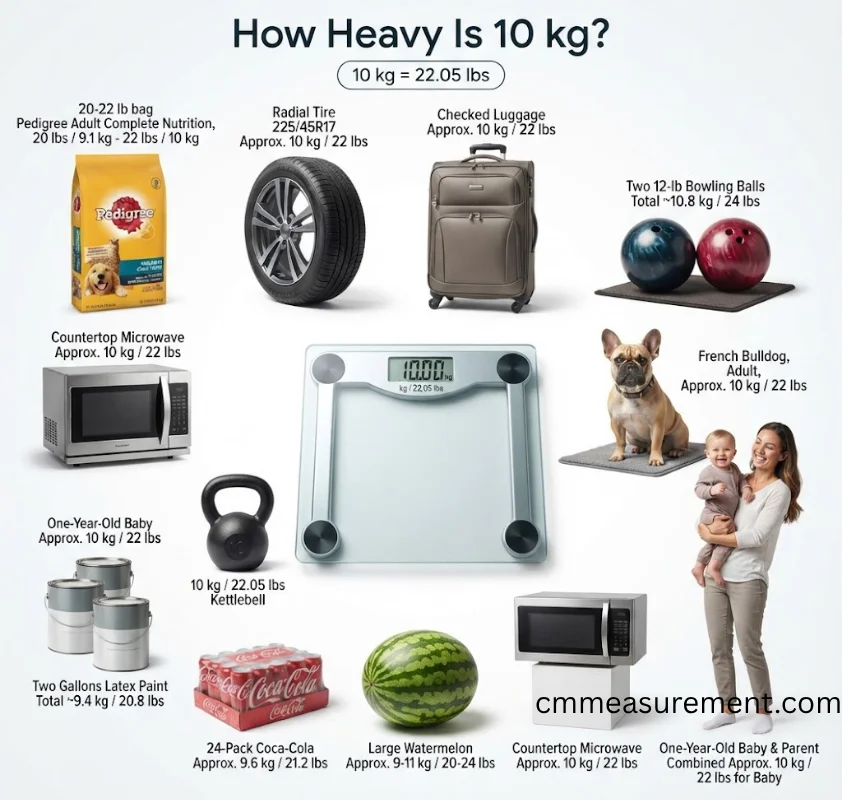
11 Real-Life Things That Weigh 10 Kilograms
Here are eleven common items that land right at, or very close to, the 10 kg mark.
A Bag of Dog Food
Most pet stores in the US sell dog food in 20 to 22 lb bags — almost exactly 10 kg. Pet owners lift this bag regularly without even thinking about the weight behind it.

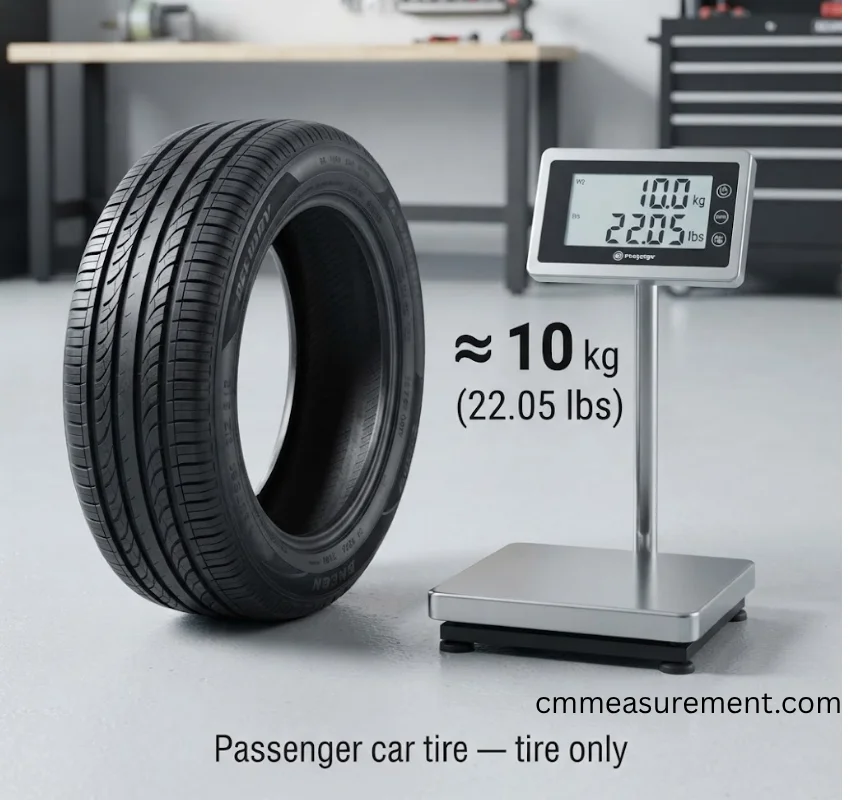
A Passenger Car Tire
A standard car tire, without the rim, weighs close to 10 kg. Rim included, that number climbs higher, which is why changing a tire takes real effort.
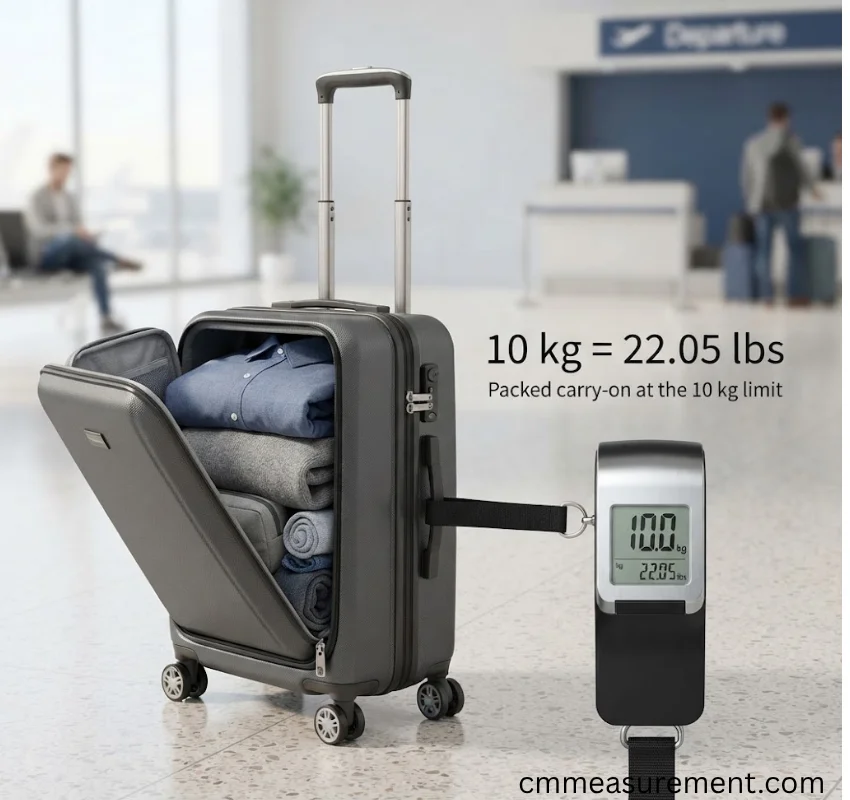
A 22 lb Airline Carry-On Suitcase
Many international carriers, including several budget airlines, cap carry-on weight at 10 kg. A week’s worth of clothes, shoes, and toiletries fills that limit fast.
Must Visit: How Heavy Is 50 kg? 15 Powerful Real-Life Examples to Easily Visualize This Weight
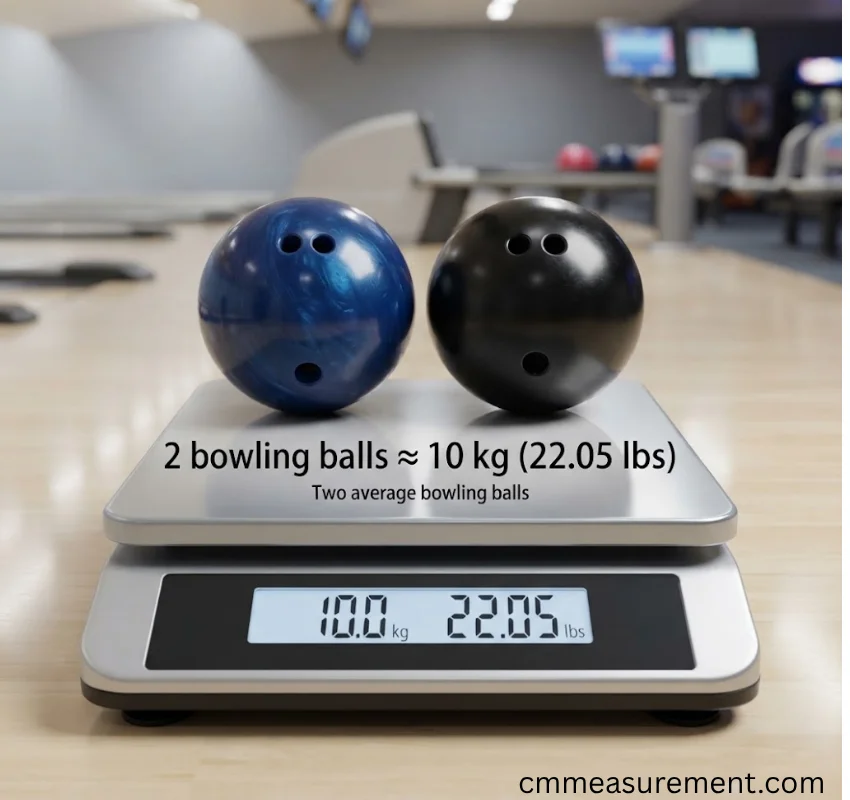
Two Standard Bowling Balls
A regulation bowling ball weighs between 10 and 16 lbs. Two average balls together land almost exactly at 10 kg, according to weight specs from the United States Bowling Congress.
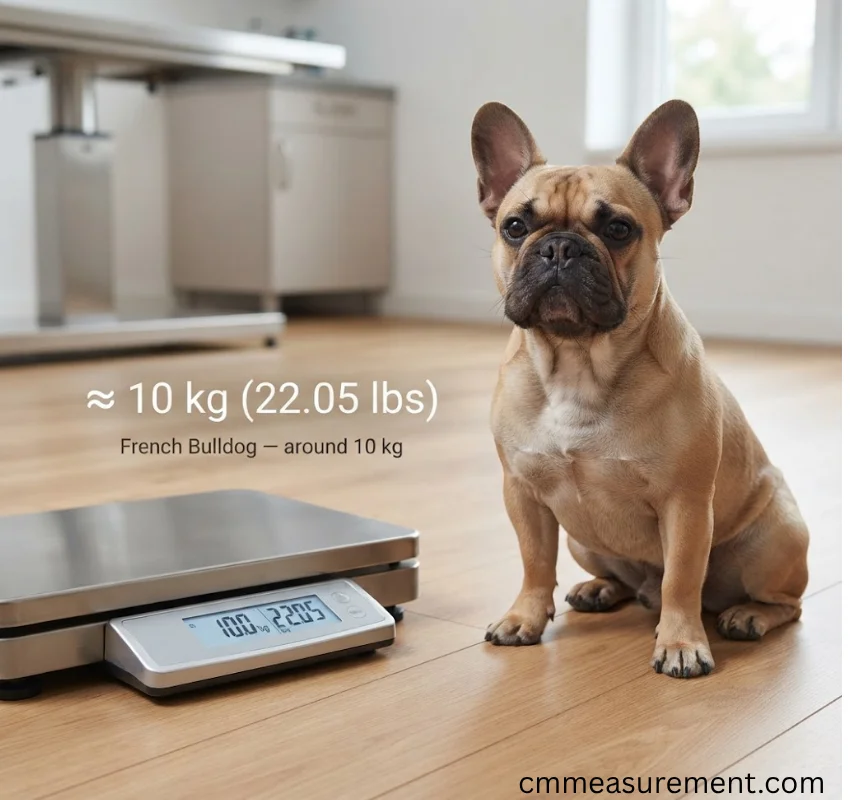
A French Bulldog
The French Bulldog, one of the most popular dog breeds in the US per the American Kennel Club, weighs between 16 and 28 lbs as an adult, with many healthy dogs sitting right around 10 kg.
A 10 kg Dumbbell or Kettlebell
Gyms across the country stock 22 lb dumbbells as a mid-range strength training weight. It’s heavy enough to build muscle, light enough for controlled reps.
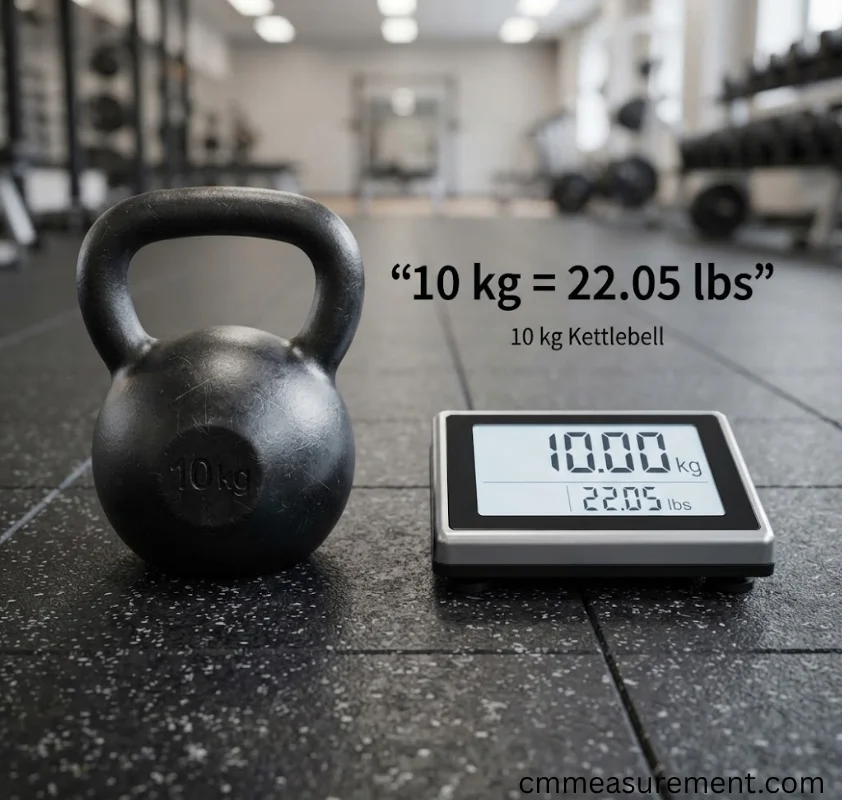
A 24-Pack Case of Soda
A full 24-pack of soda cans weighs close to 10 kg once you include the packaging. Anyone who’s carried one from the car to the kitchen has felt that weight firsthand.
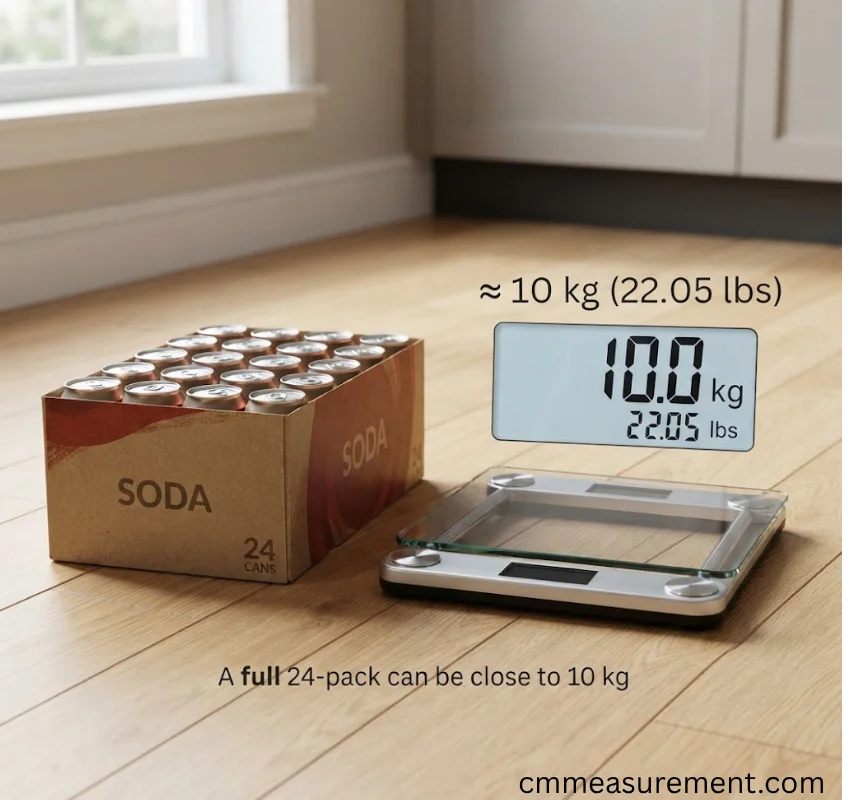
A Large Watermelon
Peak-season watermelons at farmers markets often weigh 9 to 12 kg. The high water content, about 92%, makes them surprisingly heavy for their size.
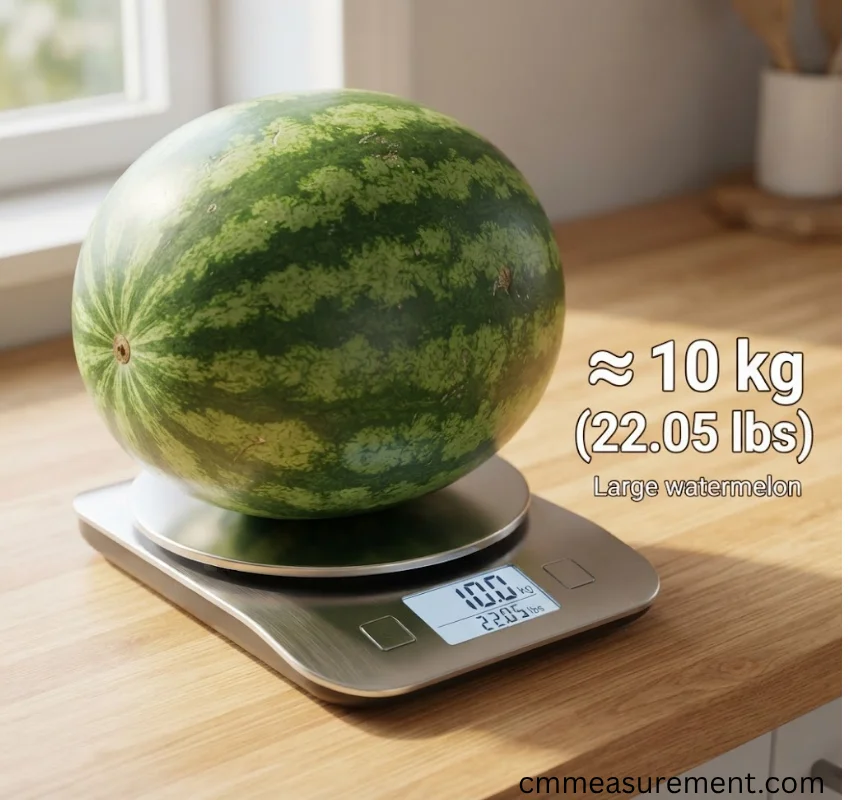
Two Gallons of Paint
A single gallon of latex paint weighs roughly 5 kg. Two gallons, a common amount for painting one room, adds up to 10 kg exactly.
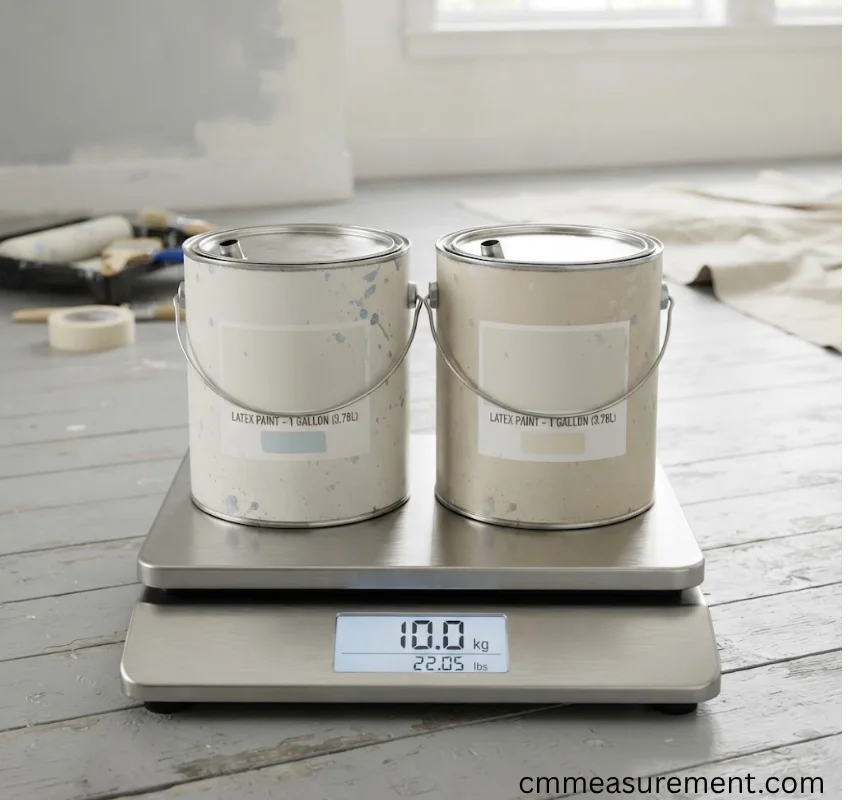
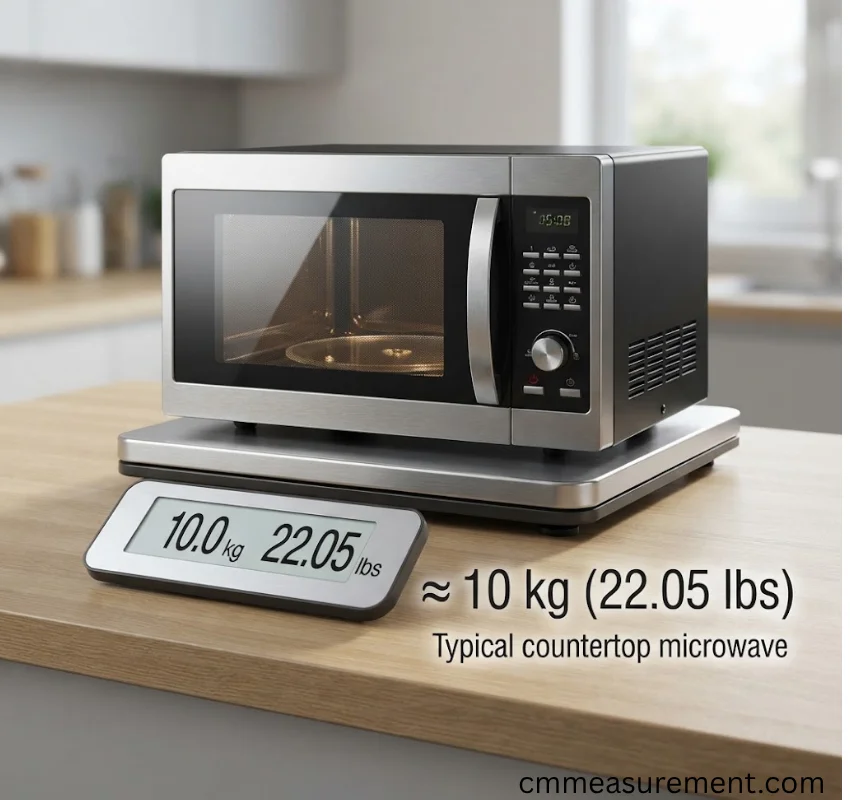
A Countertop Microwave
The average kitchen microwave weighs between 9 and 12 kg. The glass turntable and metal casing add more heft than most people expect.
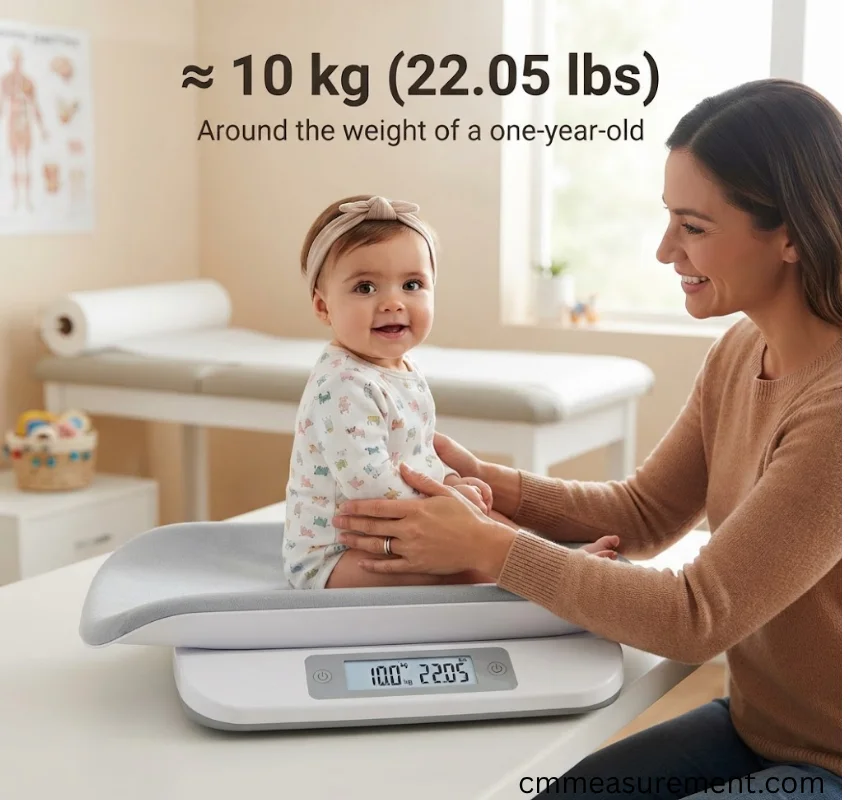
A One-Year-Old Baby
According to CDC growth charts, the average one-year-old weighs between 9 and 11 kg, with boys averaging slightly higher than girls. Parents carry this weight constantly without a second thought.
How Much Does 10 kg Feel Like in Real Life
The number stays the same, but the feeling changes with context. This is where most weight comparisons fall short.
Holding 10 kg close to your body, like a weighted vest or a barbell, feels manageable because the load stays centered and balanced.
Carrying 10 kg away from your body, like a backpack worn for hours, feels significantly heavier. Poor weight distribution forces your back and shoulders to work harder over time.
Lifting something shifting or uneven, like a squirming dog or a sack of potatoes, feels heavier than a fixed weight of the same mass. Your muscles constantly adjust to keep balance.
This is why 10 kg dumbbells feel lighter mid-workout than a 10 kg suitcase does after a long walk through an airport.
What Does 10 kg Look Like Visually
Picturing 10 kg without a scale gets easier once you break it into familiar shapes and quantities.
Stack four standard bricks together, and you’ve got 10 kg. Line up two five-liter water jugs, since one liter of water weighs almost exactly one kilogram, and that’s another accurate visual.
How many clothes weigh 10 kg? A full laundry load, roughly 20 to 25 average garments including jeans, sweaters, and jackets, typically hits this mark. That’s also why many checked luggage weight limits sit right around 10 to 15 kg — a fully packed suitcase of clothing naturally lands there.
FAQs
Is 10kg weight heavy?
It depends on context. For an adult lifting with both hands, 10 kg is moderate, not extreme. For a child or for one-handed carrying, it can feel genuinely heavy.
How much does 10 kg feel like?
It feels similar to carrying a large watermelon or a bag of dog food. Centered and close to your body, it feels lighter.
How many clothes weigh 10 kg?
Roughly 20 to 25 average pieces of clothing — think jeans, sweaters, and jackets combined — add up to about 10 kg, which is why this weight matches many airline luggage limits.
What is the weight of a 10 kg object?
A 10 kg object weighs 22.05 pounds, or 352.74 ounces. Common real-world examples include a car tire, a large watermelon, or a 24-pack of soda cans.
How much is 10kg visually?
Picture four bricks stacked together, two five-liter water jugs, or two bowling balls side by side. Each of these gives an accurate visual sense of 10 kg without needing a scale.
What weighs 10 kilograms?
Common examples include a car tire, a French Bulldog, a 10 kg dumbbell, a large watermelon, and a one-year-old baby. All of these sit at or near the 10 kg mark.
Conclusion
Ten kilograms shows up more often than most people realize — in gym bags, grocery runs, and airport luggage lines. Once you connect it to a car tire, a bulldog, or a stack of bricks, 10 kg stops being just a number on a scale and becomes something you can actually picture and feel.

Timmy Zeeshan is the founder and lead editor of CM Measurement, where he writes and maintains a growing library of unit conversion tools and practical measurement guides. With a background in engineering and a long-standing interest in everyday math problems, Timmy started CM Measurement after growing frustrated with cluttered, ad-heavy converter websites that made simple conversions harder than they needed to be.