Most Americans think in feet and gallons, not meters and liters. So when a shipping quote or a product spec suddenly mentions cubic meters, it can feel like a foreign language.
This guide fixes that fast. You’ll see exactly how big is 1 cubic meter is, using everyday objects plus the exact conversions you need for feet, inches, and gallons.
Table of Contents
What Is 1 Cubic Meter? (Definition & Quick Answer)
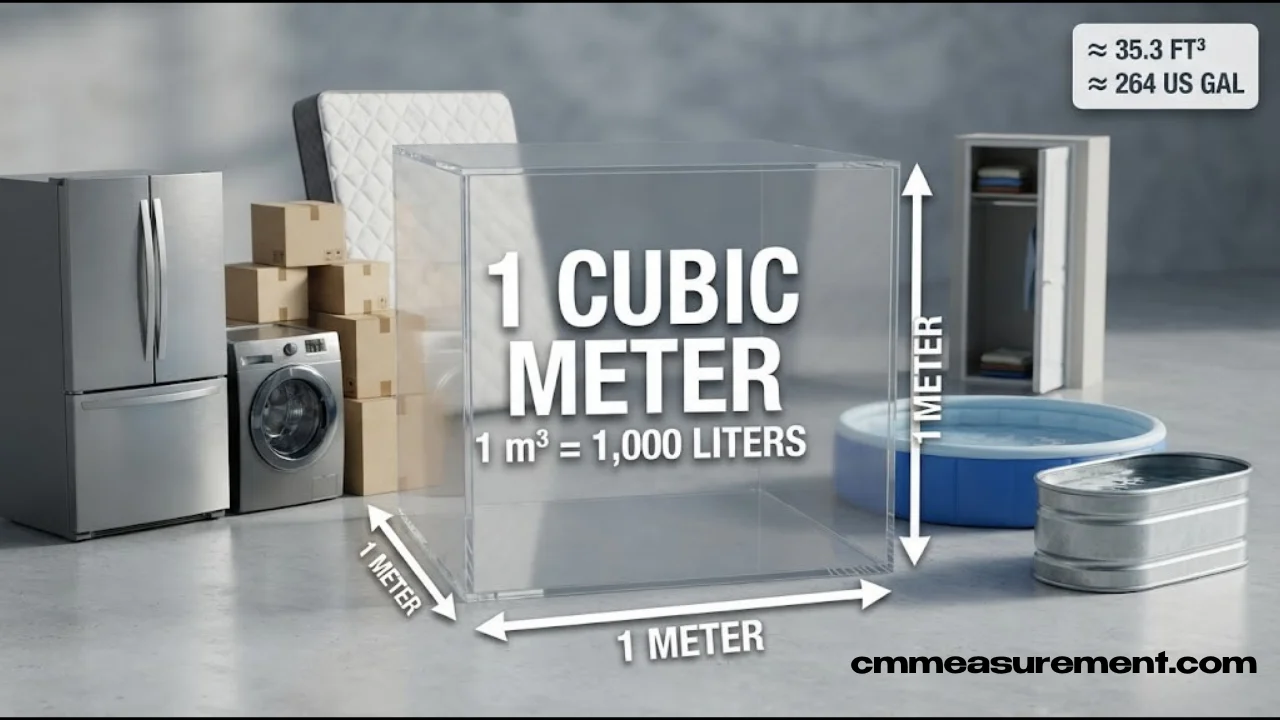
1 cubic meter is the volume of a cube measuring 1 meter — about 3.28 feet — on every side. Multiply length, width, and height together, and when all three sides equal 1 meter, you get exactly 1 cubic meter (m³).
The formula is simple:
Volume = Length × Width × Height
For a U.S. audience, the number that actually matters is the conversion. According to the International Bureau of Weights and Measures, 1 cubic meter equals exactly 1,000 liters, and works out to roughly:
- 35.3 cubic feet
- 264.2 US gallons
- 1.31 cubic yards
So how big is 1 cubic meter of space? It’s bigger than most people picture — close to the size of a large kitchen appliance, not a small box.
7 Real-Life Examples of 1 Cubic Meter
Comparing 1 cubic meter to objects you already know makes the size click instantly.
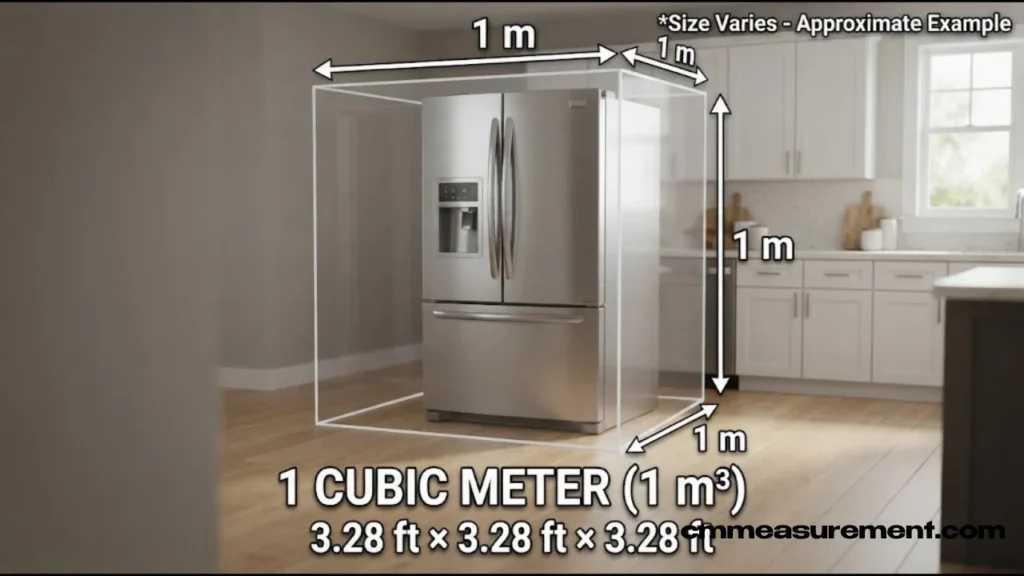
A Large Refrigerator
A full-size American refrigerator, including its outer casing, takes up close to 1 cubic meter of floor and air space. That’s why fridges are one of the most common reference points movers use when estimating truck space.
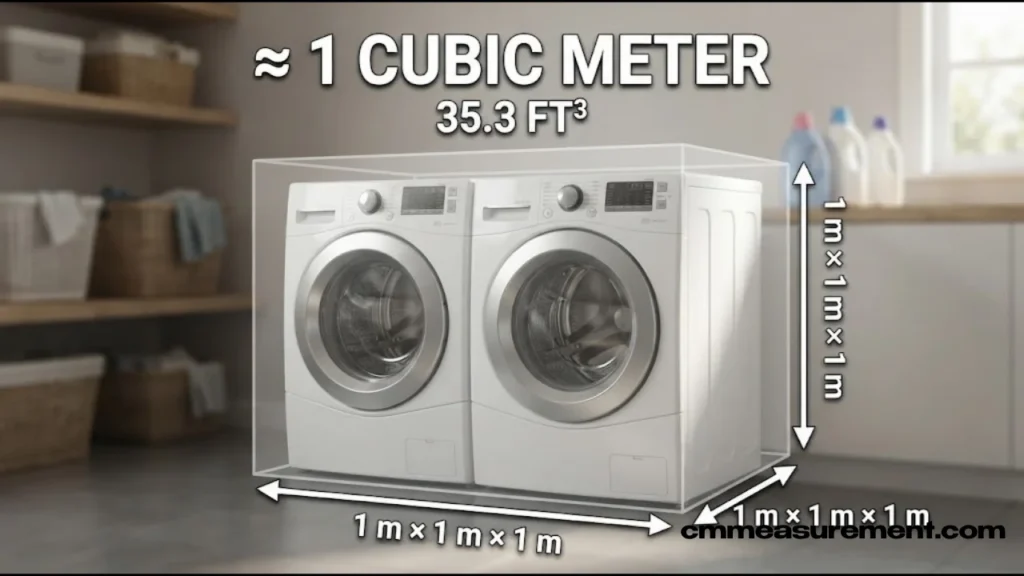
A Standard Washing Machine
A front-load or top-load washing machine holds roughly half a cubic meter of physical volume. Stack two side by side, and you’ve matched the size of 1 cubic meter almost exactly.
Must Visit: How Big Is 1 Cubic Foot? 9 Amazing Real-Life Examples to Visualize It
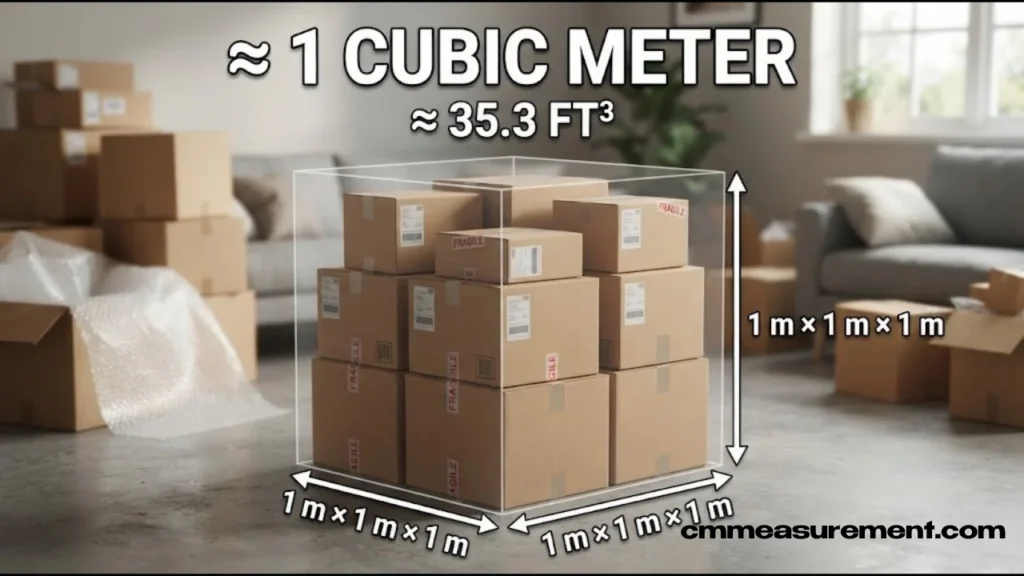
Eight Medium Moving Boxes
Stack about eight medium-to-large cardboard moving boxes together, and their combined volume lands close to 1 cubic meter. It’s a practical, hands-on way to feel this measurement without any math.
A Queen Mattress Standing on Its Side
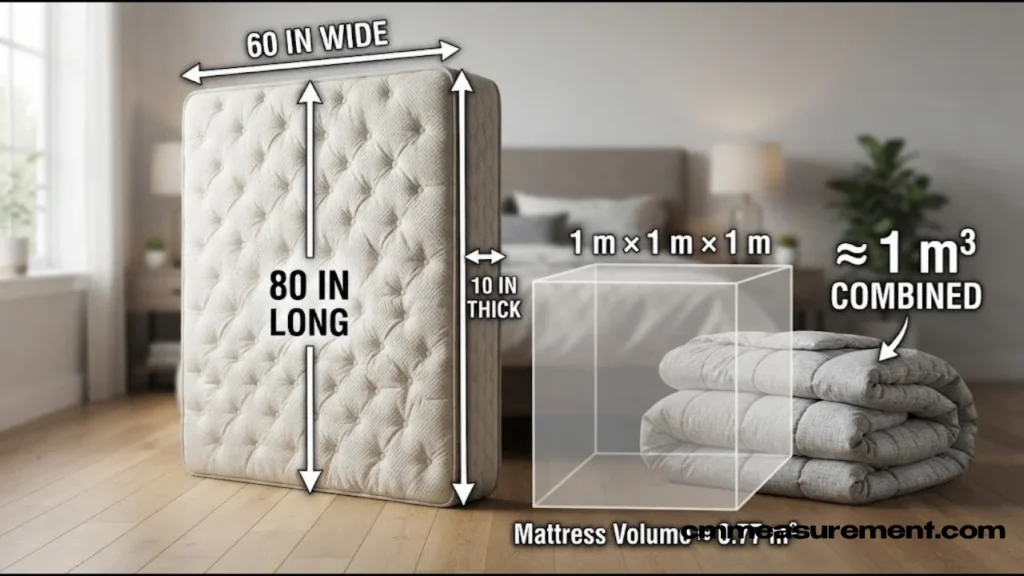
Stand a queen-size mattress upright on its long edge, and the space it occupies — length, width, and thickness combined — comes close to three-quarters of a cubic meter. Add a folded comforter next to it, and you’re right at 1 cubic meter.
A Kiddie Pool Filled to Knee Height
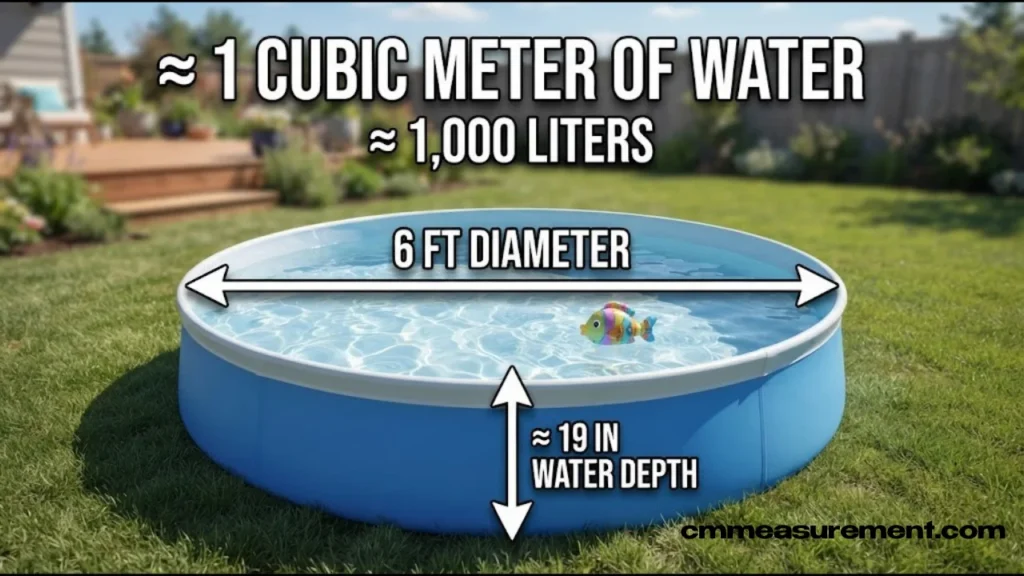
Picture a round backyard kiddie pool, about 6 feet across, filled with water to roughly knee height. That water alone holds close to 1 cubic meter — a surprisingly large amount when you picture it as a solid block instead of a puddle.
A Large Galvanized Stock Tank
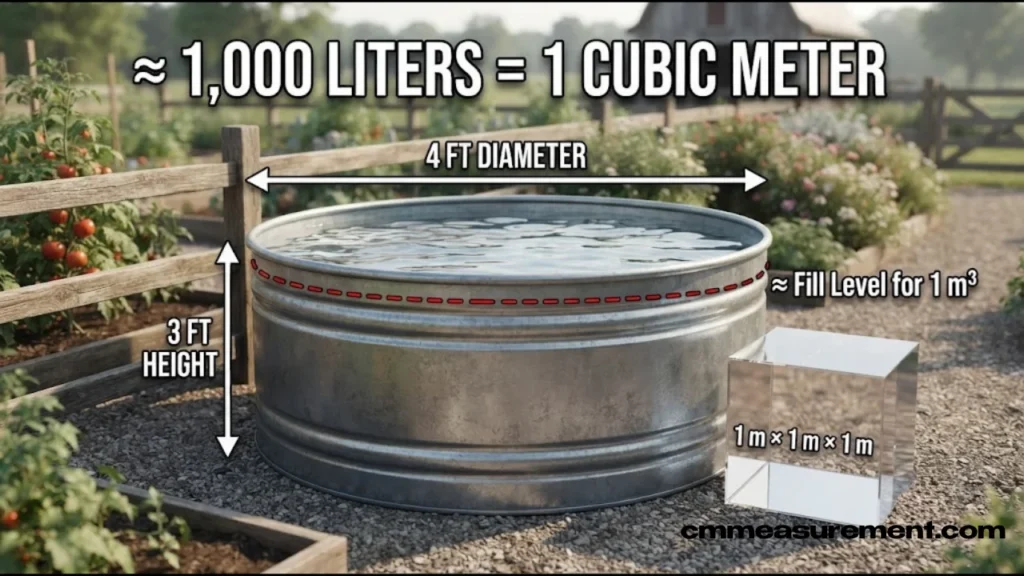
Farm and garden stores sell large metal stock tanks, often about 4 feet across and 3 feet deep. Filled to the brim, one of these holds close to 1,000 liters — the liquid equivalent of exactly 1 cubic meter.
A Small Home Office Closet
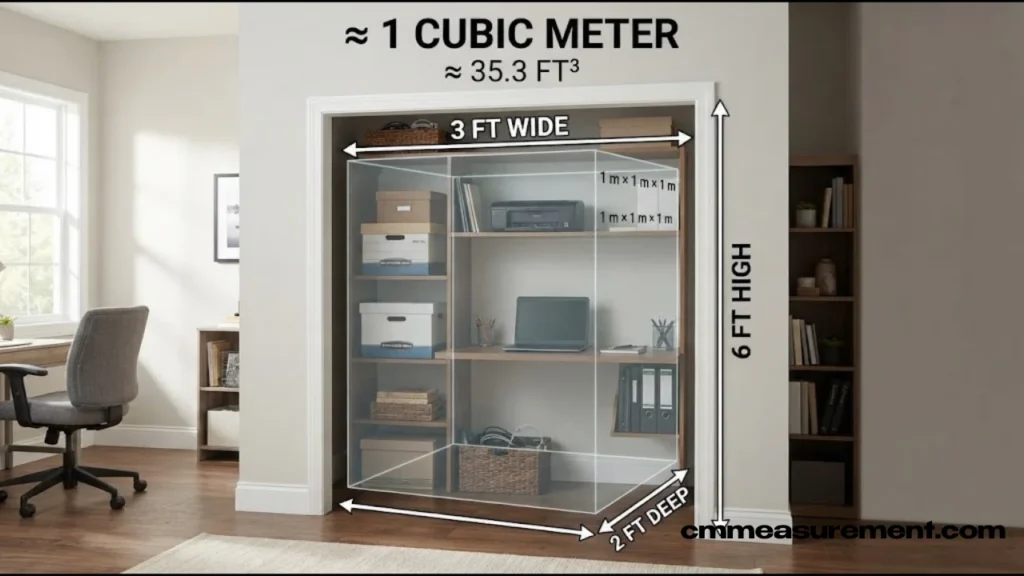
A compact reach-in closet, roughly 3 feet wide, 2 feet deep, and 6 feet tall, holds almost exactly 1 cubic meter of usable space. Open the door, and you’re staring straight at this measurement.
How Big Is 1 Cubic Meter of Space in a Room?
How big is a cubic meter visually inside a real room? Picture the corner of a standard 10×10 foot bedroom. A single cubic meter fills roughly the space a large armchair would take up, plus a bit of open air around it.
This matters because volume isn’t the same as floor space. A room might have plenty of square footage, but a low ceiling or awkward layout can still limit how many cubic meters actually fit inside it. Movers and shipping companies rely on cubic meters — not square feet — for exactly this reason.
How Big Is a 1 Cubic Meter Box?
How big is a 1 cubic meter box, in numbers Americans actually use? A box measuring 1 meter on each side equals about 39.4 inches × 39.4 inches × 39.4 inches — roughly the size of a large appliance crate or a small refrigerator box.
| Measurement | Value |
|---|---|
| Meters | 1m × 1m × 1m |
| Feet | 3.28 ft × 3.28 ft × 3.28 ft |
| Inches | 39.4 in × 39.4 in × 39.4 in |
This exact box size shows up constantly in international shipping, where ocean freight companies price cargo using CBM (cubic meter) rates rather than weight alone.
Converting Cubic Meters: The Numbers You Need
Since the U.S. runs on feet and gallons, converting cubic meters is the most useful skill in this whole guide.
1 cubic meter equals:
- 1,000 liters
- 35.3 cubic feet
- 264.2 US gallons
- 1.31 cubic yards
To convert your own measurements: take any length in feet, divide by 3.28 to get meters, then multiply length × width × height. The result comes out in cubic meters automatically.
Americans typically run into this unit in three places: international shipping quotes, European appliance specifications, and science or engineering coursework — all situations where the metric system takes over from the imperial one.
FAQs
How big is a cubic meter visually?
Picture a cube about 3.28 feet on every side — roughly the footprint and height of a large refrigerator or a small closet.
What is the size of 1 cubic meter?
It measures 1 meter (39.4 inches) on each side, giving a total volume of 35.3 cubic feet.
How big is 1 cubic meter of space?
It equals 1,000 liters, or about 264 US gallons — enough space to hold a stacked washing machine and a half, or eight medium moving boxes.
How big is a 1 cubic meter box?
A box with 1-meter sides measures about 39.4 x 39.4 x 39.4 inches, close to the size of a large appliance crate.
Conclusion
1 cubic meter stops feeling abstract once you connect it to a fridge, a stack of moving boxes, or a small closet. Use the conversions and examples above, and metric volume will never catch you off guard again.

Timmy Zeeshan is the founder and lead editor of CM Measurement, where he writes and maintains a growing library of unit conversion tools and practical measurement guides. With a background in engineering and a long-standing interest in everyday math problems, Timmy started CM Measurement after growing frustrated with cluttered, ad-heavy converter websites that made simple conversions harder than they needed to be.