Numbers on a page don’t mean much until you can picture them. 1 cubic foot is one of those measurements everyone hears — on a moving quote, a soil bag, an appliance spec sheet — but almost nobody can picture right away.
This guide fixes that. You’ll see exactly how big is 1 cubic foot is, using everyday objects you already know, plus a fast way to calculate cubic feet for your own space.
Table of Contents
What Is 1 Cubic Foot? (Definition, Formula & Quick Answer)
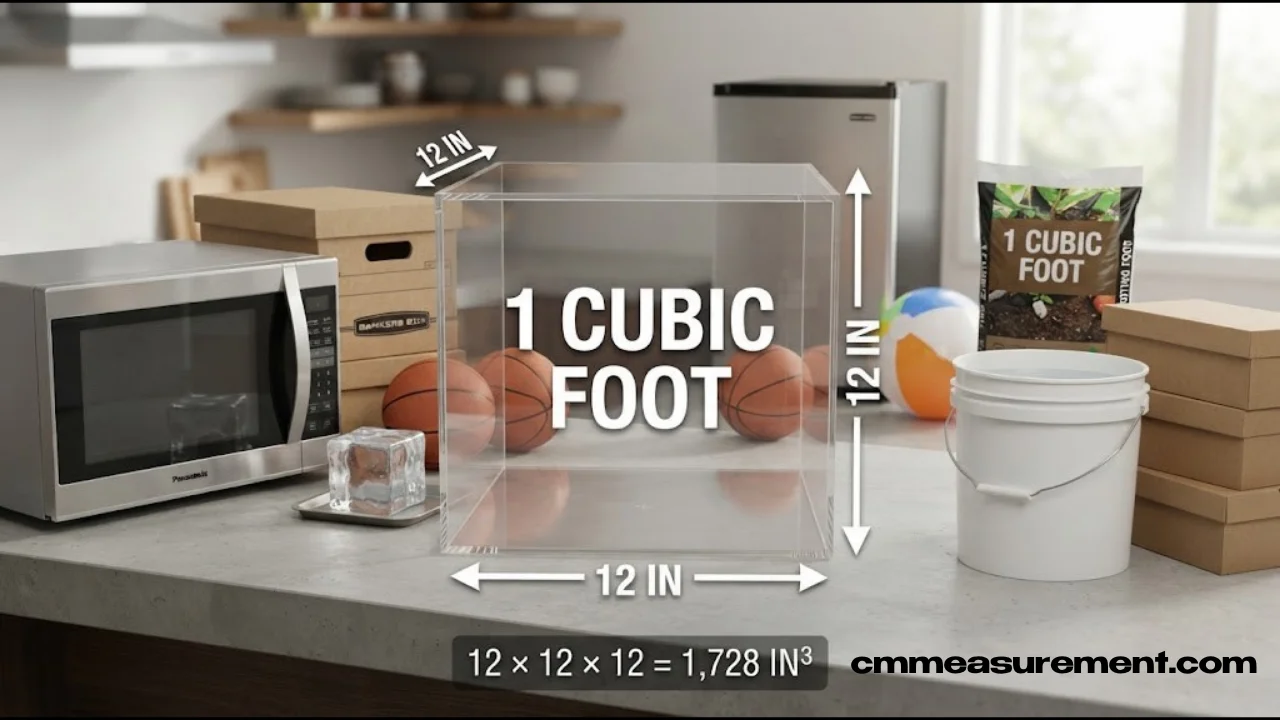
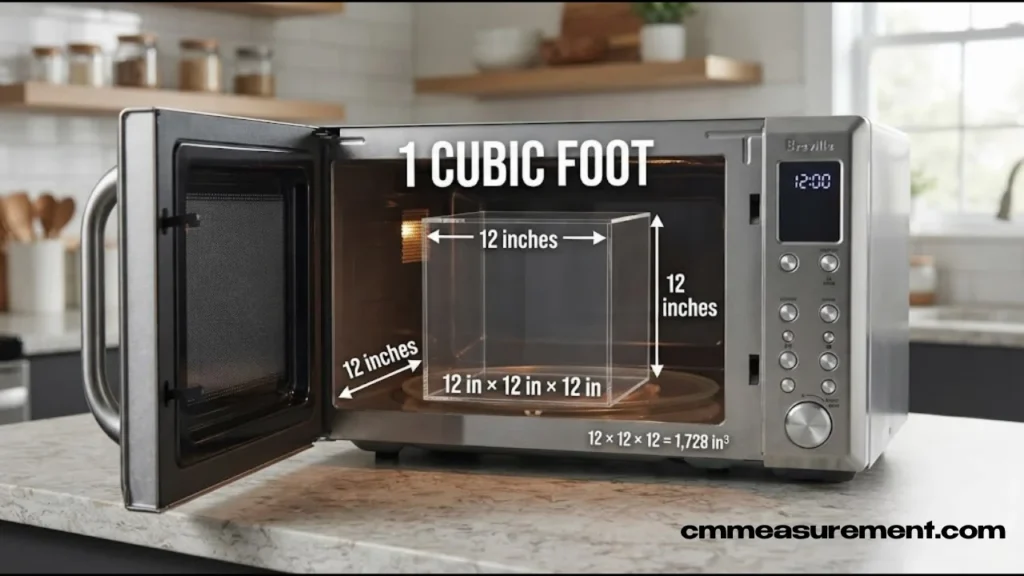
1 cubic foot is the volume of a cube that measures 12 inches on every side — 12 inches long, 12 inches wide, and 12 inches tall. Multiply those three sides together and you get 1,728 cubic inches, which equals exactly one cubic foot (Wikipedia).
The formula behind it is simple:
Volume = Length × Width × Height
When all three sides are measured in feet, your answer comes out in cubic feet (ft³). This is why cubic feet show up everywhere in the U.S. — refrigerator capacity, moving box sizes, soil bags, and shipping quotes all rely on this same formula (Omni Calculator).
So when someone asks how much is 1 cubic foot of space, the honest answer is: it’s small. Smaller than most people guess before they see it side by side with a real object.
9 Real-Life Examples of 1 Cubic Foot
Seeing 1 cubic foot next to familiar items makes the size click instantly. Here are nine grounded, real-world comparisons.
A Large Microwave Oven
Most standard countertop microwaves hold roughly 0.9 to 1.2 cubic feet inside. If you’ve ever put a big casserole dish in your microwave and it barely fit, you’ve already experienced this volume firsthand.
A Standard Banker’s or File Box
The cardboard file boxes used in offices and storage units measure close to 15 x 12 x 10 inches. That works out to almost exactly 1 cubic foot — making it one of the most accurate physical stand-ins for the measurement.
A 5-Gallon Bucket
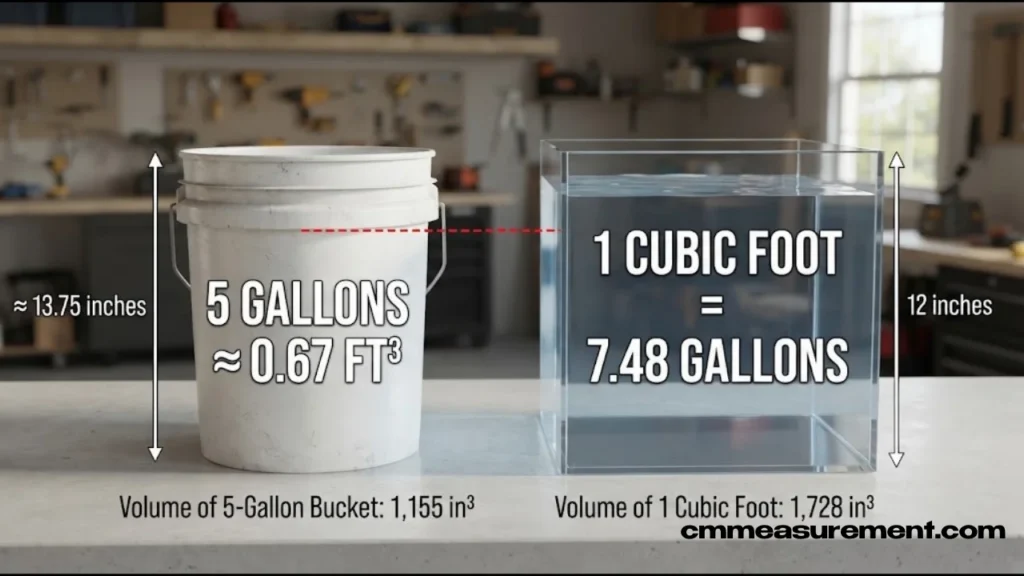
A 5-gallon bucket holds about two-thirds of a cubic foot. Since 1 cubic foot equals roughly 7.48 gallons, you’d need about 7.5 gallons — a bit more than one full bucket — to reach a true cubic foot.
Five Stacked Shoeboxes
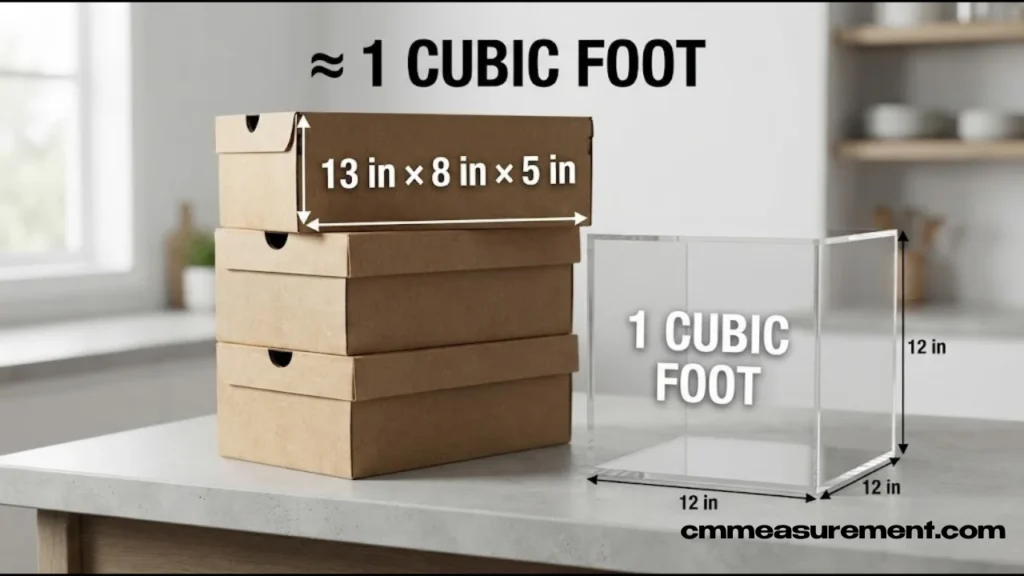
A typical shoebox holds around 350 cubic inches. Stack about five of them together, and you’ve roughly matched 1,728 cubic inches — the exact volume of 1 cubic foot.
Must Visit: How Big Is 1 Acre? 10 Real-Life Examples to Help You Visualize It
A Bag of Potting Soil or Mulch
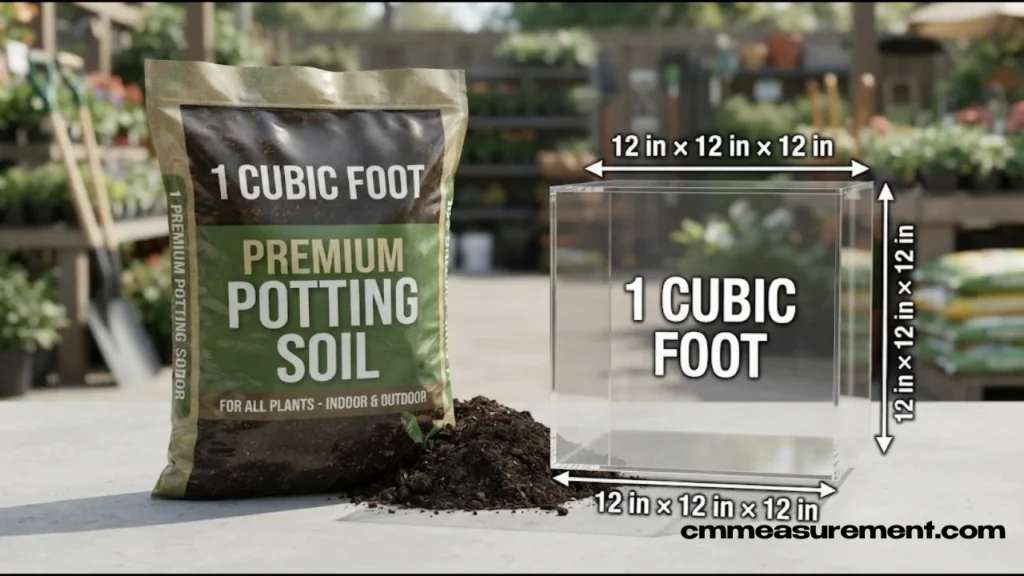
Garden centers across the U.S. commonly sell potting soil and mulch in 1 or 2 cubic foot bags. Next time you’re at a hardware store, pick one up — the bag itself is a built-in visual reference for this exact measurement.
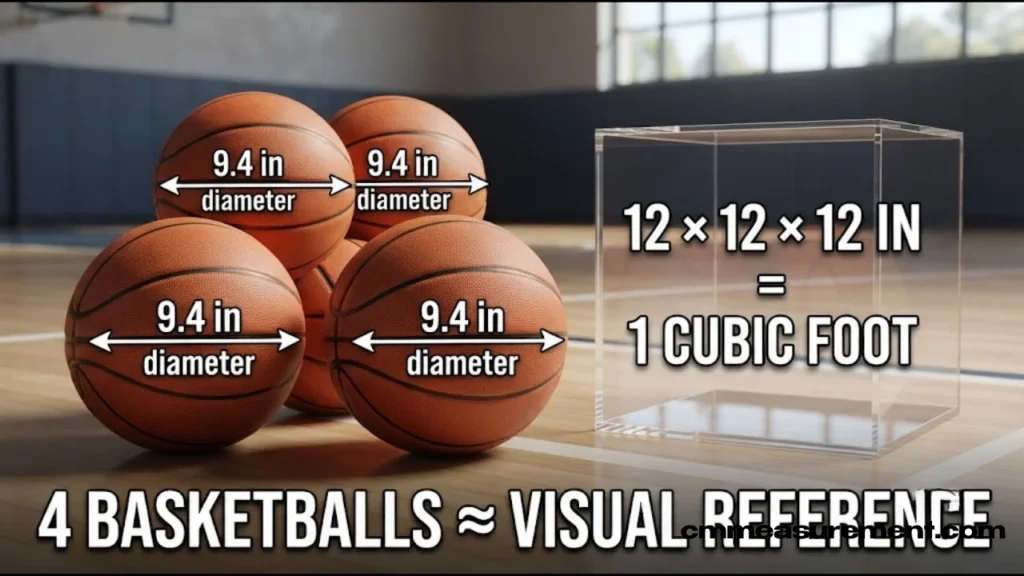
Four Basketballs
A single basketball only holds about a quarter of a cubic foot. Line up four of them, and their combined volume fills roughly 1 cubic foot of space — a fun way to picture how much air actually fits inside that cube.
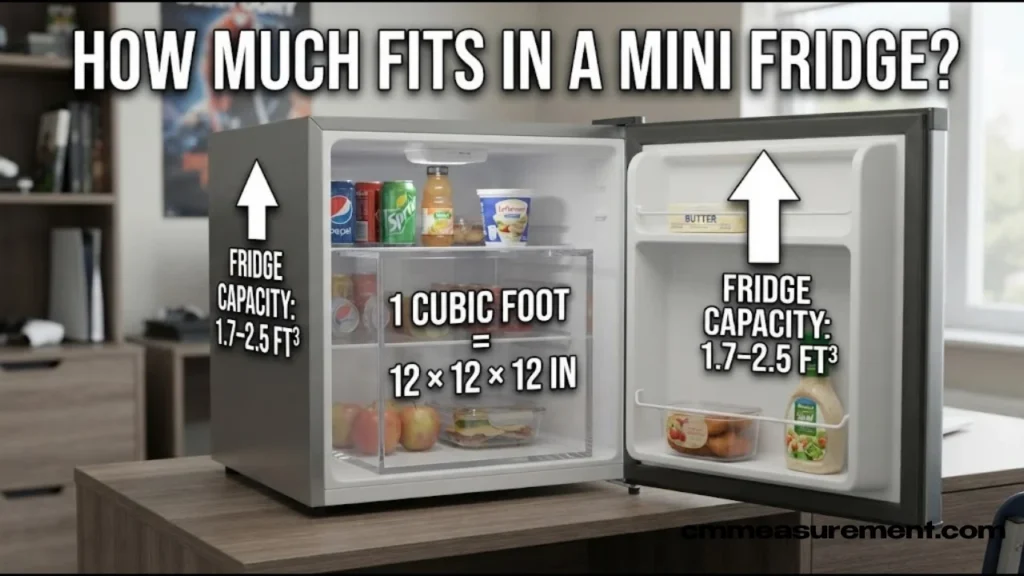
A Dorm-Room Mini Fridge
Compact mini fridges usually run between 1.7 and 2.5 cubic feet. That means even the smallest dorm fridge holds close to double a single cubic foot, which helps explain why they still fit snacks, drinks, and leftovers.
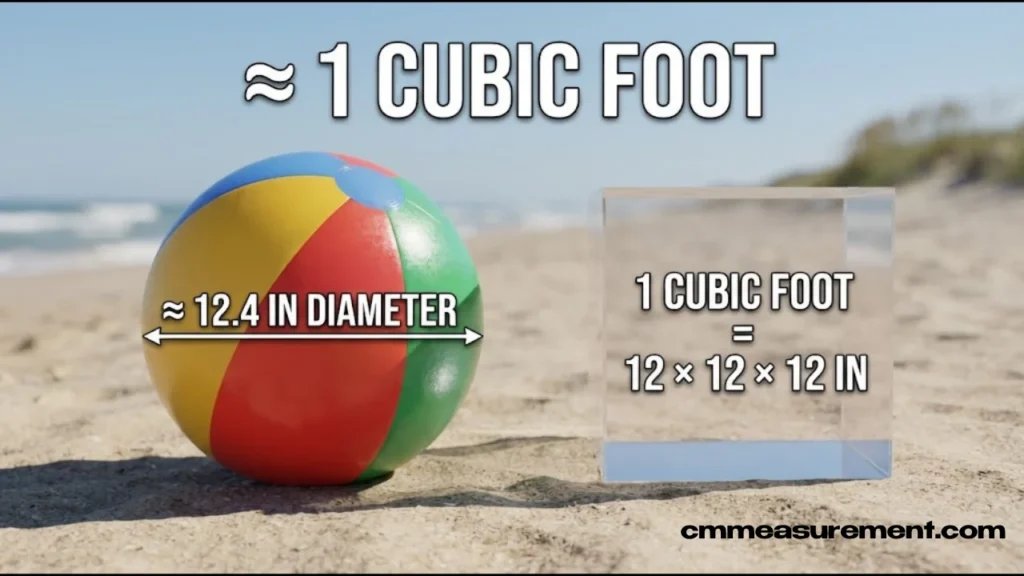
A Large Inflated Beach Ball
A beach ball inflated to about 20 inches across holds close to 1 cubic foot of air. It’s a lightweight, hollow way to feel the size without any weight attached to it.
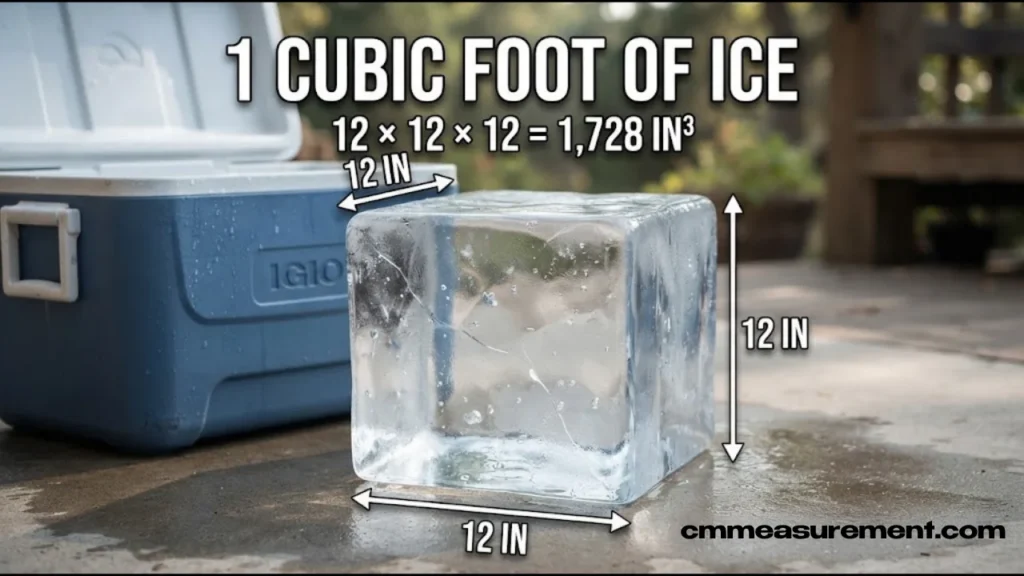
A One-Foot Cube of Ice
Picture a block of ice, cut evenly to 12 inches on every side, sitting inside a cooler. That block is a literal, physical 1 cubic foot — solid, heavy, and exact.
How to Visualize 1 Cubic Foot Without a Ruler
You don’t need measuring tools to estimate this size. A few practical tricks work almost anywhere:
Use a moving box. Standard small moving boxes are close to 1.5 cubic feet — mark off the bottom third with tape, and you’ve got a rough cubic foot.
Use your forearm. The distance from your elbow to your fingertips is close to 12 inches for many adults. Three of those lengths, arranged as a cube, gives a workable estimate.
Anchor to an object you own. Once you’ve seen a banker’s box or a bag of mulch, you carry that mental reference with you permanently.
1 Cubic Foot Compared to Other Measurements
People often mix up volume and area, so here’s the difference laid out plainly.
Cubic feet vs. square feet: Square feet measure a flat surface. Cubic feet measure a 3D space. Spread 1 cubic foot of material just 1 inch deep, and it covers about 12 square feet of ground.
Cubic feet vs. gallons: 1 cubic foot equals about 7.48 U.S. gallons of liquid.
Cubic feet vs. cubic yards: 1 cubic yard equals 27 cubic feet — useful when ordering bulk soil, gravel, or concrete.
| Unit | Equivalent in Cubic Feet |
|---|---|
| 1 cubic inch | 0.00058 ft³ |
| 1 gallon | 0.1337 ft³ |
| 1 cubic yard | 27 ft³ |
Cubic Feet Calculator: Find the Volume of Any Room
Knowing the formula lets you calculate the cubic footage of any space, including your own room.
What is the cubic foot of a 10×10 room? Assume a standard 8-foot ceiling, common in U.S. homes:
10 ft × 10 ft × 8 ft = 800 cubic feet
If your dimensions are in inches instead of feet, divide each measurement by 12 first, then multiply. This same formula scales up or down for any object, room, or container you need to measure.
FAQs
What does 1 cubic foot look like?
It looks like a cube measuring 12 inches on every side — roughly the size of a banker’s box or a large microwave oven’s interior.
Is a cubic foot 12x12x12?
Yes. 1 cubic foot equals a cube that is exactly 12 inches long, 12 inches wide, and 12 inches tall.
How much is 1 cubic foot of space?
It equals 1,728 cubic inches, or about 7.48 gallons of volume — a compact but noticeable amount of space.
How much area does 1 cubic foot cover?
That depends on depth. Spread 1 inch deep, it covers about 12 square feet. Spread 1 foot deep, it covers exactly 1 square foot.
How to visualize 1 cubic foot?
Picture a banker’s box, a large microwave interior, or a bag of potting soil from a garden center — all sit close to this exact volume.
What is the cubic foot of a 10×10 room?
With a standard 8-foot ceiling, a 10×10 room holds 800 cubic feet (10 × 10 × 8).
Conclusion
1 cubic foot stops being an abstract number once you connect it to something real — a box, a bucket, a bag of soil. Use the examples and formula above, and you’ll never have to guess at this measurement again.

Timmy Zeeshan is the founder and lead editor of CM Measurement, where he writes and maintains a growing library of unit conversion tools and practical measurement guides. With a background in engineering and a long-standing interest in everyday math problems, Timmy started CM Measurement after growing frustrated with cluttered, ad-heavy converter websites that made simple conversions harder than they needed to be.