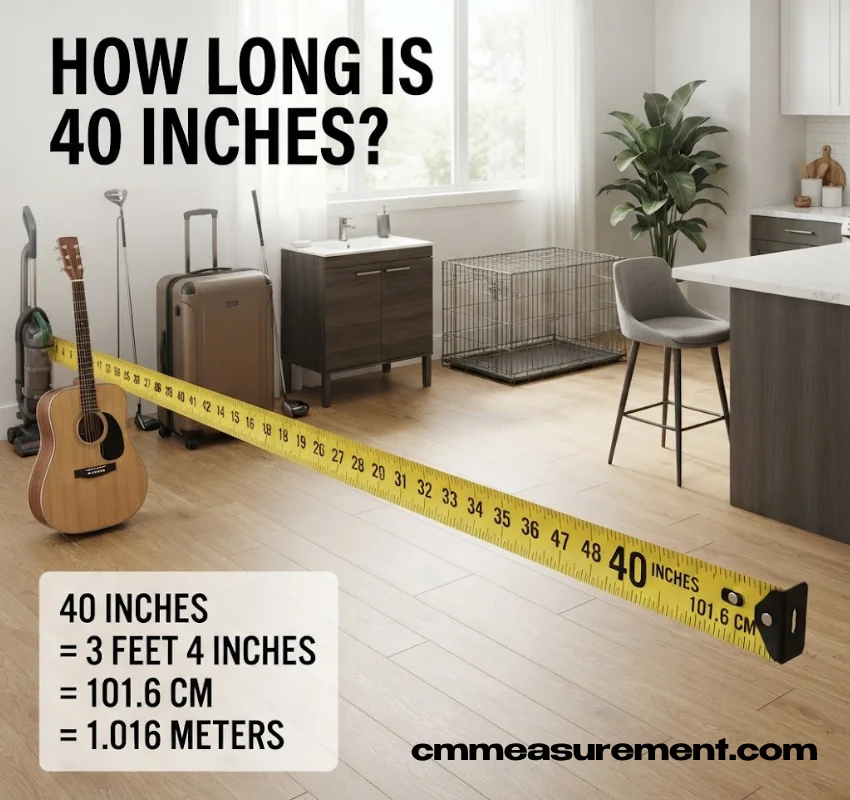
40 inches equals 3 feet 4 inches, or 101.6 centimeters. That’s just over one meter — taller than most toddlers, shorter than most adults, and about the width of a small dining table.
Numbers on a screen rarely mean anything until you tie them to something real. This guide does exactly that. You’ll get the exact 40 inches to feet conversion, ten everyday objects that match this length, and a few tricks for measuring without ever touching a tape measure.
Table of Contents
How Long Is 40 Inches in Feet, Centimeters, and Meters?
Here’s the direct answer: 40 inches in feet is 3.33 feet, written as 3’4″. This comes from dividing 40 by 12, since there are exactly 12 inches in one foot.
The inch itself has a fixed, internationally agreed definition. Since 1959, one inch has equaled exactly 25.4 millimeters under the international yard and pound agreement, a standard used across the United States, United Kingdom, and other countries that still rely on imperial units (source: NIST). That fixed ratio is why every conversion below is precise, not approximate.
| Unit | Equivalent |
|---|---|
| Inches | 40 in |
| Feet | 3.33 ft (3 ft 4 in) |
| Centimeters | 101.6 cm |
| Millimeters | 1,016 mm |
| Meters | 1.016 m |
| Yards | 1.11 yd |
For quick perspective: the average adult male in the U.S. stands around 5 feet 9 inches tall, according to the CDC’s National Health Statistics Reports (CDC data). That puts 40 inches at roughly waist height on most grown adults — a useful mental anchor before we dig into specific objects.
10 Real-Life Things That Are 40 Inches Long
Abstract numbers stick better once you attach them to objects you already know. Below are ten common references, each one grounded in a real measurement standard rather than a rough guess.
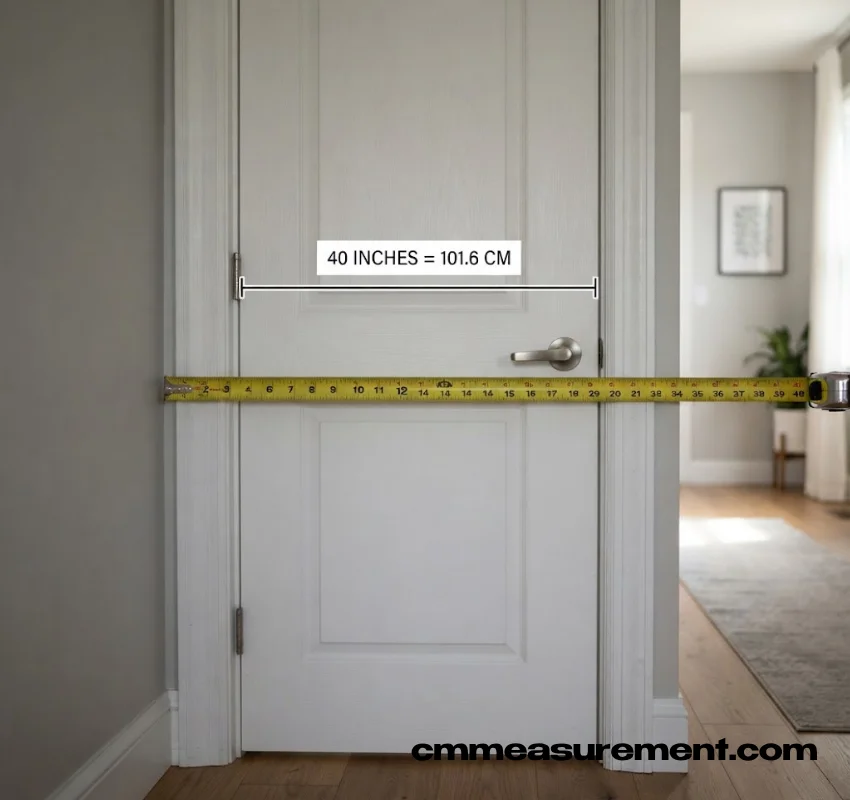
A standard interior door is typically 80 inches tall and 36 inches wide, but many hallway and closet doors are built narrower — right around 40 inches counting the frame — making this a familiar visual for indoor width.
A three-to-four-year-old child commonly measures close to 40 inches tall. Pediatric growth charts from the CDC use height-for-age percentiles, and a 40-inch mark typically falls near the 50th percentile for children around this age (CDC growth charts).
Must Visit: How Long Is 12 Inches? 15 Best Surprising Real-Life Examples

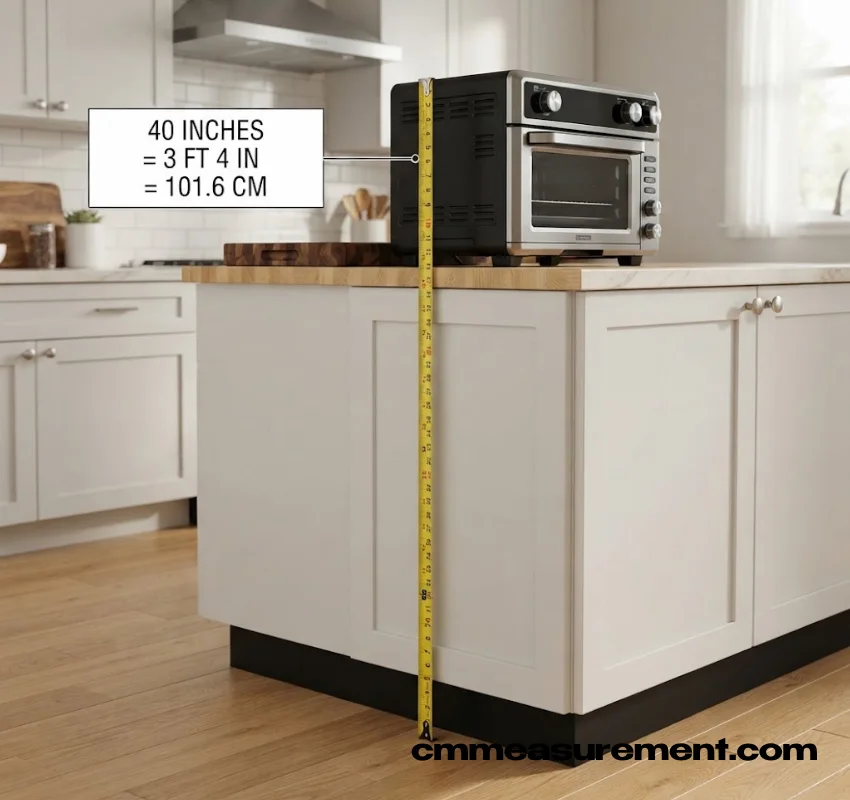
A kitchen counter sits at a standard 36 inches high under most U.S. building conventions. Add a cutting board or small countertop appliance, and you’re looking at roughly 40 inches — a handy reference if you’re planning a renovation.
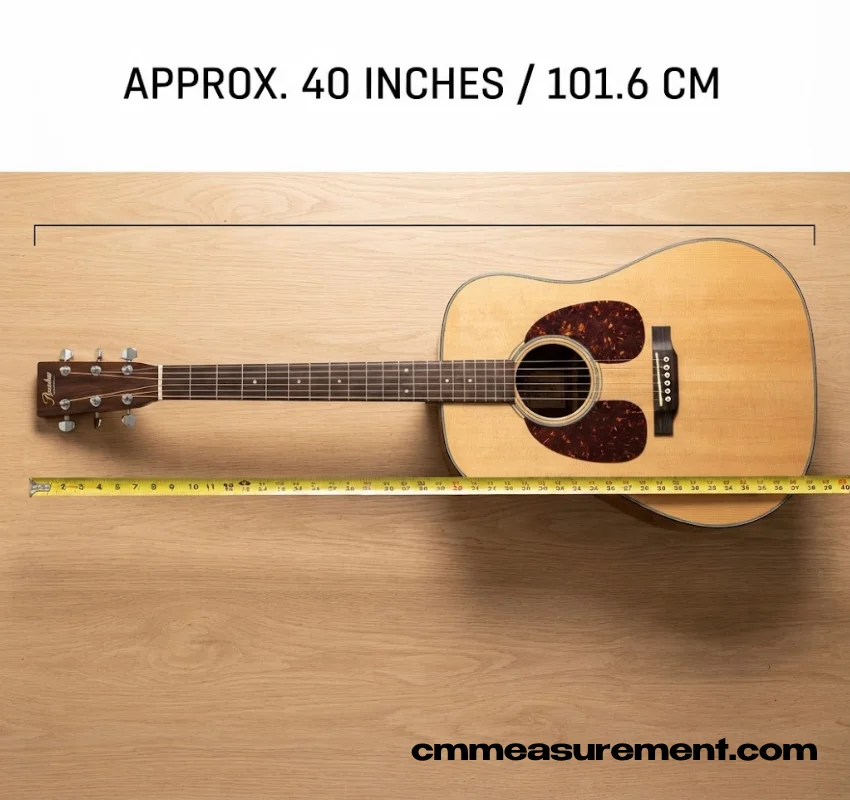
A full-size acoustic guitar runs about 40 inches from the top of the headstock to the base of the body. This has been the industry benchmark for decades across major guitar manufacturers, which makes it a remarkably consistent visual.
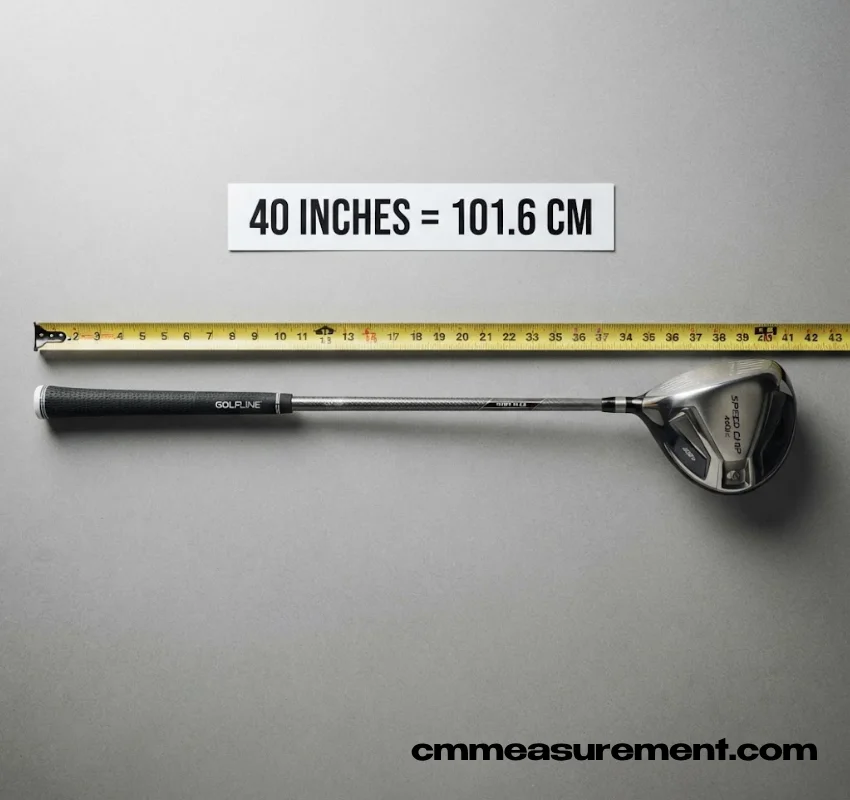
A golf driver shaft typically measures 40 inches to 45 inches for men’s clubs, with 40 inches sitting near the shorter, more controllable end of that range under standard club-fitting guidelines (USGA equipment rules).
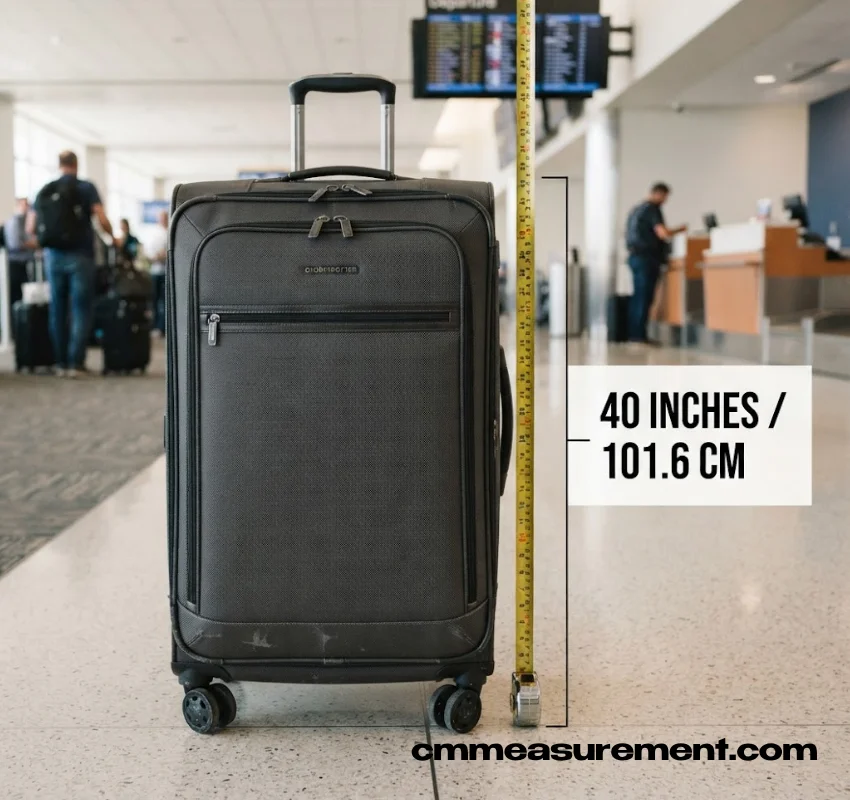
A large checked suitcase, when standing upright with the handle retracted, commonly measures between 38 and 42 inches. Airlines generally cap checked-bag dimensions using linear inches (length + width + height combined), so knowing your bag’s actual height matters at the airport.
A bathroom vanity built for a single large sink typically spans 36 to 40 inches wide, a size that fits most standard U.S. bathrooms without crowding the walkway.

A large dog crate for breeds like Labradors or German Shepherds usually measures 40 to 42 inches in interior length, sized to let a full-grown dog stand, turn, and lie down comfortably.

A shower curtain, in the standard U.S. size, measures 40 inches wide before hemming. This width gives enough overlap to fully contain water inside a standard tub or shower stall.

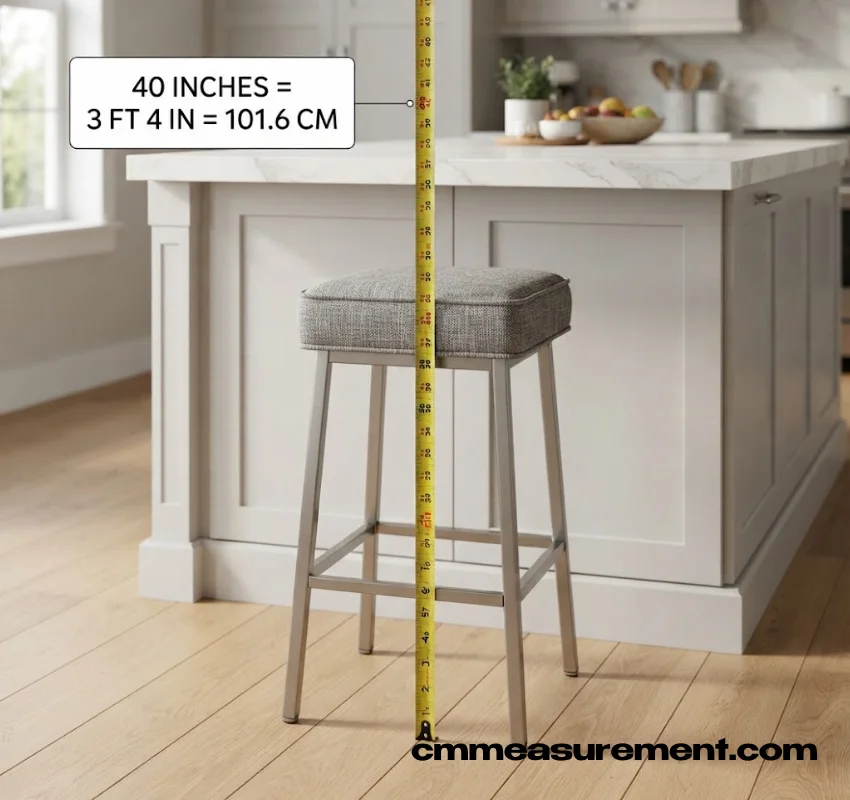
A bar stool without a backrest typically stands 38 to 42 inches from floor to seat top, a range built specifically for kitchen islands and counter-height dining.
How to Visualize 40 Inches Without a Tape Measure
You don’t need a tool in your pocket to estimate this length accurately. A few reliable, body-based methods work almost anywhere.
Use your forearm as a ruler. The average adult forearm, measured from elbow to fingertip, runs close to 18 inches. Two forearms laid end to end land you just short of 40 inches — close enough for a fast estimate.
Picture a kitchen counter and add a hand’s width. Since counters sit at 36 inches, adding roughly four inches — about one adult hand span — gets you to 40 inches almost exactly.
Try your smartphone’s AR measuring tool. Both iPhone (Measure app, powered by ARKit) and many Android phones include built-in augmented-reality rulers that use the camera and depth sensors to measure real-world objects. These tools are typically accurate within an inch or two for short distances, according to Apple’s own developer documentation (Apple ARKit) — a modern shortcut none of the old-school “stack three rulers” tricks can match.
Compare it to a yardstick minus eight inches. A standard yardstick measures 36 inches, so 40 inches is just a bit longer — picture the stick plus roughly the width of your palm.
Is 40 Inches the Same as 4 Feet?
No — this is one of the most common mixups people make. 40 inches is not 4 feet. Four feet equals 48 inches (4 × 12), while 40 inches equals only 3.33 feet, or 3 feet 4 inches.
The confusion usually happens because “40” and “4 feet” sound close in casual conversation. But the math is fixed: since one foot always equals 12 inches, you divide the inch value by 12 to get feet, not by 10. Getting this wrong on a furniture order or shipping form can mean a piece that doesn’t fit through your doorway.
Where 40 Inches Actually Matters
This measurement isn’t just trivia — it shows up in real decisions people make every week.
Airline luggage rules often use combined linear measurements (length + width + height) with limits around 62 inches for checked bags, per most major U.S. carriers’ published policies. Knowing your suitcase’s actual height, often close to 40 inches, helps you avoid an oversized-bag fee at check-in.
Furniture and doorway clearance depend heavily on this number too. Standard U.S. interior doors run 32 to 36 inches wide, so any furniture piece near or above 40 inches in width needs careful measuring before a move — a step many people skip until the sofa gets stuck in the hallway.
TV and display shopping frequently references this size class. A 40-inch television, measured diagonally, is one of the most common sizes sold for bedrooms and smaller living rooms, balancing screen size with a compact footprint.
FAQs
How long is 40 inches in feet?
Forty inches equals 3.33 feet, or exactly 3 feet 4 inches, since one foot always contains 12 inches.
What is 40 inches in feet?
Forty inches converts to 3 feet 4 inches (3.33 feet in decimal form) — the same figure whether you’re measuring furniture, luggage, or height.
How can I visualize 40 inches?
Picture a kitchen counter (36 inches) plus a hand’s width, two adult forearms laid end to end, or use your smartphone’s built-in AR measuring tool for an instant, accurate readout.
Is 40 inches 4 feet?
No. Four feet equals 48 inches. Forty inches is shorter, equaling 3 feet 4 inches instead.
Conclusion
Forty inches sits at a genuinely useful in-between length — taller than a toddler, shorter than most furniture, and common enough to show up in doorways, luggage, guitars, and vanities alike. Once you connect the number to a real object like a kitchen counter or a suitcase, you’ll never need to second-guess a measurement again.

Timmy Zeeshan is the founder and lead editor of CM Measurement, where he writes and maintains a growing library of unit conversion tools and practical measurement guides. With a background in engineering and a long-standing interest in everyday math problems, Timmy started CM Measurement after growing frustrated with cluttered, ad-heavy converter websites that made simple conversions harder than they needed to be.