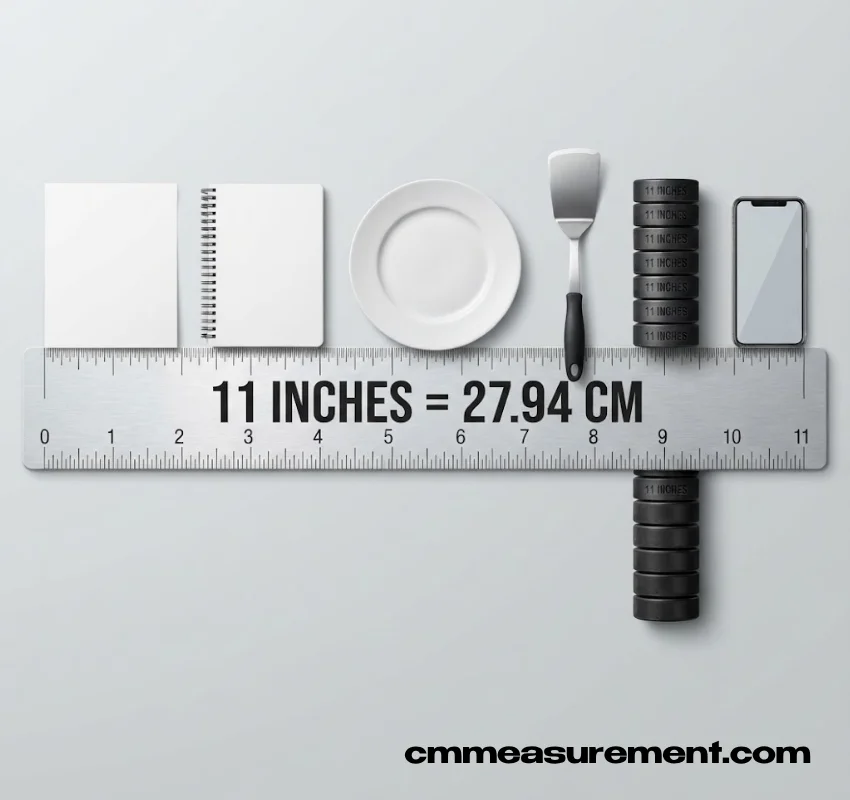
Trying to picture 11 inches without a tape measure? You’re not alone. It’s a size that shows up everywhere — on shipping labels, product listings, and DIY plans — yet most people can’t picture it right away.
Here’s the short answer: 11 inches equals 27.94 centimeters, 0.917 feet, or 279.4 millimeters. It’s one inch short of a foot. Below, you’ll find 15 real objects that match this exact length, plus body-based tricks you can use anywhere, anytime.
Table of Contents
How Long Is 11 Inches, Exactly?
Eleven inches sits just below the one-foot mark. To be precise, it’s 27.94 cm, 279.4 mm, or 0.917 feet. That single missing inch matters more than people expect — it’s the difference between something sliding neatly into a drawer or sticking out awkwardly.
Here’s a quick conversion table you can bookmark:
| Unit | Value |
|---|---|
| Inches | 11 in |
| Centimeters | 27.94 cm |
| Millimeters | 279.4 mm |
| Feet | 0.917 ft |
| Yards | 0.306 yd |
| Meters | 0.2794 m |
The inch-to-centimeter conversion is fixed by international standard: one inch always equals 2.54 cm. That means 11 inches will always land at 27.94 cm, whether you’re measuring in New York or London.
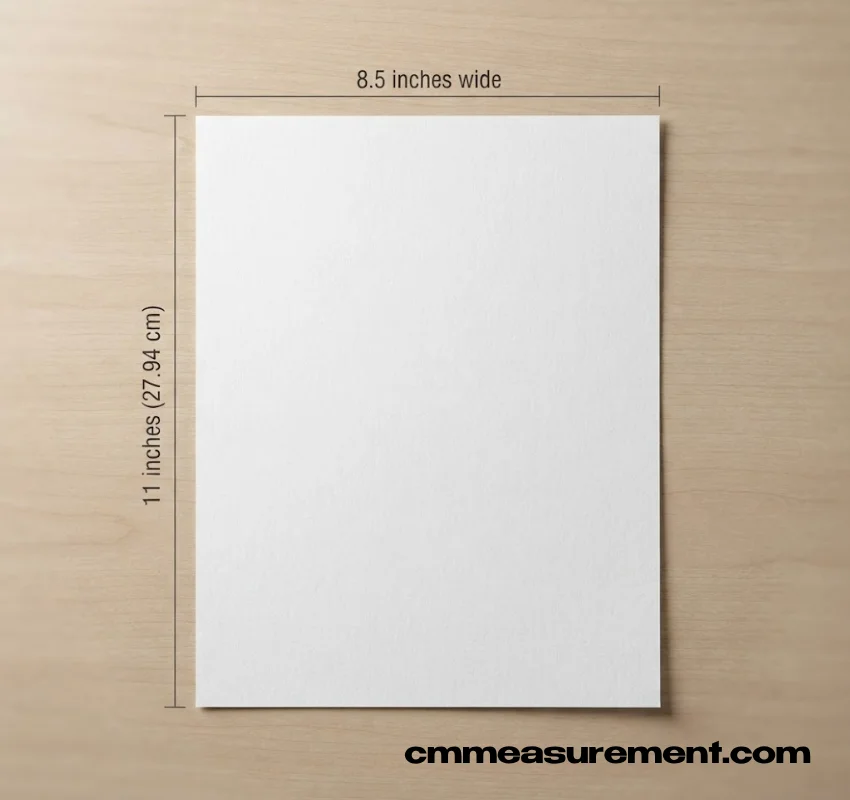
Why does this exact length matter so much in everyday design? Because standard US letter paper measures 8.5 x 11 inches. That single sheet quietly set the tone for notebooks, folders, binders, and filing cabinets across the country for over a century. It’s a size baked into American life without most people ever noticing.
15 Real-Life Examples of 11 Inches
Numbers on a page are hard to picture. Objects you already touch every day aren’t. Below are 15 everyday examples, grouped by category, so you can build a mental ruler that never needs batteries.
Household & Office Items That Are 11 Inches Long
A sheet of letter paper is the gold standard here. The long edge measures exactly 11 inches — no rounding, no guessing. It’s the most reliable reference on this entire list because it’s manufactured to that spec, not approximated.
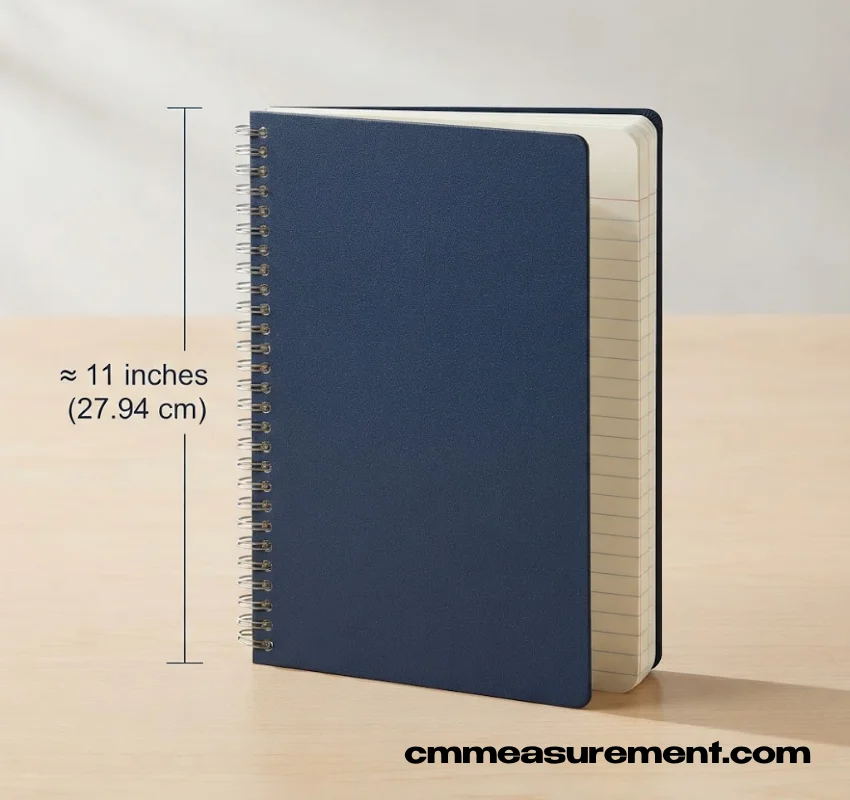
A spiral notebook typically stands about 11 inches tall, matching the paper it holds. Grab one from a backpack or desk drawer and you’re holding an 11-inch anchor.
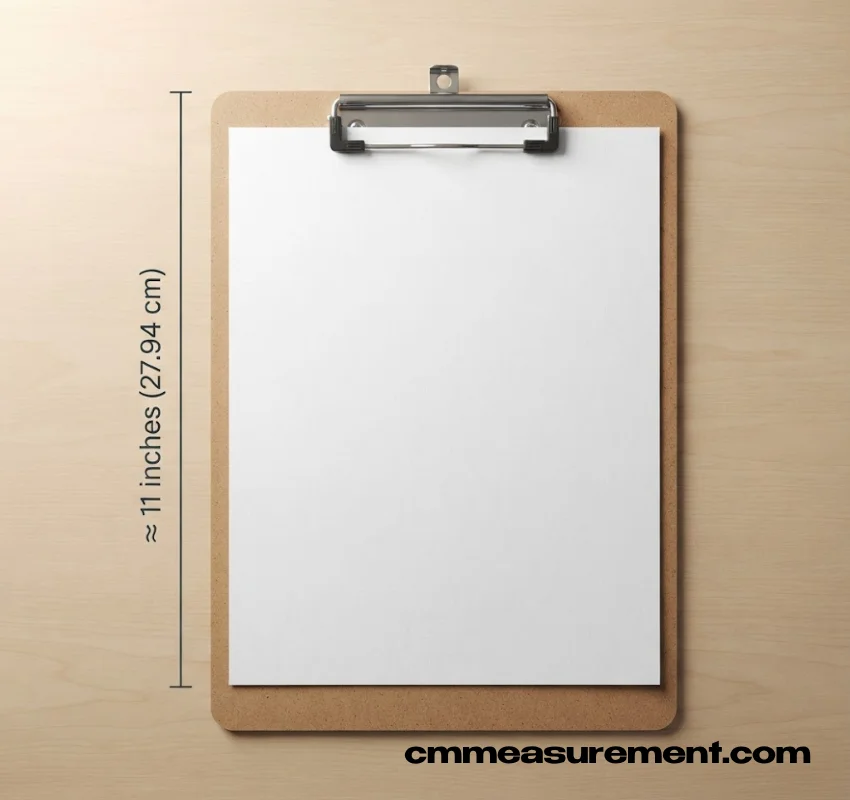
A standard clipboard built for letter-size paper runs close to 11 inches in length, since it has to accommodate that same 8.5 x 11 sheet.
Must Visit: How Long Is 8 Inches? 10 Best Real-Life Examples
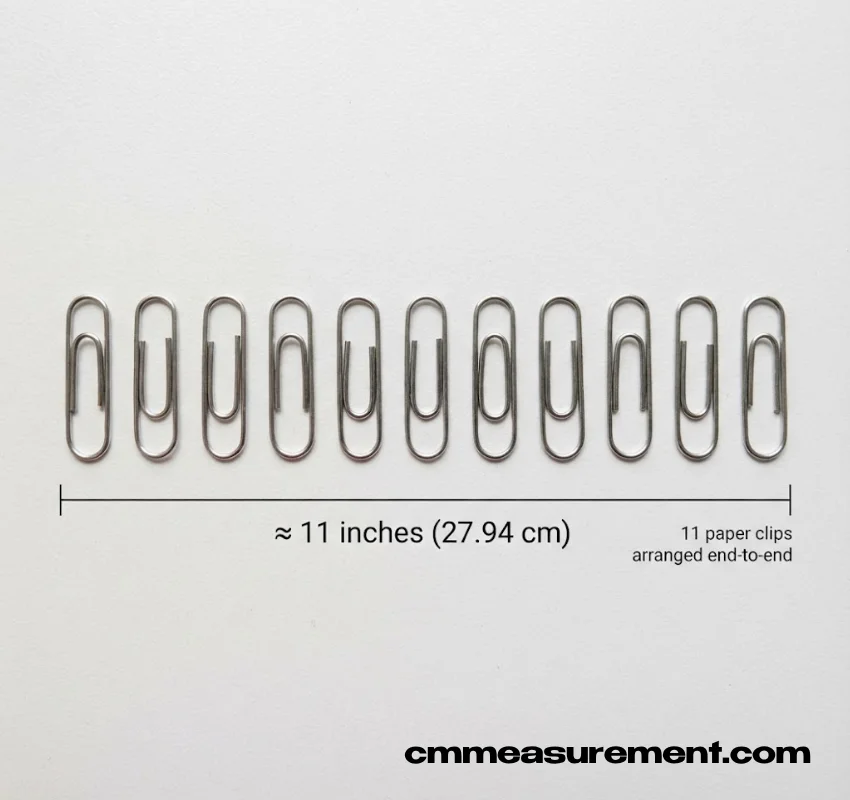
Eleven paper clips lined up end to end will land you within a hair of 11 inches, since a typical small paper clip measures almost exactly one inch.
A desk drawer’s interior depth often measures around 11 inches — deep enough for files and supplies, shallow enough to stay compact.
Kitchen & Food Comparisons
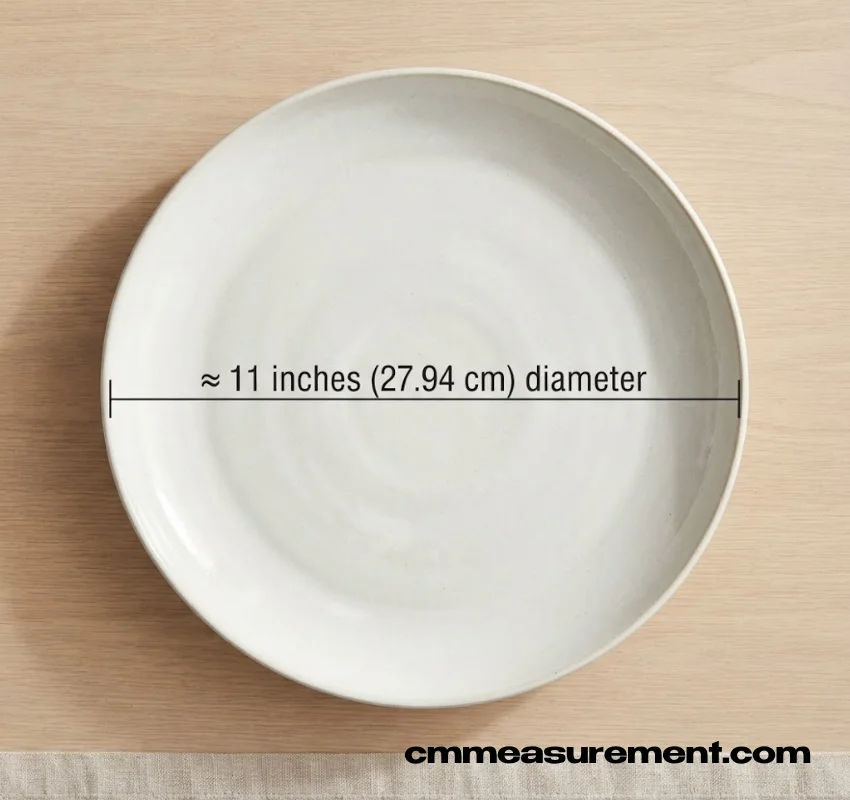
A large dinner plate commonly measures between 10.5 and 11 inches across. Restaurants often choose this size deliberately, since a slightly larger plate makes portions look more generous — a subtle bit of visual psychology used in food presentation.
A cutting board’s shorter side frequently runs about 11 inches, wide enough for chopping vegetables but still small enough to fit in a sink for rinsing.
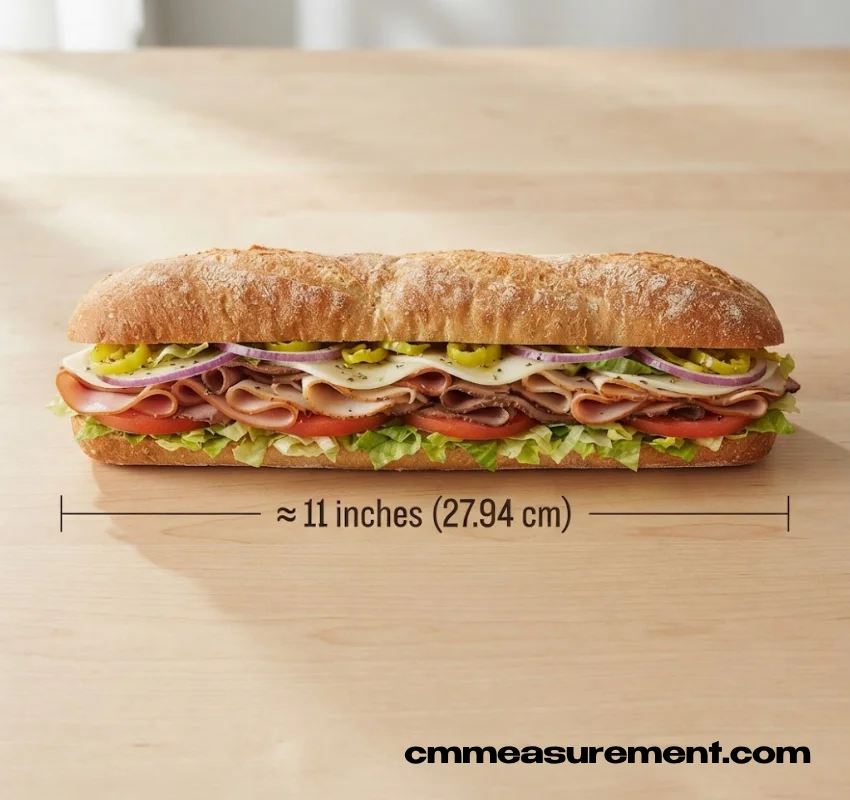
A “footlong” sub sandwich, despite the name, usually measures closer to 11 inches than a true 12-inch foot when actually measured. It’s one of the most surprising facts about American fast food branding.
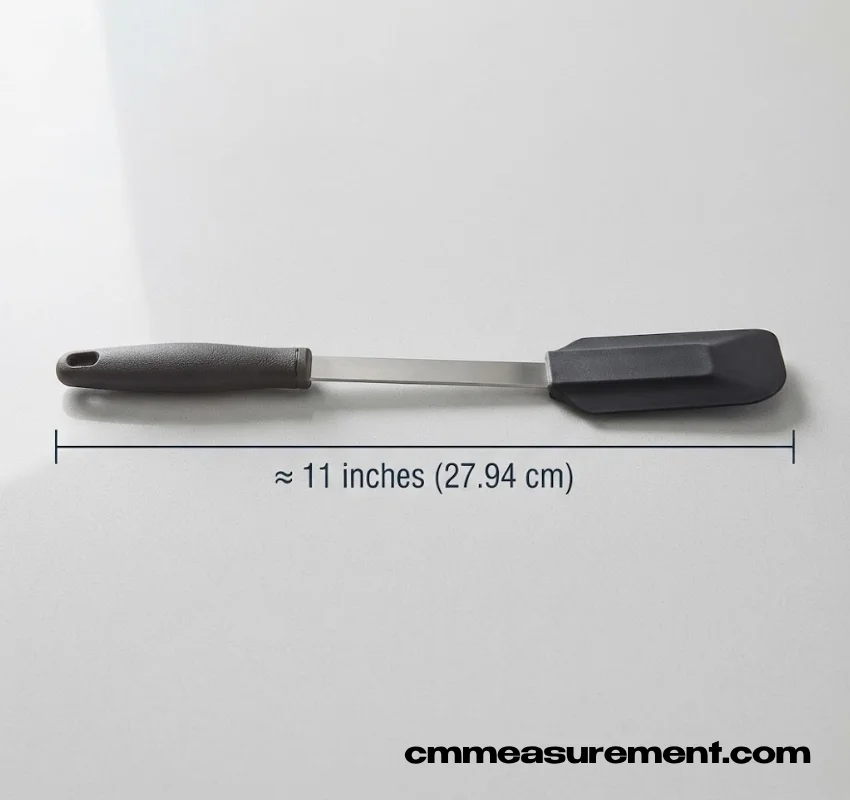
A long kitchen spatula — the kind used for flipping large items or frosting cakes — typically runs 11 to 12 inches from handle to blade tip.
Tech & Everyday Gadgets Around 11 Inches
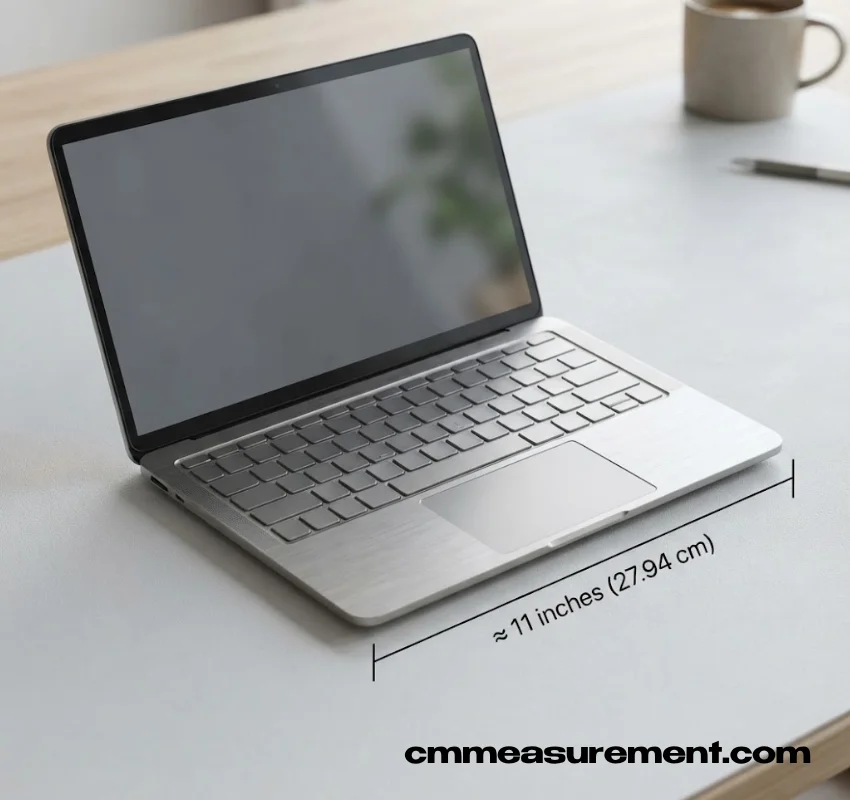
Compact laptops, especially older netbooks and ultra-portable models, often measure around 11 inches wide. This size struck a balance between screen space and portability before larger touchscreens became standard.
The 12.9-inch iPad Pro’s physical body measures roughly 11 inches along its longest edge — a detail most owners never realize despite holding it daily.
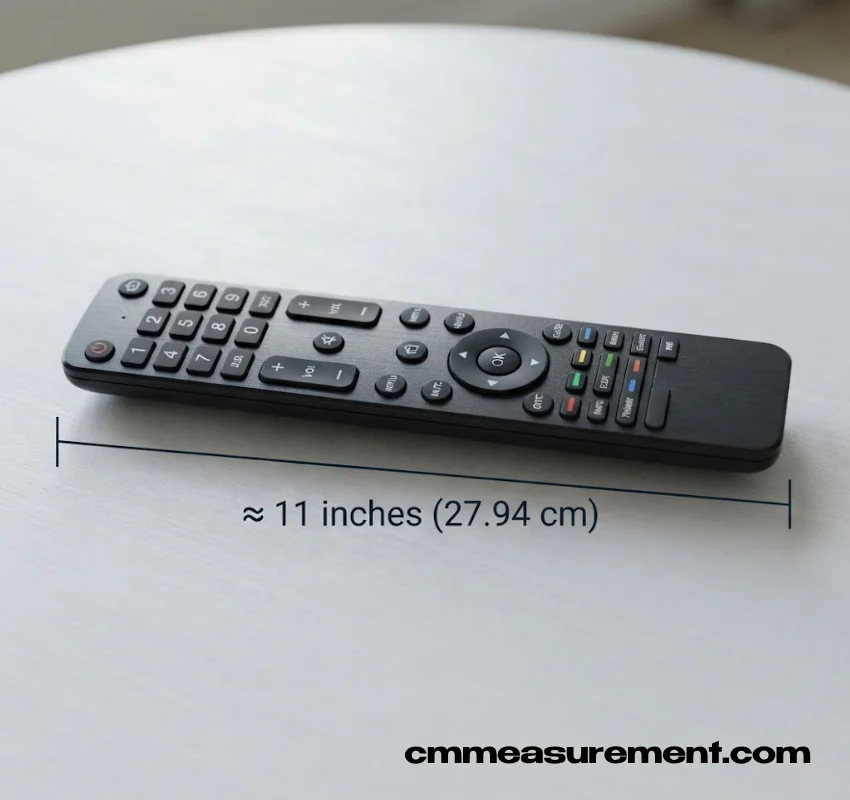
A full-size TV remote, especially older cable-box or universal models, often stretches to 10–11 inches, packed with buttons for every function imaginable.
Human Body Comparisons for 11 Inches
This is where most guides fall short — yet it’s often the fastest way to estimate a length without any tool at all.
An average adult hand span — thumb tip to pinky tip, stretched wide — measures roughly 8 to 9 inches for most adults. That means 11 inches is noticeably longer than a full hand stretch, by about two to three finger widths.
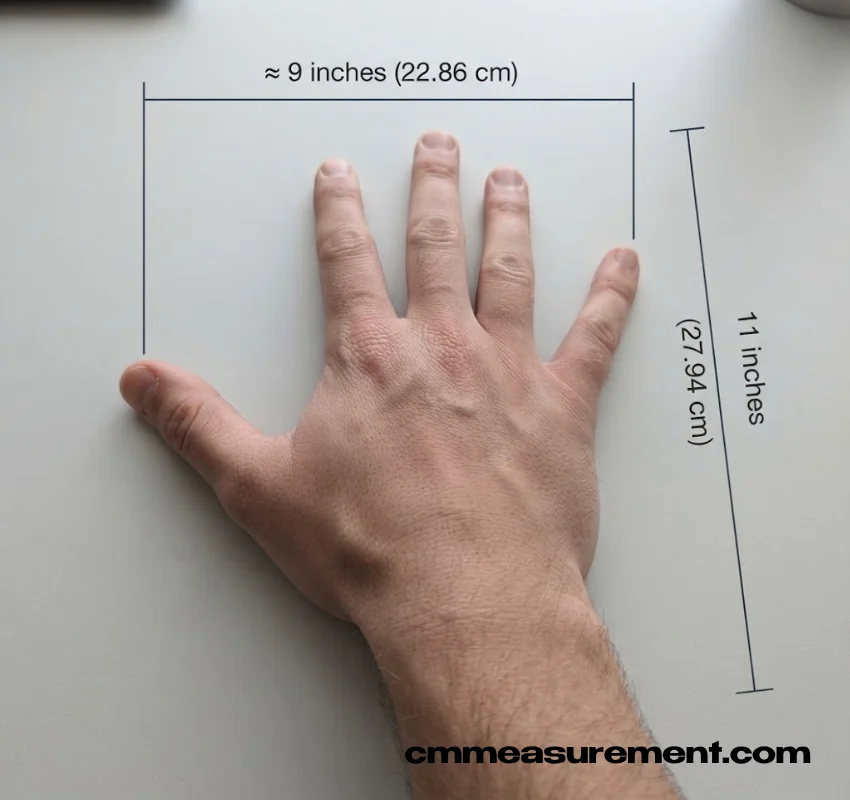
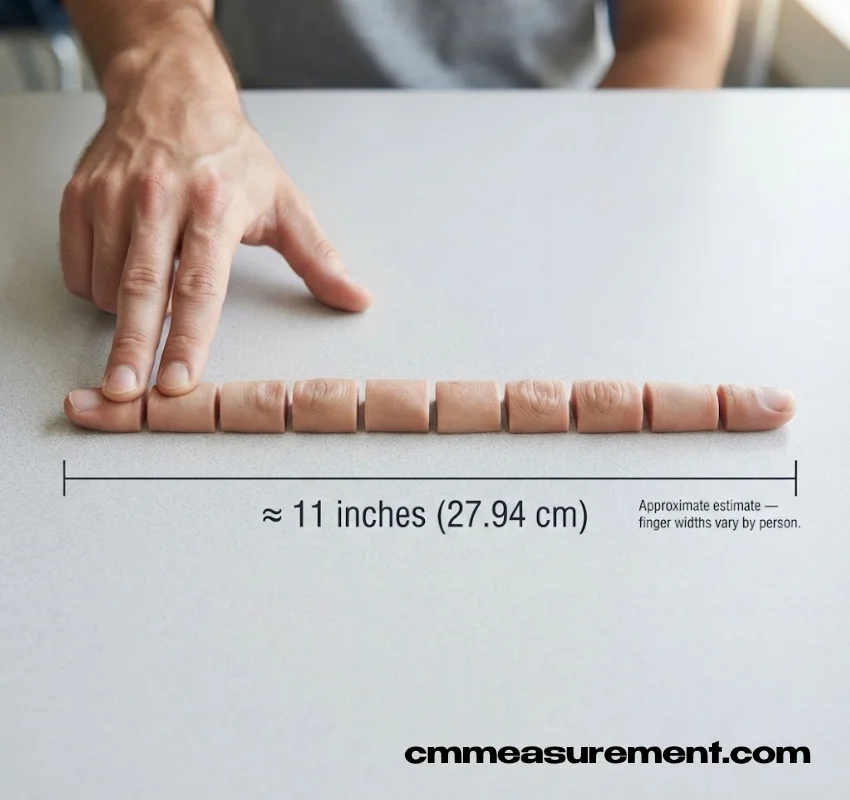
A single adult finger width averages close to 1 inch at the widest point of the middle finger. So laying 11 fingers side by side, roughly, approximates the same length — a handy trick when nothing else is available.
Forearm length, measured from the wrist crease to the elbow, comes close to 11 inches for many adults, though this varies by height and build. It’s not exact, but it’s a reasonable field estimate in a pinch.
Sports & Miscellaneous Objects at 11 Inches
Five regulation pool balls lined up in a row reach about 11.25 inches, since each ball has a 2.25-inch diameter under official billiards standards.
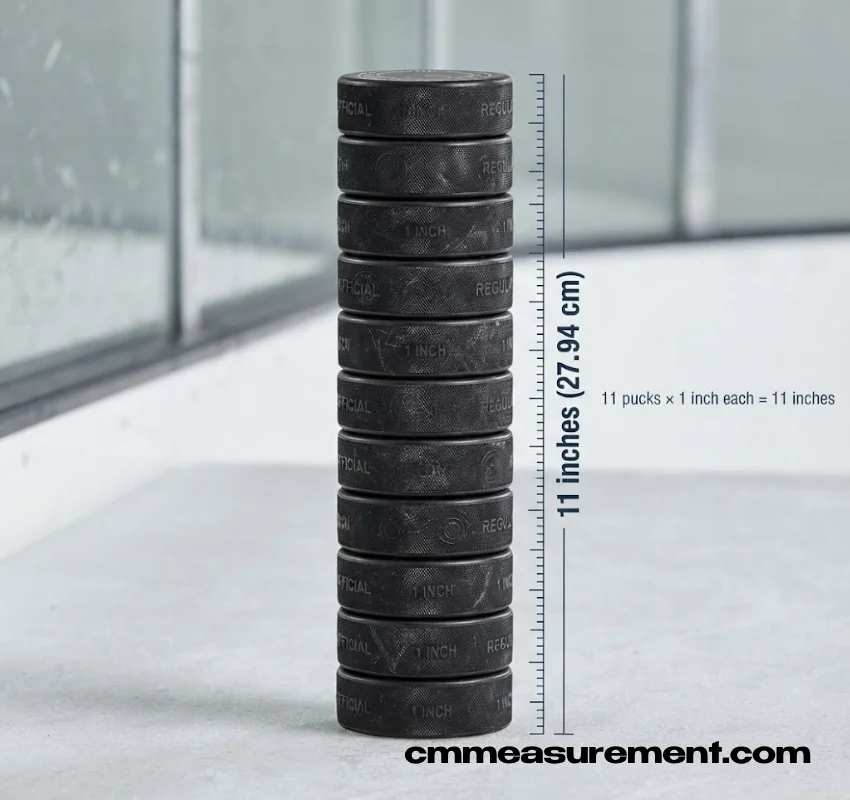
Eleven standard hockey pucks stacked vertically reach exactly 11 inches, since each NHL-regulation puck is precisely 1 inch thick. It’s one of the cleanest, most mathematically satisfying comparisons you’ll find.
How Big Is 11 Inches Compared to Something?
Comparison makes measurement click. Here’s how 11 inches stacks up against things you already know well.
11 inches vs. 1 foot (12 inches): Eleven inches is exactly one inch shorter than a foot — about 92% of the full length. Picture a 12-inch ruler with the very last inch snipped off, and you’ve got it.
11 inches vs. a standard ruler: Most classroom rulers run 12 inches. Mentally trim off the final inch marker, and what remains is your 11-inch reference.
11 inches vs. an average hand span: A typical adult hand span runs 8 to 9 inches. Eleven inches beats that by a solid margin — roughly the width of two extra fingers.
11 inches vs. a smartphone: Standing two average smartphones end to end — bottom to top — usually lands you close to, or just under, the 11-inch mark, depending on the model.
How to Measure 11 Inches Without a Ruler
No tape measure? No problem. These tool-free methods work almost anywhere.
Use a sheet of printer paper. The long edge is exactly 11 inches — no guesswork, no rounding. This is the single most accurate DIY method available.
Count finger widths. Since an average adult finger is close to 1 inch wide at its widest point, lining up 11 finger-widths gets you a rough but usable estimate.
Use your forearm. Measure your own wrist-to-elbow length once with an actual ruler, note it down, and you’ll have a built-in reference for life — assuming it lands near 11 inches, which it does for many adults.
Stack familiar objects. Eleven hockey pucks, five pool balls, or a spiral notebook height all land close enough to 11 inches for quick household or classroom estimates.
FAQs
How big is 11 inches compared to something?
Eleven inches is close to the height of a spiral notebook, the long edge of printer paper, or the diameter of a large dinner plate. It’s also about one inch shorter than a standard ruler, and noticeably longer than the average adult hand span.
How long is 1 inch in fingers?
One inch roughly equals the width of an average adult finger, measured across the middle finger at its widest point. This is why “finger-width counting” is a common quick-estimation trick when no ruler is nearby.
What body part is 12 inches long?
A forearm, measured from wrist to elbow, comes close to 12 inches for many adults, though this varies with height and build. It’s also roughly the length of an adult foot for people with larger shoe sizes, which is part of where the “foot” unit historically got its name.
How long is an example of 11 inches?
A standard sheet of US letter paper is exactly 11 inches along its long edge. It’s the single most precise, most accessible real-world example of this measurement, since it’s manufactured to that exact spec rather than estimated.
Conclusion
Eleven inches stops feeling abstract once you connect it to things you already touch daily — a sheet of paper, a dinner plate, a stack of hockey pucks. The one-inch gap between 11 inches and a full foot is small on paper but noticeable in hand.
Next time you need a quick estimate, skip the search for a ruler. Grab a sheet of paper, spread your fingers, or picture that notebook on your desk. You already own more measuring tools than you think.

Timmy Zeeshan is the founder and lead editor of CM Measurement, where he writes and maintains a growing library of unit conversion tools and practical measurement guides. With a background in engineering and a long-standing interest in everyday math problems, Timmy started CM Measurement after growing frustrated with cluttered, ad-heavy converter websites that made simple conversions harder than they needed to be.