You spot “10 cm” on a product label and freeze. Is that small enough to fit in your bag? Big enough to matter?
Here’s the short answer: 10 cm equals 3.94 inches — just under 4 inches. Below, you’ll see exactly what that looks like using 7 everyday objects, plus simple tricks to measure 10 cm without a ruler.
How Long Is 10 cm in Inches (And Other Common Units)
10 centimeters converts to 3.937 inches, usually rounded to 3.94 inches for everyday use. The math behind this is simple: divide the centimeter value by 2.54, since one inch equals exactly 2.54 cm — a standard set by international agreement back in 1959.
You can also flip the formula: multiply centimeters by 0.3937 to land on the same result. If you are interested to see cm into feets then must try this tool.
Here’s how 10 cm breaks down across other units:
- In millimeters: 100 mm
- In feet: roughly 0.33 ft
- In meters: 0.1 m
Why isn’t it a clean 4 inches? Because the metric system (based on units of 10) and the imperial system (used in the U.S., built on inches, feet, and yards) don’t align on tidy numbers. This mismatch is exactly why so many Americans reach for a converter when they see cm on a package, a ruler, or a recipe card.
What Does 10 cm Look Like? 7 Everyday Objects That Are 10 cm Long
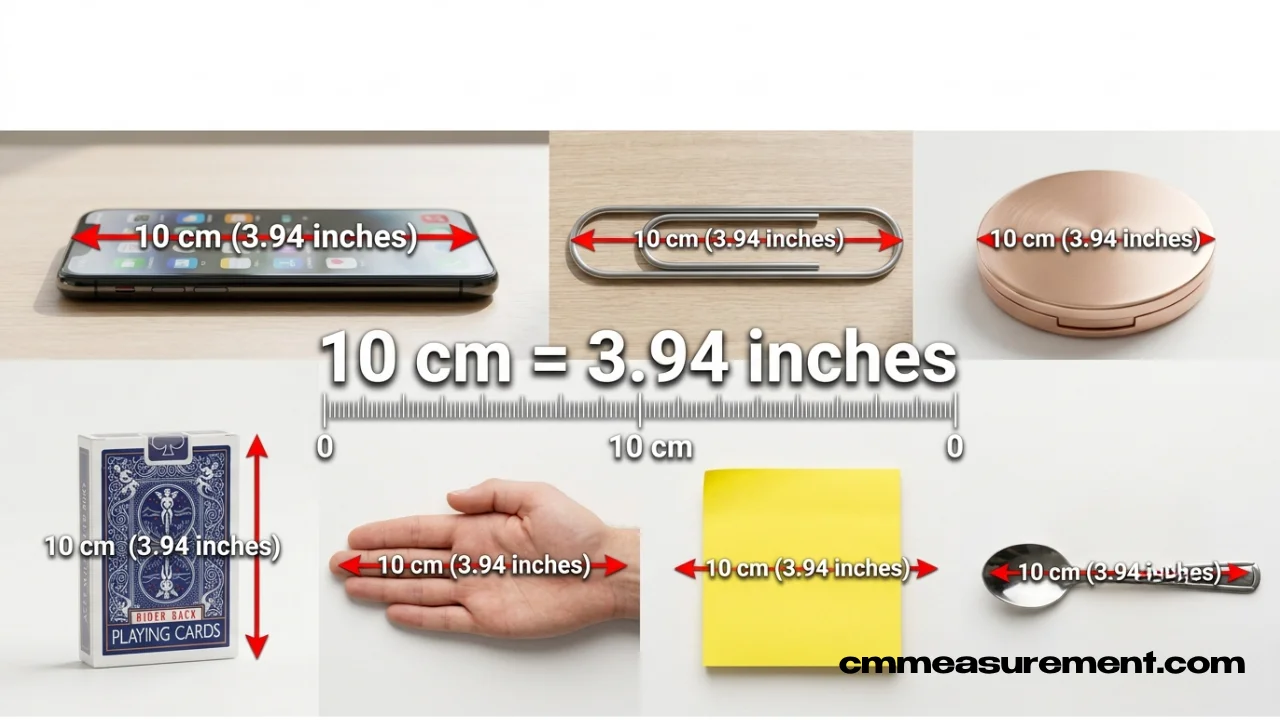
Numbers alone don’t stick. Objects do. Here are 7 real, common items close to 10 cm in length or width — the visual reference most conversion charts skip entirely.
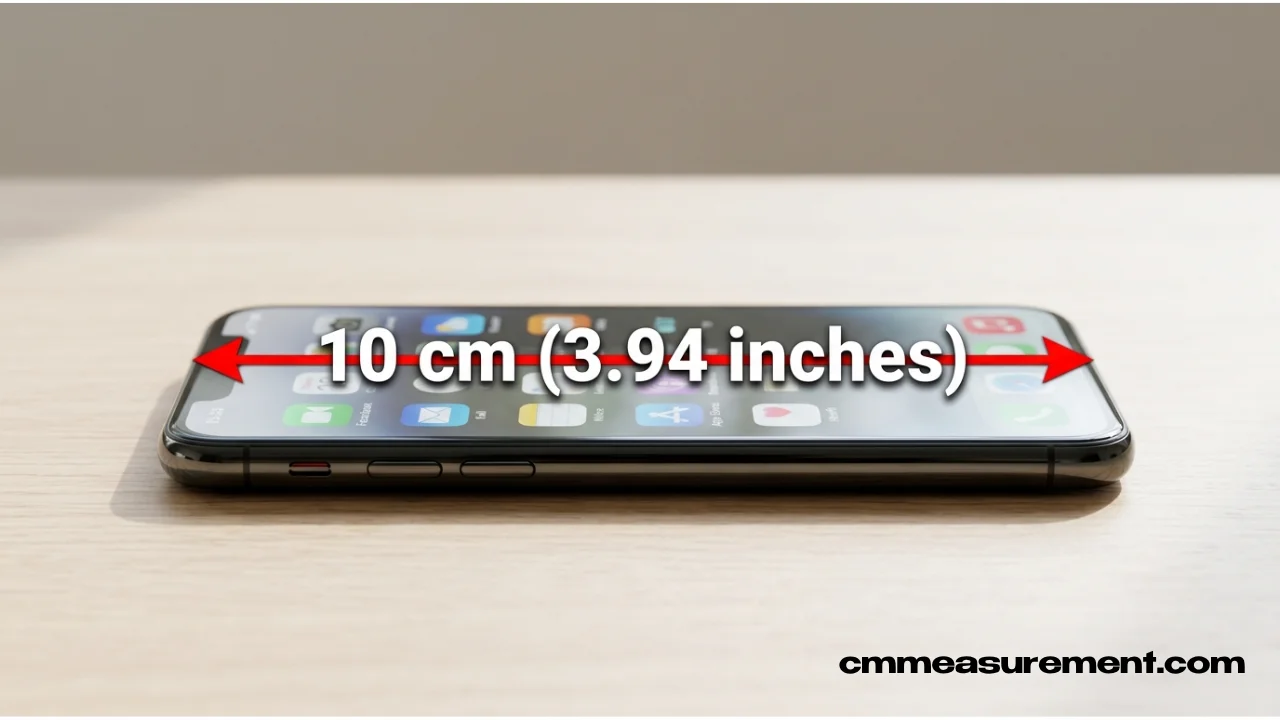
A standard smartphone width — Most phones today measure close to 7–7.5 cm across, but larger phones and cases push toward the 10 cm mark. Hold your phone sideways, and you’re already picturing the size.
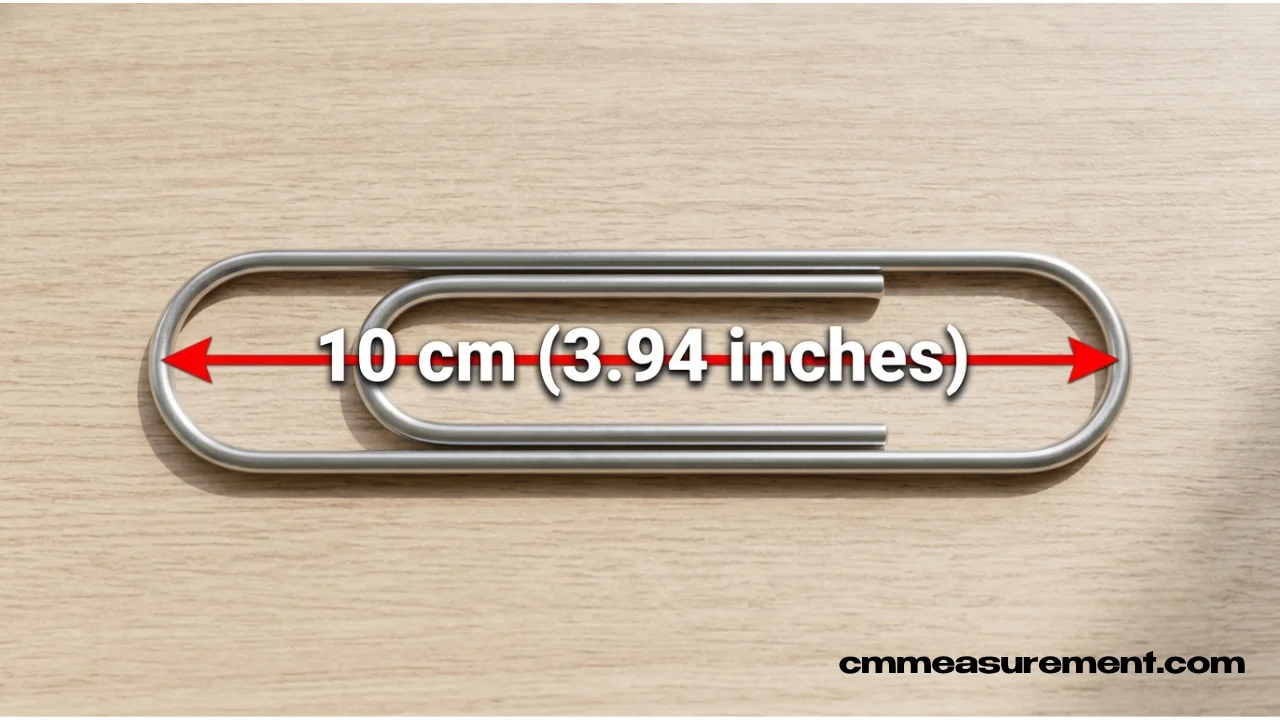
A jumbo paperclip — Regular paperclips run about 3 cm, but oversized “jumbo” clips used for thick paper stacks stretch close to 10 cm. Office drawers everywhere hide this exact example.
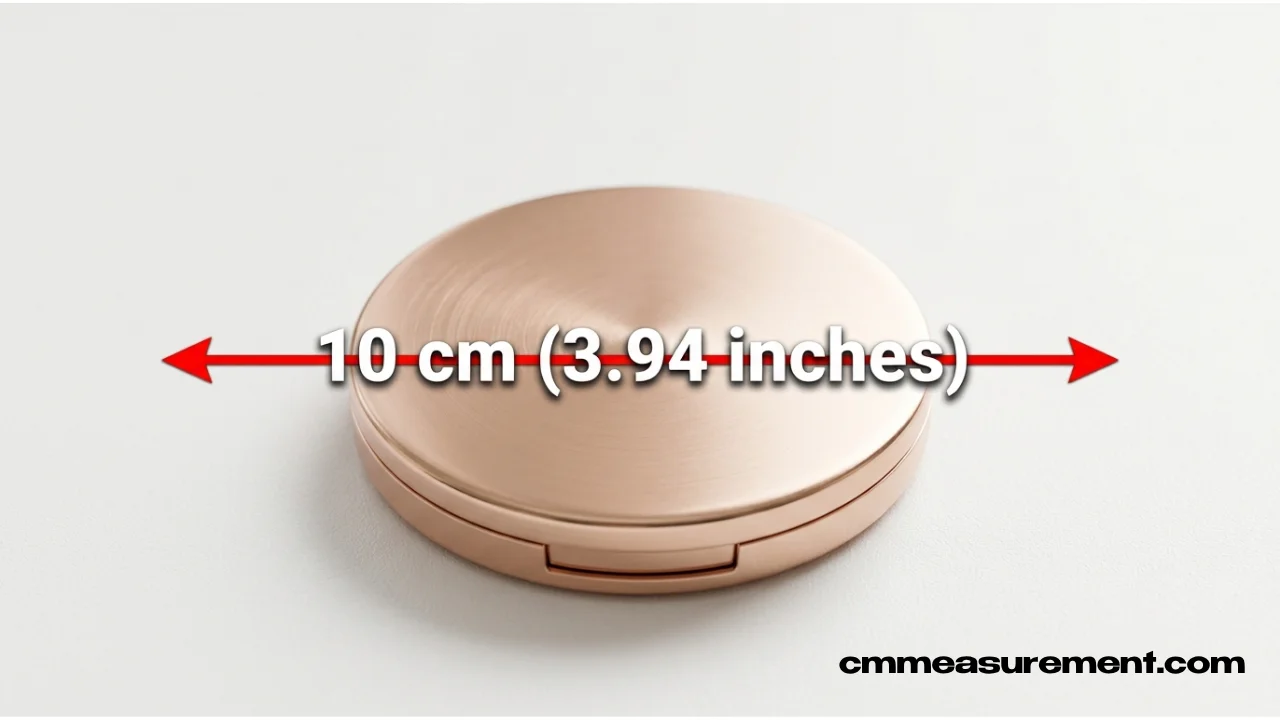
A compact powder case or small hand mirror — Many travel-size beauty compacts measure right around 10 cm across, which is part of why they fit neatly into a purse or clutch.
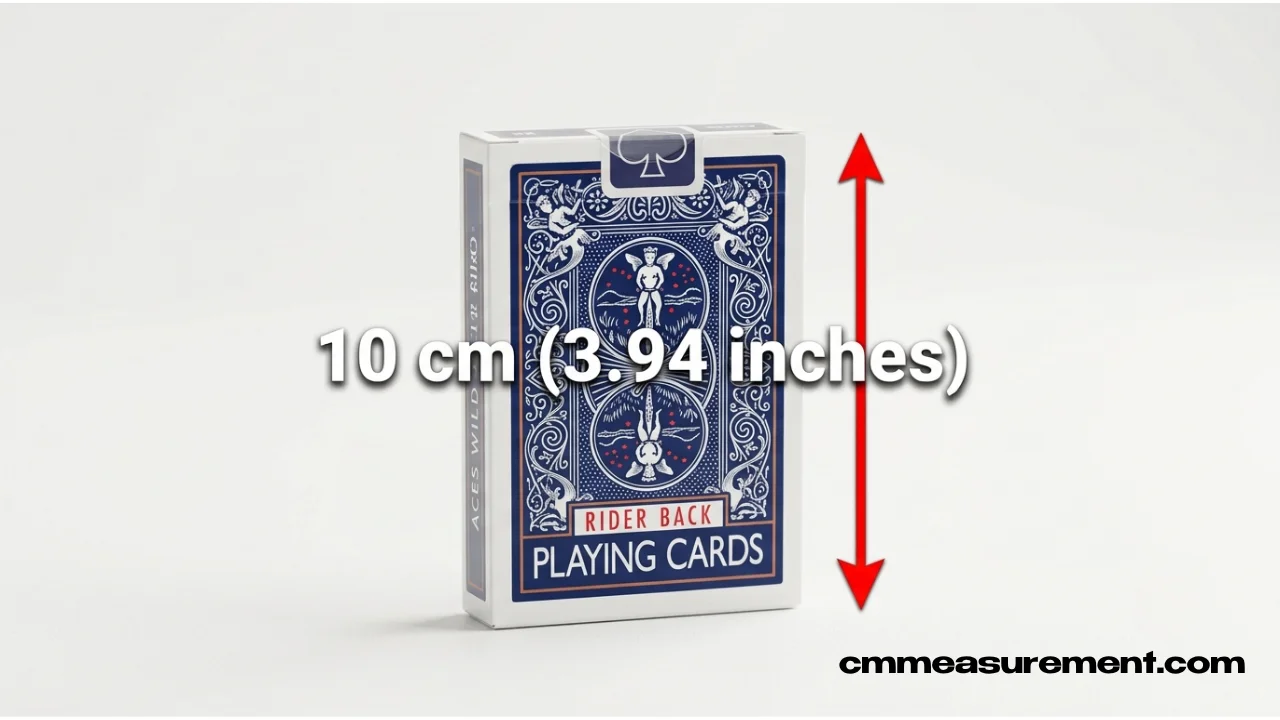
A deck of playing cards (height) — Stand a standard deck upright, and its height lands close to this measurement, giving you a tactile, familiar reference.
Must Visit: How Long Is 1 cm? 7 Real-Life Examples
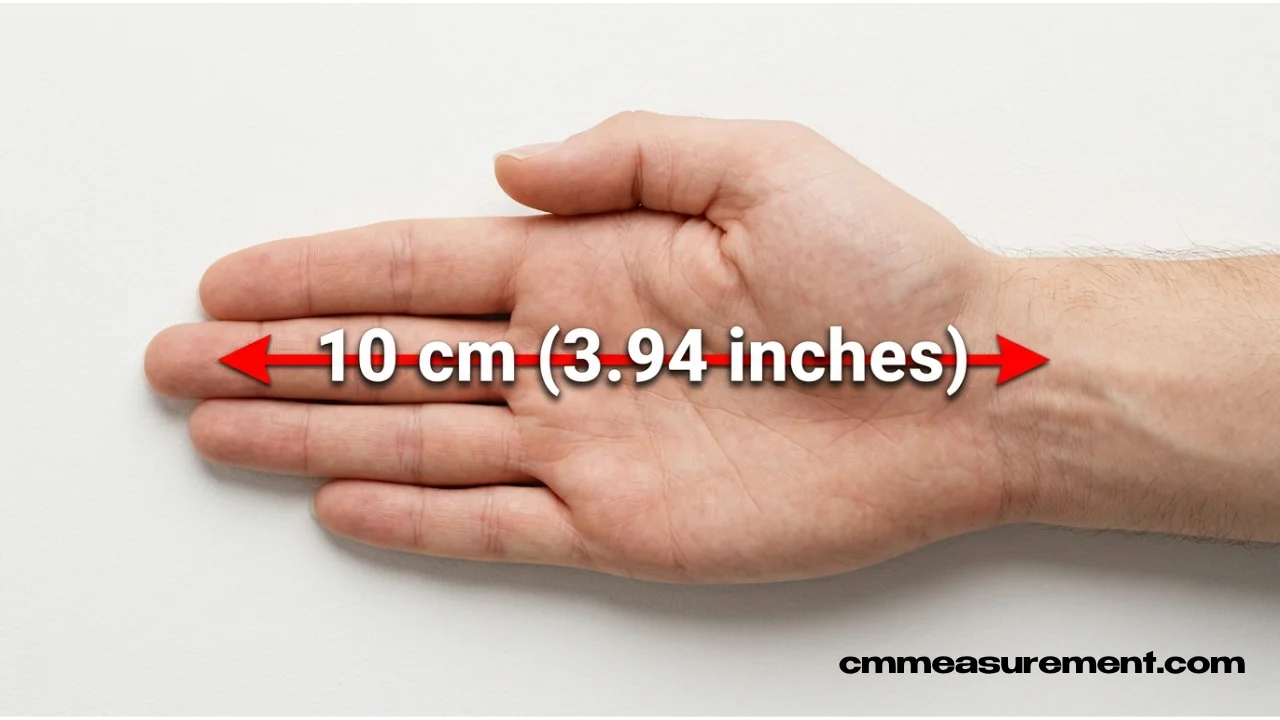
An adult palm width — Spread your hand flat. The width across your palm, from thumb-edge to pinky-edge, is often close to 10 cm — one reason “handspan estimation” is a real technique used in fieldwork and quick measurements.
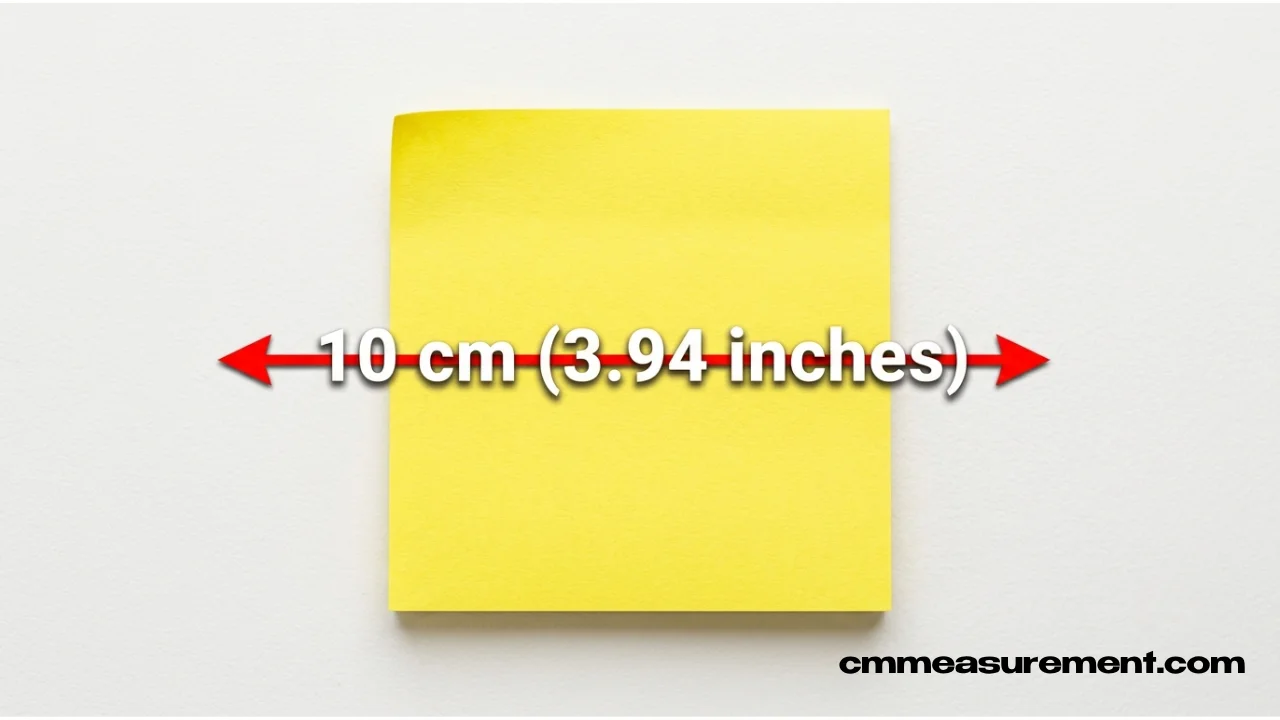
A standard sticky note — Square Post-it notes commonly measure close to this size on each side, making them a go-to visual for teachers and designers alike.
A small kitchen spoon — A standard-size teaspoon or small serving spoon frequently measures near 10 cm from tip to handle end.
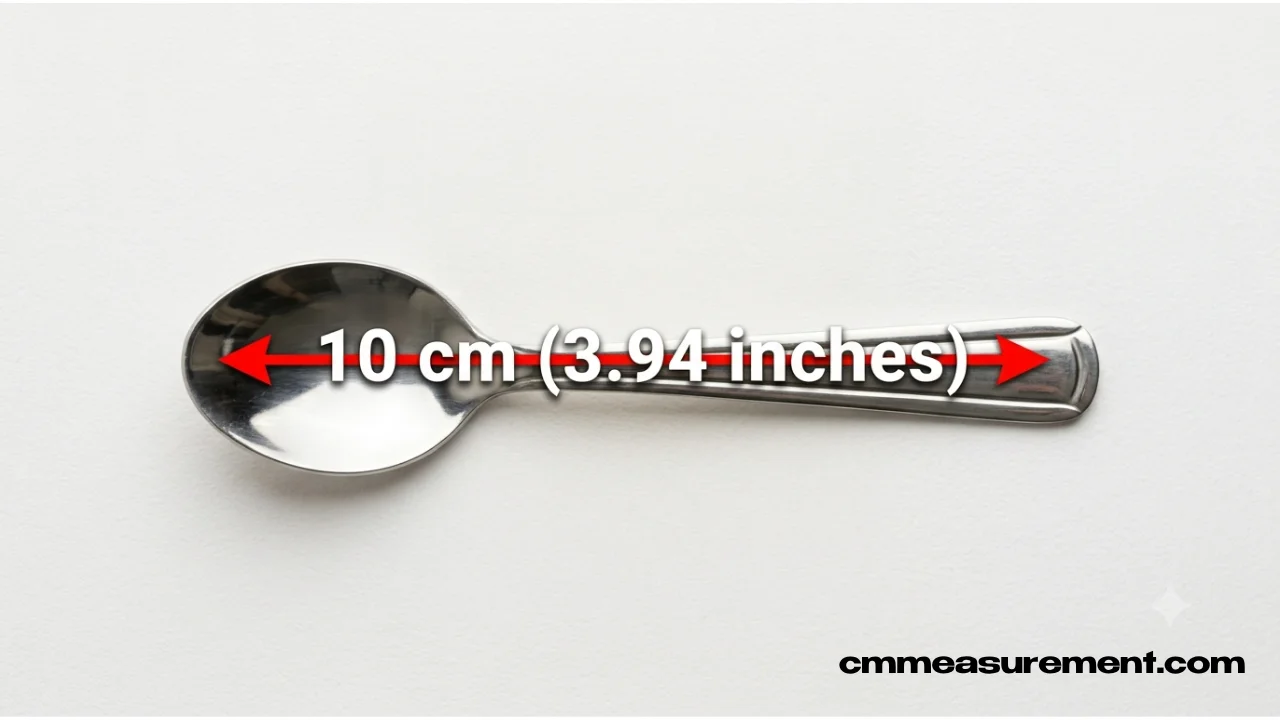
Line up any of these next to what you’re measuring, and you’ll have an instant, no-tools-needed size check.
How to Measure 10 cm Without a Ruler
No ruler nearby? You’ve still got options — and they’re more reliable than guessing.
Use a credit card as a benchmark. Standard credit cards measure 8.5 cm long, so 10 cm is just a bit longer than a full card’s length. This trick works anywhere, since almost everyone carries one.
Use your smartphone. Many phones are close to 10 cm tall or wide, especially larger models. It’s not precise, but it’s fast.
Can I use my phone as a ruler? Yes — and more accurately than the palm method. Both iPhones (via the built-in Measure app) and Android devices (via Google’s Measure feature) use augmented reality to calculate real-world distances through the camera. For quick estimates, this beats guesswork every time.
Use your palm as backup. When digital tools aren’t available, your hand doubles as a built-in measuring device — see the next section for specifics.
How Many Fingers Is 10 Centimeters?
A common question, and a genuinely useful trick for quick estimates.
The average adult finger is roughly 1.5 to 2 cm wide. That means 4 fingers held together, side by side, land close to 10 cm — a handy rule of thumb (literally) when no tools are around.
Keep in mind: finger width varies by hand size, so this method works better as a rough guide than an exact measurement. Children’s fingers are narrower, so the “4 finger rule” shifts closer to 5-6 fingers for a young child’s hand. For anything requiring precision — sewing, crafts, home repairs — a real measuring tool still wins.
FAQS
How long is a 10 cm example?
A jumbo paperclip, a deck of cards standing upright, or a small kitchen spoon are all close to 10 cm long.
How many fingers is 10 centimeters?
About 4 adult fingers held side by side, since each finger averages 1.5–2 cm in width.
What does 10cm long look like?
Picture something just under 4 inches — slightly longer than a credit card, close to the width of an adult palm.
How can I measure 10 cm without a ruler?
Use a credit card (8.5 cm) as a close reference.
How to measure 10 cm with fingers?
Line up 4 fingers side by side — that width typically comes close to 10 cm for most adults.
Can I use my phone as a ruler?
Yes. iPhones and Android phones both include AR-based measuring App.
Conclusion
10 cm equals 3.94 inches — a size you’ll recognize instantly once you picture a jumbo paperclip, a deck of cards, or your own palm width. Next time you see “10 cm” on a product listing, a recipe, or a school assignment, you won’t need to pull up a converter — you’ll already know exactly what it looks like.

Timmy Zeeshan is the founder and lead editor of CM Measurement, where he writes and maintains a growing library of unit conversion tools and practical measurement guides. With a background in engineering and a long-standing interest in everyday math problems, Timmy started CM Measurement after growing frustrated with cluttered, ad-heavy converter websites that made simple conversions harder than they needed to be.