Ever tried picturing 1 foot without grabbing a tape measure? It’s trickier than it sounds. You know the number — 12 inches — but numbers alone rarely paint a clear picture.
That’s where everyday objects come in handy. Below, you’ll get the exact conversion, a few quick hand-measuring tricks, and 8 familiar items that show you exactly what 1 foot looks like in real life.
Table of Contents
How Long Is 1 Foot: Quick Answer
1 foot equals 12 inches. It also equals 30.48 centimeters and 0.3048 meters. This makes the foot (ft) one of the most commonly used length units in the US customary system, right alongside the inch and the yard. If you are interested to see cm into feets then must try this tool.
What is 1 foot long? Think of it as roughly the length of a standard school ruler, or about one-third the height of a typical kitchen countertop. It’s a length most Americans already interact with daily, even without realizing it.
What Is 1 Foot in Inches, Centimeters, and Meters
The foot has been standardized since 1959, when the US and several other countries agreed on an exact international definition. According to reference sources on measurement standards, <cite index=”19-1″>a foot has been defined as exactly 0.3048 meters since that agreement, tying it precisely to the meter used in the International System of Units</cite>.
Here’s the full breakdown:
1 ft = 12 inches 1 ft = 30.48 centimeters 1 ft = 0.3048 meters
Is 1 meter exactly 3 feet? No — this is a common mix-up. One meter actually equals about 3.28 feet, not a flat 3. Since 1 foot is only 0.3048 meters, you’d need slightly more than 3 feet to reach a full meter. That extra 0.28 feet (roughly 3.4 inches) is easy to overlook but matters for precise measurements, like flooring or fabric cutting.
What Does 1 ft Look Like? 8 Everyday Things That Are 1 Foot Long
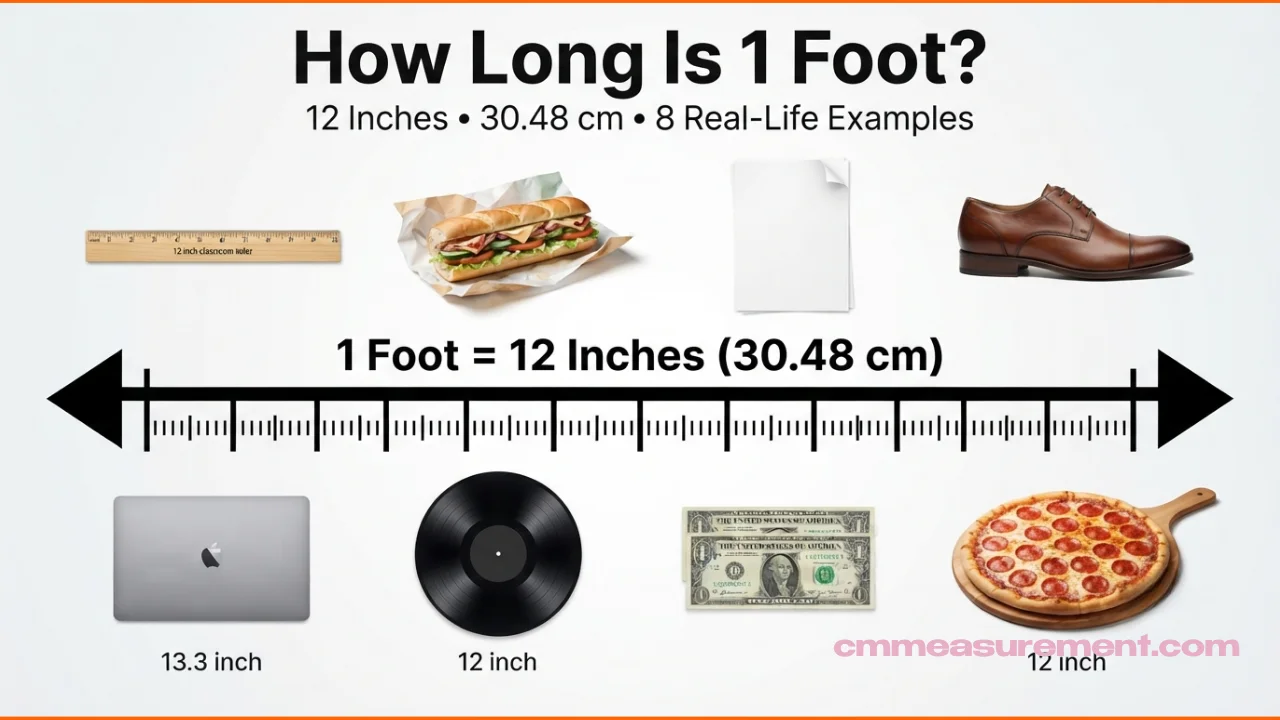
Numbers only go so far. Here are 8 things that are 1 foot long, each one something you’ve likely handled this week.
Must Visit: How Long Is 7 Feet? 7 Everyday Objects That Are Exactly 7 Feet Long
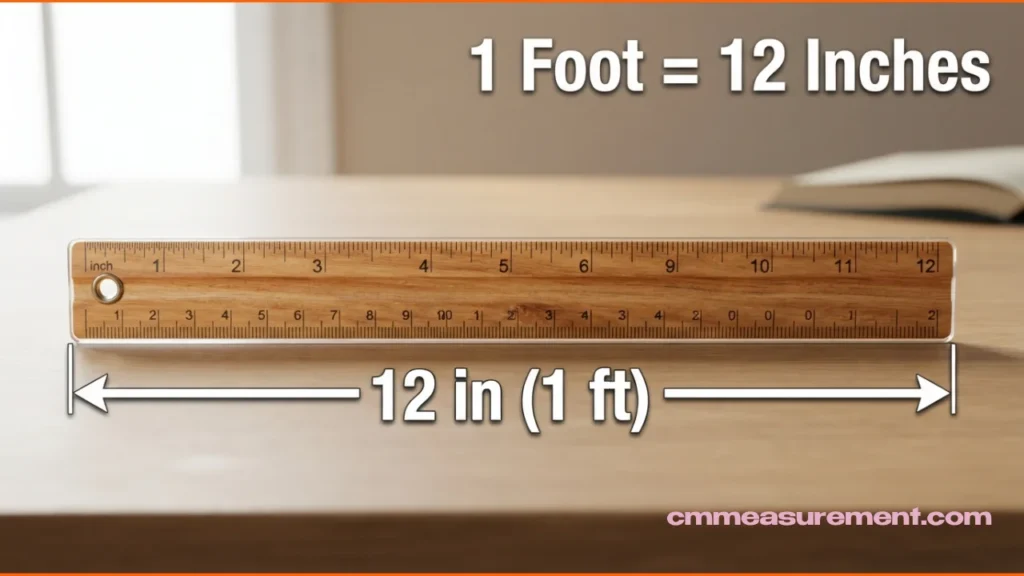
A standard classroom ruler — Nearly every ruler sold in the US measures exactly 12 inches, making it the most literal, exact match for 1 foot you’ll find in daily life.
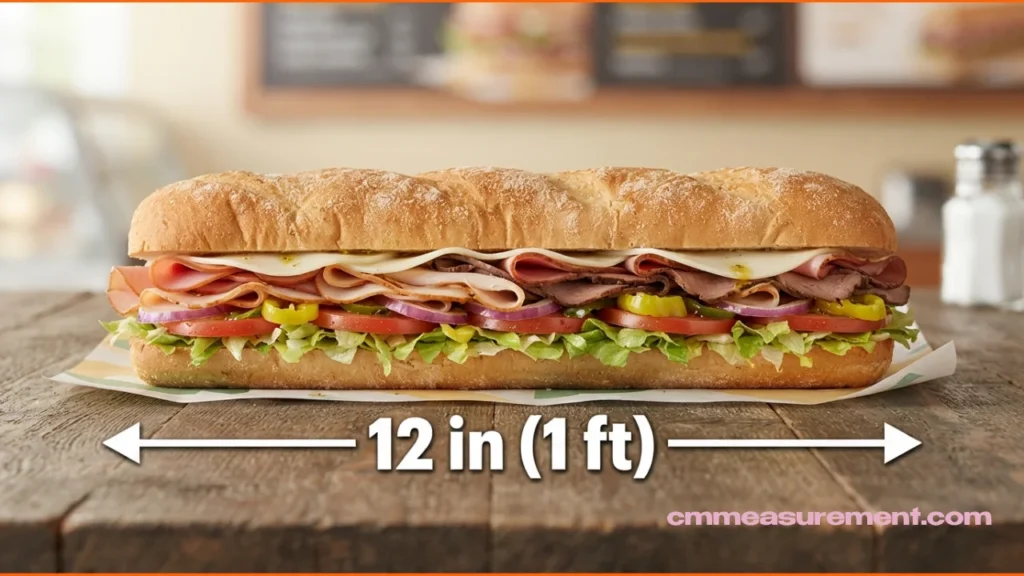
A footlong sub sandwich — Popular sandwich chains built an entire menu category around this exact length, and it remains one of the most recognizable food-based length references in the country.
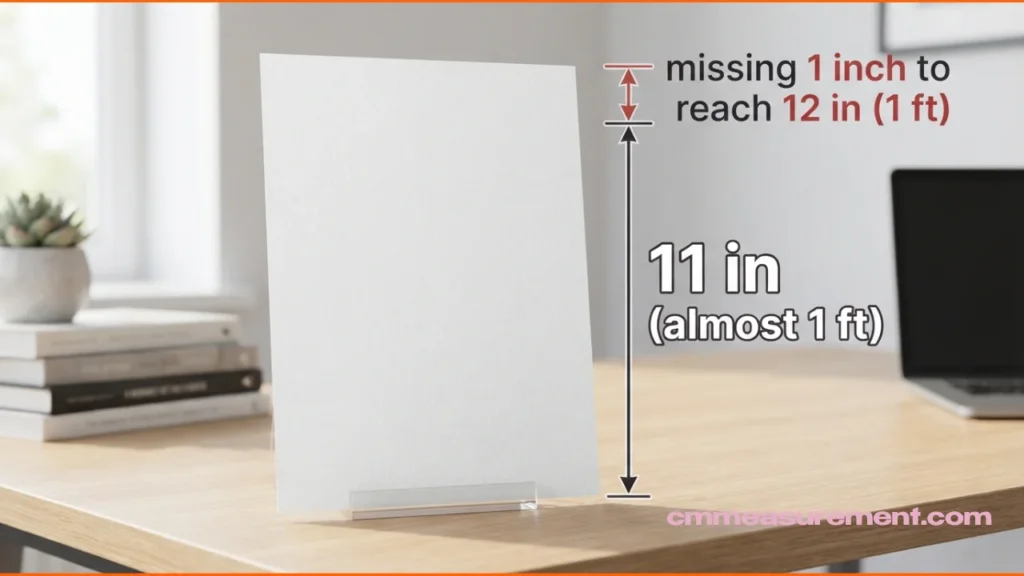
A sheet of letter paper — Standard US printer paper measures 11 inches on its long side, just shy of a full foot, making it a close and constantly available visual anchor.
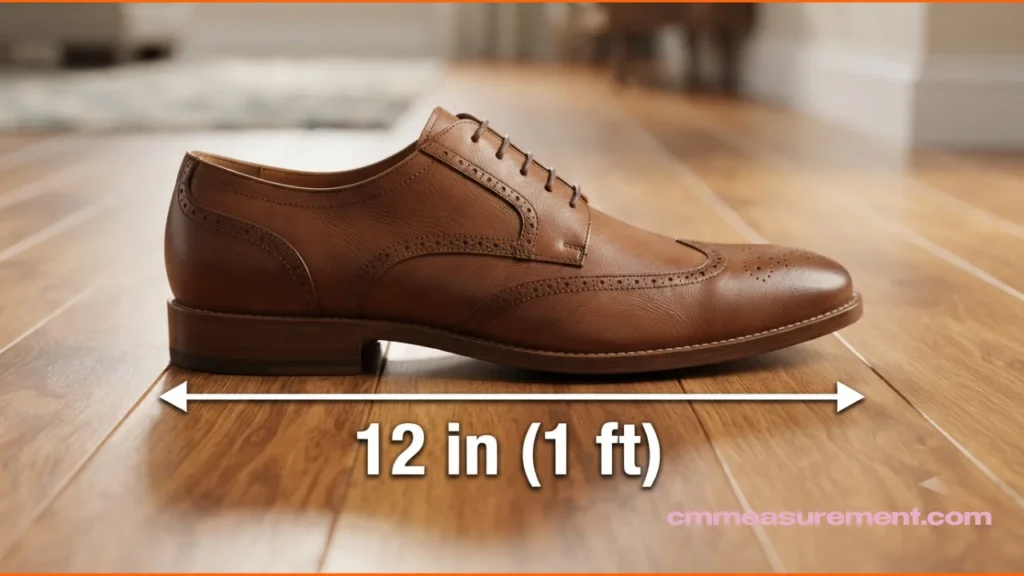
A men’s dress shoe (size 12) — Adult shoe lengths cluster near 12 inches, which is part of why the international foot definition itself is tied to shoe-sizing history.
Must Visit: How Long Is 12 Feet? 12 Feet in Inches & 7 Real-Life Size Examples
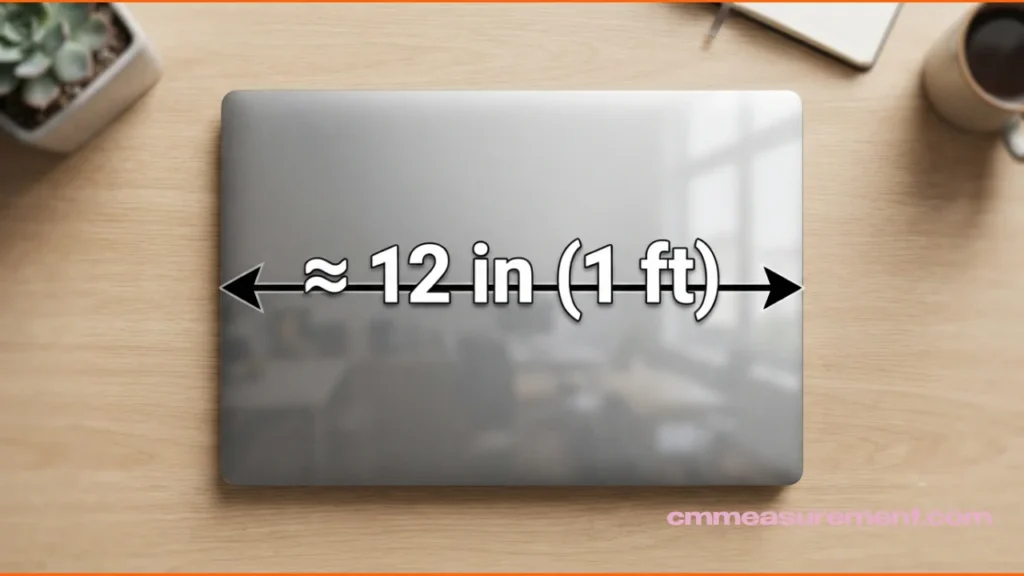
A laptop’s width — Most 13- to 14-inch laptops measure close to 12 inches across the base, giving you a portable, always-nearby reference for this length.
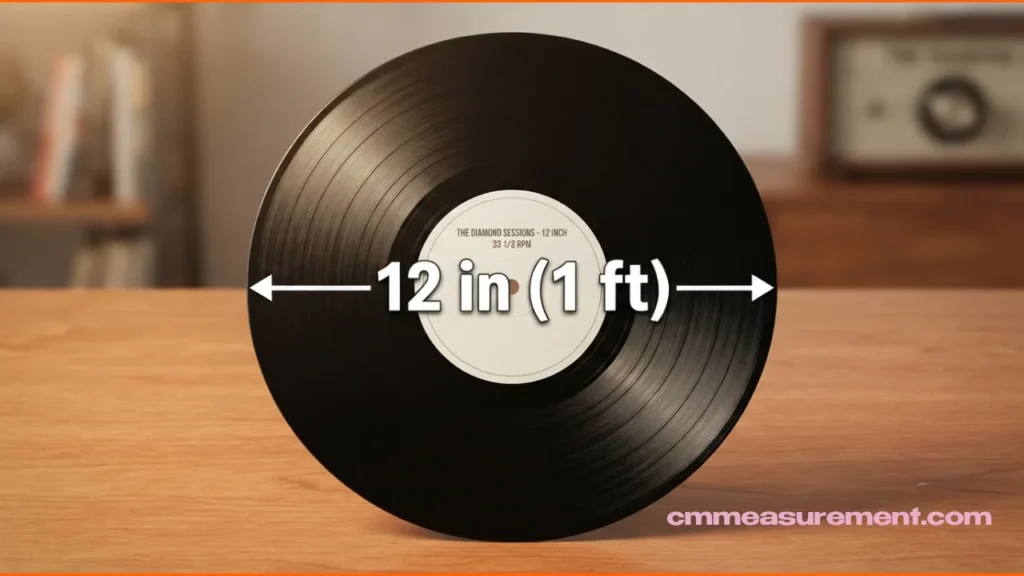
A vinyl record — Classic 12-inch vinyl records are named for this exact measurement, and the format has stayed a precise, unchanged standard since the mid-1900s.
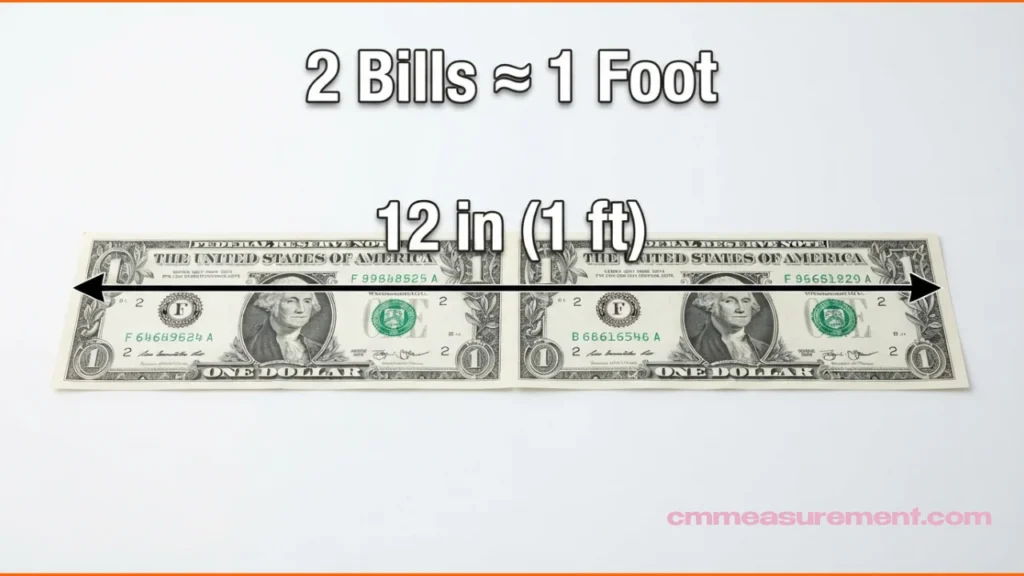
Two dollar bills placed end to end — A single bill measures about 6 inches long, so lining up two gives you a near-perfect foot-long stretch using something in most people’s wallets.
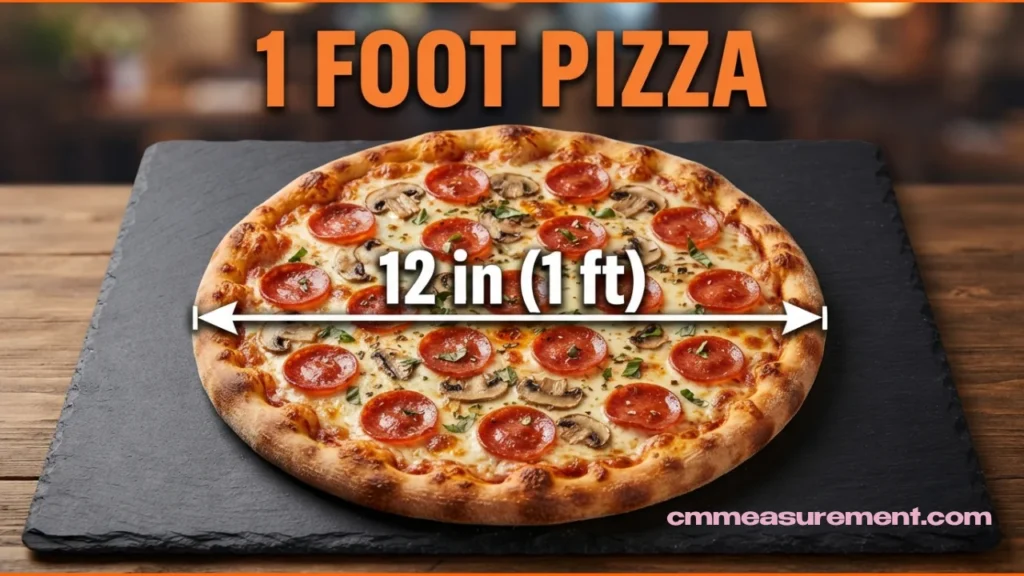
A small 12-inch pizza — Pizza sizing is measured by diameter, and a small pie landing at 12 inches gives you a circular, rather than straight-line, way to visualize the same length.
How to Measure 1 Foot by Hand (No Ruler Needed)
How to measure 1 foot by hand? You don’t always need a tool. A few body-based tricks can get you close enough for quick estimates.
Use your forearm. For most adults, the distance from elbow to wrist lands somewhere between 9 and 11 inches — close to a foot, though it varies by height and build.
Try your shoe. Since adult shoes often run near 12 inches, placing one heel-to-toe on the floor gives you an instant, portable ruler.
Count hand spans. An average adult hand span (thumb tip to pinky tip, stretched wide) measures roughly 8 to 9 inches. One and a half spans typically lands close to 1 foot.
None of these methods are lab-precise, but they’re genuinely useful when you’re shopping, rearranging furniture, or estimating space without carrying a tape measure.
1 Foot on a Ruler and Other Measuring Tools
What is 1 foot on a ruler? It’s the entire length of the ruler itself — from the very first tick mark at zero to the last one at 12 inches. If you’ve ever used a school ruler, you’ve already held a foot in your hands.
It’s worth separating this from a yardstick, which measures 3 feet (36 inches) — three times longer than a standard ruler. Mixing these two up is one of the most common measurement errors people make, especially when estimating furniture or wall space at a glance.
How long is 1 ft visually? Picture a ruler laid flat, or a footlong sandwich stretched across a plate. Both give you an instant, no-math way to judge whether something nearby is close to 1 foot.
FAQs
How long is 1 ft visually?
Visually, 1 foot matches the length of a standard 12-inch ruler or a footlong sandwich.
What is 1 foot long?
A foot is 12 inches, or 30.48 centimeters. Common real-world matches include a ruler, a vinyl record, and a small 12-inch pizza measured across its diameter.
What does 1 ft look like?
It looks like the full length of a classroom ruler — a straightforward, exact visual reference most people already own or have used.
How to measure 1 foot by hand?
Use one and a half hand spans, a shoe placed heel-to-toe, or roughly the length of your forearm from elbow to wrist.
What is 1 foot on a ruler?
It’s the ruler’s entire length, from the 0-inch mark to the 12-inch mark.
Is 1 meter exactly 3 feet?
No. One meter equals about 3.28 feet, not exactly 3. The difference comes out to roughly 3.4 extra inches beyond 3 feet.
Conclusions
foot breaks down to 12 inches, 30.48 centimeters, or 0.3048 meters — a fixed, standardized length used constantly across the US. Once you connect that number to something familiar, like a ruler, a footlong sandwich, or two dollar bills laid end to end, it stops feeling abstract.
Whether you’re estimating space at home, double-checking a shoe size, or just satisfying curiosity, these everyday anchors make 1 foot easy to picture anytime, anywhere.

Timmy Zeeshan is the founder and lead editor of CM Measurement, where he writes and maintains a growing library of unit conversion tools and practical measurement guides. With a background in engineering and a long-standing interest in everyday math problems, Timmy started CM Measurement after growing frustrated with cluttered, ad-heavy converter websites that made simple conversions harder than they needed to be.