Fifty ounces might sound small on paper, but pick it up and you’ll notice it right away. How heavy is 50 ounces in real terms comes down to one surprising fact: it’s heavier than most people expect.
Here’s the exact 50 ounces in weight conversion, plus seven powerful comparisons that make this weight instantly relatable.
Table of Contents
How Heavy Is 50 Ounces? (Grams, Kilograms & Pounds Explained)
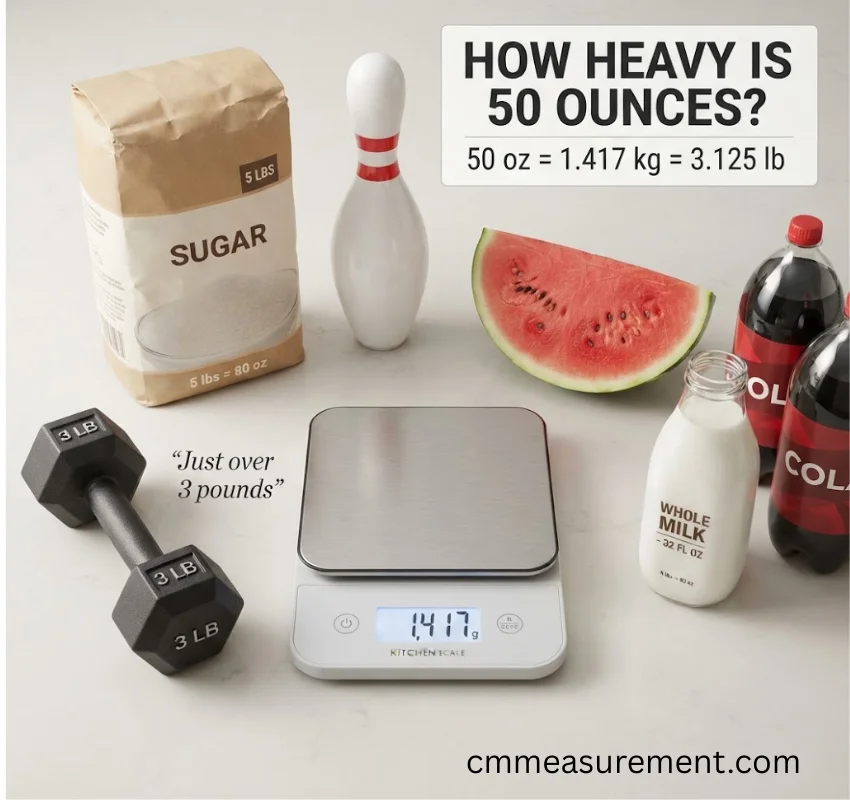
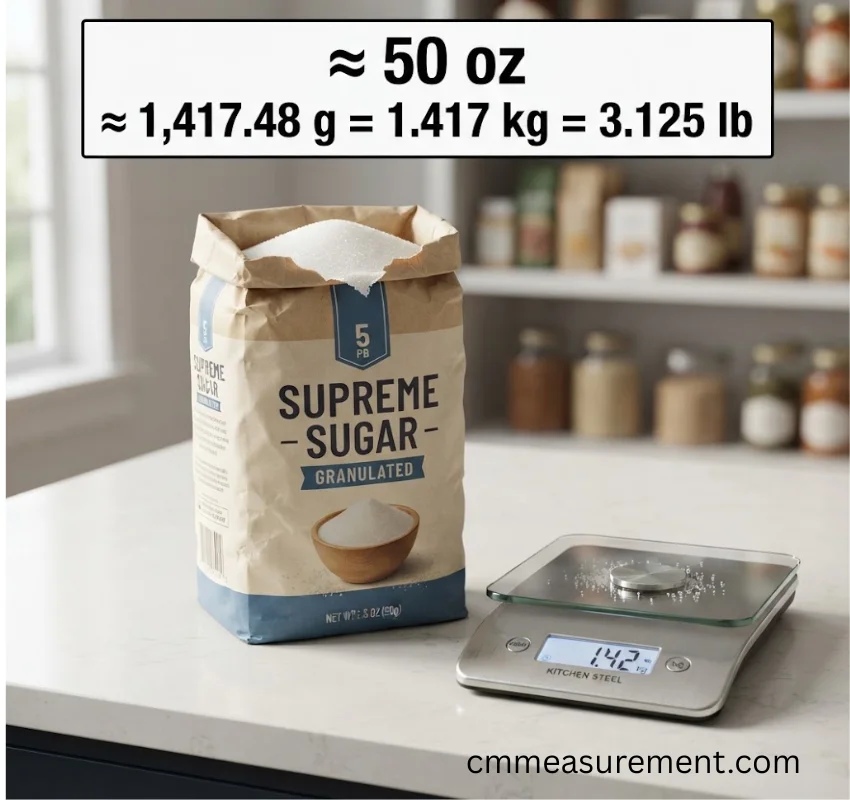
Let’s start with the number. 50 ounces equals 1,417.48 grams, or about 1.417 kilograms. In more familiar US terms, that’s 3.125 pounds — a figure that directly answers how much is 50 oz in kg and puts this weight into everyday perspective.
The conversion math is straightforward. One avoirdupois ounce, the standard ounce used across the US for food, shipping, and body weight, equals 28.35 grams. Multiply that by 50, and you land at 1,417.48 grams. To convert straight to pounds, multiply ounces by 0.0625 — so 50 × 0.0625 gives you exactly 3.125 lbs.
Here’s a quick-reference table showing where 50 ounces sits among nearby weights:
| Ounces (oz) | Kilograms (kg) | Pounds (lb) |
|---|---|---|
| 30 oz | 0.850 kg | 1.875 lb |
| 40 oz | 1.134 kg | 2.5 lb |
| 50 oz | 1.417 kg | 3.125 lb |
| 60 oz | 1.701 kg | 3.75 lb |
| 70 oz | 1.984 kg | 4.375 lb |
Notice how 50 ounces lands just above 3 pounds. That single detail makes this weight far easier to remember: it’s a little heavier than three pounds of anything.
7 Powerful Real-Life Comparisons: What Weighs 50 Ounces?
Numbers become useful once you connect them to something you can actually pick up. Here are seven everyday objects that weigh close to 50 ounces — a strong answer to what this “surprisingly heavy” weight actually feels like.
A large bag of granulated sugar. Many sugar bags sold in US grocery stores weigh close to 4 pounds (64 oz), so a bag roughly three-quarters full lands right around 50 ounces.
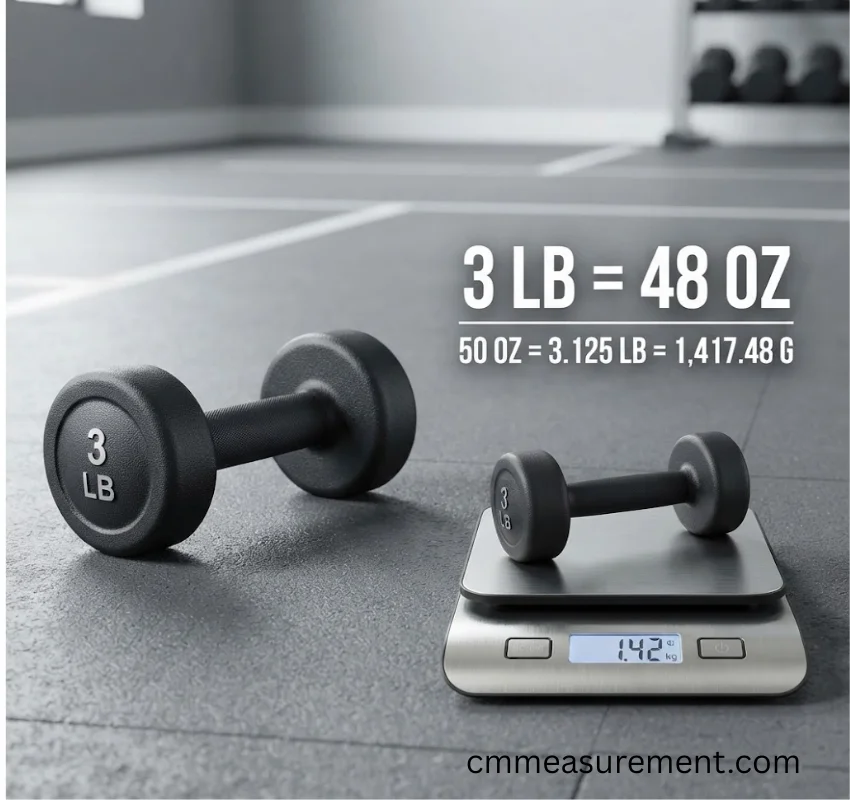
A small dumbbell. Home gym dumbbells commonly come in 3-pound increments, and a single 3-pound dumbbell sits almost exactly at the 50-ounce mark, making it one of the most precise real-life comparisons available.
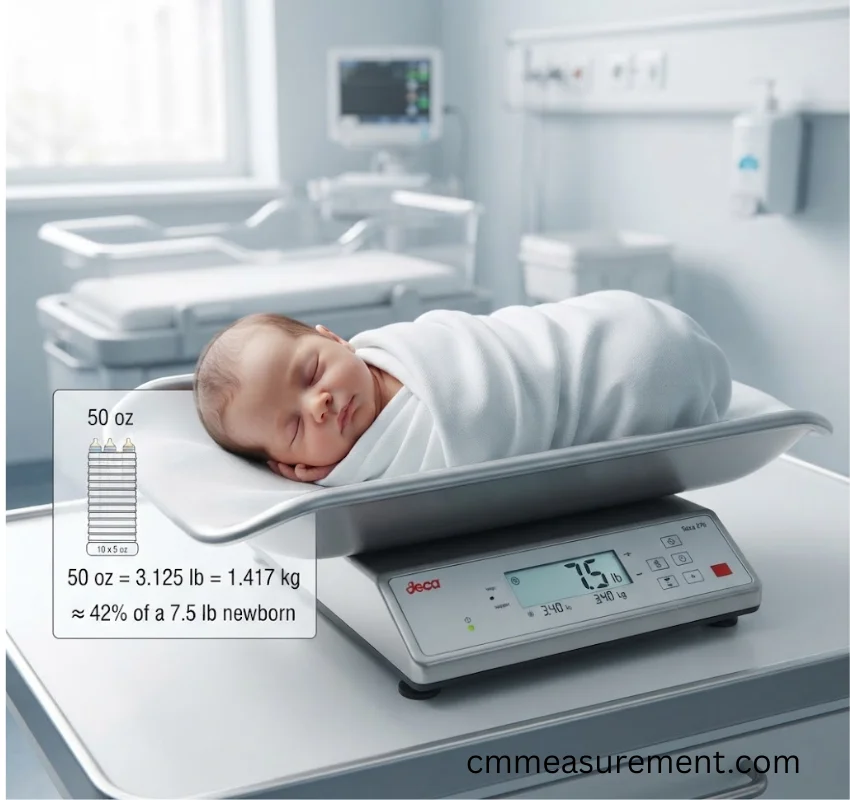
A newborn baby, minus a bit. The average newborn in the US weighs around 7.5 pounds (120 oz), so 50 ounces represents roughly two-thirds of a typical newborn’s weight — a comparison that resonates with new parents.
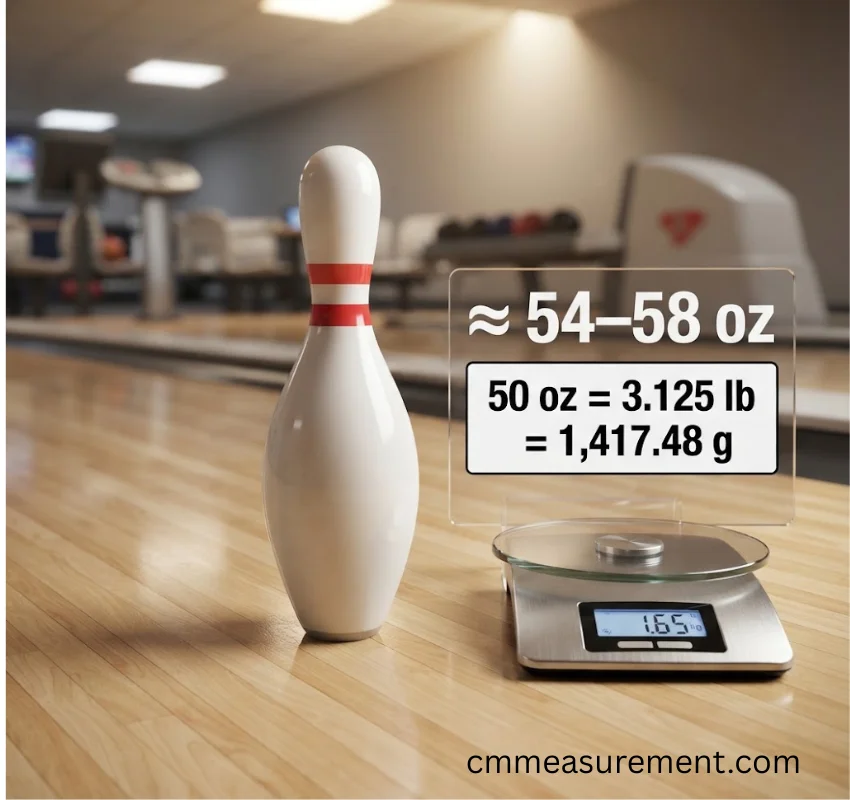
A standard bowling pin. Regulation bowling pins weigh between 3 pounds 6 ounces and 3 pounds 10 ounces, putting them just slightly above the 50-ounce range and offering a familiar sports-related reference.
Must Visit: How Heavy Is 10 Ounces? 8 Amazing Real-Life Comparisons to Easily Visualize This Powerful Weight
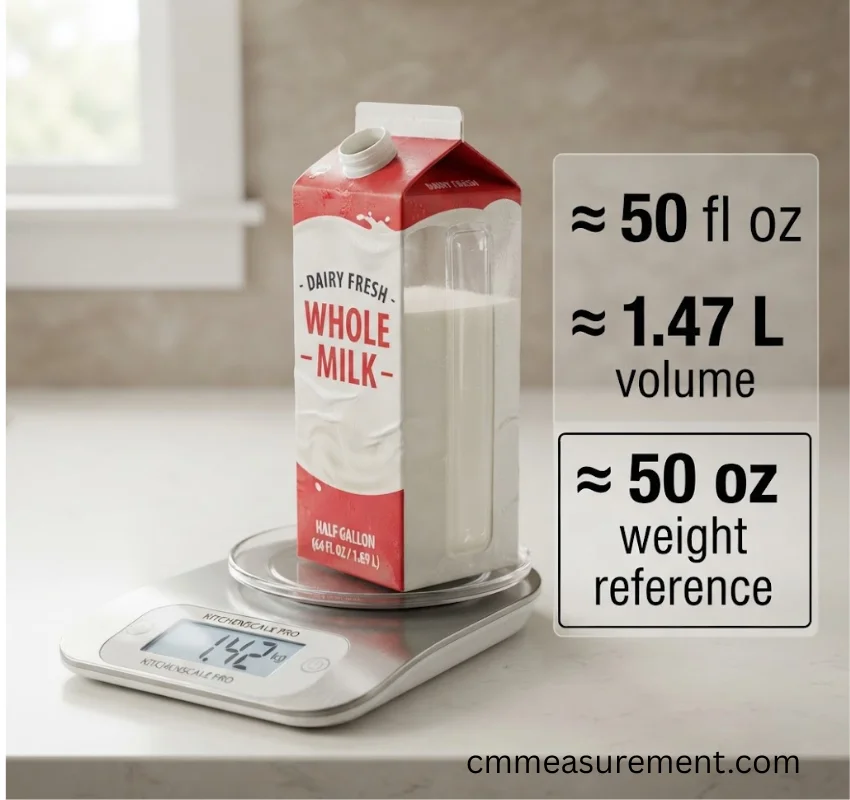
A half-gallon of milk, roughly. A full half-gallon of milk weighs close to 4.3 pounds, so about three-quarters of that carton approximates 50 ounces.
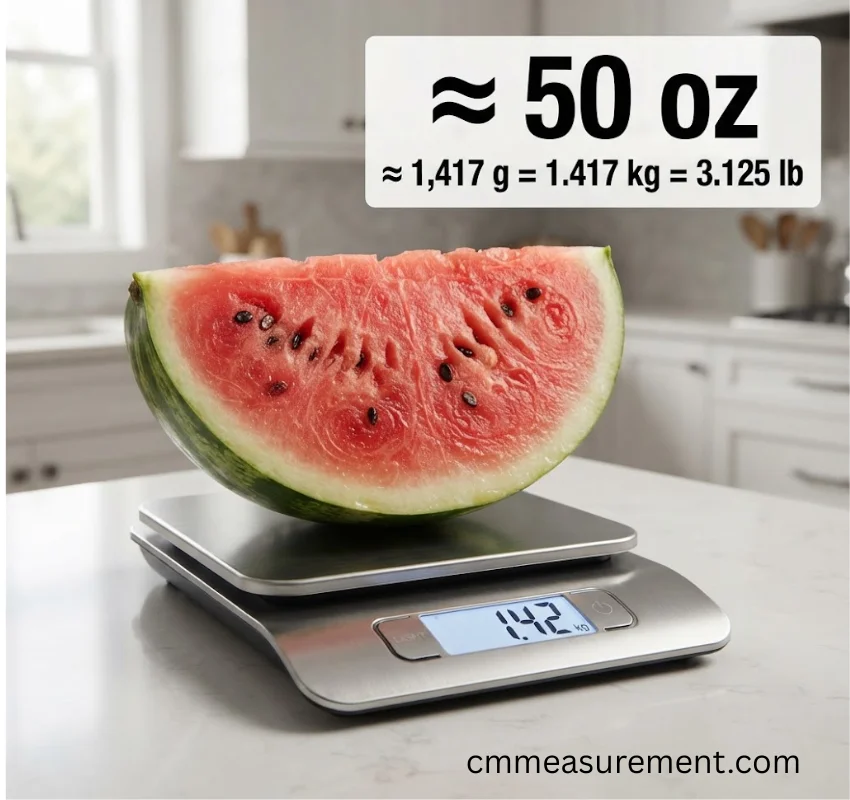
A large watermelon slice. A quarter-cut of a medium watermelon often weighs in this range, giving grocery shoppers a produce-aisle reference point.
Two and a half 2-liter soda bottles. Each empty 2-liter bottle weighs little, but filled with liquid, a single bottle plus half of another lands close to 50 ounces combined.
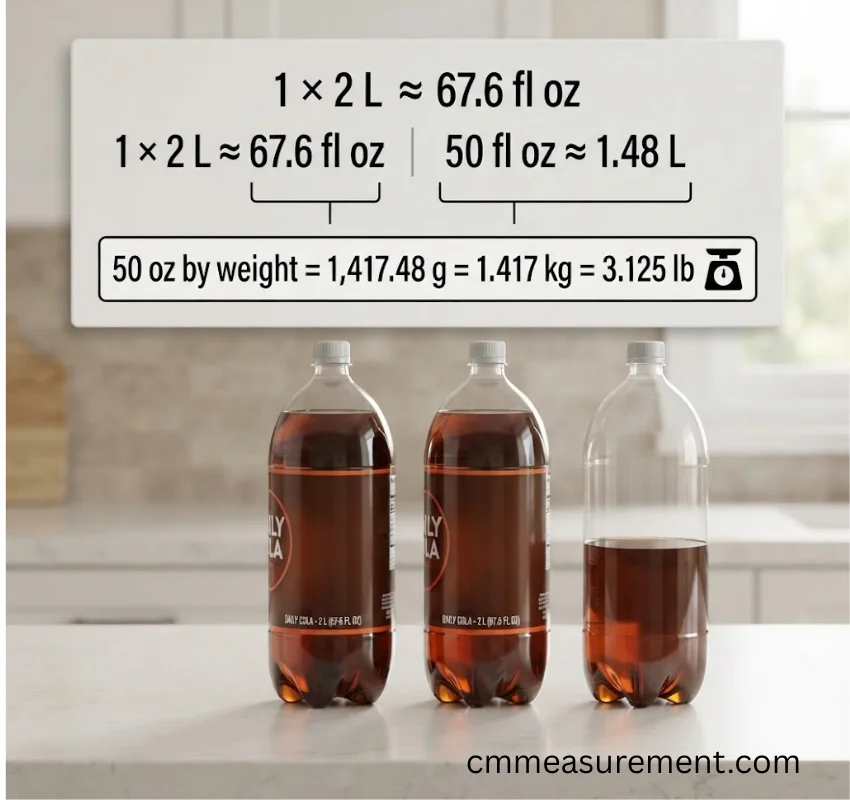
Each of these builds a tactile memory for this exact weight, making future estimates far easier without a scale.
How Much Does 50 Oz of Water Weigh? Is 50 Oz Equal to 1 Liter?
Water offers one of the cleanest comparisons in measurement, since its density sits very close to 1 gram per milliliter. How much does 50oz of water weigh? Almost exactly 50 ounces, since fluid ounces and weight ounces nearly align for water specifically.
This leads to a related and commonly searched question: is 50 oz 1 liter? Not quite. One liter equals about 33.8 fluid ounces, meaning 50 ounces is noticeably larger than a liter — roughly 1.5 liters, in fact. This is a useful distinction for anyone comparing bottled water sizes, since many bottles are labeled in liters while US recipes and nutrition labels often use ounces.
How Heavy Is 5kg of Water? Putting 50 Ounces Into Perspective
Zooming out gives useful context. How heavy is 5kg of water? Five kilograms converts to about 176 ounces, meaning 50 ounces is roughly 28% of that total weight. Picture just over a quarter of a 5kg water jug, and you’ve built an accurate mental model for the 50-ounce mark.
This comparison matters for anyone dealing with shipping, bulk grocery items, or fitness equipment, where weights are often listed in kilograms rather than ounces. Knowing how these two units relate makes switching between them far less confusing.
What Household Items Weigh Approximately 1 Ounce?
Since 50 ounces is really just fifty single ounces added together, it helps to know what household items weigh approximately 1 ounce individually.
A slice of bread, a single AA battery, a pencil, a slice of cheese, or a small handful of about 22 almonds all weigh close to one ounce. Picture fifty of any of these stacked together, and you’ve mentally rebuilt the full 50-ounce weight from the ground up — a helpful trick anyone can use without ever touching a kitchen scale.
FAQs
How heavy is 50 ounces?
50 ounces weighs 1,417.48 grams, or about 1.417 kilograms, which converts to exactly 3.125 pounds in the US customary system.
What household items weigh approximately 1 ounce?
Common 1-ounce items include a slice of bread, one AA battery, a pencil, or a small handful of almonds.
How much is 50 oz in kg?
50 ounces equals approximately 1.417 kilograms, using the standard avoirdupois ounce-to-gram conversion.
How much does 50oz of water weigh?
50 fluid ounces of water weighs almost exactly 50 ounces by weight, since water’s density is very close to 1 gram per milliliter.
Is 50 oz 1 liter?
No. One liter equals about 33.8 fluid ounces, so 50 oz is roughly 1.5 liters, making it noticeably larger than a single liter bottle.
How heavy is 5kg of water?
5kg of water weighs about 176 ounces, meaning 50 ounces represents just over a quarter of that total amount.
Conclusion
Fifty ounces (1.417 kilograms) becomes much clearer once it’s tied to something real — a small dumbbell, a bowling pin, or three-quarters of a newborn’s weight. Next time you see “50 oz” on a label or a shipping form, you’ll already know exactly how much that represents in your hands.

Timmy Zeeshan is the founder and lead editor of CM Measurement, where he writes and maintains a growing library of unit conversion tools and practical measurement guides. With a background in engineering and a long-standing interest in everyday math problems, Timmy started CM Measurement after growing frustrated with cluttered, ad-heavy converter websites that made simple conversions harder than they needed to be.