Twenty kilograms is a number people hear all the time — at the airport, at the gym, at the pet store. But numbers alone don’t mean much until you connect them to something real.
This guide breaks down exactly how heavy 20 kg is, using everyday objects you already know. By the end, you’ll know what it feels like, what it weighs in pounds, and whether you can lift it yourself.
Table of Contents
How Heavy Is 20 kg? Quick Conversion at a Glance
20 kg equals 44.09 pounds. That’s the number most people search for first, so let’s get it out of the way.
Here’s the full breakdown:
| Unit | Value |
|---|---|
| Kilograms | 20 kg |
| Grams | 20,000 g |
| Pounds | 44.09 lbs |
| Ounces | 705.48 oz |
| Stone | 3.15 st |
| Metric tons | 0.02 t |
The kilogram is the base unit of mass in the metric system, used almost everywhere in the world except the United States. The pound, by contrast, belongs to the imperial system that Americans use daily. Multiply any kilogram figure by 2.20462 to get pounds — that’s the conversion factor behind every number above, according to the National Institute of Standards and Technology.
So when someone asks “how much is 20 kg,” the short answer is simple: just under 45 pounds, or roughly the weight of a carry-on suitcase packed to the brim.
7 Real-Life Examples of Things That Weigh 20 kg
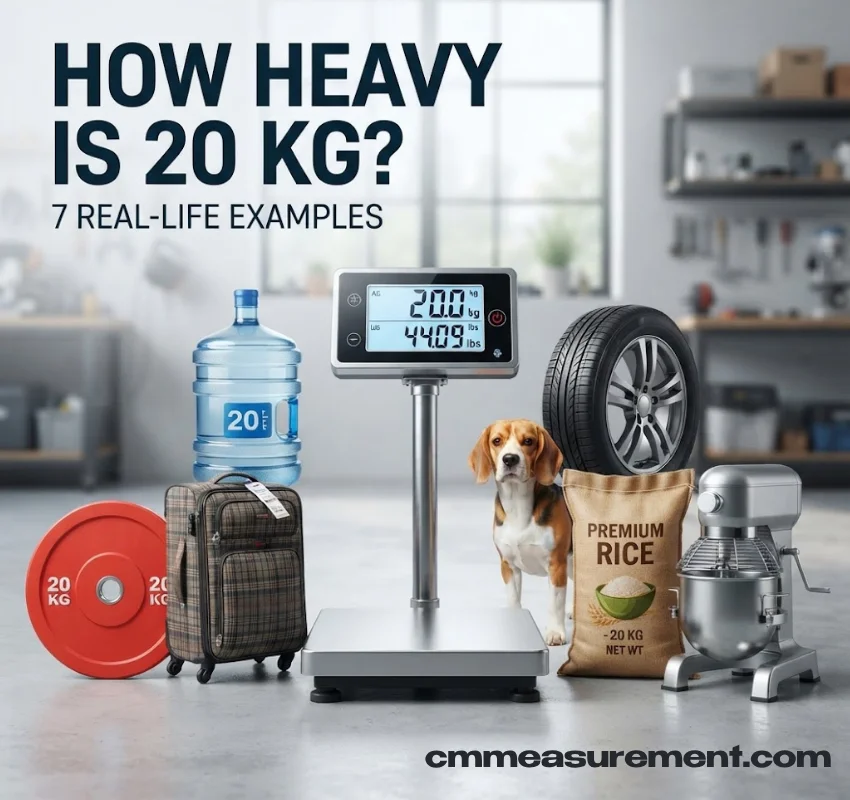
Numbers are abstract. Objects are not. Here are seven things that weigh close to 20 kg, chosen because you’ve probably touched at least one of them this month.
A Full 5-Gallon Water Jug

One liter of water weighs exactly one kilogram. That means a 20-liter jug — the kind sitting on office water coolers — weighs precisely 20 kg when full.
Lift one, and you’ll notice something odd: the water sloshes and shifts, which makes the load feel heavier and less predictable than a solid object of the same mass.
Must Visit: How Heavy Is 50 kg? 15 Powerful Real-Life Examples to Easily Visualize This Weight
A Standard Passenger Car Tire
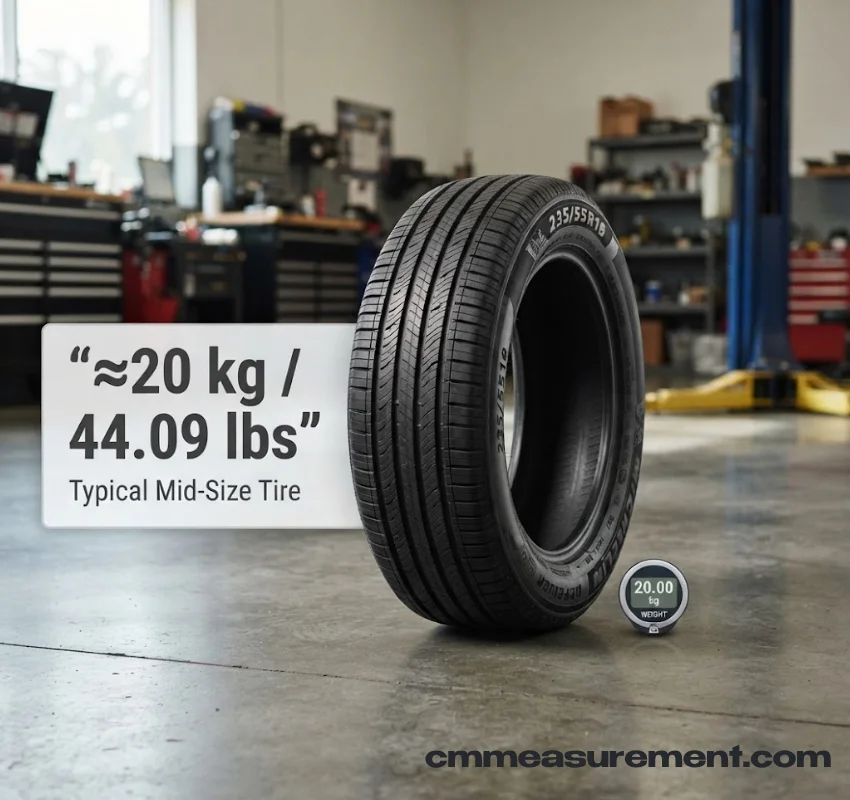
A mid-size sedan or SUV tire, without the metal rim, typically weighs between 18 and 22 kg. Brands like Michelin and Goodyear make tires in this exact range for popular US vehicles.
Anyone who’s changed a flat tire knows this weight isn’t just heavy — it’s awkward. Round, rubbery, and hard to grip, a tire demands more effort than its number suggests.
A Medium-Sized Dog
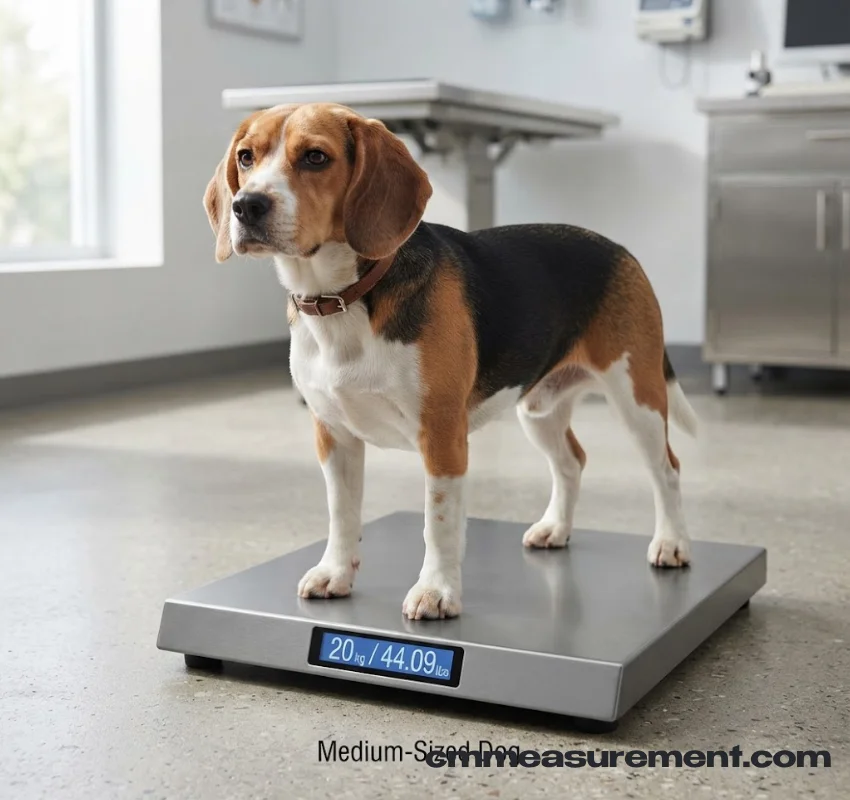
Breeds like the Border Collie, Beagle, and Cocker Spaniel commonly weigh 18 to 22 kg, according to breed standards published by the American Kennel Club. That puts an average adult dog of these breeds right at the 20 kg mark.
Carrying a dog is different from carrying dead weight. A living animal squirms and redistributes its weight, which is why vets and groomers describe lifting one as more tiring than the scale suggests.
A Fully Packed Checked Suitcase

Most US airlines, including Delta and American Airlines, set their standard economy checked-baggage limit at 50 pounds (about 23 kg). A suitcase packed to 20 kg sits just under that ceiling — heavy, but still within airline rules.
The boxy shape and single handle of a suitcase make this weight harder to manage than a compact object of equal mass, especially on stairs or uneven ground.
A Red Olympic Weight Plate
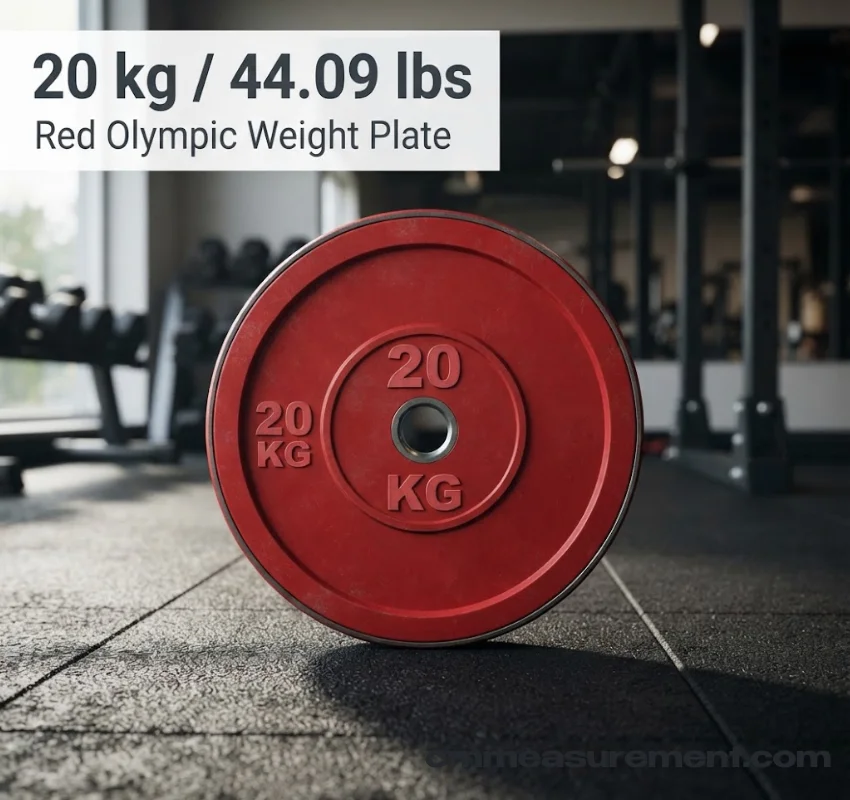
In competitive weightlifting, plates are color-coded by weight under International Weightlifting Federation rules. The red plate always means 20 kg, making it one of the most precisely known 20 kg objects in the world.
Because the mass sits in a dense, compact disc, this plate is often used as the cleanest physical reference for understanding what 20 kg of concentrated weight actually feels like in your hands.
A Bag of Dog Food or Rice
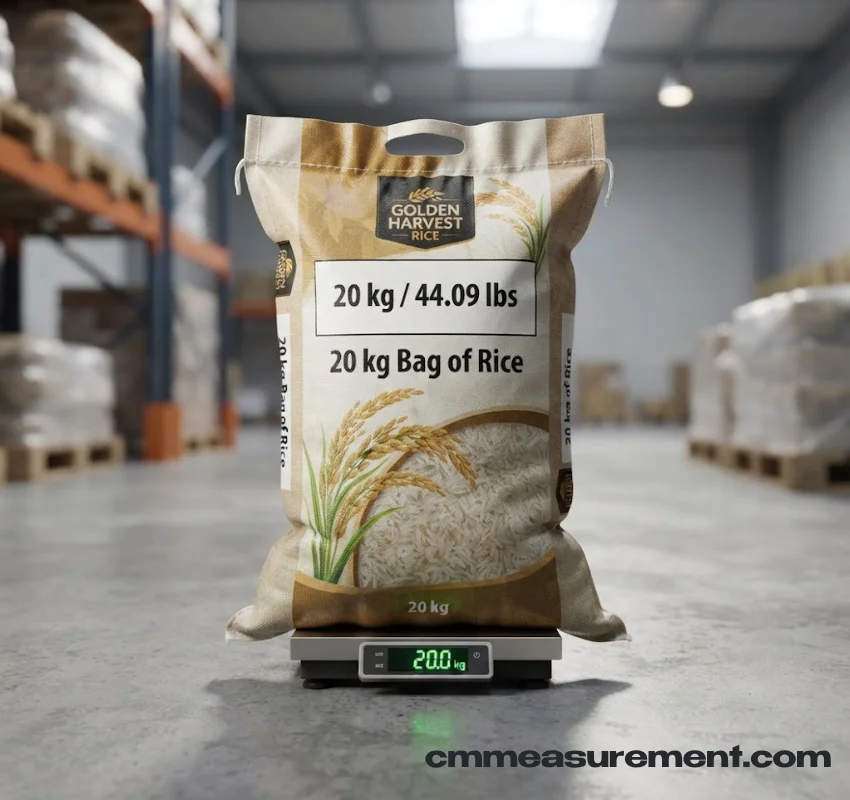
Bulk 20 kg bags of dry dog food or rice are common at wholesale retailers and pet stores across the US. Unlike a solid object, the contents shift as loose granules or kibble, which spreads the weight unevenly across the bag.
That shifting is exactly why a 20 kg sack often feels heavier and clumsier to carry than a 20 kg box of the same size.
A Stand Mixer or Compact Kitchen Appliance

Heavy-duty stand mixers and countertop appliances built for commercial-style baking can weigh close to 20 kg, largely due to their cast-metal housings and motors. This is a category most weight guides skip, yet it’s one many home bakers encounter directly the first time they lift one off a store shelf.
The dense metal base means the weight is concentrated low and close to the counter, which actually makes it easier to control than a bulkier item of the same mass.
How Heavy Does 20 kg Feel? The Perception Gap
Here’s something most weight charts leave out: the same 20 kg can feel completely different depending on the object.
Three factors control that feeling:
- Grip surface — a compact object with handles (like a suitcase) is easier to control than a slippery, round one (like a tire).
- Weight distribution — evenly balanced mass, like a weight plate, feels more stable than shifting mass, like water or rice.
- Duration — lifting 20 kg for a few seconds is manageable for most healthy adults; holding it for several minutes causes rapid muscle fatigue, particularly in the forearms and lower back.
Fitness level plays a role too. Someone who trains regularly will find 20 kg routine. Someone who doesn’t lift often may find the same weight surprisingly demanding, even for a short carry.
Is 20 kg Heavy to Lift? Safety Guidelines
Most healthy adults can lift 20 kg safely, as long as they use correct form. The technique matters more than raw strength.
The Occupational Safety and Health Administration recommends bending at the knees, keeping the load close to the body, and lifting with the legs rather than the back. Repeated lifting of loads this heavy, especially over a full shift, raises injury risk and may call for mechanical assistance or a lifting partner.
A few practical notes worth knowing:
- Women can lift 20 kg just as safely as men — lifting capacity depends on training and technique, not gender.
- Older adults or anyone with an existing back issue should be more cautious, since recovery from strain takes longer with age.
- A single lift of 20–25 kg is generally considered acceptable for a healthy adult; frequent repetition changes the calculation entirely.
If in doubt, especially with an awkward or unstable load, it’s always safer to ask for help or split the weight across two trips.
What Is 20 kg Compared To? Beyond the Usual List
Beyond individual objects, it helps to compare 20 kg to familiar benchmarks rather than single items.
It sits just under the standard international airline baggage limit of 23 kg, which is why airport scales so often show numbers hovering around this mark. It’s also close to the body weight of an average 5-to-6-year-old child, based on growth data from the Centers for Disease Control and Prevention. And in laundry terms, it’s roughly what a large load of soaking-wet towels weighs fresh out of the washer, before the spin cycle removes excess water.
These comparisons matter because they turn an abstract number into something your body already understands.
FAQs
How heavy does 20kg feel?
20 kg feels moderately heavy for most people, comparable to lifting a medium-sized dog or a packed suitcase. The feeling changes fast — what’s manageable for a few seconds becomes tiring within a couple of minutes of continuous carrying.
What item weighs 20 kg?
A full 5-gallon water jug, a red Olympic weight plate, and a medium dog breed like a Beagle or Border Collie all weigh close to 20 kg. A standard car tire and a bag of dog food or rice also land in this range.
Is 20kg heavy to lift?
Yes, but it’s manageable for most healthy adults with proper form. Bending at the knees and keeping the load close to your body reduces strain significantly. Repeated or prolonged lifting increases difficulty and injury risk.
What is 20kg compared to?
20 kg is close to the standard airline checked-baggage limit and the average weight of a 5-to-6-year-old child. It also equals about 44 pounds, making it a useful mental benchmark for judging other unfamiliar weights.
Conclusion
Twenty kilograms isn’t just a number on a scale — it’s a water jug, a dog, a suitcase, a weight plate. Once you connect the figure to something you’ve actually lifted, 44.09 pounds stops being abstract and starts making sense.
Next time you hear “20 kg,” you’ll know exactly what that means in your hands.

Timmy Zeeshan is the founder and lead editor of CM Measurement, where he writes and maintains a growing library of unit conversion tools and practical measurement guides. With a background in engineering and a long-standing interest in everyday math problems, Timmy started CM Measurement after growing frustrated with cluttered, ad-heavy converter websites that made simple conversions harder than they needed to be.