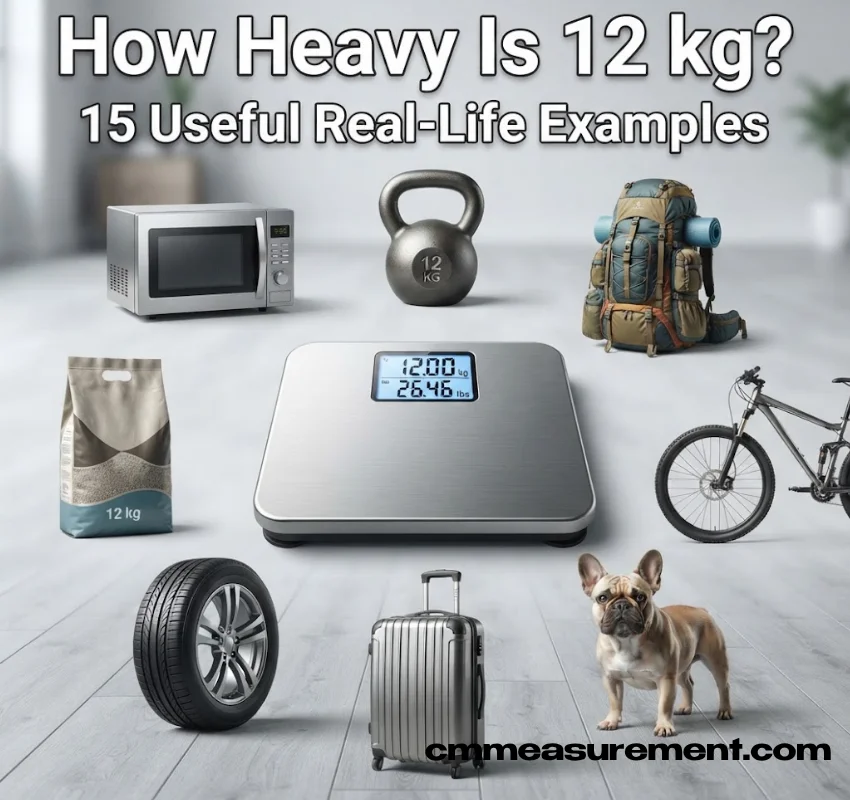
How Heavy Is 12 kg? 12 kg equals 26.46 pounds. That’s roughly the weight of a countertop microwave sitting on your kitchen counter right now.
Numbers alone don’t stick. This guide gives you 15 real-life things that weigh 12 kg, straight conversions, and a clear answer to whether 12 kilograms actually counts as heavy.
Table of Contents
What Is 12 kg in Pounds and Other Units?
12 kg converts to 26.46 pounds. The math is simple: multiply any kilogram figure by 2.20462, and you get pounds. So 12 × 2.20462 = 26.46 lbs.
Here’s 12 kilograms broken into every unit you’re likely to need:
| Unit | 12 kg Equals |
|---|---|
| Pounds | 26.46 lbs |
| Grams | 12,000 g |
| Ounces | 423.29 oz |
| Stone | 1.89 st |
| Milligrams | 12,000,000 mg |
To put 12 kg on the wider mass scale: an average adult human weighs around 70 kg, according to data compiled in Wikipedia’s orders-of-magnitude mass reference. That makes 12 kg less than a fifth of a typical adult’s body weight, but still nearly triple a large housecat. It’s a genuine mid-range weight — heavier than anything you’d toss one-handed, lighter than anything you’d need help moving.
15 Real-Life Things That Weigh 12 kg
Here are 15 everyday things that weigh 12 kg, grouped by where you’d actually run into them.
In the kitchen and around the house:
A countertop microwave oven — most mid-size units weigh between 10 and 14 kg, with the steel housing, magnetron, and glass turntable landing many models right at the 12 kg mark.
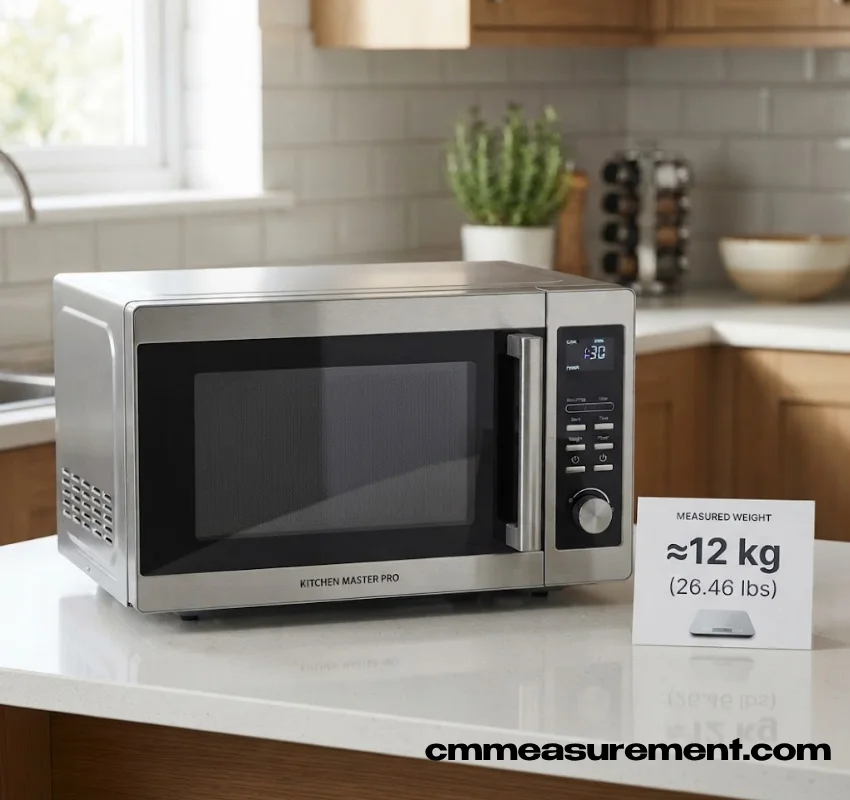
A large 25-pound bag of rice — a full bag works out to roughly 11.3 kg, sitting close enough to 12 kilograms to serve as an easy grocery-aisle reference.

A large bag of clumping cat litter — these typically weigh 12 to 12.2 kg, making them one of the more precise household stand-ins for this exact weight.
Must Visit: How Heavy Is 100 kg? 15 Helpful Real-Life Examples

In the gym and at the training rack:
A single 12 kg kettlebell — a cast-iron kettlebell set to this weight is exact, with zero rounding, making it the cleanest way to physically feel how heavy 12 kg truly is.
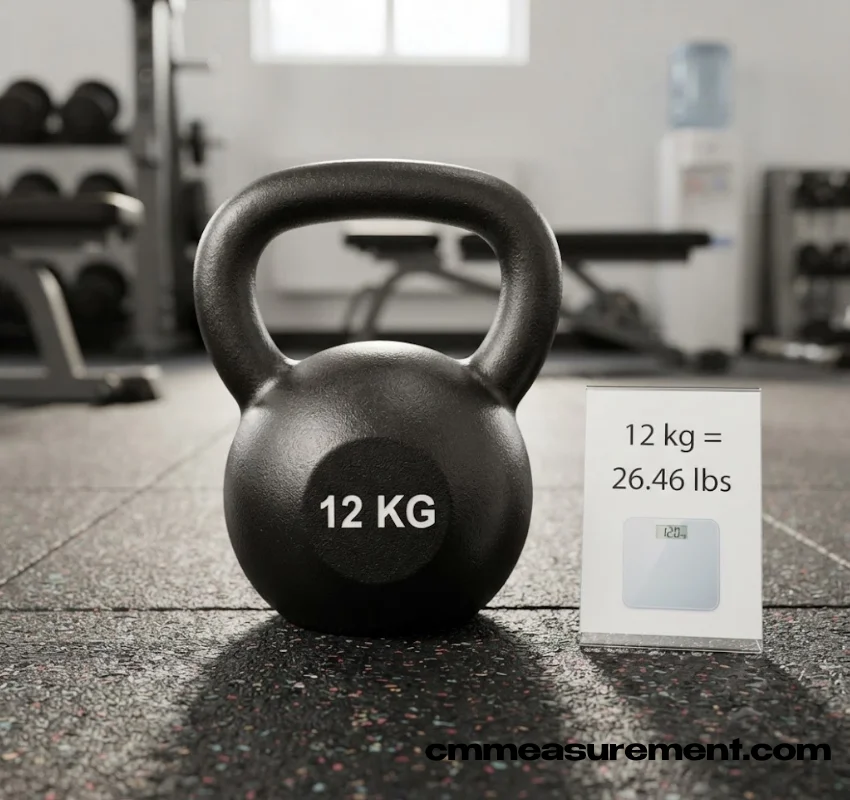
Two 6 kg dumbbells combined — held one in each hand, this pairing equals 12 kilograms exactly, though the split load feels noticeably different from a single dense object.
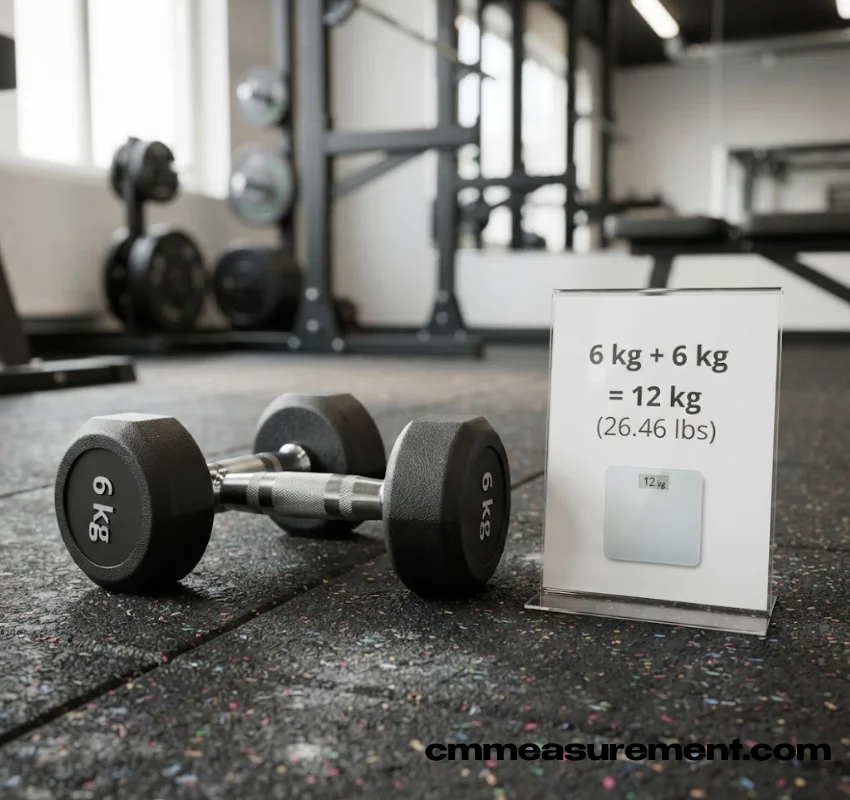
A weighted vest at 12 kg — training vests loaded to this setting distribute the weight across the chest and back, giving your whole body a working sense of the load.
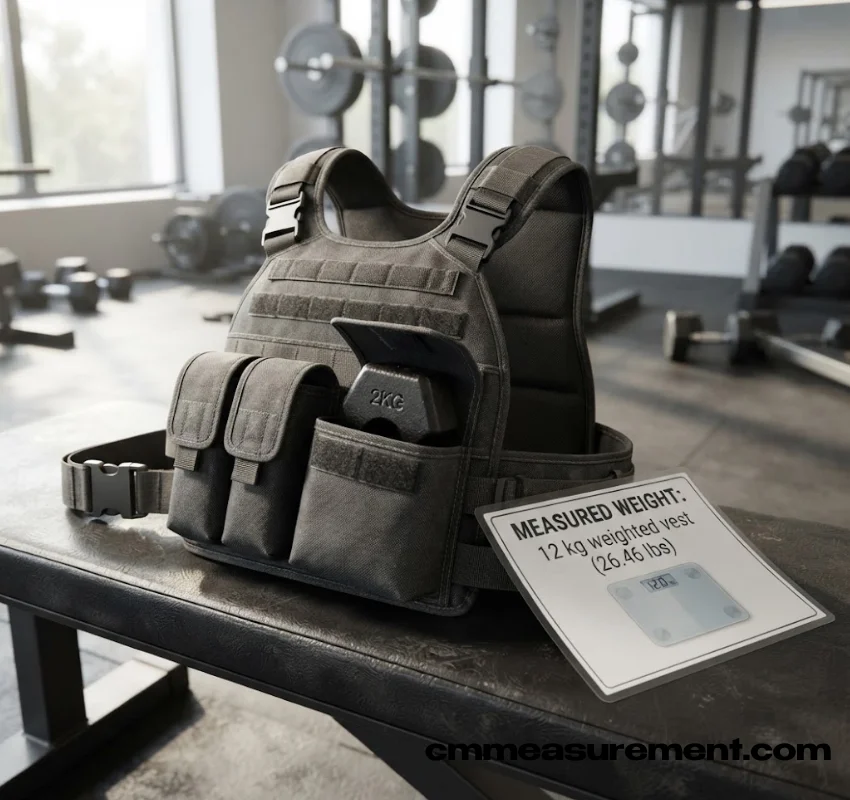
In sports and outdoor gear:
An aluminum-frame mountain bike — entry-level trail bikes generally weigh 10 to 15 kg, with many hitting the 12 kg benchmark for a balance of strength and portability.

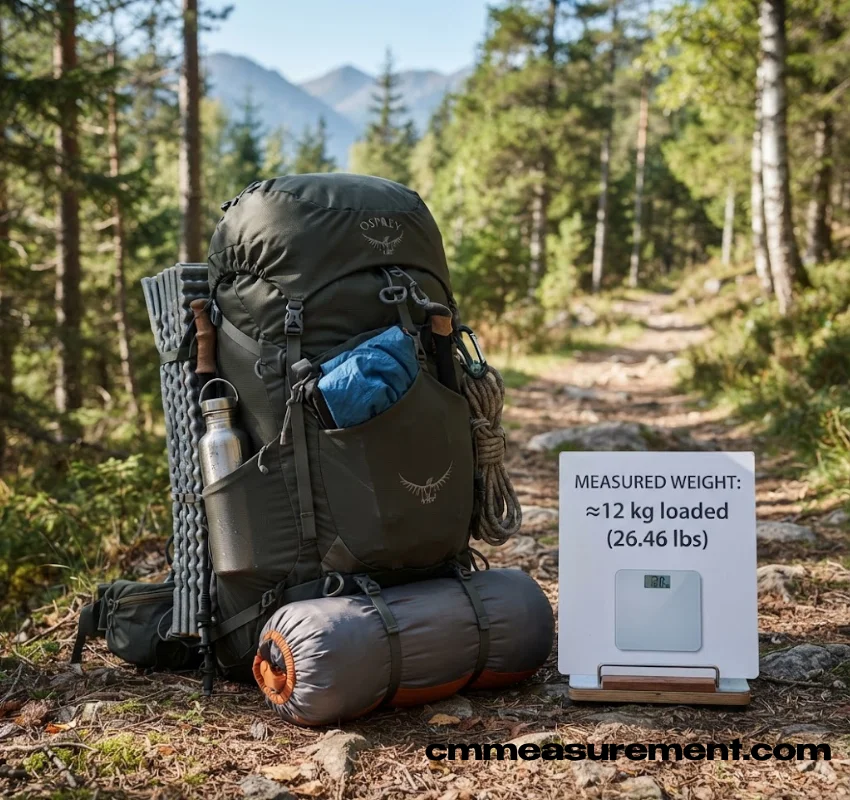
A loaded overnight hiking backpack — packed with gear for a one-night trip, most backpacks land close to 12 kg, though shoulder straps make the load feel lighter than it would in your arms.
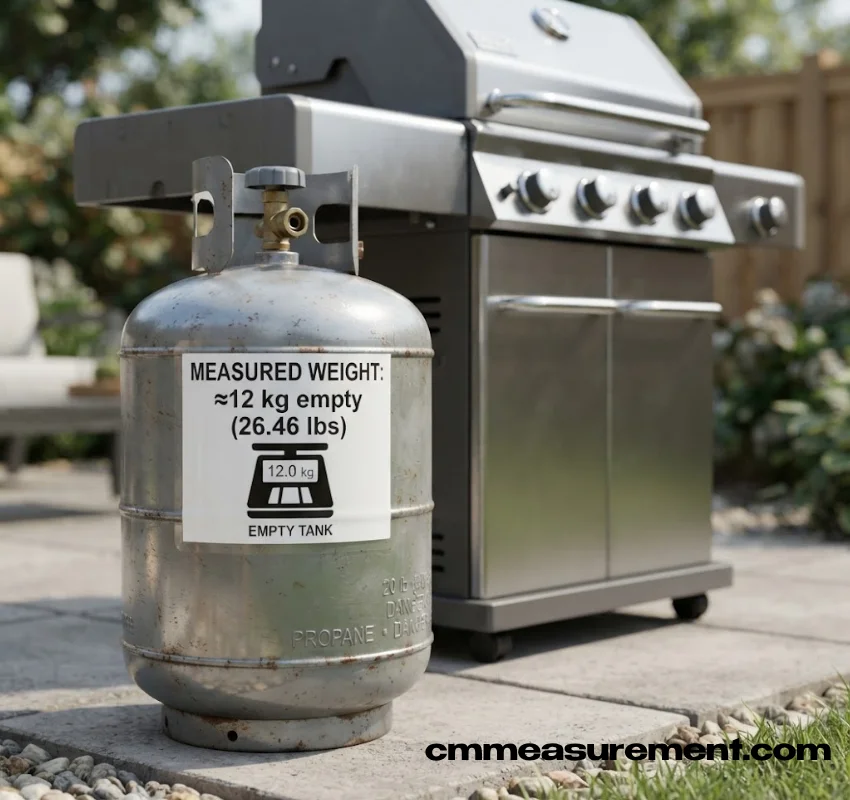
An empty small propane tank — the tanks used for backyard grills weigh roughly 11 to 13 kg empty, with thick steel walls concentrating the weight into a compact cylinder.
With pets and animals:
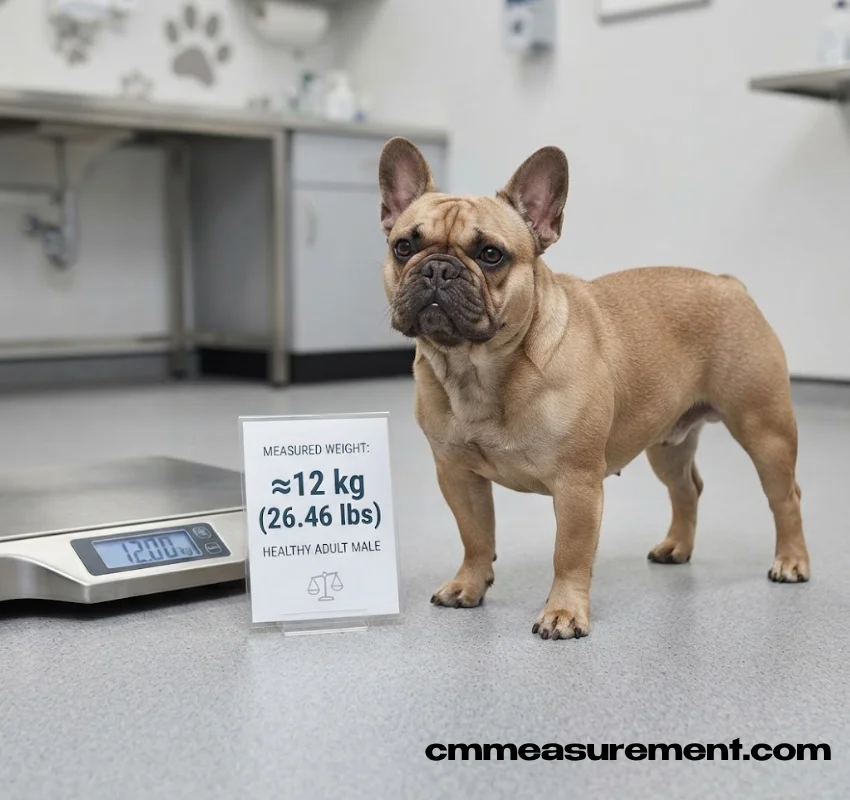
A full-grown French Bulldog — this compact, muscular breed typically weighs 11 to 13 kg as an adult, making it a genuinely relatable 12 kg reference for anyone who’s carried one to the vet.
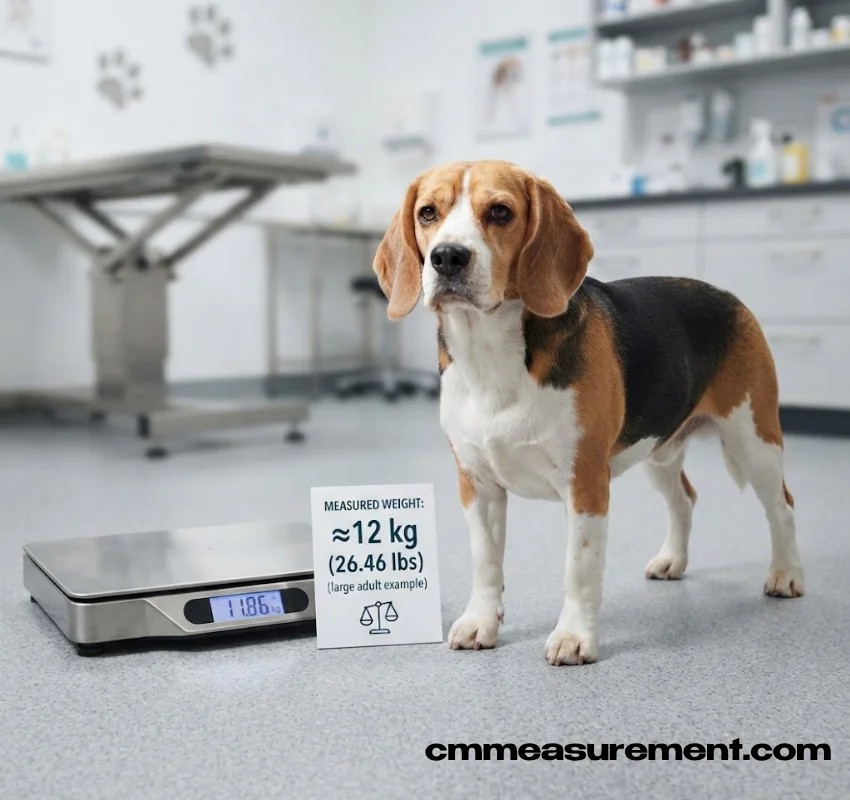
An adult Beagle — Beagles commonly average 20 to 25 pounds, or roughly 9 to 11 kg, landing just under the 12 kg mark for larger individuals of the breed.
A medium bag of dry dog food — bags in the 24 to 27-pound range work out to 10.9 to 12.2 kg, a weight most dog owners handle monthly without thinking twice.

On the road and in transit:
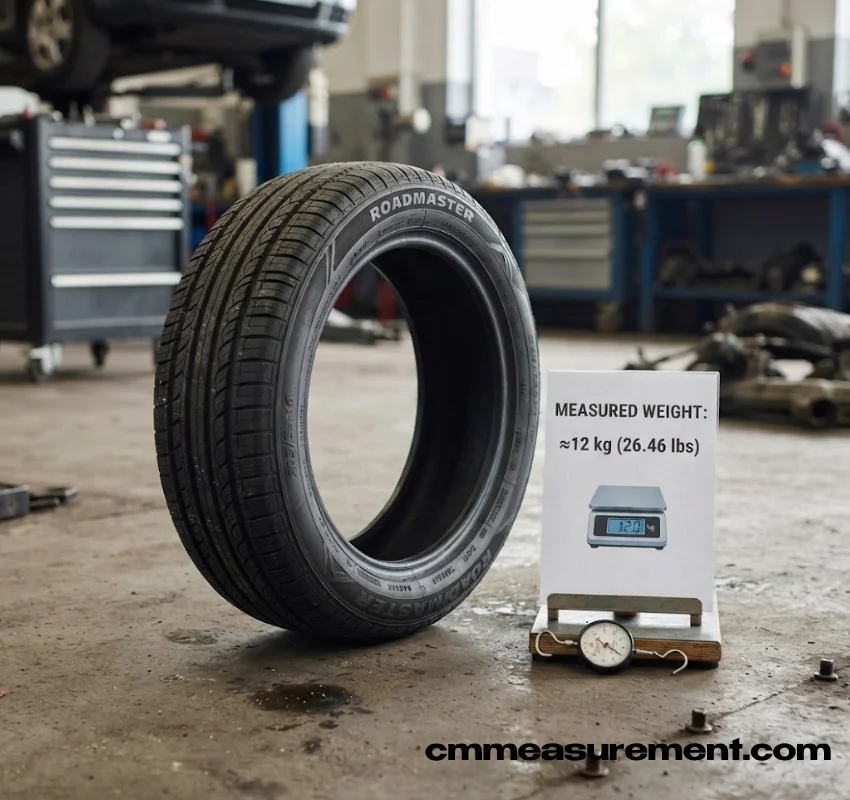
A standard car tire without the rim — tires for sedans and compact cars typically weigh 10 to 13 kg once removed from the wheel, catching people off guard the first time they lift one.
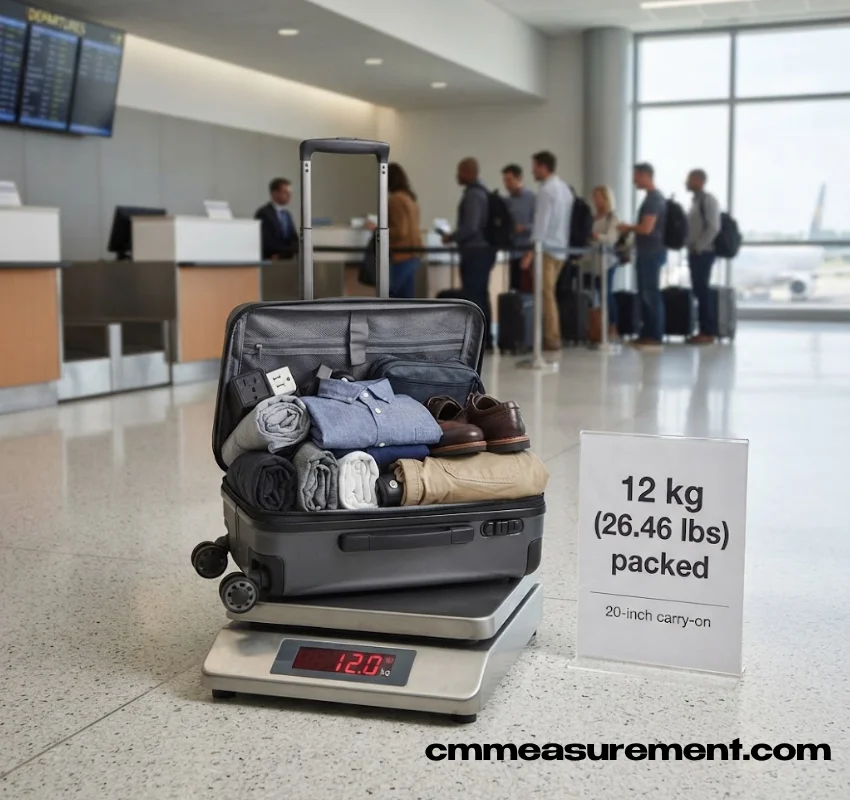
A packed 20-inch carry-on suitcase — empty, these suitcases weigh only 3 to 4 kg, but a full week’s worth of clothes and shoes pushes the total to close to 12 kg.
As a living, human reference:
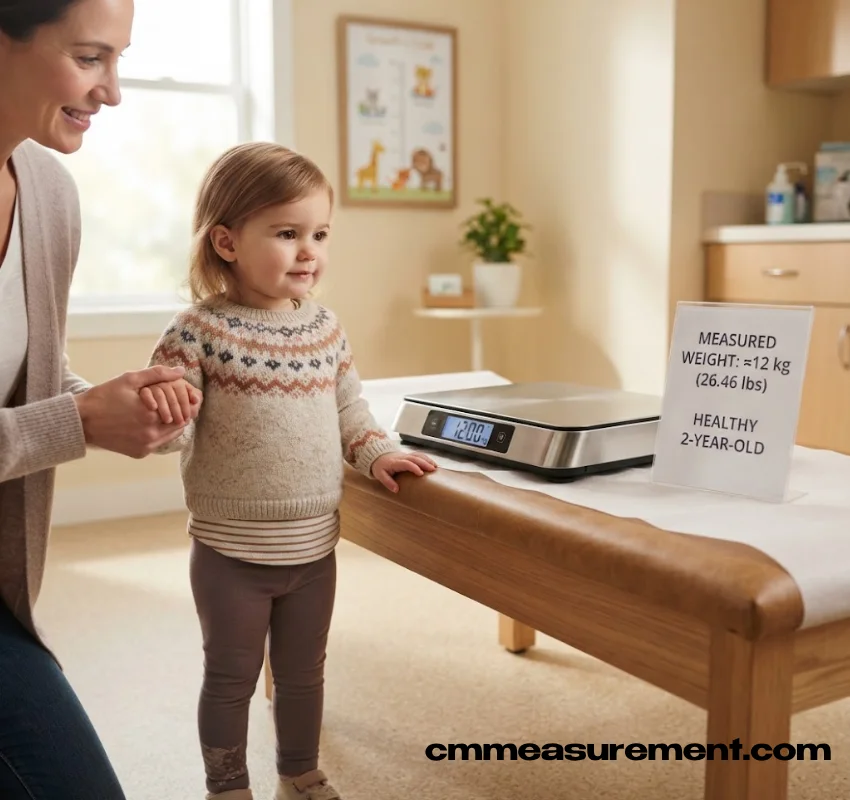
A 2-year-old toddler — CDC growth chart data places the average toddler between 24 and 30 months at roughly 12 to 13 kg, making this one of the most instantly relatable comparisons on the list.
What Does 12 kg Look Like?
12 kg looks completely different depending on what it’s made of. Weight alone doesn’t tell you much about size or shape.
A car battery packed with 12 kg takes up barely more room than a shoebox — dense, compact, and deceptively heavy for its footprint. Compare that to a loaded hiking backpack at the same weight, which fills most of your torso’s width but distributes the load so evenly across both shoulders that it feels far lighter in practice.
For travelers, this distinction matters at the airport. A 12 kg carry-on sits well within most airlines’ cabin bag limits, while the same weight packed into a rigid car battery would never even fit in an overhead bin. Density, not just mass, shapes how a weight actually behaves in your hands.
Is 12 kg Heavy?
For most healthy adults, 12 kg is a moderate weight — noticeable the moment you pick it up, but manageable for short distances with proper form.
Context changes the answer. Is 12 kg heavy to carry continuously? Yes — holding a 12 kilogram object in one arm for more than a few minutes tires most people out quickly, which is why gym trainers recommend two-handed grips or distributed-weight gear like backpacks and vests for anything close to this mark.
Is 12 kg heavy in gym terms? It’s considered a solid beginner-to-intermediate training load — a single 12 kg kettlebell is a standard starting weight in CrossFit and functional strength programs across the US.
As a body-weight comparison, 12 kg roughly matches the average weight of a healthy 2-year-old toddler, per CDC pediatric growth data. Parents who lift toddlers daily already have a built-in, first-hand sense of exactly how this weight feels in real life.
12 kg vs Other Common Weights (5 kg, 10 kg, 15 kg)
Seeing 12 kg next to nearby weights makes the number easier to place.
5 kg (11 lbs) feels light — similar to a small bag of flour or a light dumbbell that most people lift without a second thought.
10 kg (22 lbs) sits just under 12 kg — close to the weight of a large watermelon or a small suitcase, still easy for most adults to carry short distances.
12 kg (26.46 lbs) is the middle ground on this list — heavier than a casual grocery bag, but far from unmanageable. It’s the point where two-handed lifting starts to matter.
15 kg (33 lbs) steps up noticeably. Carrying this weight for more than a minute or two starts to strain the arms and lower back, especially without proper lifting technique.
FAQs
What things weigh 12 kg?
Common 12 kg objects include a countertop microwave, a 12 kg kettlebell, a French Bulldog, a car tire without the rim, and a 2-year-old toddler. Each one gives a slightly different physical sense of the same weight.
Is 12 kilograms heavy?
It depends on context. For a short, two-handed lift, 12 kg is manageable for most healthy adults. Carried continuously in one arm, or lifted repeatedly, it becomes noticeably tiring.
What is 12kg in weight?
12 kg equals 26.46 pounds, or 12,000 grams. It sits well below the average adult human body weight of about 70 kg but is heavier than most small household items.
What object is most likely to weigh about 12 kilograms?
A standard countertop microwave oven is one of the most common and consistent 12 kg objects found in American homes, typically falling between 10 and 14 kg depending on the model.
Conclusion
12 kg breaks down to 26.46 pounds, 12,000 grams, or 1.89 stone — and in daily life, it shows up in places you’ve probably already handled without noticing: a kettlebell at the gym, a bag of rice at the store, a toddler on your hip. Whether it counts as “heavy” comes down to how you’re carrying it and for how long. Now you’ve got 15 real, grounded examples to picture it clearly.

Timmy Zeeshan is the founder and lead editor of CM Measurement, where he writes and maintains a growing library of unit conversion tools and practical measurement guides. With a background in engineering and a long-standing interest in everyday math problems, Timmy started CM Measurement after growing frustrated with cluttered, ad-heavy converter websites that made simple conversions harder than they needed to be.