You’ve heard the number. But how heavy is 100 pounds, really? Numbers on a scale don’t mean much until you connect them to something you can actually picture.
That’s what this guide does. We’ll give you the exact answer, then walk through 10 real-life examples of things that weigh 100 pounds — plus honest, fact-based answers about what 100 lbs means for the human body.
How Much Is 100 Pounds in Weight?
Let’s start with the numbers.
100 pounds equals 45.36 kilograms, or 45,359 grams. In stone — the unit still used in the UK — that’s about 7.14 stone.
The formula is simple: multiply pounds by 0.453592 to get kilograms. So 100 lb × 0.453592 = 45.3592 kg.
That’s the math. But raw numbers don’t build intuition. That’s where comparison comes in — and it’s the part most weight converters skip entirely.
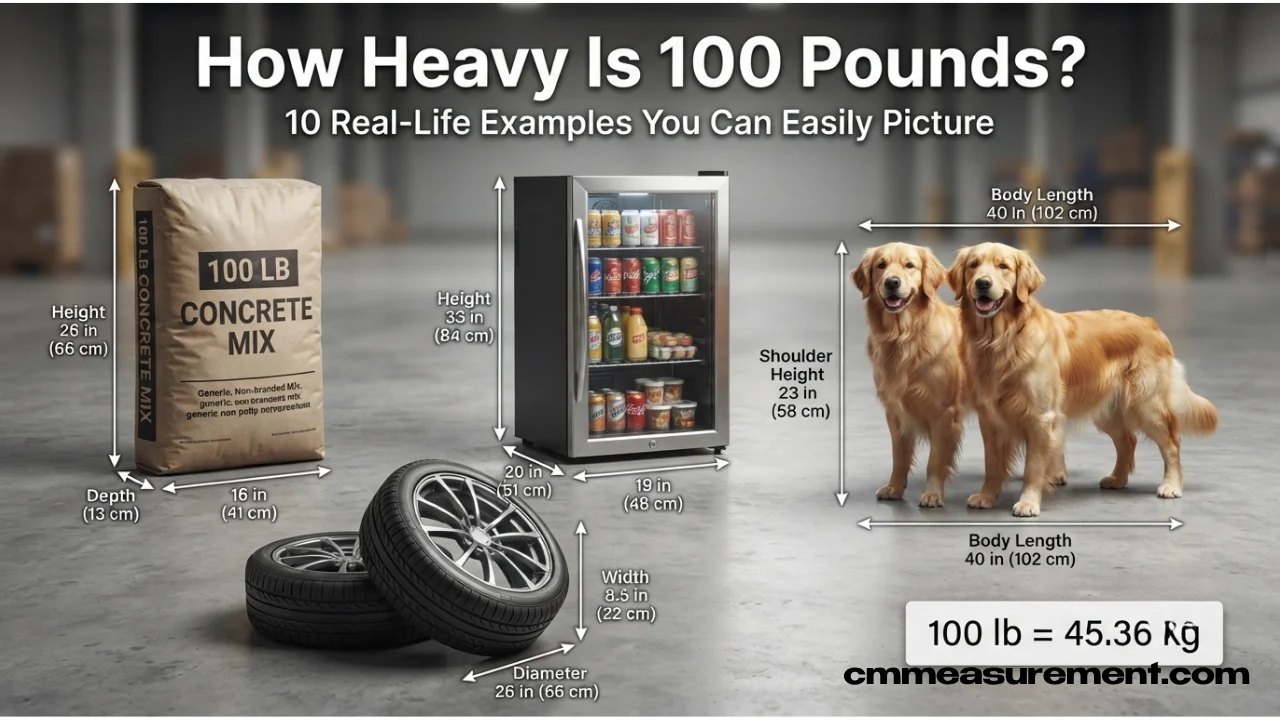
What Does 100 Pounds Look Like? 10 Real-Life Examples
Here are 10 everyday things that weigh close to 100 lbs, grouped so you can find one that clicks with your own experience.
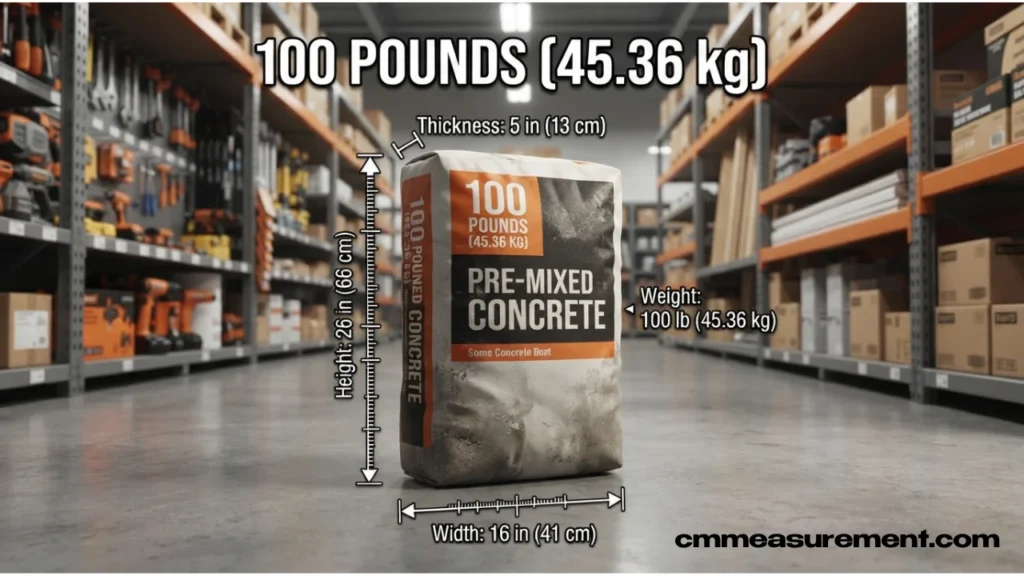
A large bag of concrete mix. Standard 80-lb bags are common at hardware stores, but many suppliers sell a 100-lb sack for bigger jobs. Lifting one off a pallet gives you a very direct sense of this weight.
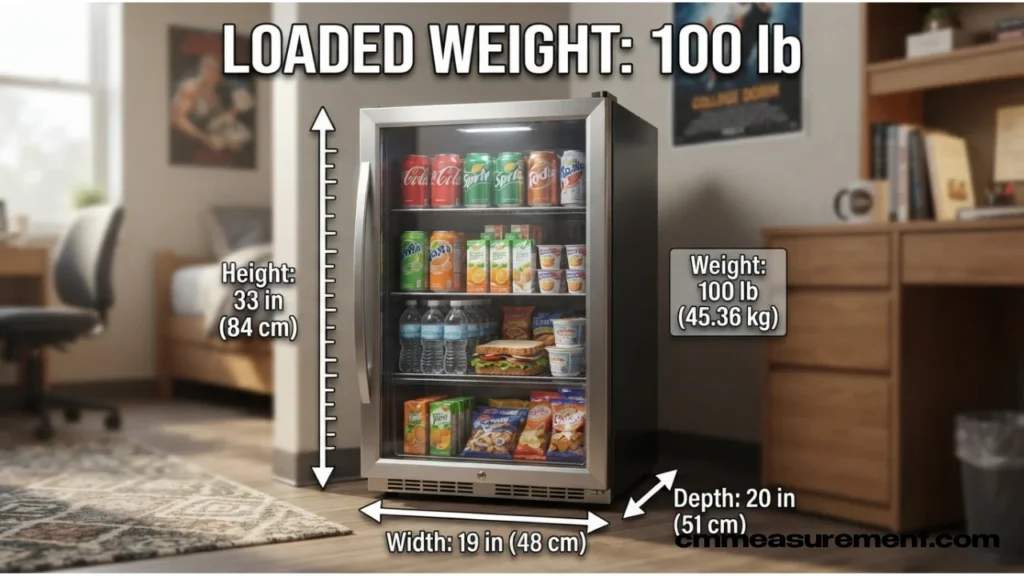
A mini refrigerator, fully loaded. An empty compact fridge weighs 40–60 lbs. Fill it with drinks and food, and it climbs close to 100 pounds — a familiar dorm-room or garage comparison.
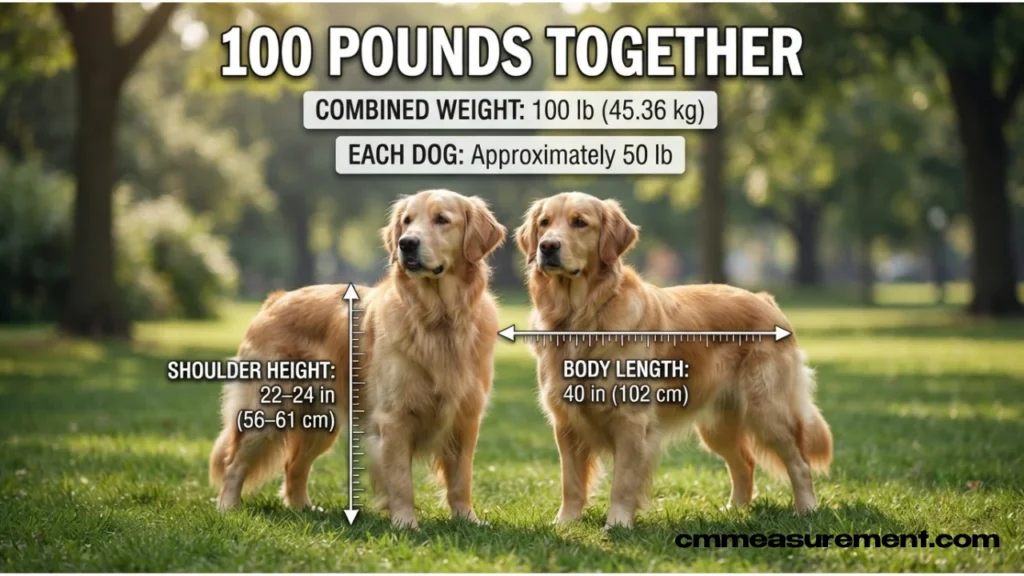
An adult Golden Retriever, times two. A healthy adult Golden Retriever weighs 55–75 lbs. Two medium dogs together land right around 100 lbs of weight, which explains why carrying two large dogs at once is genuinely hard.
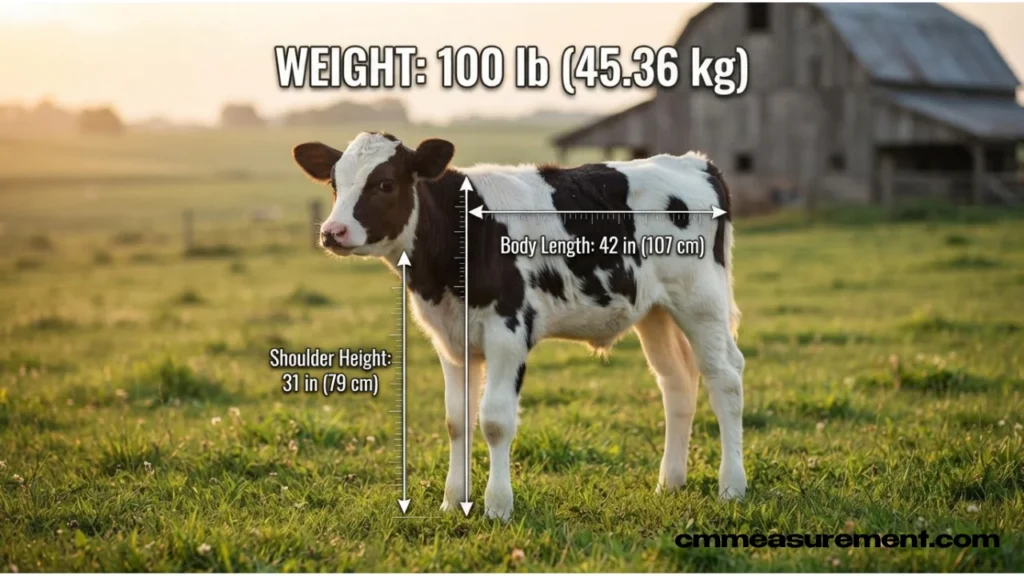
A newborn dairy calf. Calves are born weighing 60–100 lbs depending on breed, giving farmers and ranchers a living, breathing reference point for this exact figure.
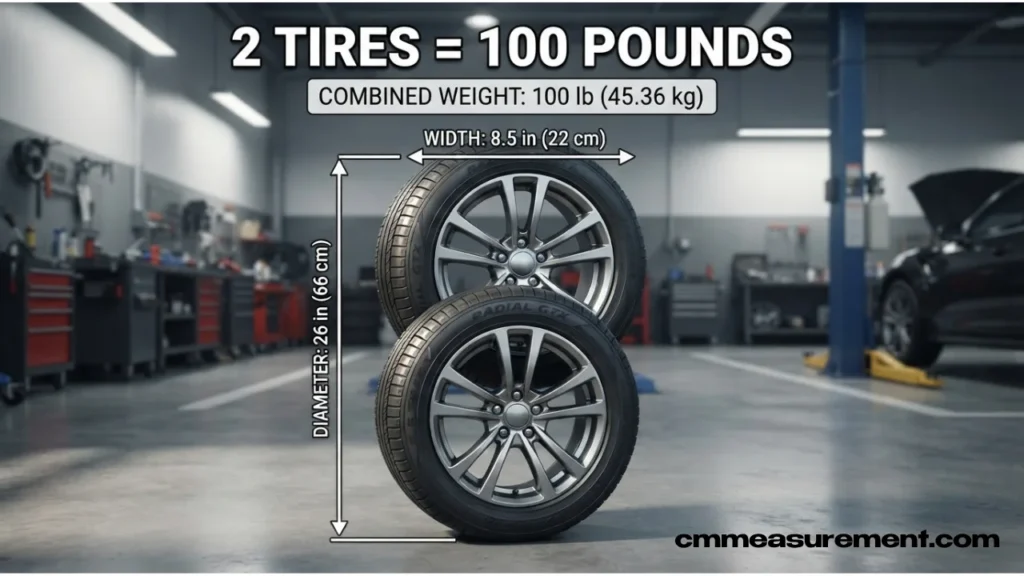
Two standard car tires with rims. A single passenger tire and rim assembly runs 40–55 lbs. Stack two together, and you’ve hit the 100-pound mark — no wonder changing a full set solo is exhausting.
Must Visit: How Heavy Is 5 Pounds? 7 Real-Life Examples to Help You Visualize It
A quarter-filled bathtub. Water weighs about 8.3 lbs per gallon. Roughly 12 gallons — a bathtub filled to a shallow few inches — reaches 100 lbs, a useful trick for picturing liquid weight.

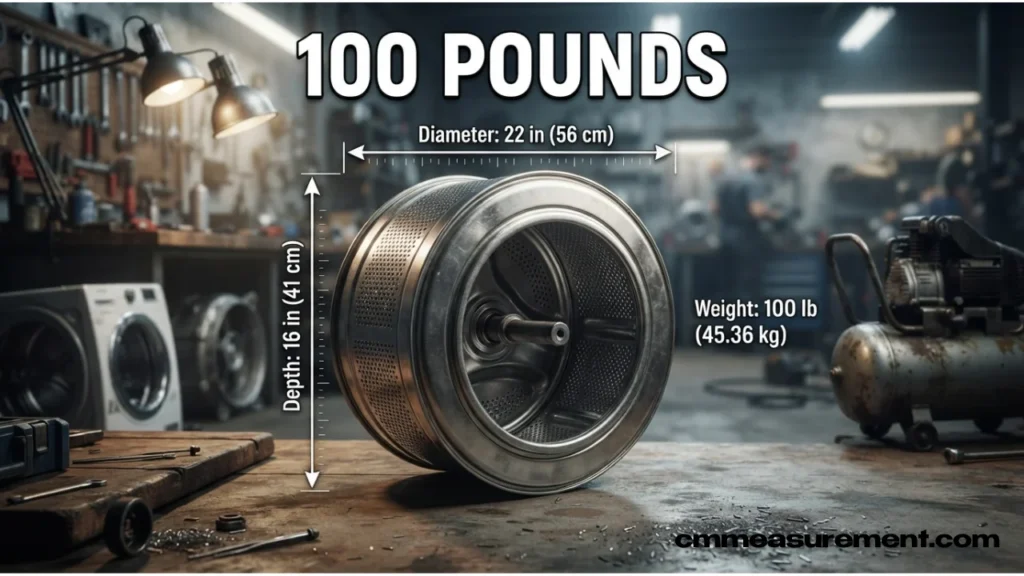
The stainless-steel drum from a washing machine. Strip away the outer shell, and the inner drum assembly of a full-size washer typically weighs somewhere near 100 pounds on its own.
An adult female white-tailed deer. A mature doe typically weighs between 90 and 130 lbs, putting many does right around the 100-pound mark — a comparison hunters and rural drivers across the U.S. run into often.

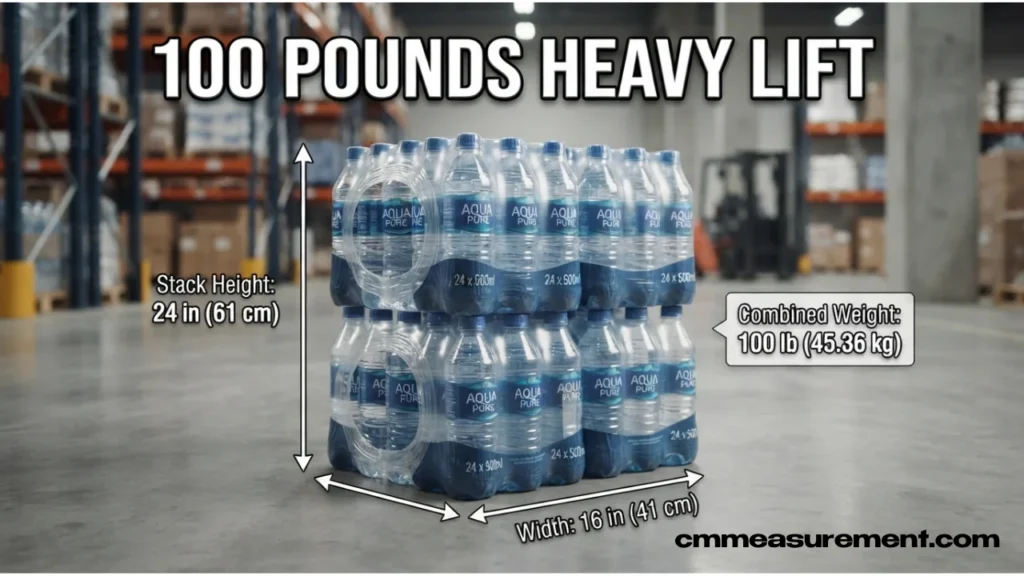
Four 24-packs of bottled water. Each bottle weighs roughly 1.1 lbs, so four full cases add up to almost exactly 100 pounds — a comparison that makes grocery-hauling instantly relatable.
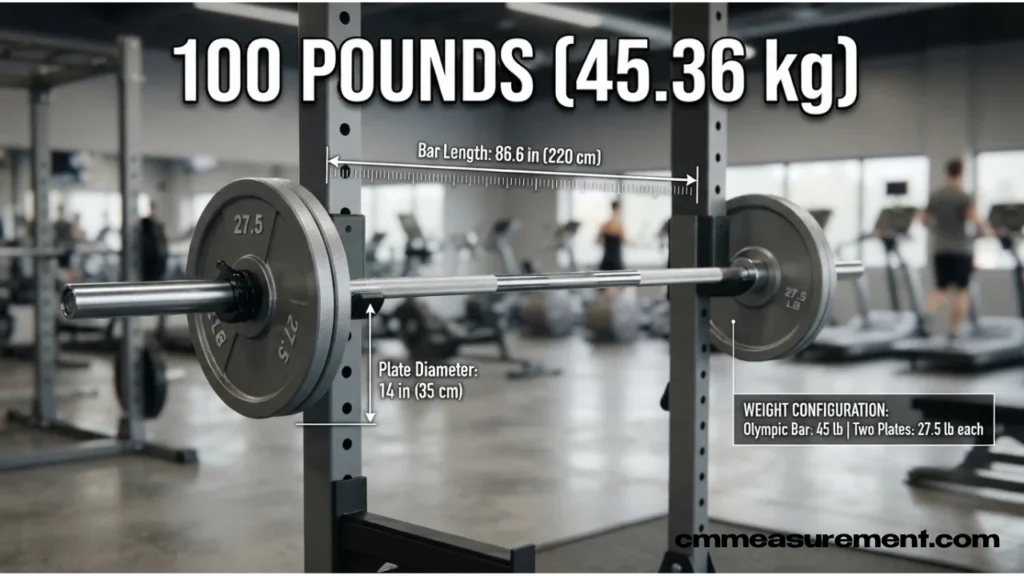
A loaded barbell at the gym. Two 45-lb plates plus a 45-lb Olympic bar equals 135 lbs, but drop to two 25-lb plates and you’re sitting right at 100 lbs — a common warm-up or working weight for many lifters.
Is 100 Pounds Heavy? Context for the Human Body
Numbers change meaning depending on who — or what — is carrying them. Here’s the honest, fact-checked context.
Is 100 pounds heavy for a 12-year-old? Not necessarily. CDC data shows a healthy weight range for 12-year-olds spans roughly 67 to 135 pounds, depending on height, sex, and how far along puberty a child is. A 12-year-old weighing 100 lbs typically falls in the upper-normal range, not an outlier. Body composition and height matter more than the number alone.
Is 100 pounds too skinny for someone who’s 5’4″? Here’s the math: BMI is calculated as weight (lb) ÷ height (in)² × 703. At 5’4″ (64 inches), 100 lbs produces a BMI of about 17.2, which falls under the commonly used underweight threshold of 18.5. That doesn’t automatically signal a health problem — frame size, muscle mass, and genetics all play a role — but it is a number worth discussing with a healthcare provider rather than guessing about.
Is 100 pounds heavy to carry? By workplace safety standards, yes — meaningfully so. The National Institute for Occupational Safety and Health (NIOSH) sets a “load constant” of 51 pounds as the maximum weight considered safe for a single person to lift under ideal conditions, a threshold referenced directly by OSHA when evaluating workplace lifting risks. At 100 pounds, you’re carrying roughly double that recommended limit — which is exactly why moving something like a 100-lb bag of concrete or a washing machine drum calls for a dolly, a lifting strap, or a second person, not brute effort.
FAQs
What’s something that weighs 100 pounds?
A large bag of concrete mix, a loaded mini fridge, two adult Golden Retrievers, or four full 24-packs of bottled water all land close to 100 pounds.
Is 100 pounds heavy for a 12 year old?
Not typically. CDC growth data puts the healthy weight range for 12-year-olds between roughly 67 and 135 pounds, so 100 lbs sits comfortably within normal variation for many kids that age.
What does 100 pounds look like?
Picture two medium-sized dogs, a fully stocked mini fridge, or a quarter-filled bathtub — all visual stand-ins for 100 lbs that are easier to picture than the number itself.
How much is 100 pounds in weight?
100 pounds equals 45.36 kilograms (45,359 grams), or about 7.14 stone.
Is 100 pounds heavy to carry?
Yes, relative to safe-lifting standards. NIOSH’s recommended single-person lifting limit is 51 pounds under ideal conditions, so 100 lbs is roughly double what’s considered safe to lift alone without assistance or equipment.
Is 100 pounds too skinny for 5’4″?
It can be. At 5’4″, 100 lbs works out to a BMI of about 17.2, which falls below the standard underweight cutoff of 18.5 — worth a conversation with a doctor rather than a DIY diagnosis.
Conclusion
100 pounds equals 45.36 kilograms — but the number only becomes meaningful once you connect it to something real: two large dogs, a loaded mini fridge, or a bag of concrete mix. Next time someone mentions 100 lbs, you’ll have ten ways to picture exactly what that means.

Timmy Zeeshan is the founder and lead editor of CM Measurement, where he writes and maintains a growing library of unit conversion tools and practical measurement guides. With a background in engineering and a long-standing interest in everyday math problems, Timmy started CM Measurement after growing frustrated with cluttered, ad-heavy converter websites that made simple conversions harder than they needed to be.