2 feet equals 24 inches, or 60.96 centimeters. That’s the short answer. But numbers alone don’t help much when you’re trying to picture a real size in your head.
This guide fixes that. You’ll see exactly how long 2 feet is, compare it to objects you already know, and learn how to measure it without ever grabbing a ruler.
Table of Contents
How Long Is 2 Feet?
A foot is a unit in the US customary system, and it’s built on a simple rule: every foot has 12 inches. Since 2 feet is just two of those, the math is easy — 2 x 12 = 24 inches.
Here’s the full conversion, so you don’t have to do the math yourself:
| Unit | Value |
|---|---|
| Inches | 24 in |
| Centimeters | 60.96 cm |
| Millimeters | 609.6 mm |
| Meters | 0.61 m |
| Yards | 0.67 yd (2/3 of a yard) |
The metric side matters too. In most of the world outside the US, length is measured in the SI metric system, using centimeters and meters instead of feet and inches. That’s why product labels — especially imported furniture or electronics — often list both. If you’ve ever measured something with a tape measure and seen inches on one edge and centimeters on the other, this is exactly why.
If you are interested to see cm into feets then must try this tool.
One more useful anchor: a standard yardstick is 3 feet long, so 2 feet is two-thirds of that. If you own one, you already have a built-in reference for this measurement sitting in your garage.
What Does 2 Feet Look Like?
Numbers are abstract. Your body isn’t. A person’s forearm, from elbow to fingertip, is roughly 18 inches — so 2 feet is about that same length plus a spread hand on top. That’s a genuinely useful trick, because you’re carrying this “ruler” with you at all times.
Here’s another way to frame it: 2 feet is shorter than a yardstick, longer than a standard sheet of printer paper (11 inches), and just a bit taller than the average kitchen trash can lid. It’s not a huge distance — it’s the kind of length that shows up constantly in daily life without you noticing.
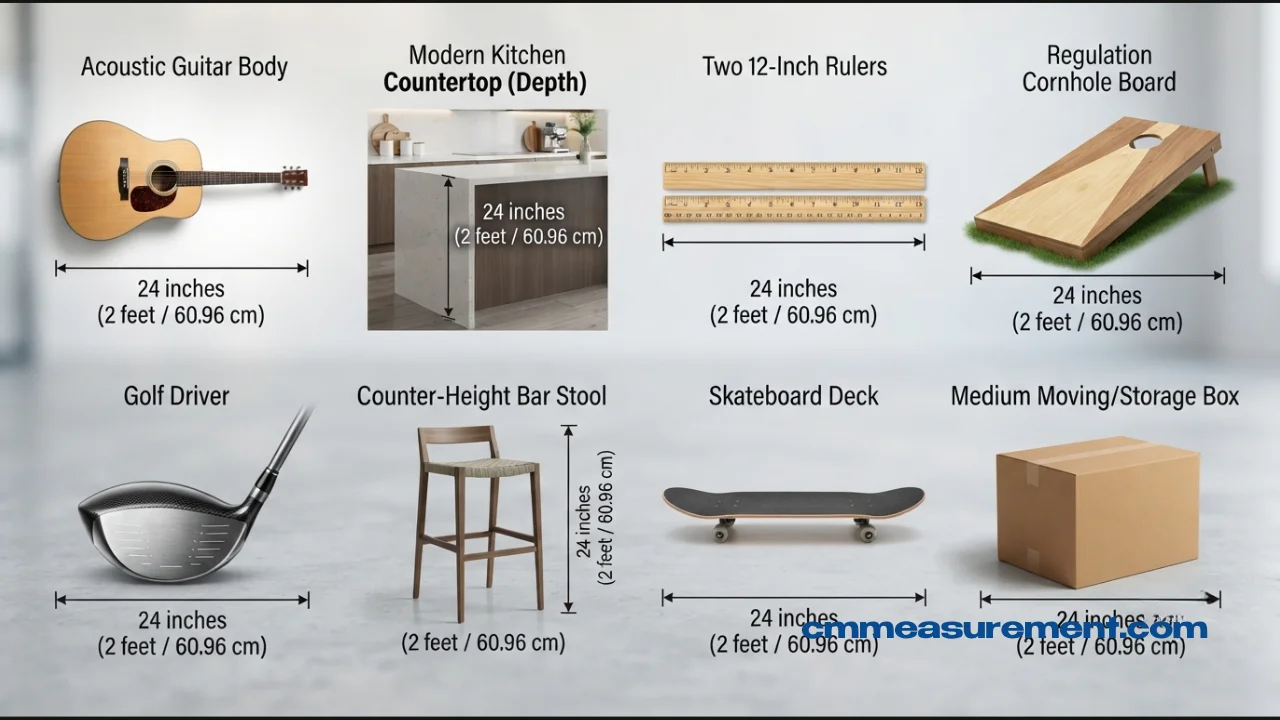
8 Everyday Objects That Are Exactly 2 Feet Long
Comparing 2 feet to familiar items makes the number click instantly. Here are eight things you’ve probably seen — or used — that measure close to 24 inches.
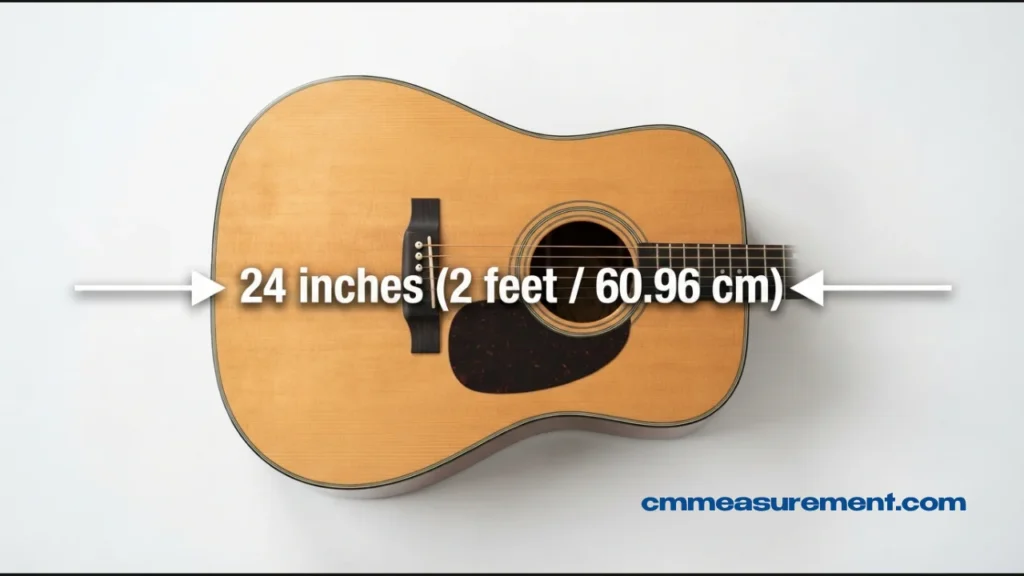
A Standard Acoustic Guitar Body
The main body of a full-size acoustic guitar — not the neck, just the body — measures close to 2 feet. This is one reason guitars feel substantial in your hands but still portable enough to carry in a gig bag.
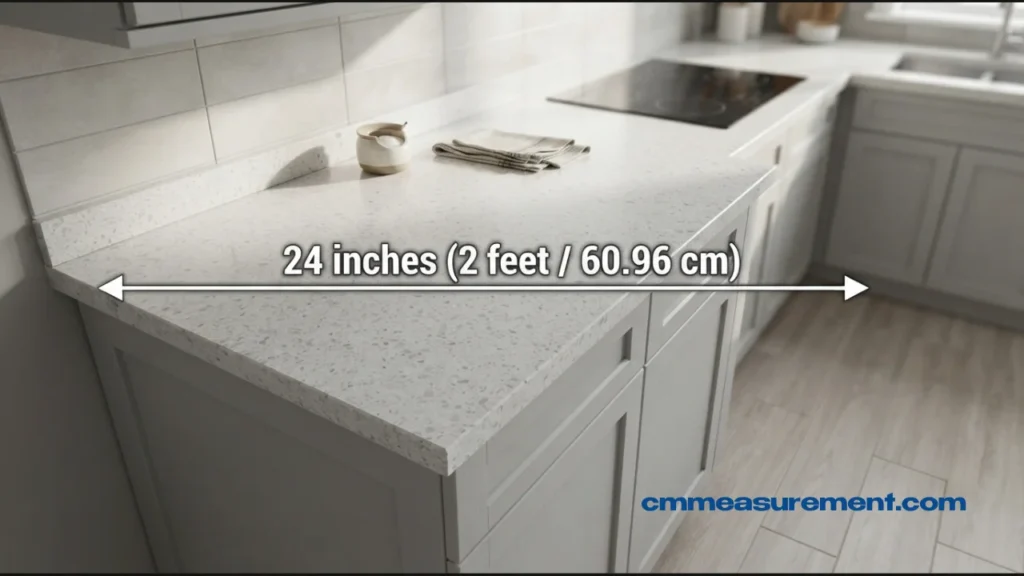
A Kitchen Counter’s Depth
Walk up to almost any American kitchen counter and measure front to back. You’ll land near 24 inches. This depth isn’t random — it’s a standard used by cabinet makers because it fits a dinner plate, a cutting board, and a small appliance without wasted space.
Must Visit: How Long Is 8 Feet? 7 Everyday Objects That Are Exactly 8 Feet Long
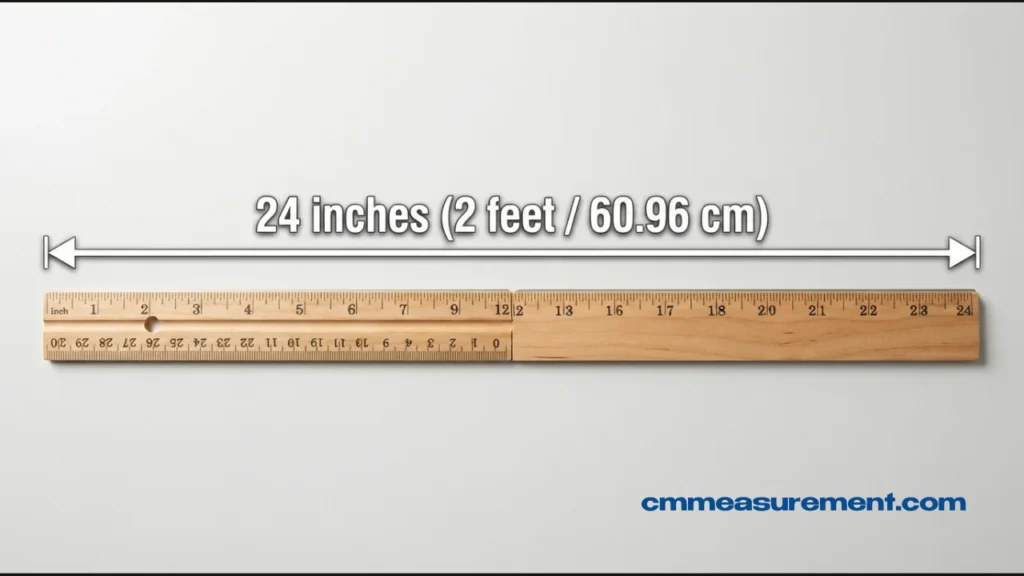
Two 12-Inch Rulers Placed End to End
This one is almost too simple, but it works. Every classroom ruler is 12 inches. Line up two of them, and you’ve got an exact, physical 2-foot measurement with zero guesswork.
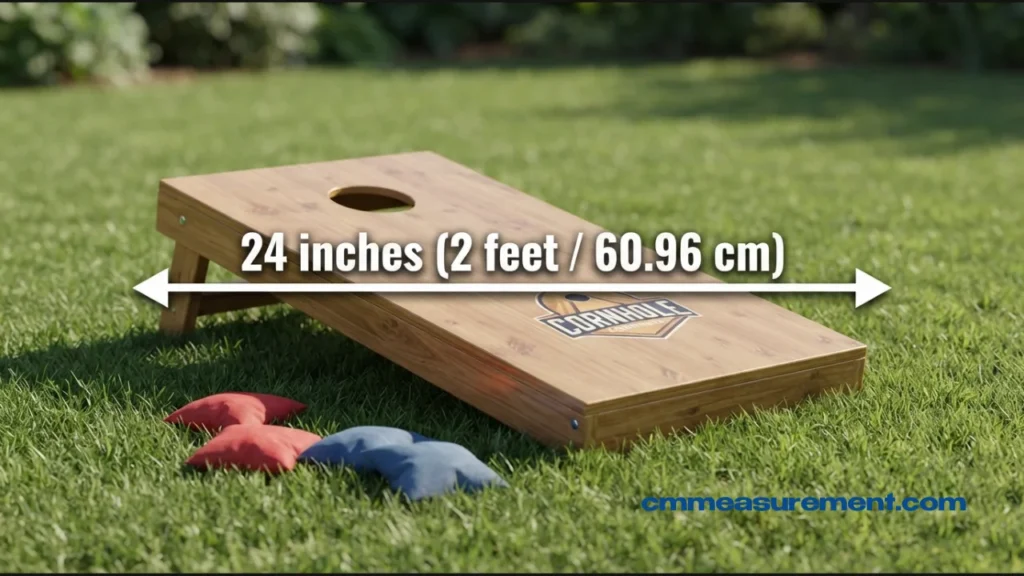
A Regulation Cornhole Board’s Width
Backyard cornhole boards, a staple at American tailgates and summer cookouts, are built to a regulation width of 2 feet. If you’ve ever set one up, you’ve already handled this exact measurement without thinking twice about it.
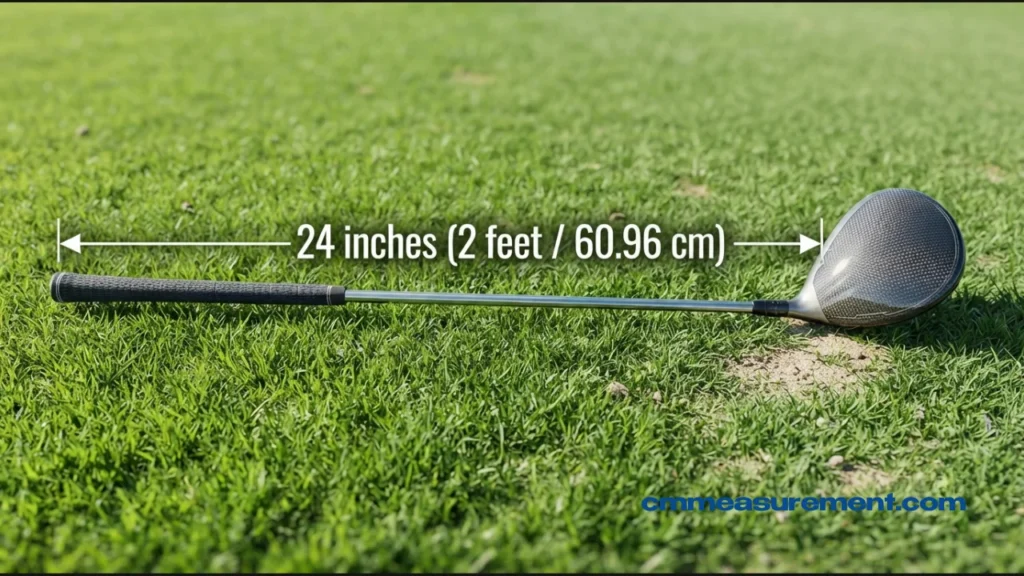
A Standard Golf Driver
Most golf drivers used by adult players measure close to 24 inches from grip to clubhead. Golfers who’ve shopped for clubs will recognize this length instantly — it’s a common spec listed right on the shaft.
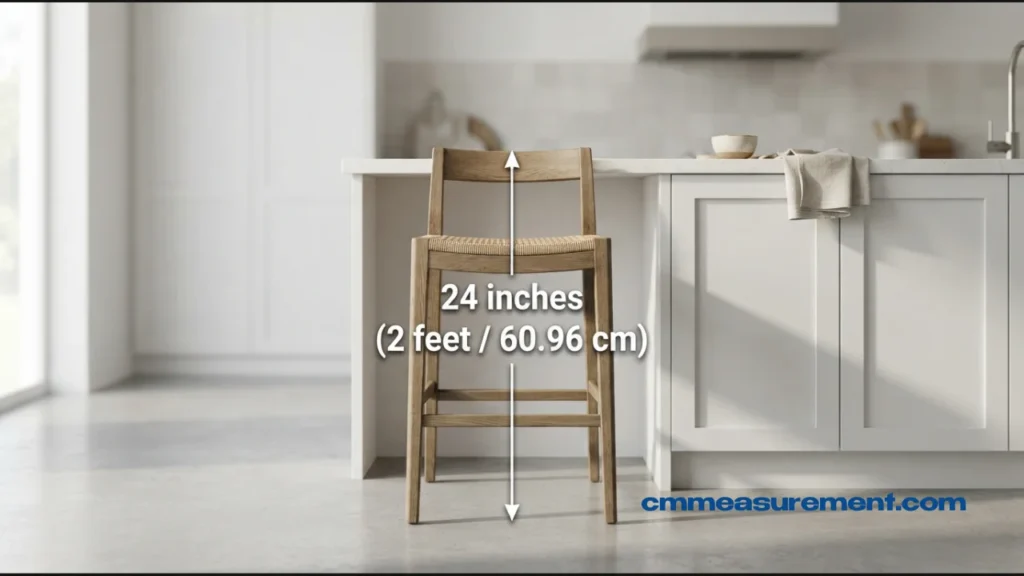
A Counter-Height Bar Stool’s Seat
The seat height on a typical counter-height bar stool sits around 2 feet off the ground. That’s why these stools pair so naturally with kitchen counters — the two measurements were designed to work together.
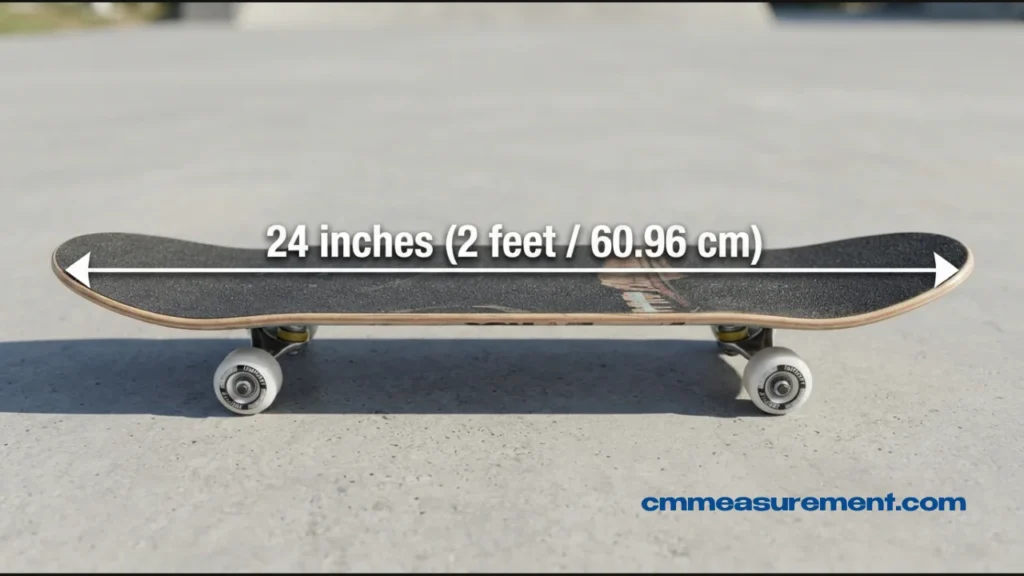
A Skateboard Deck
Most beginner and street skateboard decks run close to 2 feet long. This length gives riders enough platform for their feet while keeping the board light and easy to flip.
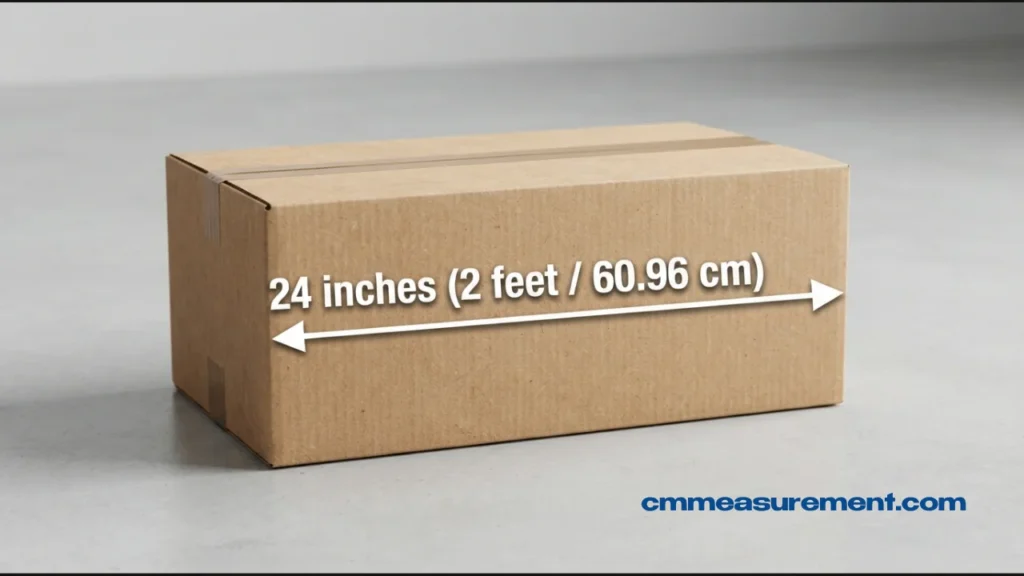
A Medium Moving or Storage Box
If you’ve ever packed for a move, you’ve handled a medium moving box, and those typically measure about 2 feet along the longest side. It’s a size chosen deliberately — big enough to be efficient, small enough that a full box doesn’t become too heavy to lift.
How to Measure 2 Feet Without a Ruler
Sometimes you need a quick estimate and no tools nearby. These tricks get you close:
Use your hand span. An adult hand span averages about 8 inches. Three spans, placed end to end, land you almost exactly at 2 feet.
Use paper money. A US dollar bill is 6.14 inches long. Line up four bills, and you’re within an inch of 24 inches — a trick almost everyone can try right now.
Use your shoe. The average adult shoe is close to 10–12 inches. Two shoe-lengths, heel to toe, get you into the 2-foot range.
Use printer paper. A standard sheet is 11 inches long. Two sheets plus a couple inches gets you to 24.
None of these replace an actual tape measure, but they’re fast enough for everyday estimating — shopping, furniture placement, or figuring out if something fits before you buy it.
FAQs
What is 2 feet long in inches?
2 feet equals 24 inches. Since 1 foot always equals 12 inches, doubling that gives you 24.
How long does 2 feet look like?
It looks similar to two classroom rulers placed end to end, a guitar body, or a counter-height bar stool’s seat height.
How long is 2 ft long?
2 ft is 24 inches, 60.96 cm, or 609.6 mm — the same measurement, just expressed in different units.
What size is 2 ft in cm?
2 feet converts to 60.96 centimeters, using the standard rate of 30.48 cm per foot.
How tall is 2 ft tall?
2 feet tall is the same as 24 inches tall — roughly knee-height on an average adult.
What size is 2 ft?
2 ft describes a length of 24 inches, which is also 0.61 meters or two-thirds of a yard.
Conclusions
feet always equals 24 inches, or 60.96 centimeters — a measurement you likely encounter more often than you realize. Once you connect it to real objects like a guitar body, a cornhole board, or a bar stool seat, the number stops being abstract and starts being something you can picture instantly, ruler or not.

Timmy Zeeshan is the founder and lead editor of CM Measurement, where he writes and maintains a growing library of unit conversion tools and practical measurement guides. With a background in engineering and a long-standing interest in everyday math problems, Timmy started CM Measurement after growing frustrated with cluttered, ad-heavy converter websites that made simple conversions harder than they needed to be.