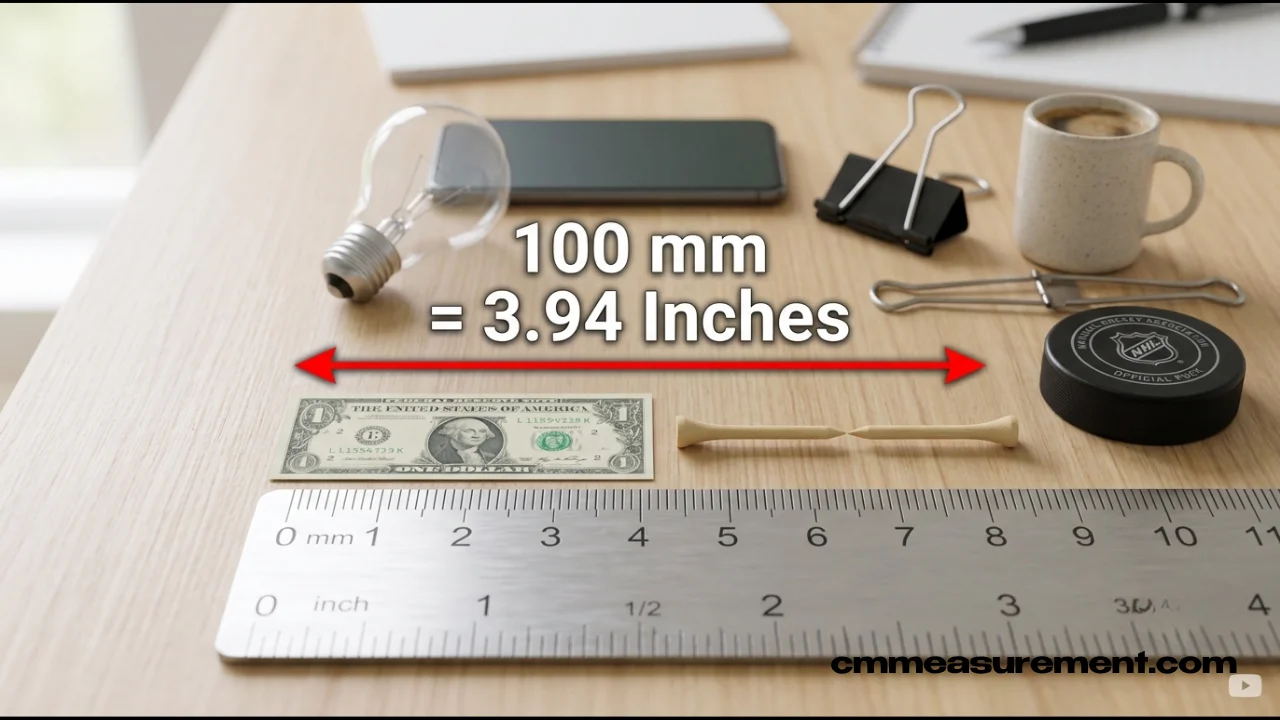
Ever seen “100 mm” on a package or a tool and had no clue what that means in real life? You’re not alone. Most people in the US think in inches, not millimeters, so a number like 100 mm just doesn’t click right away.
Here’s the short version: 100 mm equals 3.94 inches. That’s just under 4 inches — a little smaller than a standard smartphone width. Below, we’ll break down exactly what that looks like, where you’d spot it in daily life, and how to measure it yourself.
What Is 100 mm? Quick Answer in Inches
100 mm is equal to 3.937 inches, usually rounded to 3.94 inches.
The millimeter (mm) is part of the metric system, the measurement system used by almost every country except the US. It’s a tiny unit — there are 25.4 millimeters in a single inch, according to the National Institute of Standards and Technology (NIST), which sets official US measurement standards.
The inch, on the other hand, belongs to the US customary system. It’s the unit Americans grow up measuring with — rulers, tape measures, screen sizes, you name it. If you are interested to see converter tool then click here.
To convert, just divide by the conversion factor:
100 mm ÷ 25.4 = 3.94 inches
That’s it. No complicated math, just one clean division.
How Long Is 100 mm? 7 Real-Life Examples
Numbers on a page don’t always stick. Comparing 100 mm to things you already hold, use, or see every day makes it click instantly.
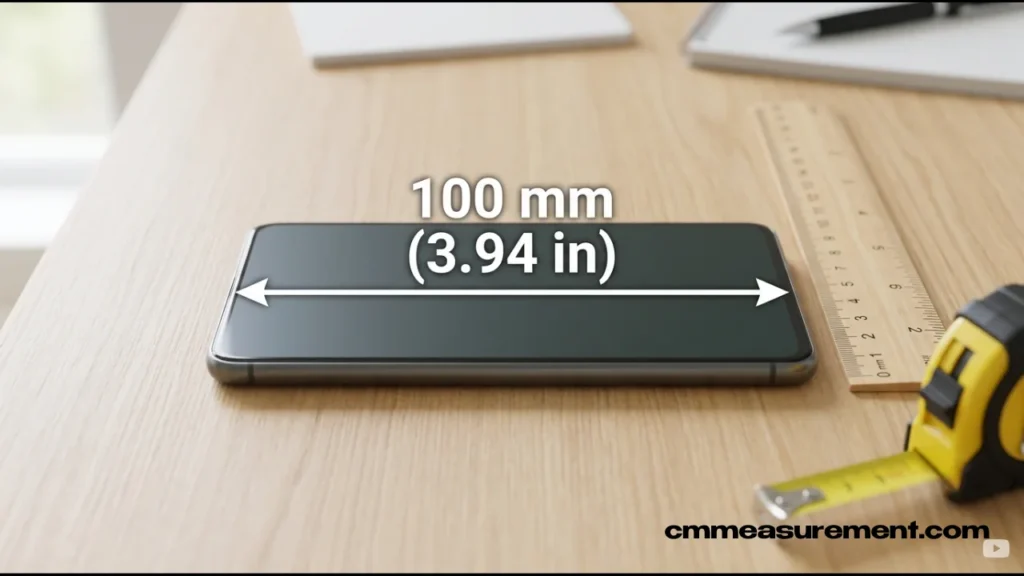
A standard smartphone’s width Most phones are close to 70–75 mm wide, but many phone cases or tablet edges land right around 100 mm. Hold your phone sideways and you’re in the ballpark.
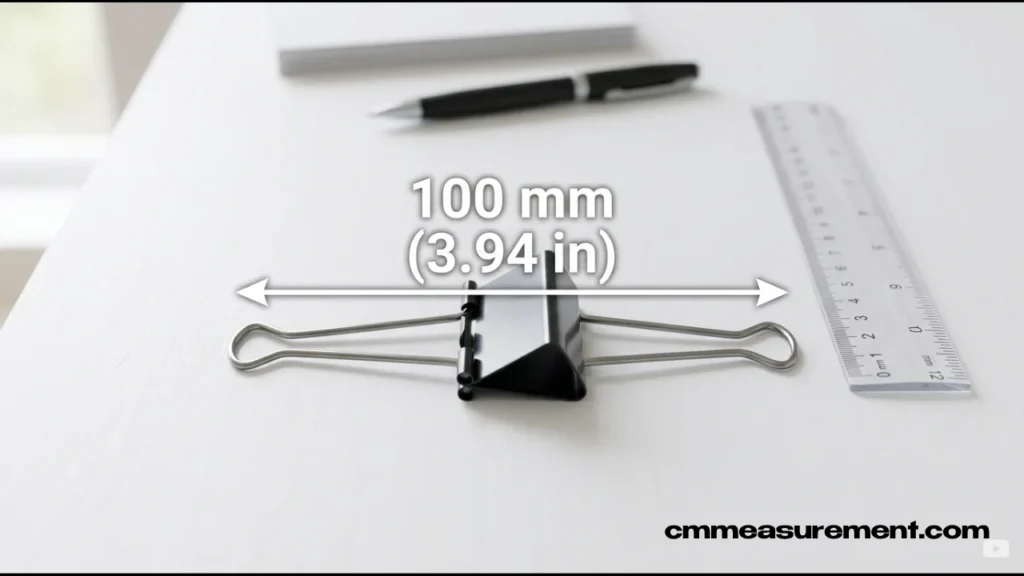
A large binder clip laid flat The bigger office binder clips stretch close to 100 mm end to end — a handy visual if you’ve got one on your desk right now.
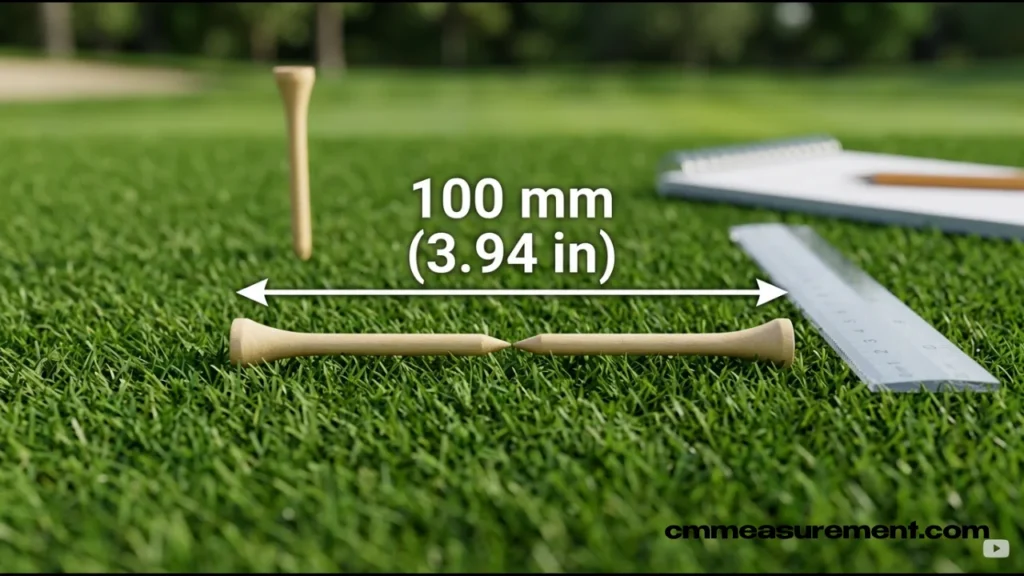
A standard golf tee, doubled A golf tee is roughly 54 mm. Line up two, and you’re just past the 100 mm mark.
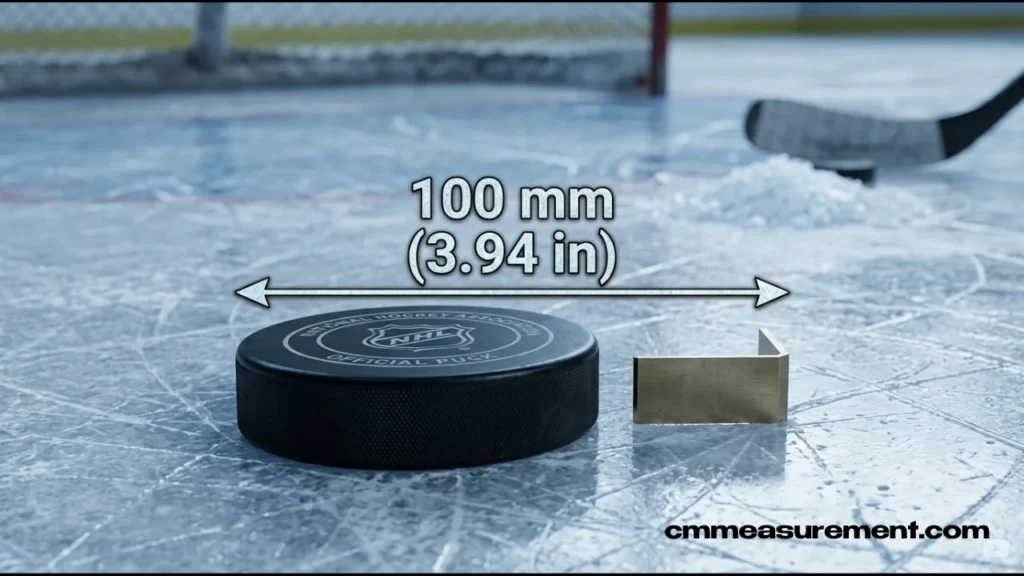
A hockey puck’s diameter, plus a bit An official hockey puck is about 76 mm across. Add a thumb’s width and you’re near 100 mm.
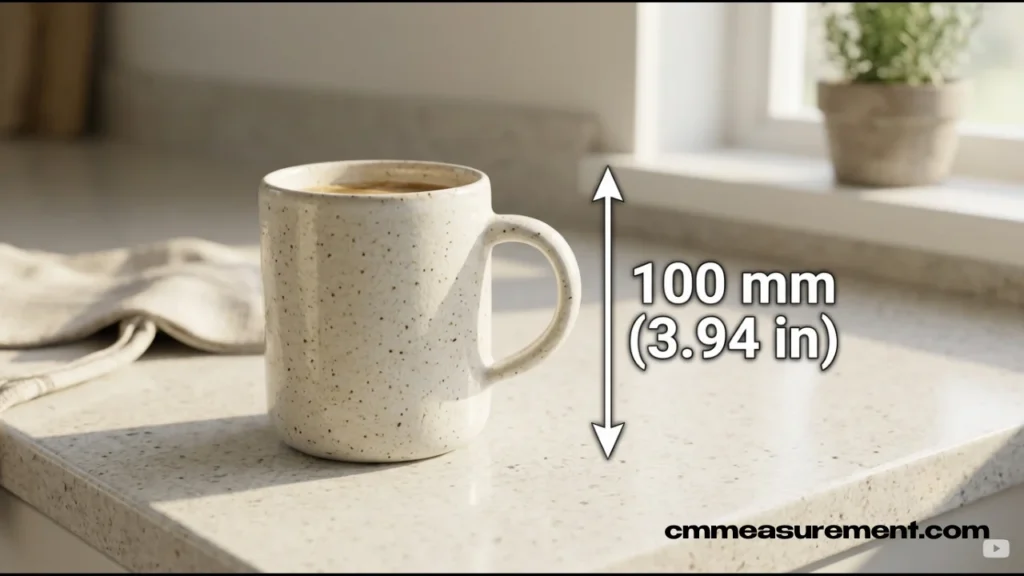
A small coffee mug’s height Many espresso or small mugs sit around 90–100 mm tall — check your kitchen cabinet.
Must Visit: How Long Is 20 mm? 7 Real-Life Examples to Visualize the Size
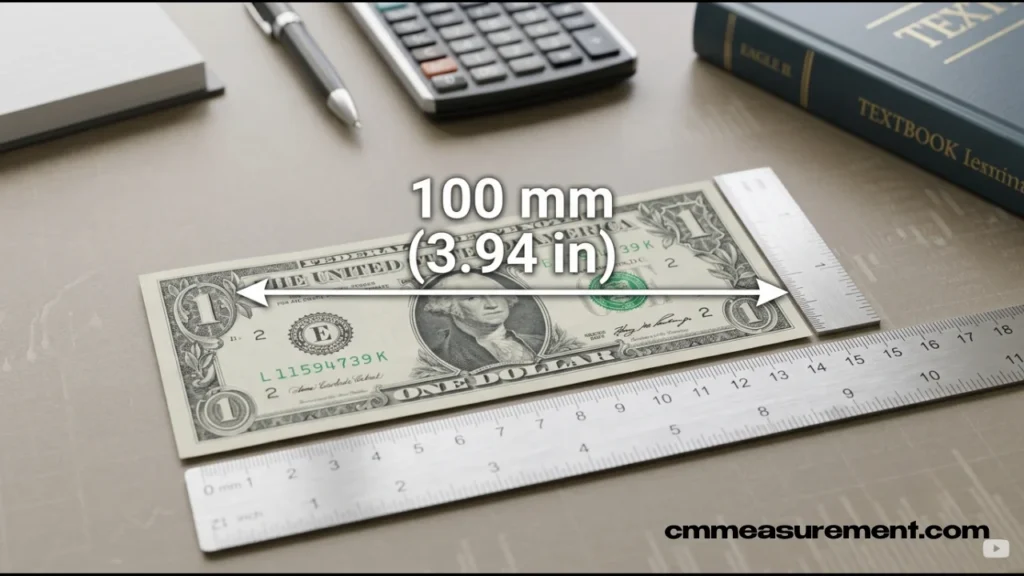
A dollar bill’s short side, plus an inch A US dollar bill is 66 mm wide. Add roughly an inch (25 mm), and you’re closing in on 100 mm.
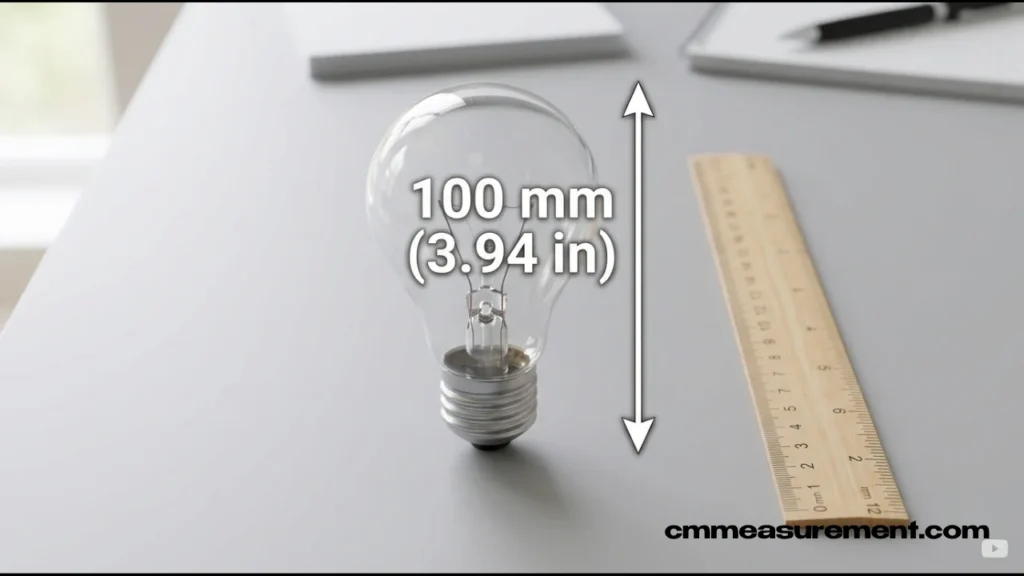
A standard light bulb’s length Many household A19 bulbs measure close to 100 mm from base to tip — a familiar object in nearly every home.
These everyday comparisons turn an abstract metric measurement into something you can picture without even reaching for a ruler.
Is 100 mm 6 Inches? Clearing Up the Confusion
No — 100 mm is not 6 inches. This mix-up happens a lot, so let’s clear it up with real numbers.
- 100 mm = 3.94 inches
- 6 inches = 152.4 mm
That’s a difference of over 50 mm — more than half the length of a AA battery. So if you’re picturing 100 mm as 6 inches, you’re picturing something almost 50% too long.
A simple way to remember it: 4 inches is close to 100 mm, not 6. Keep that mental anchor and you’ll rarely get it wrong again.
100 mm on a Ruler and Tape Measure
Here’s where it gets practical. Most US rulers and tape measures show both scales — inches on one edge, centimeters and millimeters on the other.
To find 100 mm:
- Look at the metric side of your ruler or tape measure.
- Count to the 10 cm mark — remember, 100 mm equals 10 centimeters, since there are 10 mm in every centimeter.
- If you only have an inch ruler, measure to just under the 4-inch mark (3.94 inches, to be precise).
This trick works whether you’re using a carpenter’s tape measure, a sewing ruler, or a basic school ruler. Once you find that 10 cm line, you’ve found your 100 mm.
mm to Inches Conversion Chart (Nearby Sizes)
Sometimes you need a number close to 100 mm, not exactly 100. Here’s a quick reference:
| Millimeters (mm) | Inches (approx.) |
|---|---|
| 90 mm | 3.54 in |
| 95 mm | 3.74 in |
| 100 mm | 3.94 in |
| 105 mm | 4.13 in |
| 110 mm | 4.33 in |
Bookmark this table for quick lookups — it saves you from doing the math every time you’re sizing up a part, a package, or a DIY project measurement.
FAQs
What size is 100 mm in inches?
100 mm is 3.94 inches, or 3.937 inches if you want the precise decimal.
Is 100 mm 6 inches?
No. 100 mm is 3.94 inches, not 6. Six inches would actually be 152.4 mm — much longer.
What is the size of 100 mm?
100 mm equals 10 centimeters, or about 3.94 inches — roughly the width of a small smartphone or a large binder clip.
What is 100 millimeters equal to?
100 millimeters equals 10 cm, 3.94 inches, or 0.1 meters.
What does 100 ml look like in a cup?
Quick note: mL (milliliters) measures volume, not length, so it’s a different unit than mm. As a reference, 100 mL is about 0.42 US cups — a little less than half a standard measuring cup.
What is 100 mm on a ruler?
On a metric ruler, 100 mm sits exactly at the 10 cm mark. On an inch-only ruler, it lands just before the 4-inch line.
Conclusion
100 mm might look unfamiliar at first, but it’s simple once you anchor it to something real: just under 4 inches, or exactly 10 centimeters. Whether you’re reading a ruler, sizing a part, or just satisfying curiosity, that one number — 3.94 inches — is all you need to remember.

Timmy Zeeshan is the founder and lead editor of CM Measurement, where he writes and maintains a growing library of unit conversion tools and practical measurement guides. With a background in engineering and a long-standing interest in everyday math problems, Timmy started CM Measurement after growing frustrated with cluttered, ad-heavy converter websites that made simple conversions harder than they needed to be.