Most Americans grow up measurement in inches, not centimeters. So when a label says “1 cm,” it’s hard to picture without a ruler.
This guide fixes that. You’ll get a quick answer, a no-ruler trick, and 7 real-life examples of things that are about 1 cm long — so you’ll never have to guess again.
How Long Is 1 cm? Quick Answer
1 cm equals about 0.39 inches — a little more than a third of an inch, or roughly ⅜”.
A centimeter (cm) is part of the metric system, the measurement standard used by nearly every country except the United States. The US relies on the imperial system, where inches, feet, and yards rule everyday life. That’s the whole reason 1 cm feels so unfamiliar to most Americans — it’s simply not a unit we grew up using at the grocery store or the hardware shop. If you are interested to see cm into feets then must try this tool.
According to the National Institute of Standards and Technology (NIST), the US officially recognizes the metric system, but customary units still dominate daily use across the country. That gap is exactly why visual comparisons matter more than formulas for most readers.
How Big Is 1 cm? A No-Ruler Trick to Picture It
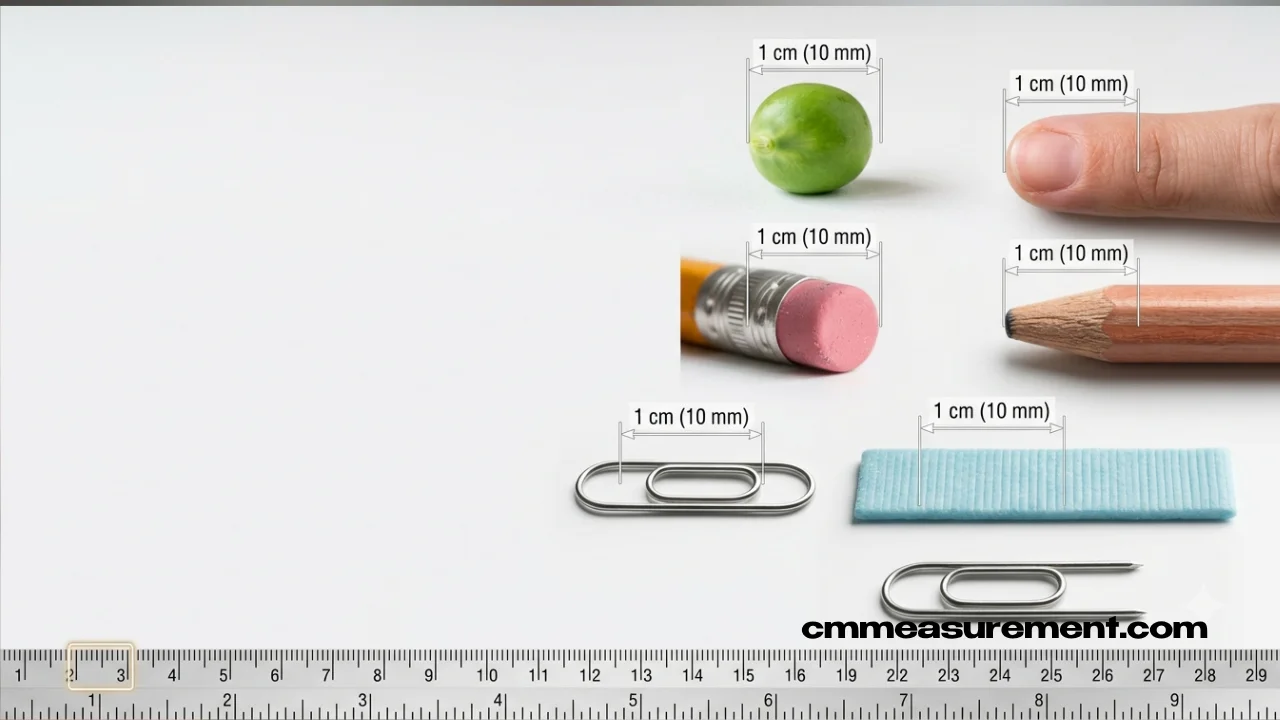
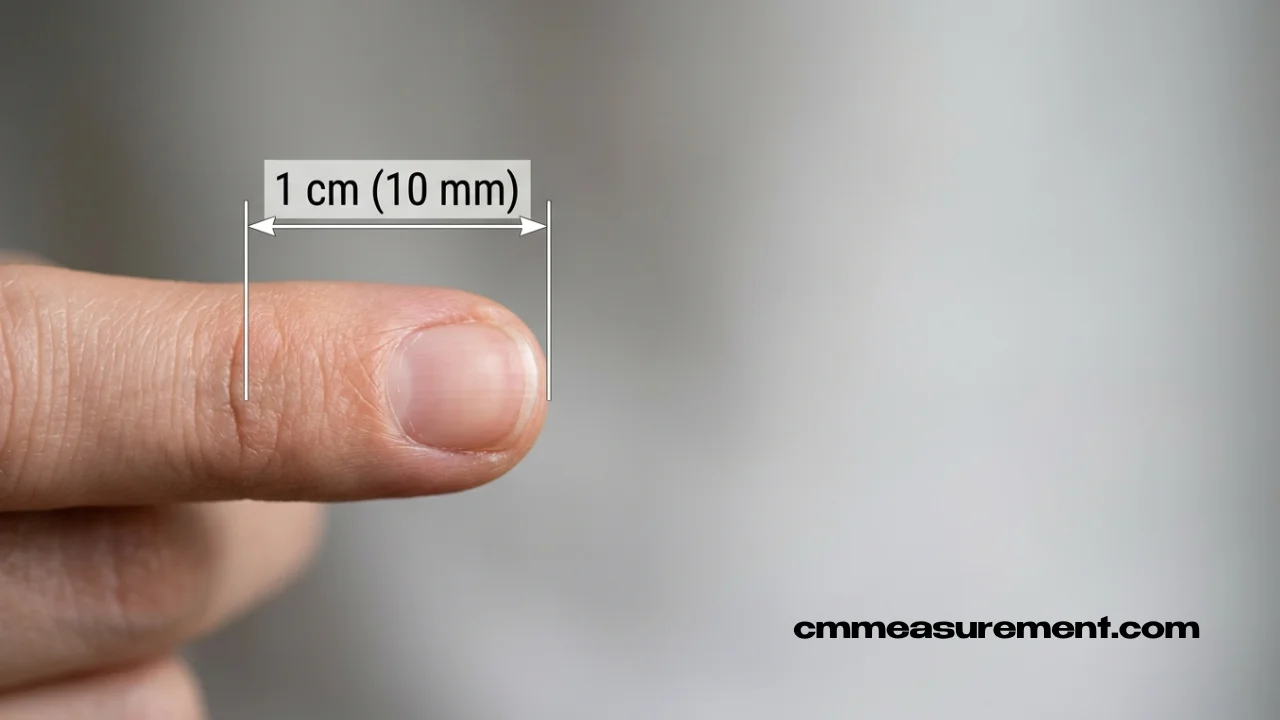
Here’s the fastest way to answer what is 1 cm on a finger: look at your pinky fingernail. The width of an average adult pinky nail is almost exactly 1 cm across.
Another trick — pinch your thumb and index finger together until there’s a tiny gap, about the size of a small pea. That gap is roughly 1 cm.
This body-based method beats memorizing math. Your hand is always with you, but a ruler usually isn’t. Estimation experts and educators often teach this exact trick in classrooms because it builds fast, practical spatial awareness without needing a tool.
7 Real-Life Examples of 1 cm
These everyday objects give you a mental anchor for exactly how long 1 cm really is.
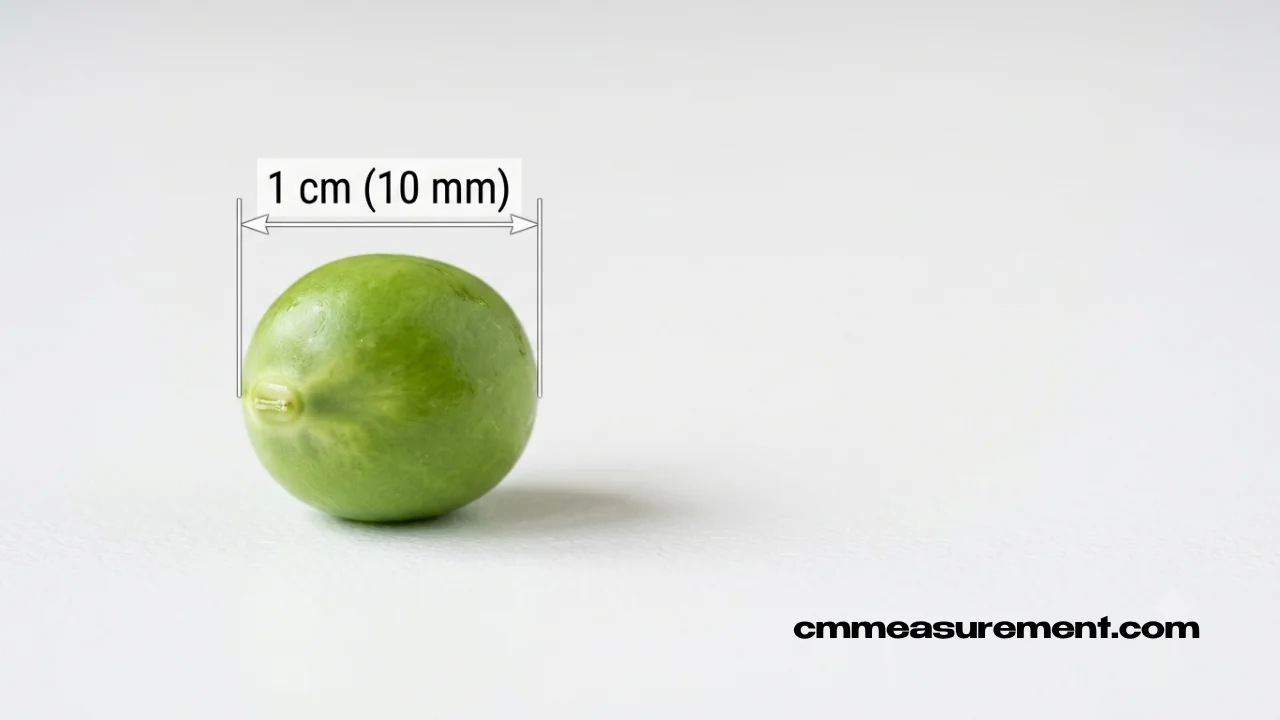
A garden pea. A single pea measures close to 1 cm across. This comparison is even used by health researchers to describe small tumor sizes, according to the National Cancer Institute (NCI).
Your pinky fingernail. As mentioned above, the width of a pinky nail is a near-perfect match for 1 cm.
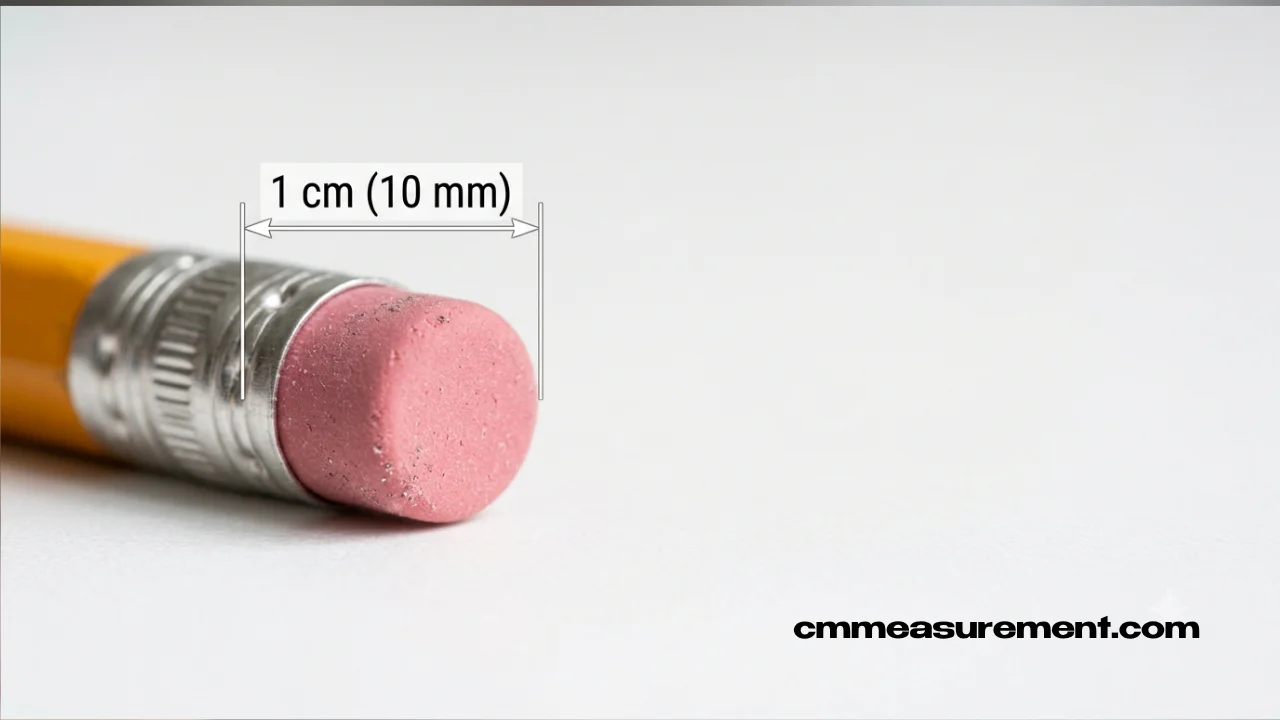
A pencil eraser. The pink eraser cap on top of a standard wooden pencil is about 1 cm wide.
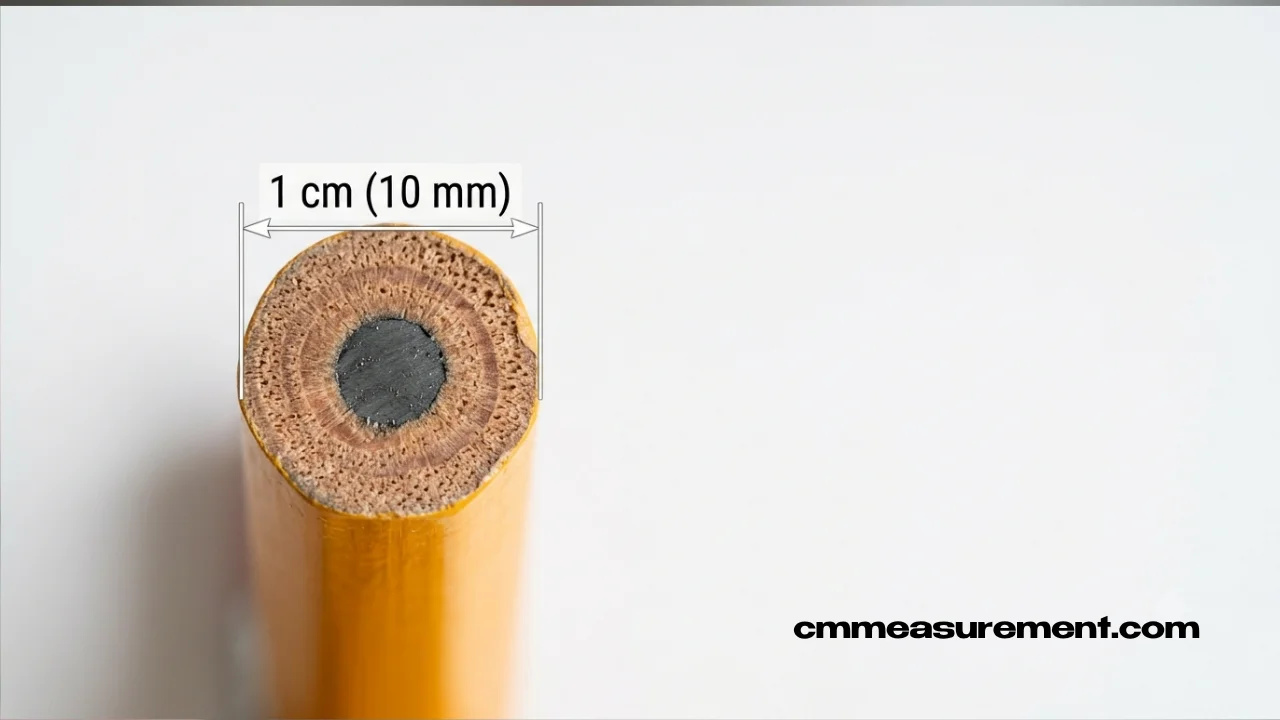
An unsharpened pencil. The diameter (thickness) of a new, unsharpened pencil is close to 1 cm.
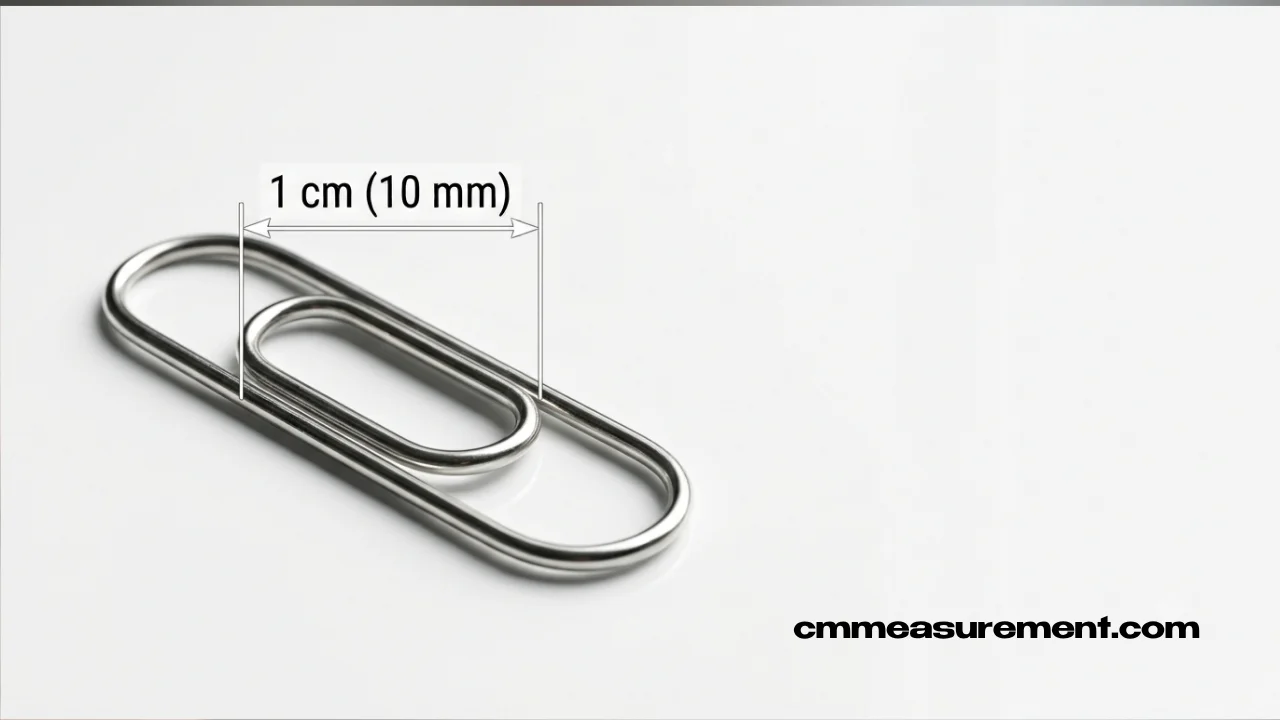
A paperclip’s wire loop. The narrow end of a standard paperclip measures about 1 cm across.
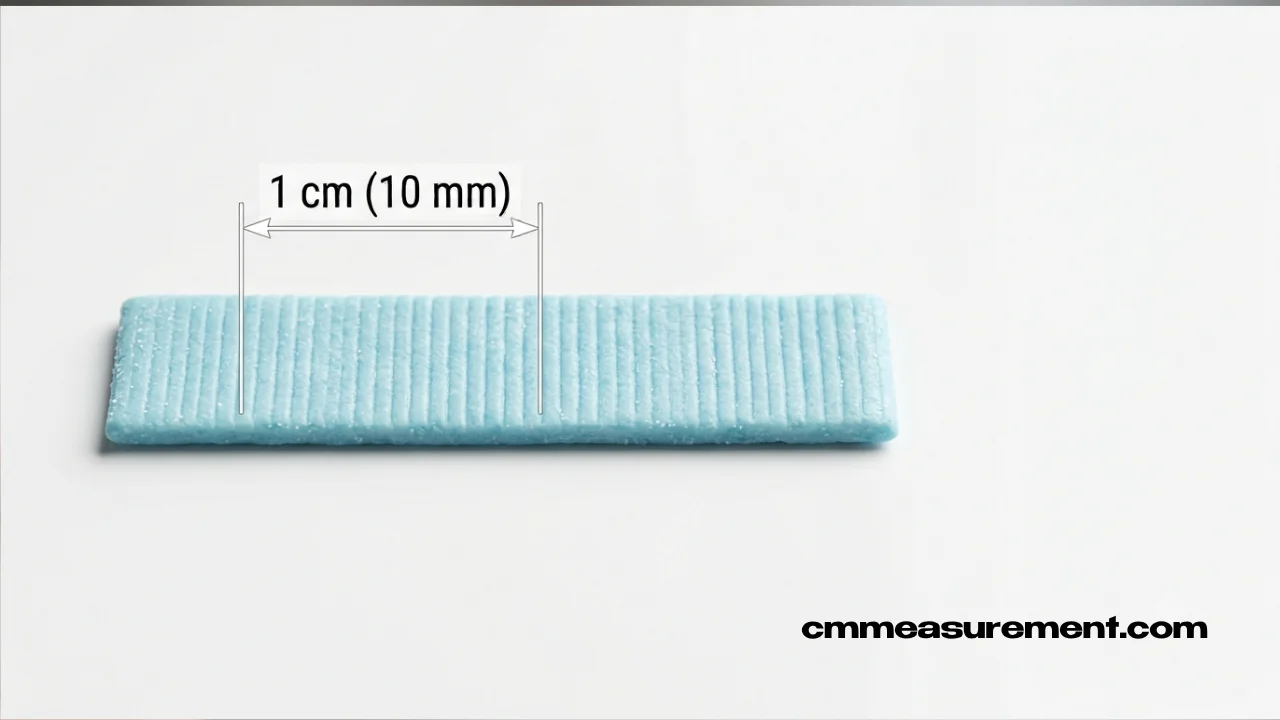
A stick of gum. The width of a typical stick of chewing gum sits right around 1 cm.
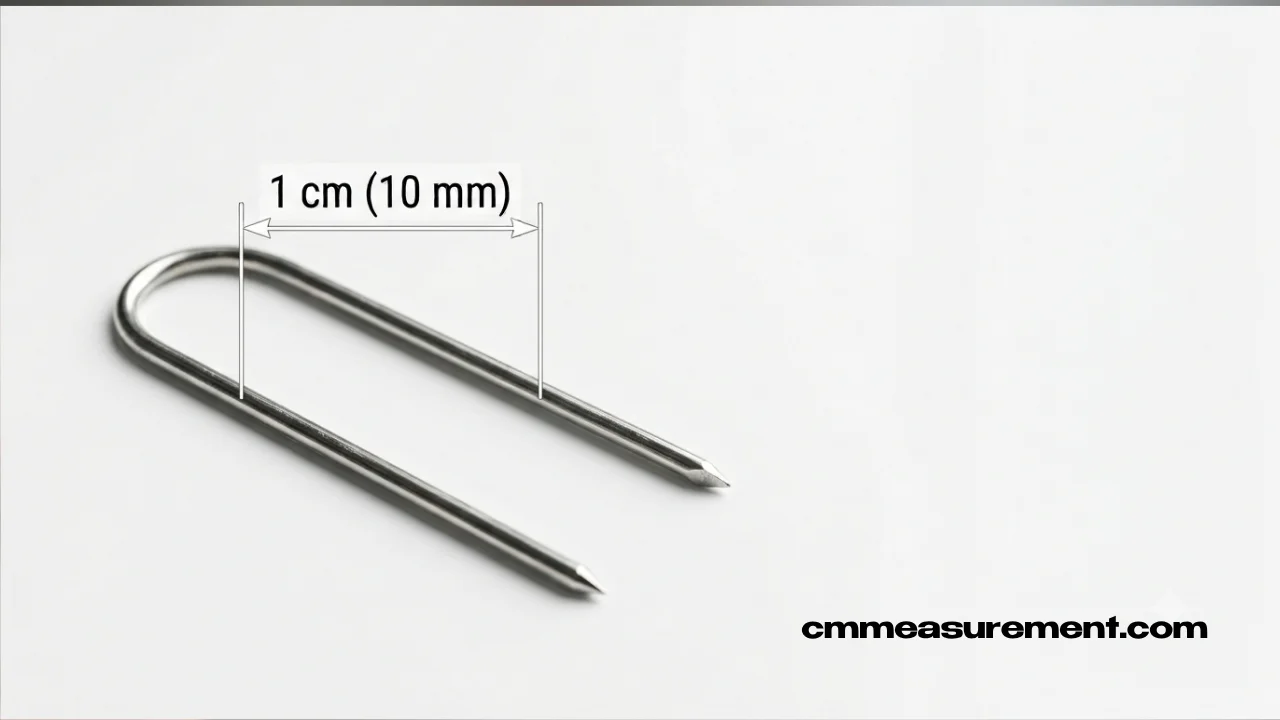
A standard staple. Before it’s folded shut, a regular office staple is about 1 cm long.
So, is 1 cm the size of a pea? Yes — it’s one of the most reliable comparisons out there, and it’s backed by real medical measurement standards, not guesswork.
1 cm to Inches: Fast Conversion Reference
The math behind the conversion is simple: 1 inch equals exactly 2.54 cm. To go from centimeters to inches, divide by 2.54.
Quick reference:
- 1 cm ≈ 0.39 in
- 2 cm ≈ 0.79 in
- 5 cm ≈ 1.97 in
- 10 cm ≈ 3.94 in
This conversion factor is a fixed, internationally agreed standard — not an estimate. It’s defined by the International System of Units (SI), the same framework that governs scientific and engineering measurement worldwide.
Why 1 cm Matters in Everyday US Life
Even in an inch-first country, centimeters show up more than people realize.
Clothing and shoe sizing. Many global brands list garment measurements in cm, especially for imported or online-only items.
Skincare and jewelry. Ring sizes, piercing needle gauges, and skincare tool dimensions are frequently listed in millimeters and centimeters.
Phone and laptop specs. Screen bezels, port widths, and camera lens sizes are often measured in cm or mm on spec sheets.
Sewing and craft patterns. Many patterns, especially from international designers, use centimeters for precision cutting.
Airline luggage limits. International carriers often list baggage dimensions in centimeters, which trips up US travelers who only think in inches.
Knowing that 1 cm is roughly a third of an inch means you can glance at any of these labels and immediately get a rough sense of real-world size — no calculator needed.
FAQS
What is 1 cm on a finger?
The width of an average adult pinky fingernail is almost exactly 1 cm.
What is an example of a 1 cm?
A garden pea, a pencil eraser, or the width of a paperclip’s wire loop are all reliable, everyday examples of something measuring 1 cm.
Is 1 cm the size of a pea?
Yes. A standard pea is one of the most commonly cited size comparisons for 1 cm.
How long is 1 cm in actual size?
1 cm equals about 0.39 inches, or a little more than a third of an inch. It’s roughly the width of a pencil eraser.
How big does 1 cm look like?
Picture a small pea, a pinky nail’s width, or the thin edge of a stick of gum. All three give an accurate visual sense of 1 cm.
What item is 1 cm long?
A standard office staple, before it’s folded closed, measures close to 1 cm — a handy, always-nearby reference in most homes and offices.
Conclusion
A centimeter is small, but it’s easy to picture once you connect it to things you already know. A pea, a fingernail, a pencil eraser — these everyday objects turn an abstract metric unit into something you can see and feel.
Next time you spot “1 cm” on a label, you won’t need a ruler. You’ll already know exactly what it looks like.

Timmy Zeeshan is the founder and lead editor of CM Measurement, where he writes and maintains a growing library of unit conversion tools and practical measurement guides. With a background in engineering and a long-standing interest in everyday math problems, Timmy started CM Measurement after growing frustrated with cluttered, ad-heavy converter websites that made simple conversions harder than they needed to be.