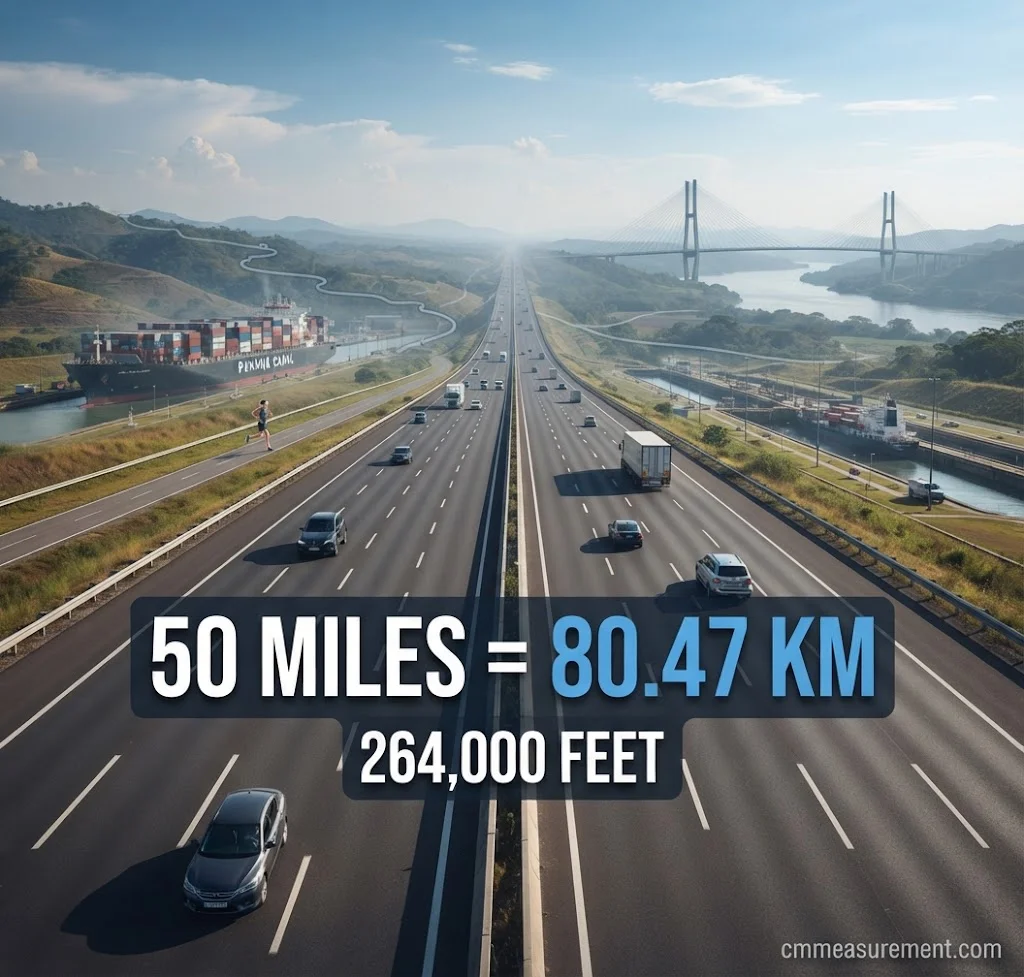
50 miles equals about 80.5 kilometers, or 264,000 feet. That’s the short answer. But a number like that doesn’t mean much until you picture it.
This guide breaks down how long is 50 miles using real comparisons, travel times, and simple math. By the end, you’ll know exactly what this distance looks like in everyday life.
Table of Contents
How Long Is 50 Miles? (Quick Conversion Answer)
50 miles is a distance equal to 80.47 kilometers, 264,000 feet, or 88,000 yards. One mile equals 1.609 kilometers, so the math scales up fast once you’re covering 50 of them.
Here’s the quick breakdown:
| Unit | Value |
|---|---|
| Kilometers | 80.47 km |
| Feet | 264,000 ft |
| Yards | 88,000 yd |
| Meters | 80,467 m |
For American readers, think of it this way: 50 miles is roughly the width of a smaller US state, or the radius many commuters travel to reach a major city job.
6 Real-Life Things That Show How Far 50 Miles Really Is
Numbers stick better when you tie them to something familiar. Here are six grounded, verifiable comparisons for 50 miles.
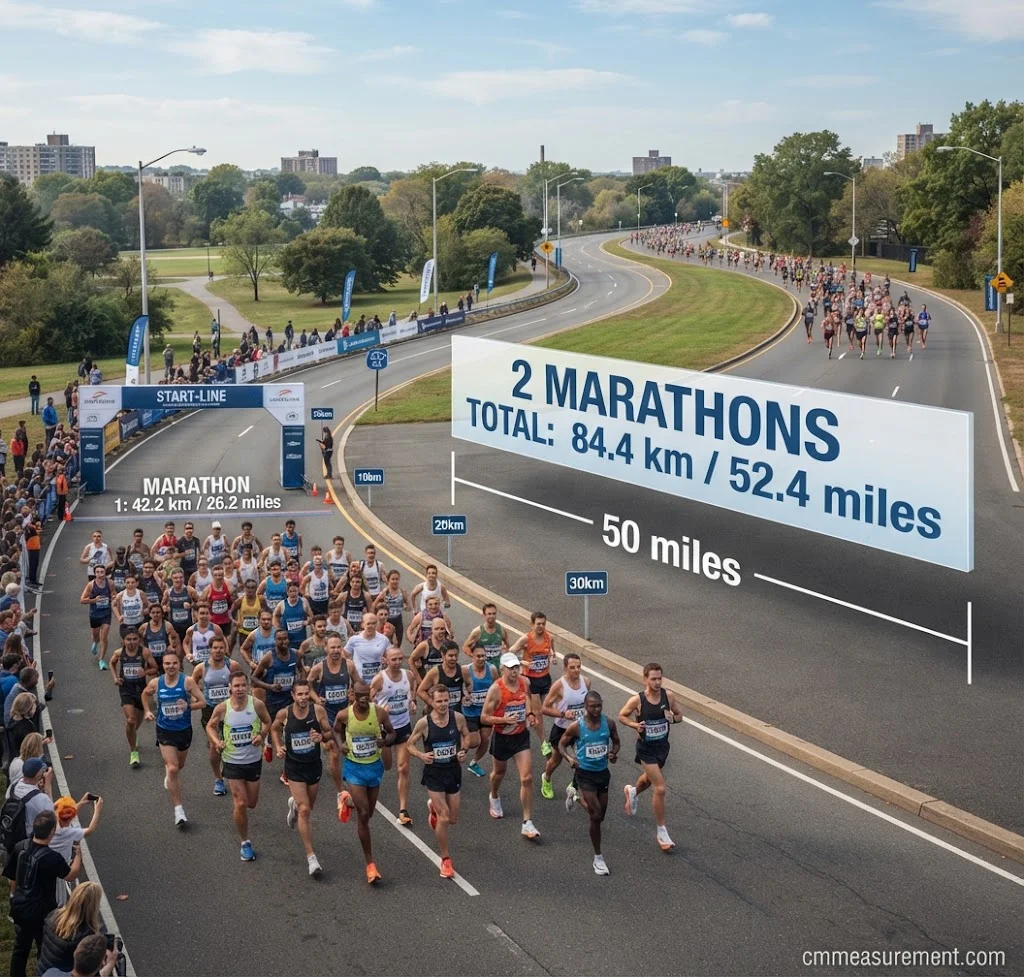
Two full marathons, back to back. A single marathon covers 26.2 miles. Run it twice, and you land just under 50 miles. This is roughly the physical territory covered in many ultramarathon events, which push runners well past standard race distances.
The Panama Canal’s full length. This engineering marvel spans nearly 50 miles across the Isthmus of Panama, connecting the Atlantic and Pacific Oceans. Ships take about 8 to 10 hours to complete the transit through its locks.

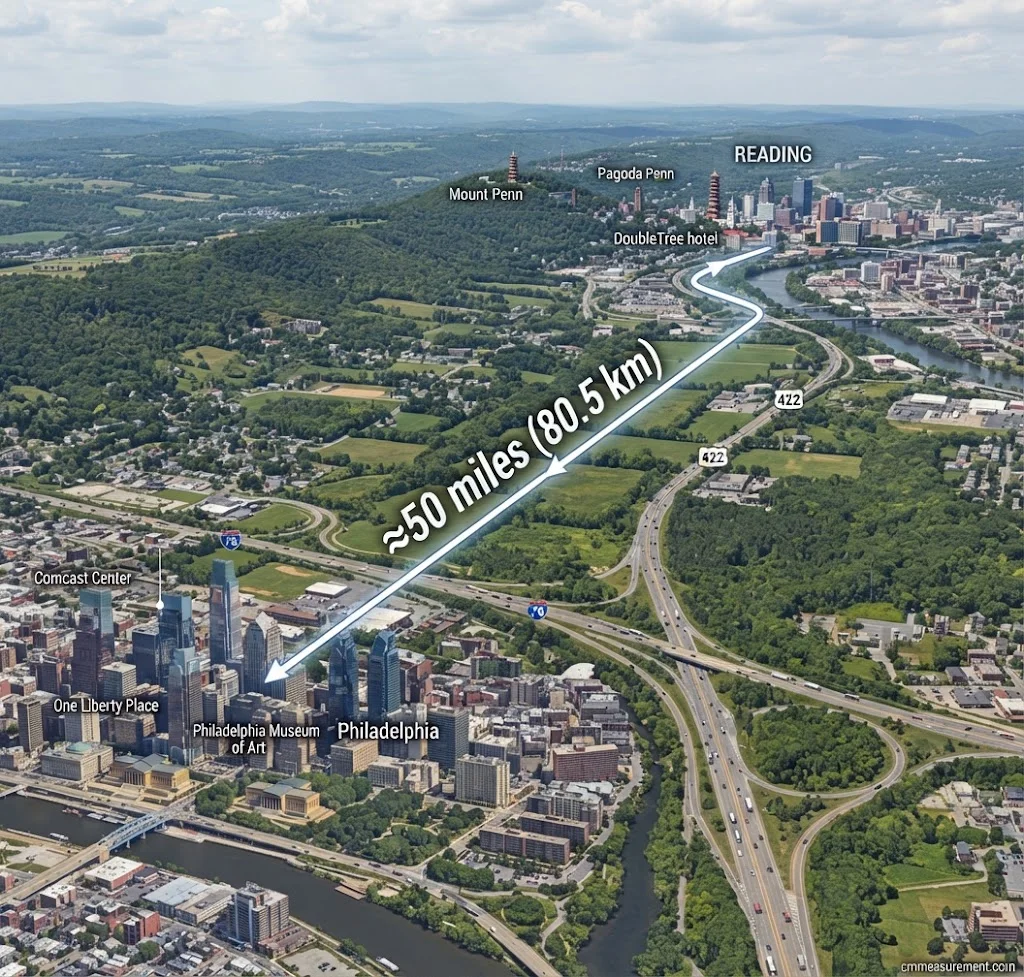
Philadelphia to Reading, Pennsylvania. This is a real, drivable stretch that Pennsylvania commuters travel regularly. It’s a practical, lived-in example of what 50 miles feels like behind the wheel.
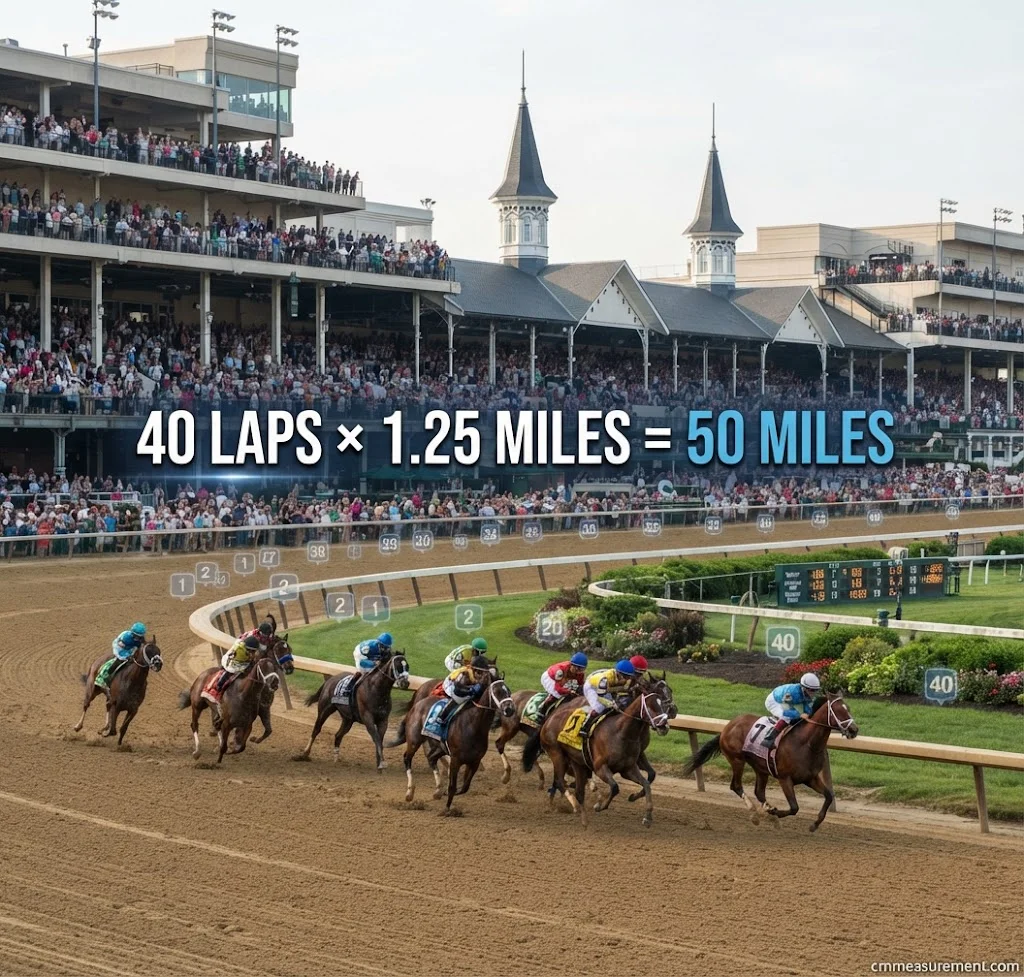
Forty laps around the Kentucky Derby track. The Derby itself runs 1.25 miles. Multiply that by 40, and you’ve matched the 50-mile mark, showing just how much ground a short race distance adds up to when repeated.
A JFK 50 Mile ultramarathon course. This is one of the oldest ultramarathons in the country, run through Maryland’s mountains and canal towpaths. Elite finishers complete it in around 6 hours; most participants take longer.

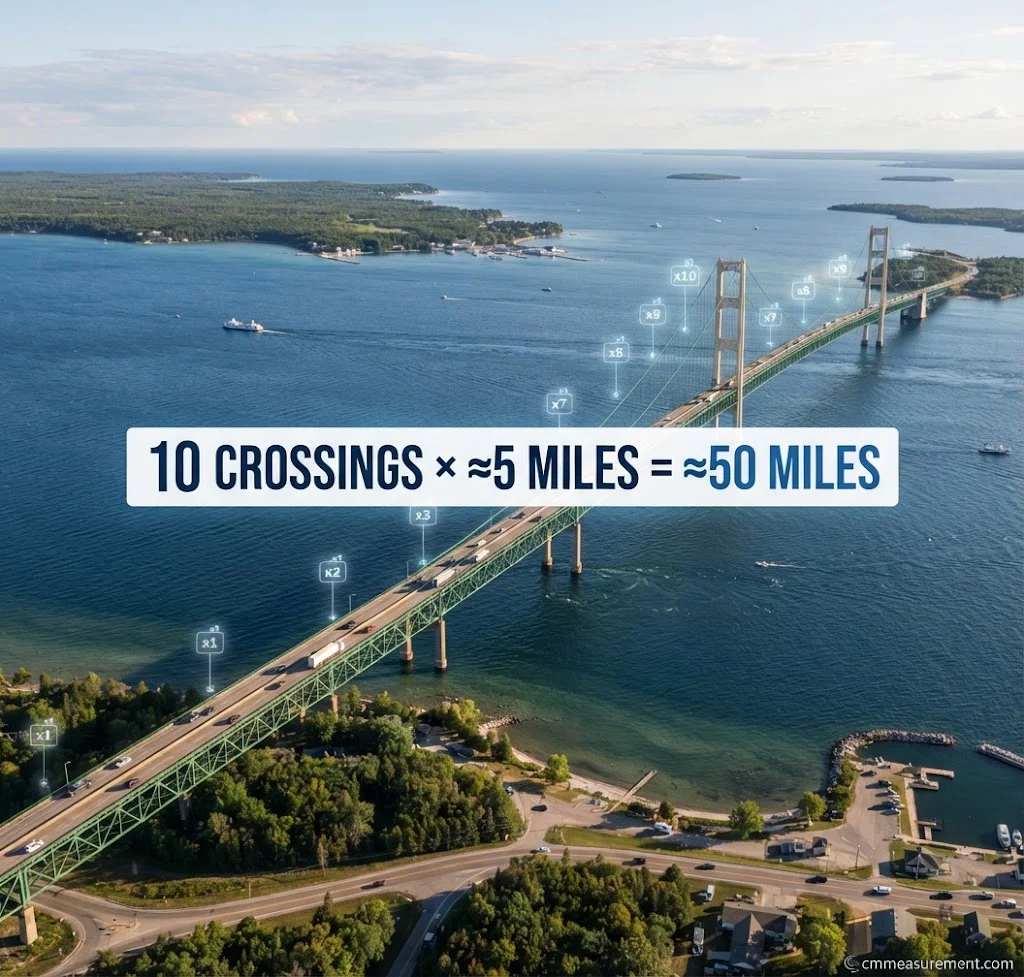
Crossing the Mackinac Bridge ten times. This Michigan suspension bridge spans nearly 5 miles across the Straits of Mackinac. Cross it 10 times, and you’ve covered the full 50-mile distance.
Quick-reference table:
| Comparison | Approx. Distance | Closeness to 50 Miles |
|---|---|---|
| Two marathons | 52.4 mi | Very close |
| Panama Canal | ~50 mi | Exact match |
| Kentucky Derby x40 | 50 mi | Exact match |
| Mackinac Bridge x10 | ~50 mi | Close |
How Long Does It Take to Travel 50 Miles? (Driving, Walking, Running, Cycling)
How long is a drive of 50 miles? At highway speed, roughly one hour. City traffic and stoplights can stretch that closer to 90 minutes.
Speed changes the whole picture. Here’s the breakdown by mode:
| Mode | Approx. Time |
|---|---|
| Walking (3 mph) | 16–17 hours |
| Running (6 mph) | 8–9 hours |
| Cycling (12–15 mph) | 3–4 hours |
| Driving (50–60 mph) | 50–60 minutes |
How long to run 50 miles? For elite ultramarathon runners, roughly 6 to 7 hours. For most recreational runners tackling their first 50-mile event, the finish line often comes closer to 10 to 15 hours, depending on terrain and elevation gain.
Is 50 Miles Far? Minutes, Hours, and Everyday Context
Is 50 miles 1 hour? At exactly 50 mph, yes. But real-world driving speeds shift that number depending on the road.
How many minutes away is 50 miles? Here’s how it breaks down at different speeds:
| Speed | Time to Cover 50 Miles |
|---|---|
| 40 mph | 75 minutes |
| 50 mph | 60 minutes |
| 60 mph | 50 minutes |
| 70 mph | 43 minutes |
So a 50-mile trip isn’t always “an hour.” It’s closer to 43 to 75 minutes, depending on the posted speed limit and traffic conditions.
For daily commuting, 50 miles each way is considered a long haul, often eating up two or more hours of driving per day. For a weekend trip or a scenic drive, though, it’s a completely manageable stretch that most people cover without a second thought.
How Many Miles in 2 Hours? Understanding Speed and Distance
Distance always comes down to one simple relationship: speed multiplied by time equals distance.
How many miles in 2 hours? It depends entirely on your pace:
| Speed | Distance in 2 Hours |
|---|---|
| 25 mph | 50 miles |
| 40 mph | 80 miles |
| 50 mph | 100 miles |
| 65 mph | 130 miles |
How long will it take to travel 50 miles? At a steady 25 mph, exactly 2 hours. At highway speeds closer to 60 or 70 mph, you’d cover 50 miles in well under an hour, leaving extra time to spare within that same 2-hour window.
This simple formula works for planning any trip, not just this one. Once you know your speed, distance and time practically calculate themselves.
FAQs
How long is a drive of 50 miles?
At highway speed, a 50-mile drive takes about one hour. In heavier city traffic, it can stretch to 1 to 1.5 hours.
How many minutes away is 50 miles?
Depending on speed, 50 miles takes between 43 and 75 minutes to cover by car.
How long to run 50 miles?
Elite ultramarathon runners finish in about 6 to 7 hours. Most recreational runners take 10 to 15 hours.
How long will it take to travel 50 miles?
It depends on your mode of transport: about 1 hour driving, 3 to 4 hours cycling, or 16 to 17 hours walking.
Is 50 miles 1 hour?
Yes, if you’re traveling at exactly 50 mph. Faster or slower speeds change that time.
How many miles in 2 hours?
At 25 mph, you’d cover 50 miles. At 50 mph, you’d cover 100 miles in the same 2-hour window.
Conclusion
50 miles is more than just a number, it’s an hour on the highway, a full day on foot, or the length of the Panama Canal. Whether you’re planning a road trip or training for an ultramarathon, these comparisons make the distance easy to picture and remember.

Timmy Zeeshan is the founder and lead editor of CM Measurement, where he writes and maintains a growing library of unit conversion tools and practical measurement guides. With a background in engineering and a long-standing interest in everyday math problems, Timmy started CM Measurement after growing frustrated with cluttered, ad-heavy converter websites that made simple conversions harder than they needed to be.