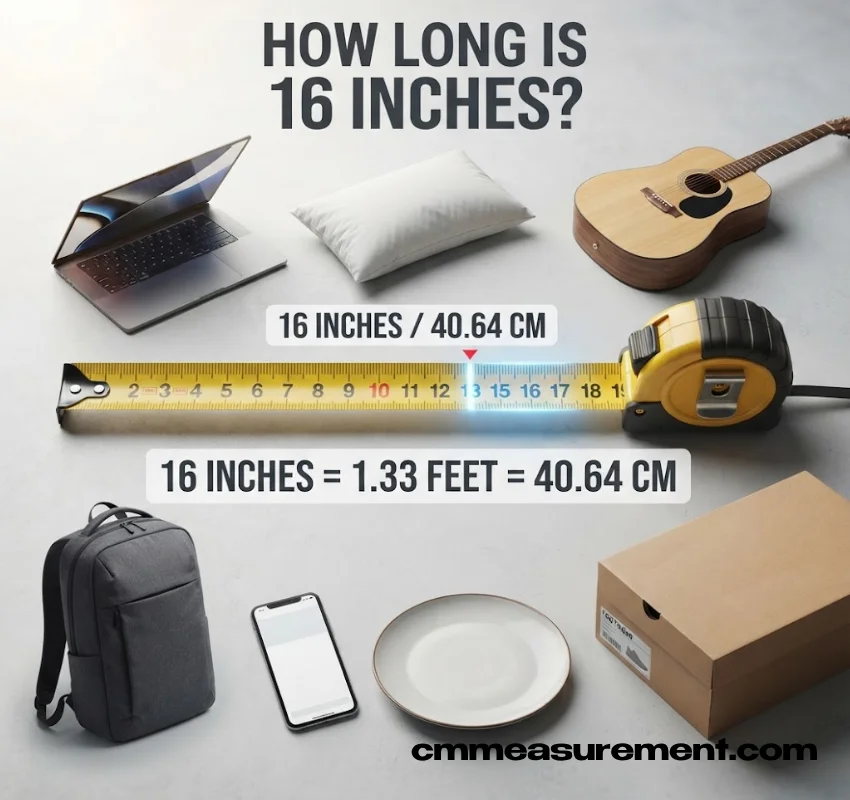
Sixteen inches shows up more often than you’d think — in laptop bags, pillows, guitars, and even your own footsteps. But numbers on a screen don’t always click. You need something real to picture.
This guide breaks down how long 16 inches actually is, shows you where to find it on a ruler, and gives you 13 real-life examples you can picture instantly. No math skills required.
Table of Contents
How Long Is 16 Inches? (Quick Answer)
16 inches equals 1.33 feet, or 40.64 centimeters, or 406.4 millimeters.
That’s the short version. Here’s why each number matters.
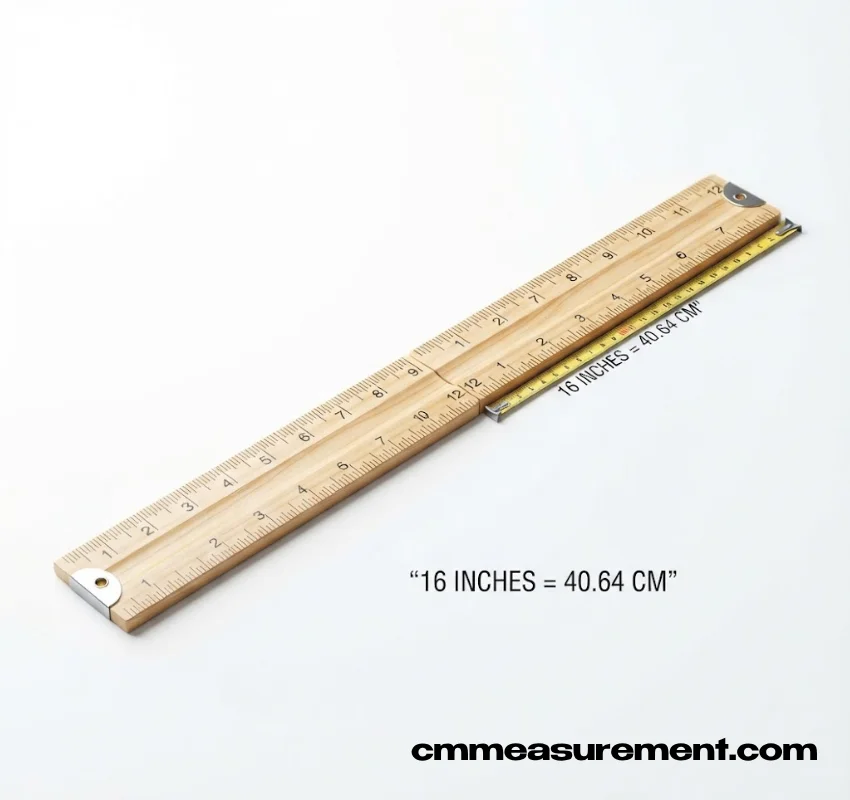
A standard US ruler measures 12 inches, which is exactly 1 foot. So 16 inches is one full ruler length plus 4 extra inches tacked on. Picture a 12-inch ruler with a stick of gum laid across the end — that’s roughly your 16 inches.
In the metric system, 16 inches converts to 40.64 cm. Most countries outside the US use centimeters as their default unit, so if you’re shopping on an international site or reading a product spec sheet from overseas, this conversion matters.
Here’s the breakdown in one place:
- 16 inches = 1.33 feet
- 16 inches = 40.64 centimeters
- 16 inches = 406.4 millimeters
- 16 inches = 0.4064 meters
Knowing all four units helps whether you’re reading a US tape measure, a European sizing chart, or a technical spec sheet from a manufacturer.
What Does 16 Inches Look Like on a Ruler?
A 12-inch ruler is the most common size found in schools, offices, and toolboxes across the US. To visualize 16 inches, you need to go past the end of that ruler by 4 more inches.
Think of it this way: lay the ruler flat, then imagine adding roughly a third of its length again. That extra stretch is your 16-inch mark.
If you’re using a tape measure instead, this is easier — just pull it out to the number 16. Most retractable tape measures used for home projects go up to 25 feet, so 16 inches is barely a fifth of the way unrolled.
Rulers also break inches down into smaller fractional units — halves, quarters, eighths, and sixteenths. On a standard ruler:
- The longest lines mark whole inches
- Medium lines mark half-inch points
- Shorter lines mark quarter-inch and eighth-inch points
- The smallest lines mark sixteenths of an inch
This fractional system matters most in carpentry, sewing, and any project where precision counts. A woodworker cutting a shelf to 16 and 3/8 inches, for example, relies on those small tick marks to avoid a crooked cut.
13 Helpful Real-Life Examples of 16 Inches
Numbers are abstract. Objects aren’t. Here are 13 everyday items that measure close to 16 inches, split into two groups — practical items you already own, and a few surprising comparisons that stick in memory.
Everyday Objects Around You
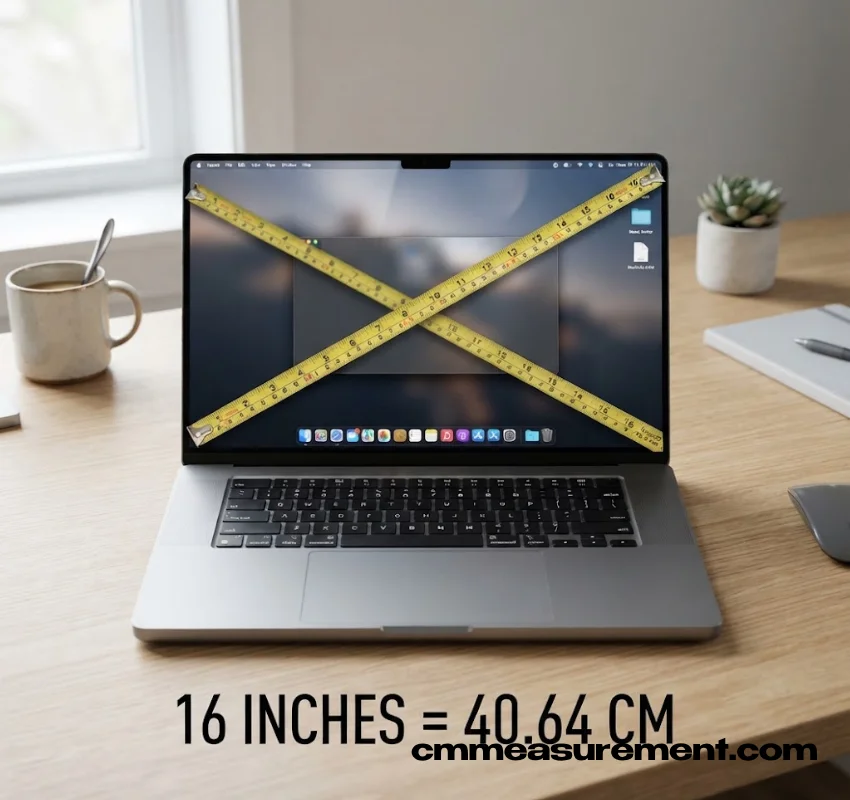
Medium laptop screens often measure between 15.5 and 16 inches wide, depending on the bezel design. If you’ve ever carried a larger laptop bag, you already know this size by feel.
Two standard rulers laid end to end, minus a small gap, land almost exactly at 16 inches. This is the simplest mental trick if you already own a ruler.
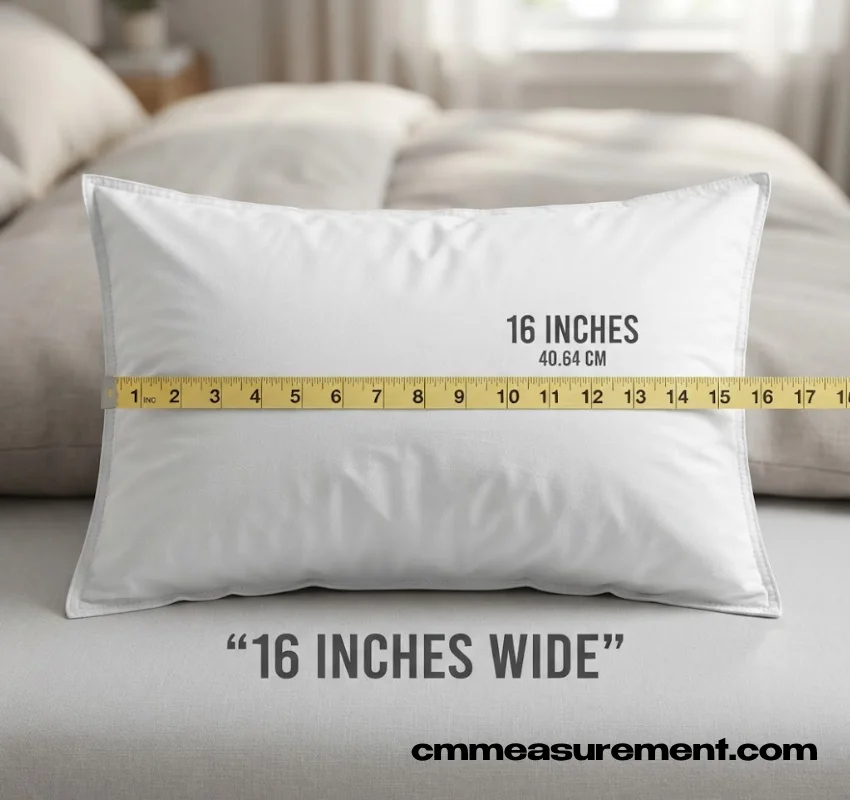
A standard bed pillow typically measures close to 16 inches wide when fully fluffed. Next time you fix your bedding, you’re handling a real-world 16-inch object.
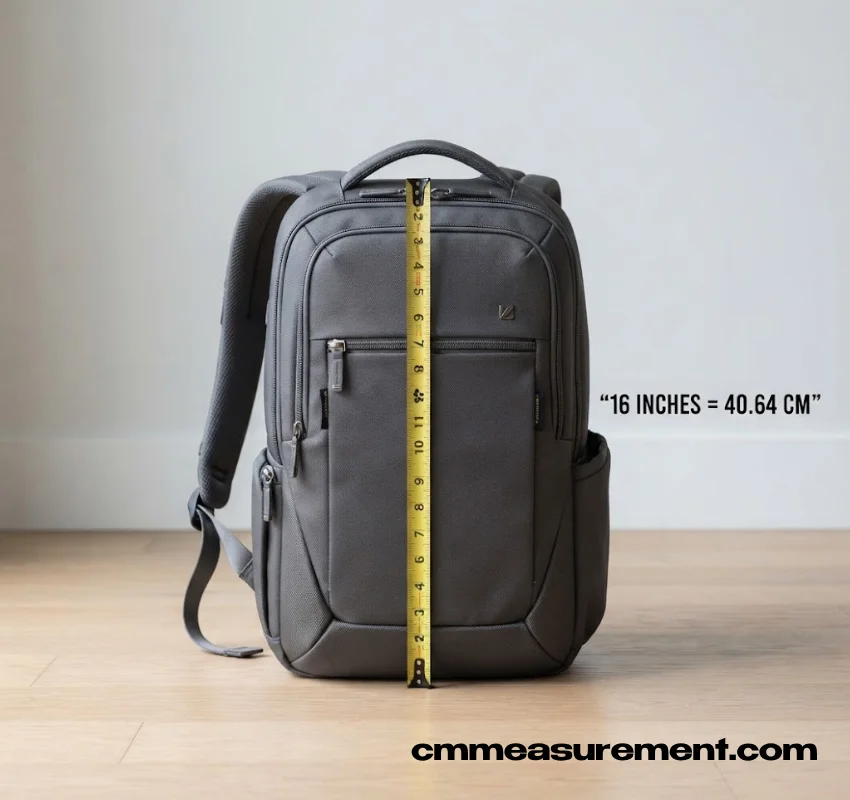
A carry-on backpack made for school or air travel often stands around 16 inches tall — a detail worth knowing before you try to squeeze one into an overhead bin.
Must Visit: How Long Is 40 Inches? 10 Amazing Real-Life Examples to Visualize It Easily
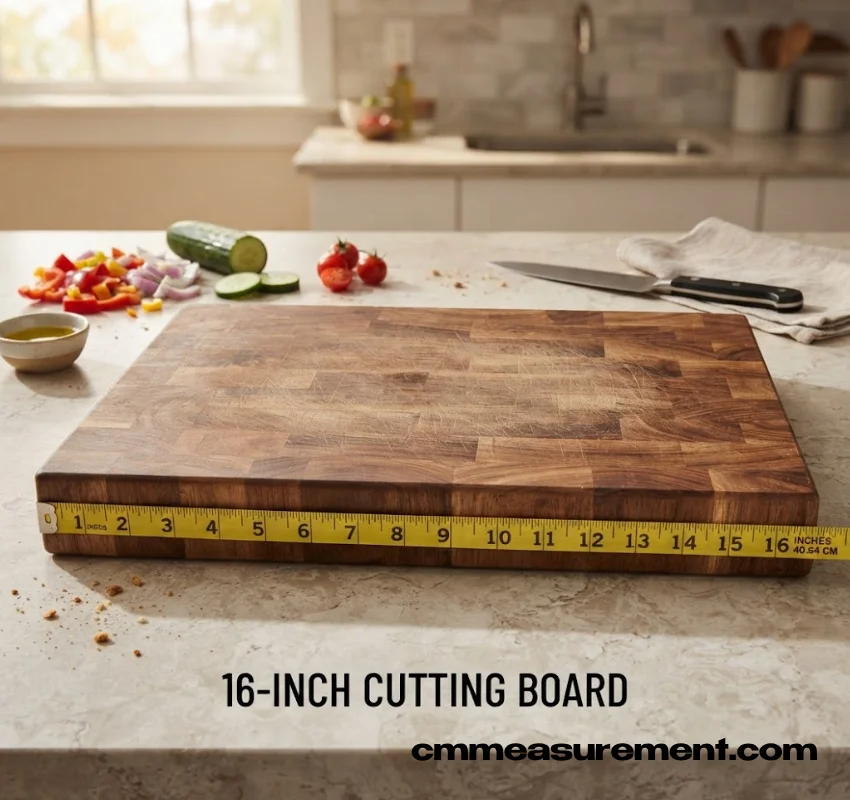
A large kitchen cutting board is frequently built around a 16-inch length, giving home cooks enough surface area to prep a full meal without crowding.
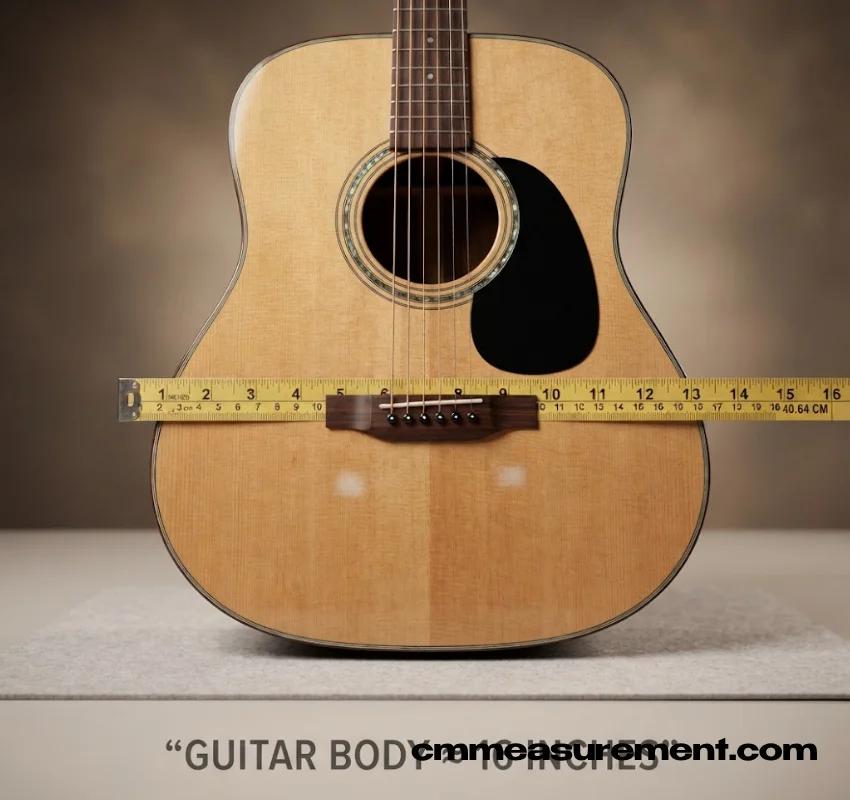
The body of a standard acoustic guitar, not counting the neck, measures close to 16 inches. Musicians handle this measurement constantly without ever thinking of it in inches.
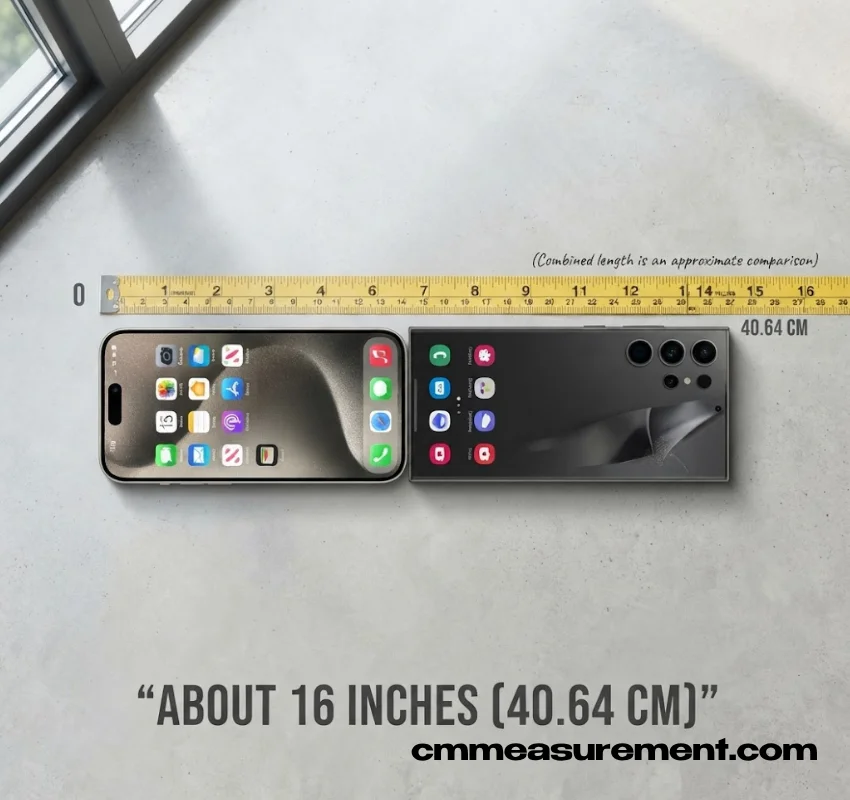
Two smartphones placed end to end, with a little extra room, reach close to 16 inches. Most phones run 6 to 6.5 inches long, so doubling that gets you most of the way there.
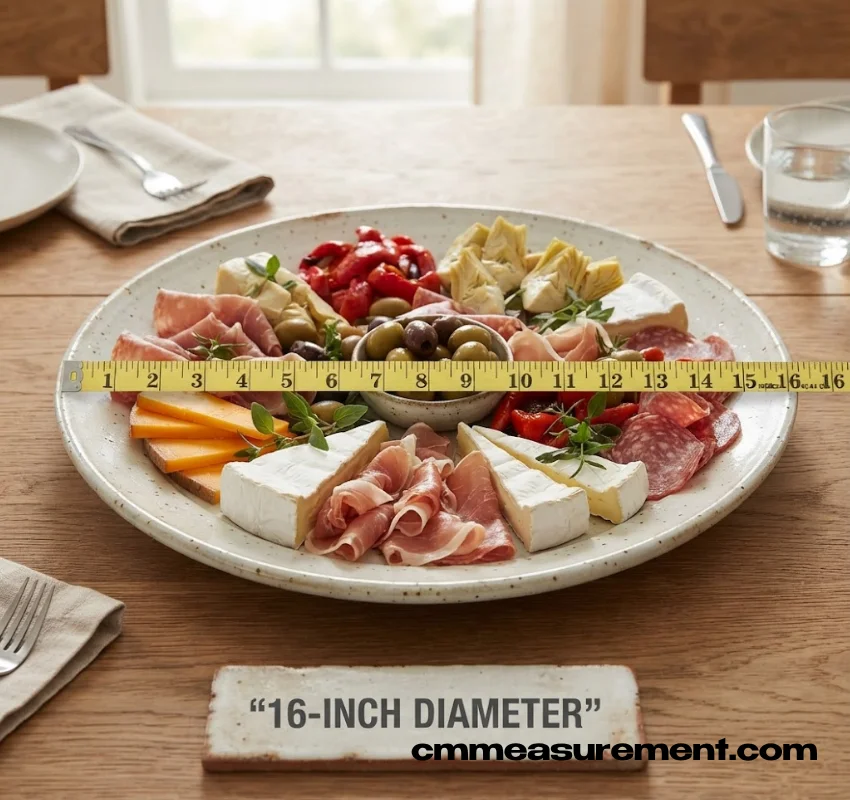
An oversized dinner plate or serving platter can reach a 16-inch diameter, especially the kind used for holiday meals or large family dinners.
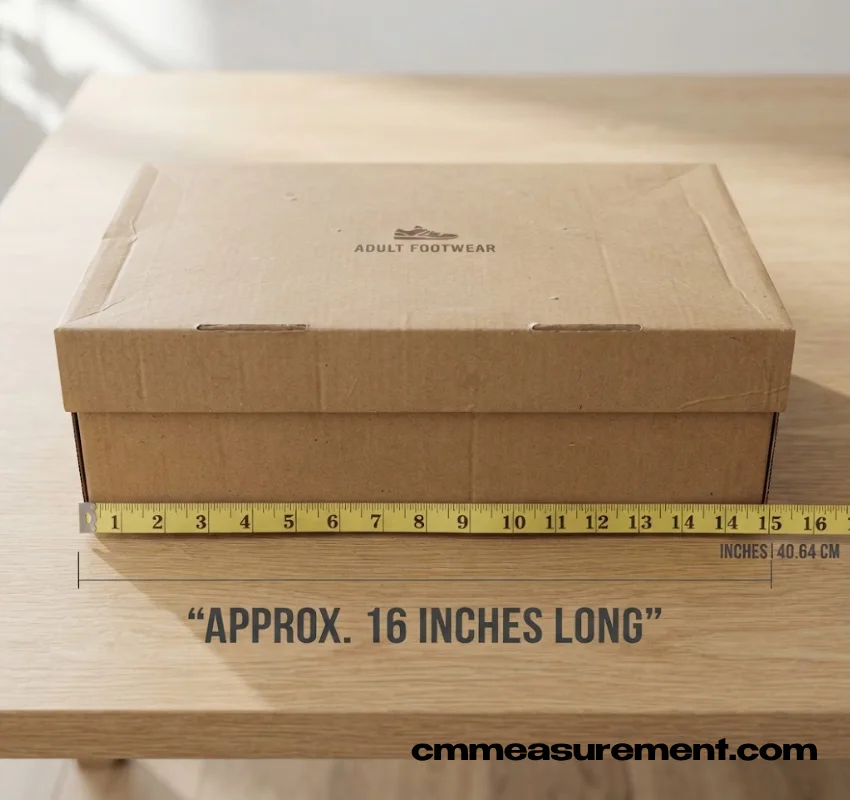
An adult shoe box frequently measures near 16 inches in length, depending on shoe size — a familiar object if you’ve bought shoes recently.
Surprising Size Comparisons
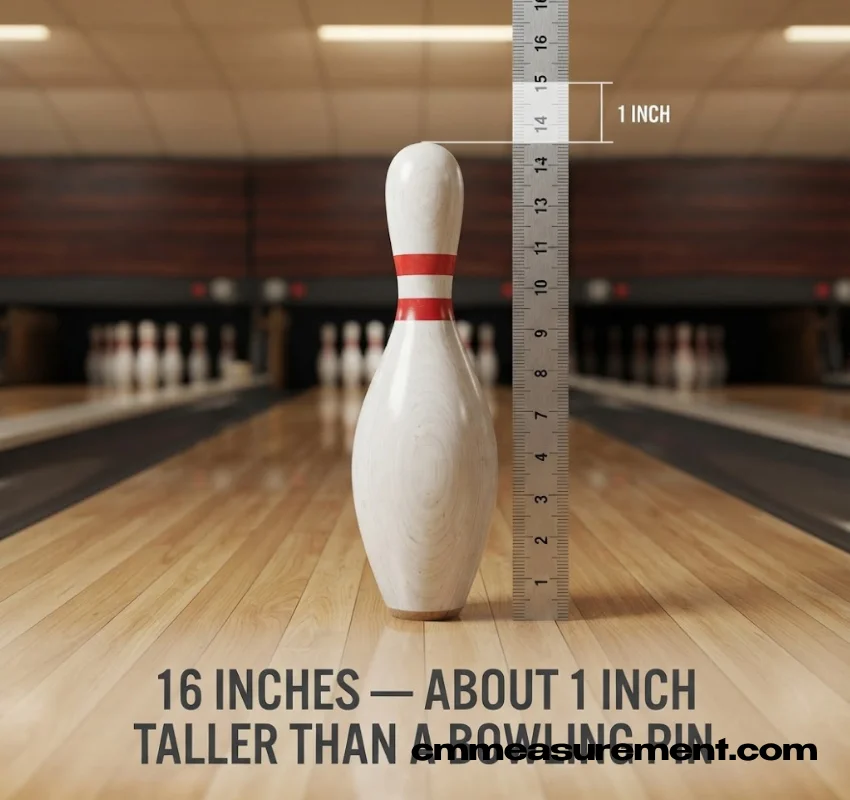
A bowling pin stands about 15 inches tall under official specifications, making 16 inches just slightly taller than a regulation pin standing on the lane.
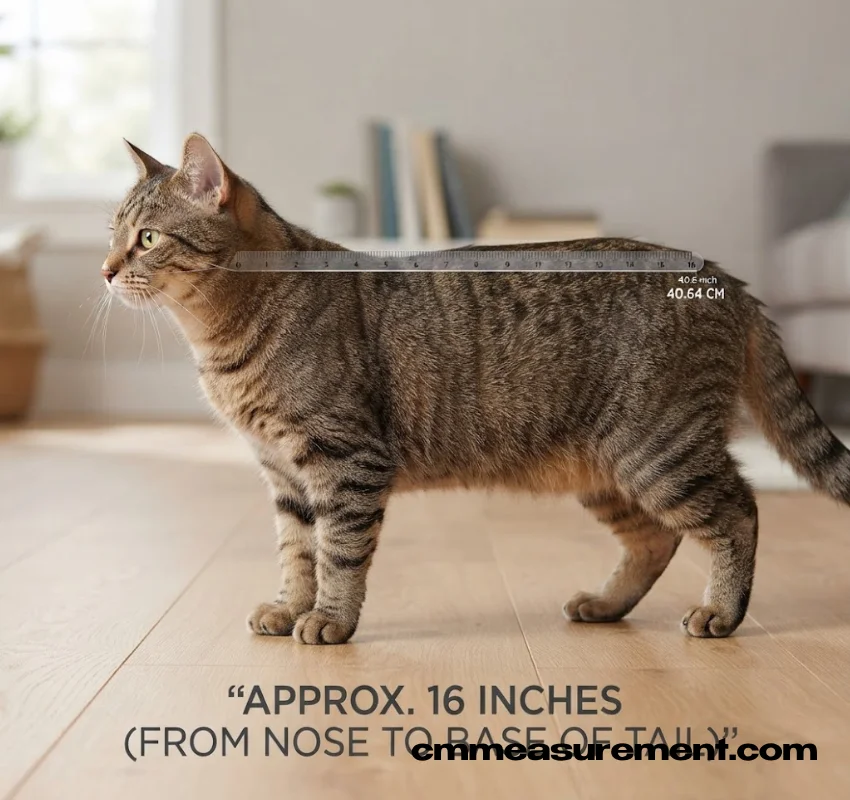
An average house cat, measured from nose to the base of the tail, often comes close to 16 inches — a strangely precise coincidence for pet owners.
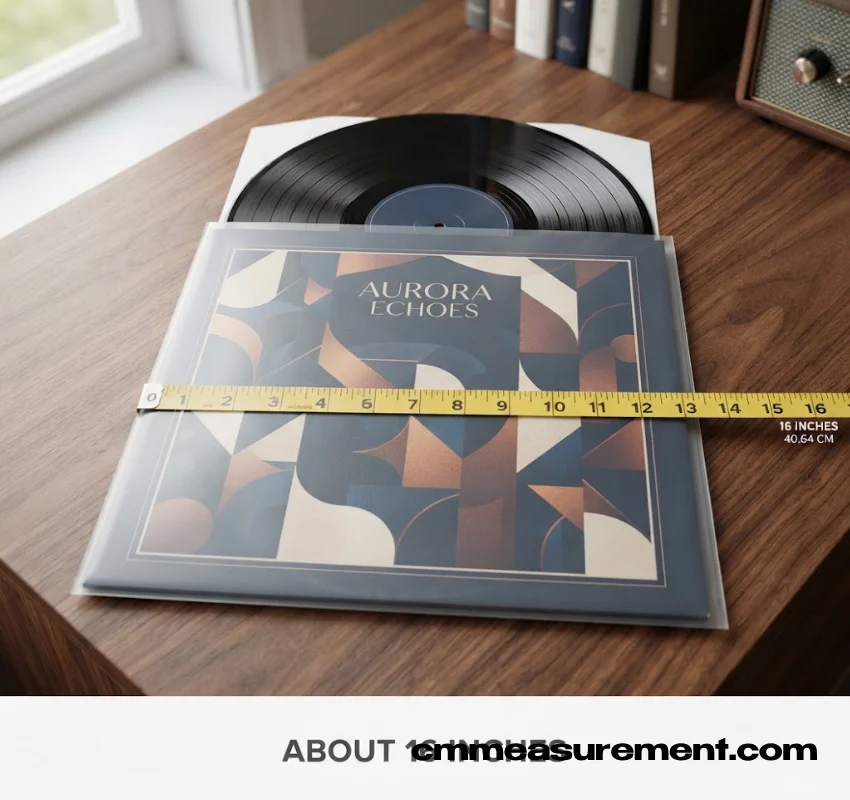
A vinyl record with its sleeve and packaging margin reaches close to 16 inches total, giving music collectors a familiar physical reference.
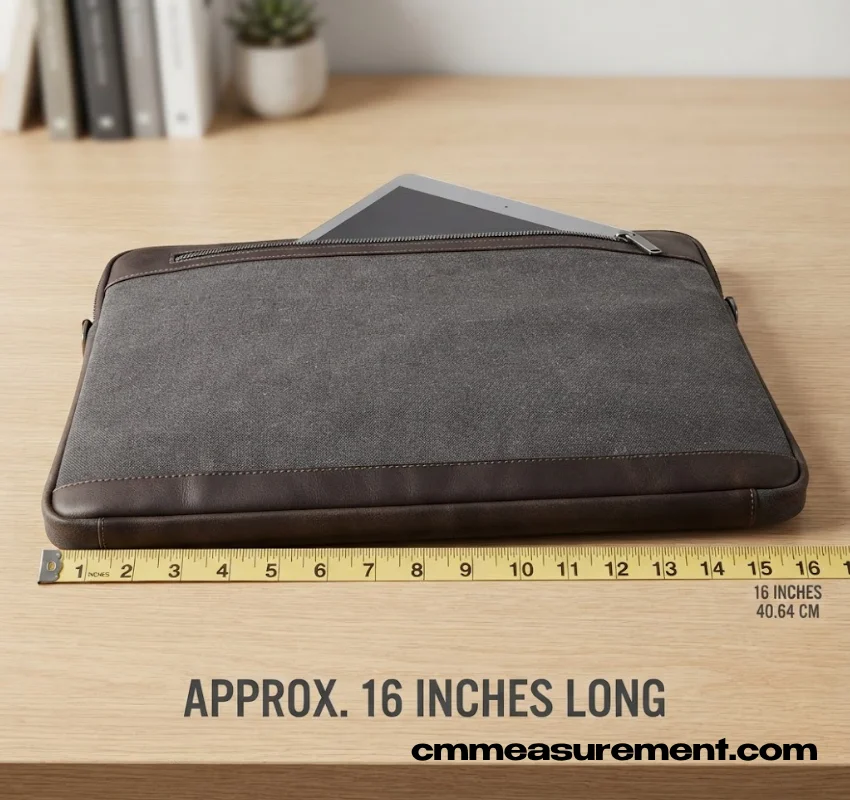
A tablet sleeve built for larger tablets commonly runs around 16 inches long, useful if you’re shopping for tech accessories online and need a mental size check.
How to Measure 16 Inches Without a Ruler
Sometimes you need a quick estimate and there’s no tape measure in sight. A few reliable body-based references can help.
Your forearm, from elbow to wrist, measures close to 10 inches for most adults — so 16 inches is roughly your forearm plus a hand’s width.
A standard sheet of printer paper measures 11 inches on its long side. Add about 5 inches — roughly half a smartphone’s length — and you’re close to 16 inches.
A dollar bill measures about 6.14 inches long. Line up two and a half bills end to end, and you’re within range of 16 inches.
These tricks won’t replace a proper tape measure for anything requiring precision, like furniture assembly or shipping calculations. But for a fast visual check, they work well.
Why Knowing 16 Inches Matters
Understanding this measurement isn’t just trivia — it has practical value in daily US life.
Airline carry-on rules often restrict bag dimensions closely, and many personal-item allowances hover in a size range where every inch counts. Knowing what 16 inches looks like helps you avoid a gate-check surprise.
Online shopping relies heavily on size charts. Furniture, backpacks, monitors, and kitchen tools are frequently listed in inches, and a shopper who can visualize the number avoids returns caused by size mismatches.
Home projects and DIY work — shelving, cutting boards, curtain rods — often call for measurements in this range. A clear mental picture of 16 inches speeds up planning and reduces measuring errors.
Shipping and mailing services calculate cost based partly on box dimensions. A package close to 16 inches on one side can shift pricing tiers, so understanding the measurement helps avoid unexpected fees.
FAQs
What is an example of 16 inches?
A medium laptop’s screen width, a standard bed pillow, or two rulers placed end to end (minus a small gap) all measure close to 16 inches.
What does 16 inches look like on a ruler?
It’s one full 12-inch ruler length plus 4 more inches — past the end of a standard ruler by about a third of its total length.
What can I compare 16 inches to?
Everyday items like a large cutting board, a carry-on backpack’s height, an acoustic guitar’s body, or an average house cat measured nose to tail all sit close to 16 inches.
Is 16 inches big or small?
It depends on context. For a laptop or pillow, 16 inches is a normal, mid-range size. For a human body part or a piece of furniture, it would be considered small to moderate.
Conclusion
Sixteen inches isn’t an abstract number once you connect it to real objects. A laptop screen, a kitchen cutting board, a bed pillow — these are things you touch every week, and now you know exactly how they measure up.
Next time you see “16 inches” on a product listing or a tape measure, you’ll picture it instantly instead of guessing.

Timmy Zeeshan is the founder and lead editor of CM Measurement, where he writes and maintains a growing library of unit conversion tools and practical measurement guides. With a background in engineering and a long-standing interest in everyday math problems, Timmy started CM Measurement after growing frustrated with cluttered, ad-heavy converter websites that made simple conversions harder than they needed to be.