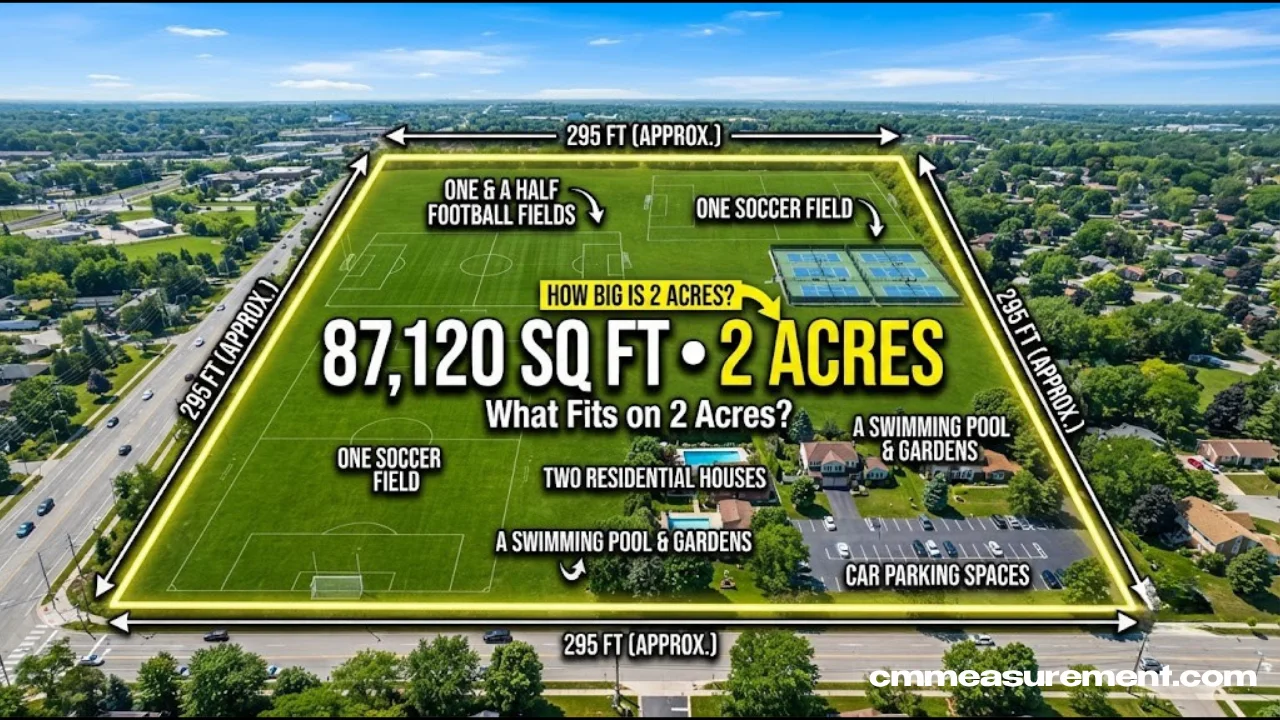
Trying to picture 2 acres of land? You’re not alone. Acreage is one of the hardest measurements to visualize because it’s an area, not a distance — and most of us don’t walk around thinking in square feet.
Here’s the short answer: 2 acres equals 87,120 square feet, or roughly the size of one and a half football fields. Below, you’ll find the exact numbers, real dimensions, and nine comparisons that make 2 acres click instantly.
Table of Contents
How Big Is 2 Acres in Square Feet, Yards, and Meters?
One acre equals 43,560 square feet. So 2 acres simply doubles that: 87,120 square feet.
Here’s how that breaks down across the units you’ll actually see on a deed, listing, or survey:
| Unit | 2 Acres Equals |
|---|---|
| Square Feet | 87,120 sq ft |
| Square Yards | 9,680 sq yd |
| Square Meters | 8,093.7 sq m |
| Hectares | 0.809 ha |
| Square Miles | 0.003125 sq mi |
Quick formula: Acres × 43,560 = square feet. Flip it around — square feet ÷ 43,560 = acres — and you can check any lot size yourself.
The acre itself dates back to medieval England, where it described the amount of land a farmer could plow with a team of oxen in one day. That history is why the unit still isn’t a round number in the metric system — it grew out of farmwork, not math (Wikipedia).
What Does a 2 Acre Lot Look Like? Dimensions Explained
Here’s something most people miss: acreage has no fixed shape. A perfect square, a long rectangle, and an oddly angled parcel can all be exactly 2 acres.
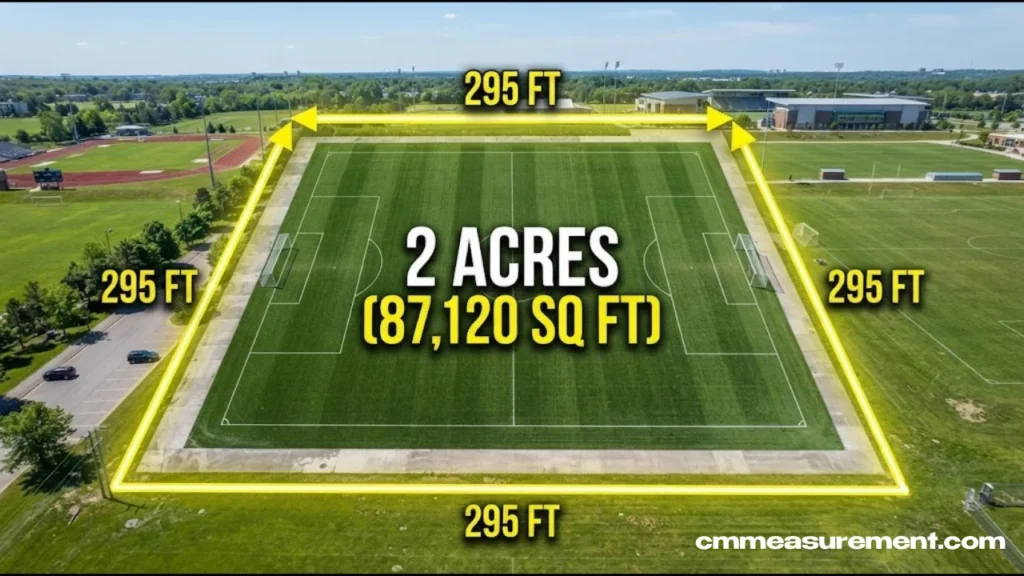
If your 2 acre lot is a perfect square, each side measures about 295 feet. That’s the number you’d get by taking the square root of 87,120.
But land rarely comes in perfect squares. Here are a few real dimension pairs that also equal roughly 2 acres:
- 60 ft x 1,451 ft (long, narrow strip)
- 106 ft x 822 ft
- 210 ft x 415 ft
- 295 ft x 295 ft (true square)
Lot shape matters more than most buyers realize. A narrow strip gives you less usable width for a house footprint, while a squarer lot offers flexibility for building, landscaping, and setbacks.
One related term worth knowing: the commercial acre. It’s smaller than a standard acre — about 36,000 square feet — because it accounts for space lost to roads, sidewalks, and curbs in a development.
9 Powerful Real-Life Comparisons to Visualize 2 Acres
Numbers alone don’t stick. Comparisons do. Here are nine ways to picture 2 acres using things you already know:
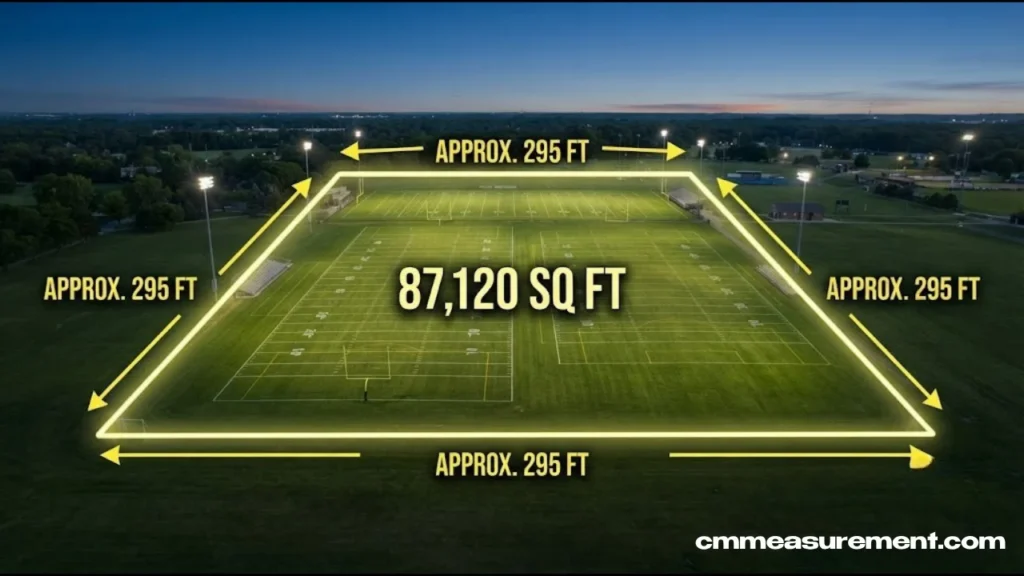
1. Football fields — An NFL field, including both end zones, covers about 1.32 acres. That means 2 acres is roughly one and a half football fields.
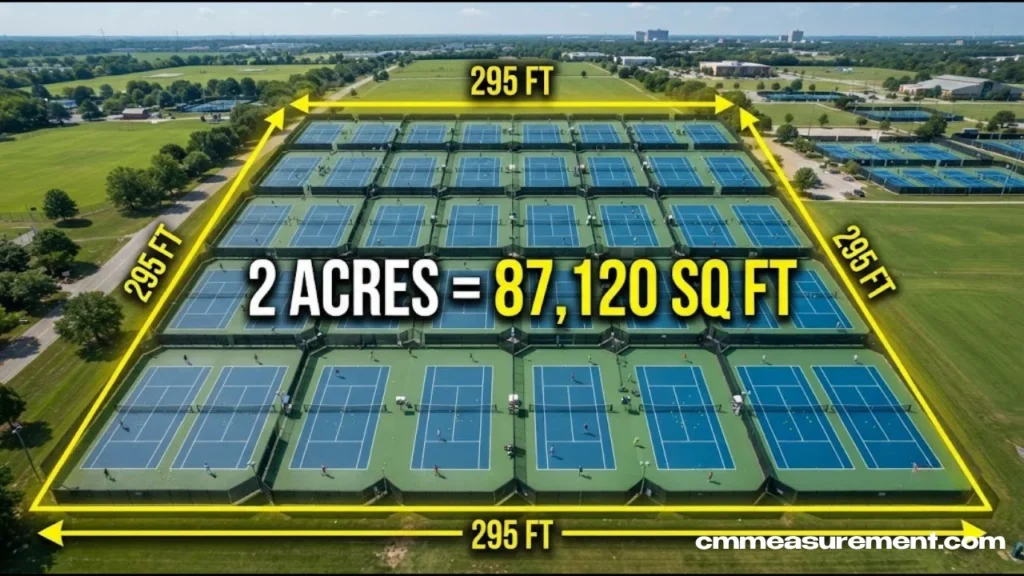
2. Tennis courts — A standard tennis court is about 0.06 acres. You could fit around 32 tennis courts inside 2 acres.
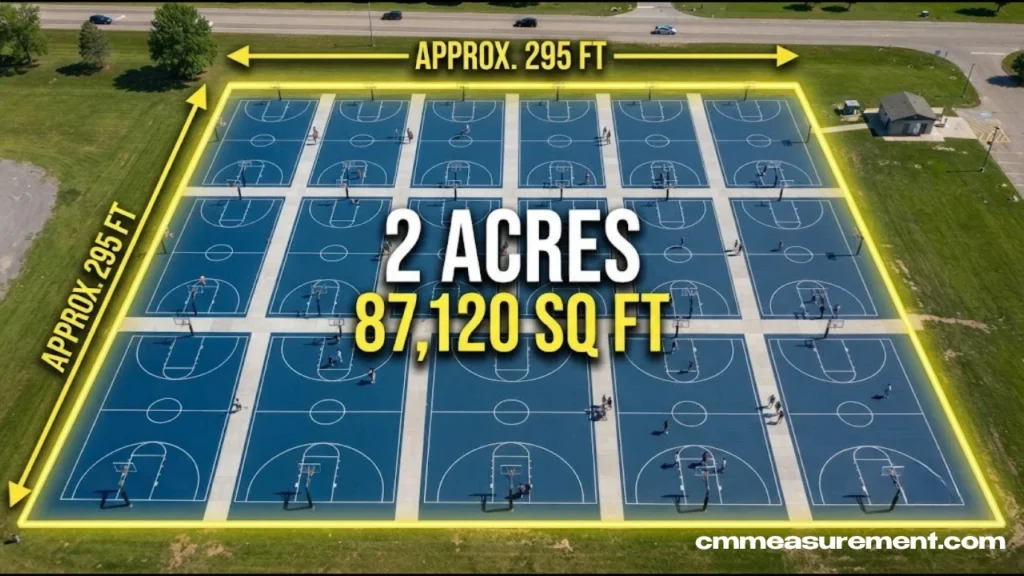
3. Basketball courts — At roughly 0.11 acres each, about 18 basketball courts would fit on a 2-acre parcel.
Must Visit: How Heavy Is 50 Pounds? 12 Amazing Real-Life Examples You’ll Recognize
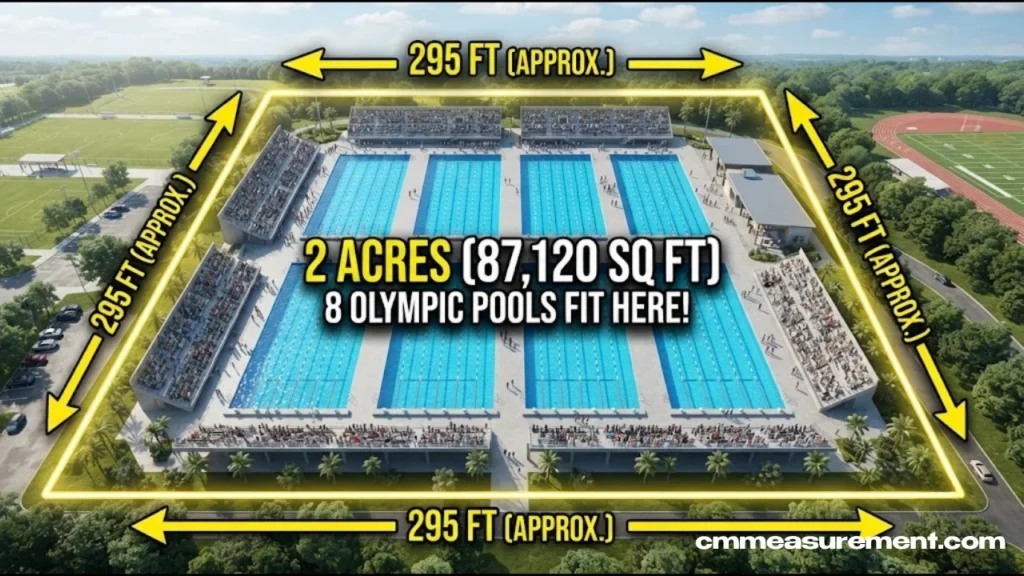
4. Olympic swimming pools — An Olympic pool covers about 0.25 acres. That puts eight Olympic pools inside 2 acres.
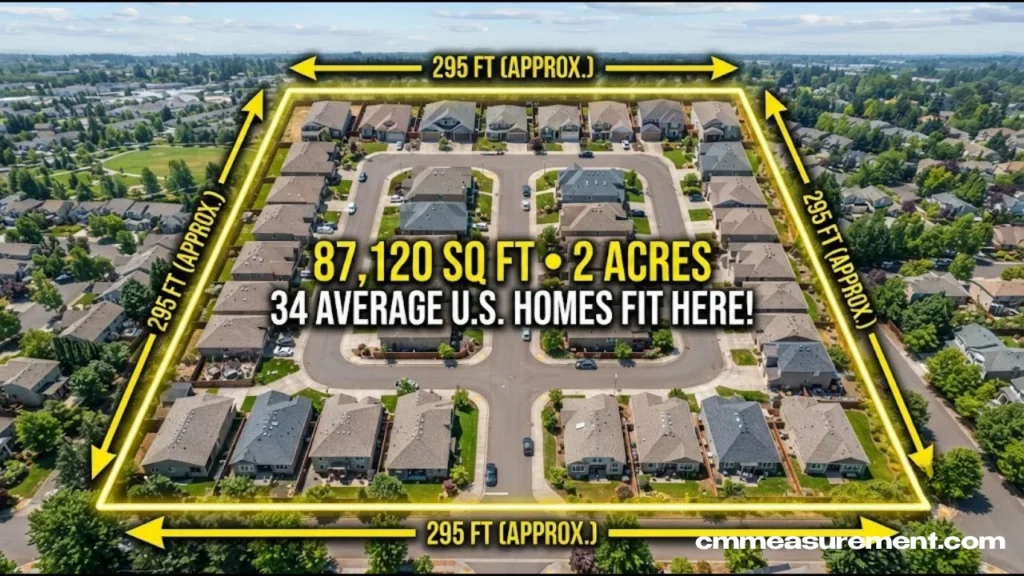
5. Average single-family houses — With the average U.S. home footprint near 2,500 square feet, you could fit roughly 34 average houses on 2 acres, side by side with no yard space.
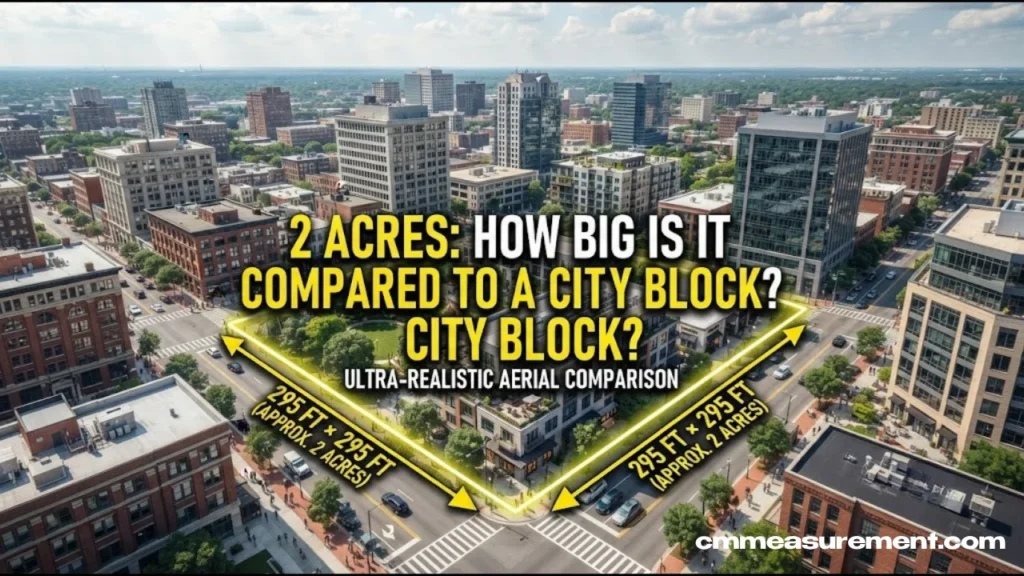
6. A city block — In dense urban grids, 2 acres often equals a full city block, which is why it can feel massive downtown but modest in a rural setting.
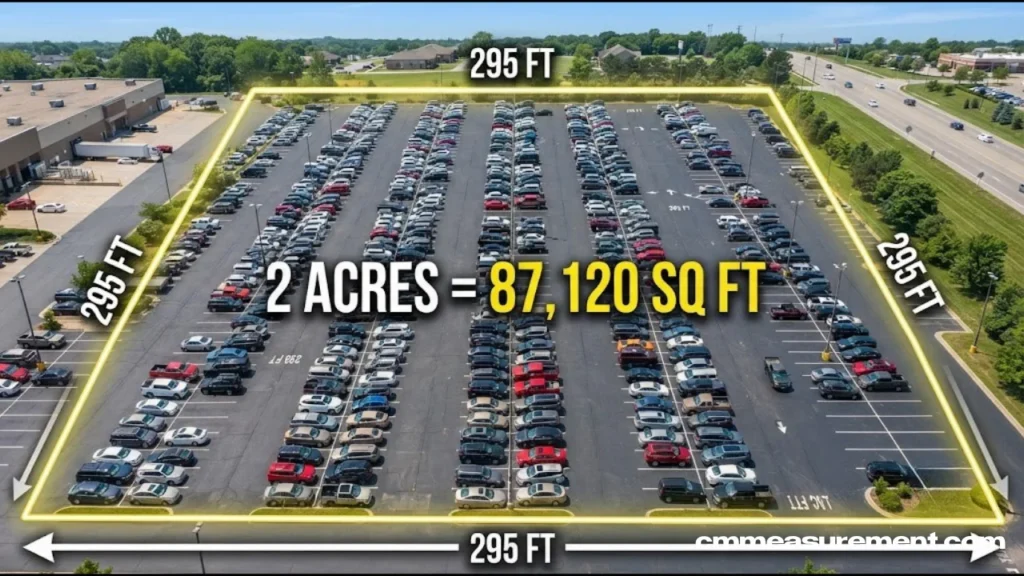
7. Parking spaces — A standard space is about 0.005 acres. 2 acres could hold well over 1,700 parking spots.
8. A FIFA soccer pitch — A regulation soccer field runs between 1.6 and 1.9 acres, so 2 acres is just slightly larger than one full pitch.
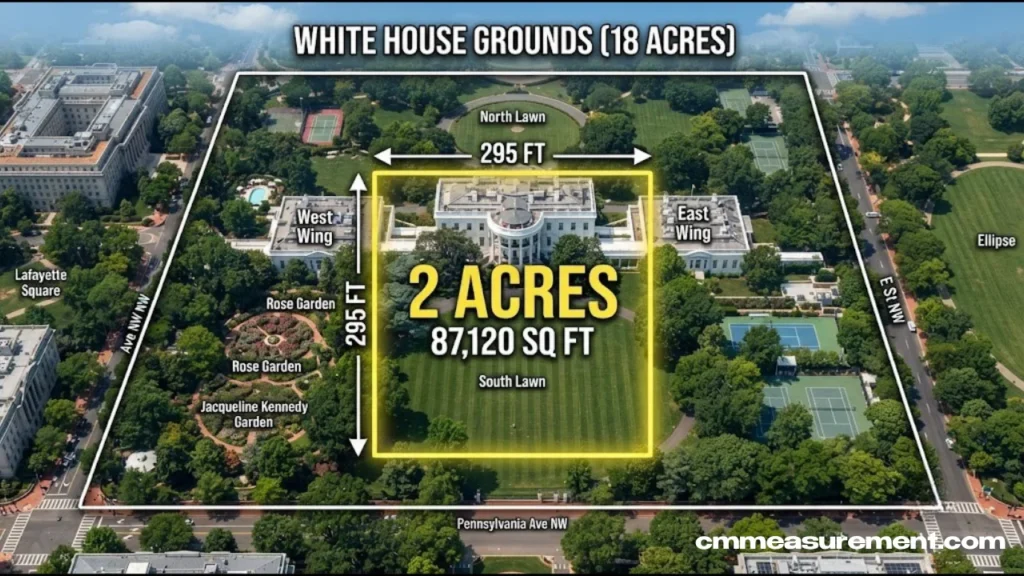
9. The White House grounds — The White House sits on about 18 acres. 2 acres is roughly one-ninth of that entire property.
How Much Does 2 Acres of Land Cost in the USA?
Land prices swing widely depending on where you’re looking. The USDA reported the average U.S. farmland value at around $3,800 per acre (USDA NASS), meaning a raw 2 acre plot could run near $7,600 before development costs.
That average hides big regional swings. States like New Jersey, Connecticut, and California post far higher per-acre prices due to demand and limited supply. Meanwhile, states like Wyoming and New Mexico offer some of the lowest per-acre costs in the country.
A few factors drive that price up or down:
- Location — proximity to cities and infrastructure
- Zoning — residential, agricultural, or commercial designation
- Topography — flat, buildable land costs more than sloped or flood-prone parcels
- Utility access — water, sewer, and electric hookups add value
How to Measure and Confirm a 2-Acre Property
Before you trust a listing that says “2 acres,” it’s worth verifying. Here’s how:
- Check the deed or plat map — these legal documents list exact boundary measurements.
- Hire a licensed surveyor — the most accurate option, especially for irregular or wooded lots.
- Use a GPS mapping app or measuring wheel — a solid DIY estimate for rough confirmation.
- Do the math yourself — measure length and width in feet, multiply them, then divide by 43,560.
Even a small error in measurement can shift a property from 1.9 acres to 2.1 acres, which matters if you’re planning a build with strict setback rules.
FAQs
How many football fields is 2 acres?
2 acres equals about 1.5 football fields, counting the end zones. Without end zones, it’s closer to 1.65 fields.
How big is a 2 acre square?
A perfectly square 2 acre lot measures about 295 feet by 295 feet.
How to visualize 1/2 acre?
Half an acre equals 21,780 square feet — picture roughly 8 tennis courts or a large suburban yard, about a quarter the size of a full football field.
Is a football field an acre?
Not quite. A football field, including end zones, covers about 1.32 acres — meaning it’s actually a bit larger than one full acre, not equal to it.
Conclusion
2 acres breaks down to 87,120 square feet — enough space for dozens of houses, a small orchard, or a spacious rural homestead. Whether you’re buying land, checking a listing, or just curious, the comparisons above turn an abstract number into something you can actually picture and plan around.

Timmy Zeeshan is the founder and lead editor of CM Measurement, where he writes and maintains a growing library of unit conversion tools and practical measurement guides. With a background in engineering and a long-standing interest in everyday math problems, Timmy started CM Measurement after growing frustrated with cluttered, ad-heavy converter websites that made simple conversions harder than they needed to be.