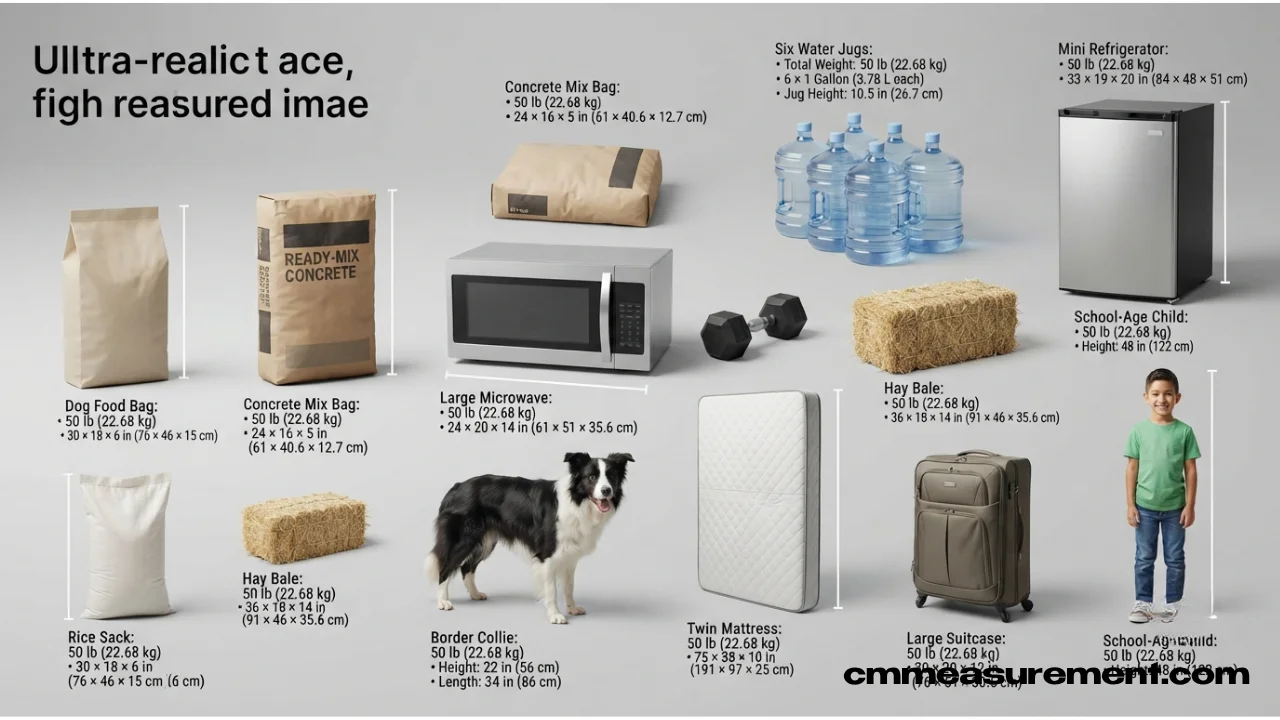
Fifty pounds equals about 22.68 kilograms. That’s the exact math, but a number alone doesn’t tell your muscles anything. The only way to really understand how heavy 50 pounds is comes from picturing objects you already know.
This guide breaks down 12 real-life examples of things that weigh 50 pounds, what that weight actually looks like, and whether it’s safe to carry.
Table of Contents
How Heavy Is 50 Pounds, Really?
Fifty pounds sits right at a tipping point. It’s the weight where “I can handle this” quietly turns into “I need a better grip.”
For most adults, 50 pounds works out to roughly a quarter to a third of their own body weight. That ratio matters more than the raw number. A 150-pound adult carrying 50 pounds is hauling a third of themselves — noticeably different from carrying a 10-pound bag of groceries.
Density changes the experience too. A compact 50-pound object, like a bag of cement, feels far heavier in your hands than a bulky 50-pound object, like a stuffed duffel bag, even though the scale reads the same number. Shape, balance, and grip decide how “heavy” something actually feels — not just its weight.
12 Real-Life Examples of Things That Weigh 50 Pounds
Here’s what weighs 50 pounds in categories you’ll recognize from daily life — kitchen, gym, backyard, and travel.
A large bag of dog food. Brands like Purina and Royal Canin package their biggest bags at exactly 50 pounds for large-breed dogs. It’s one of the most common 50 lb items in American households.
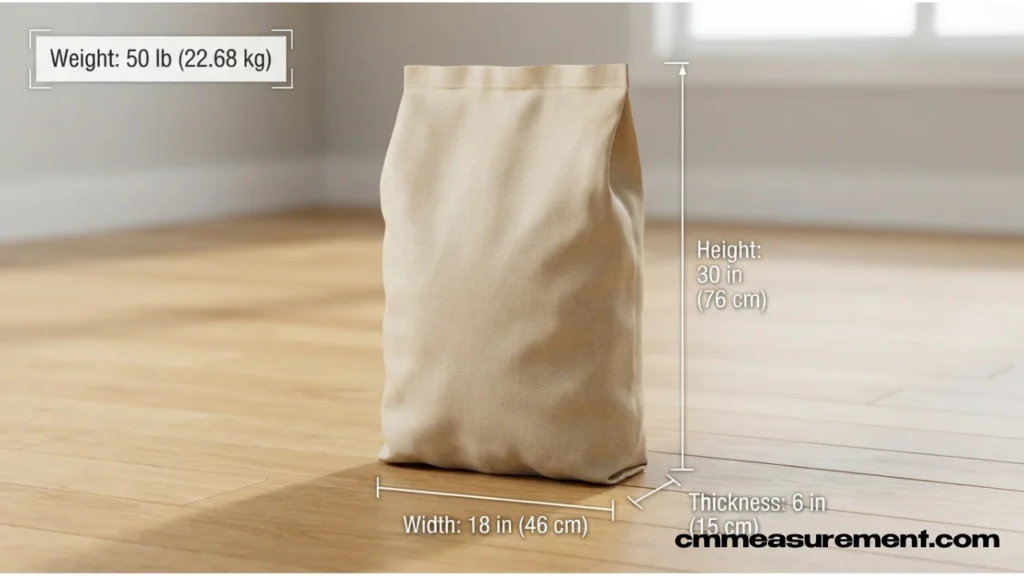
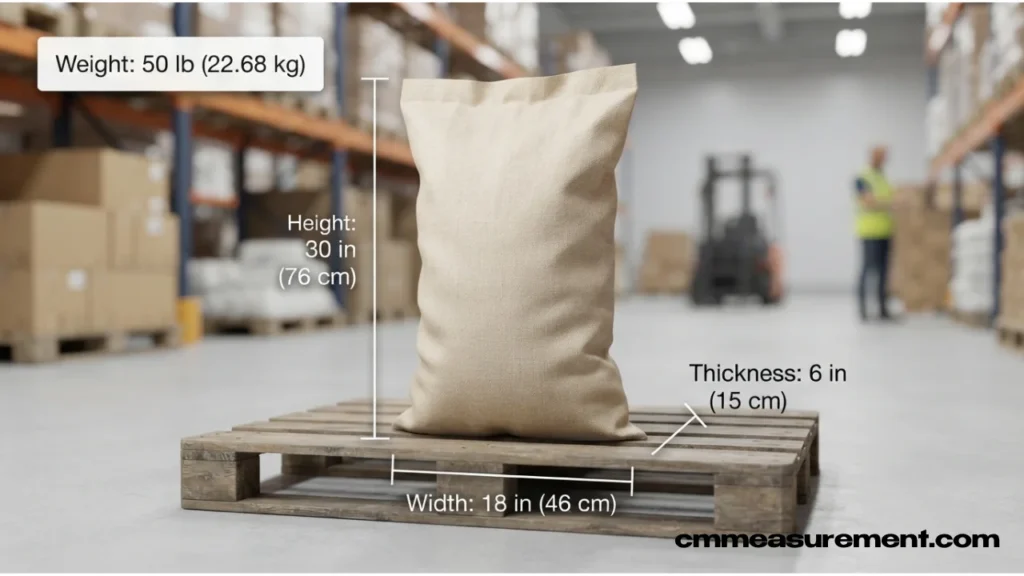
A bag of concrete or cement mix. Standard construction bags, including Quikrete, are sold at 50 pounds as the industry norm for small DIY and repair jobs.
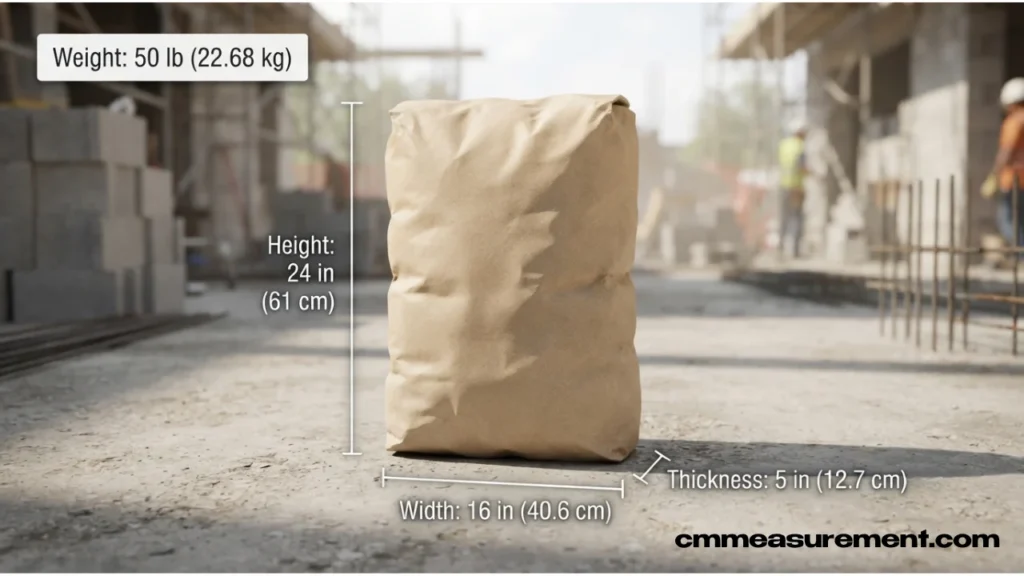
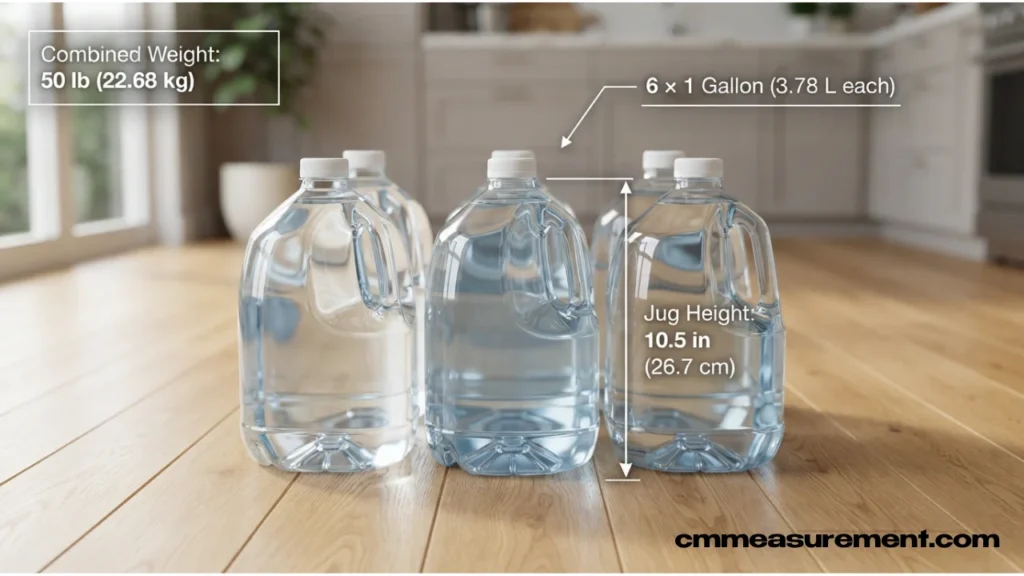
Six gallons of water. Water weighs about 8.34 pounds per U.S. gallon, according to the USGS Water Science School. Six gallons adds up to roughly 50 pounds — heavier than most people expect from “just water.”
Must Visit: How Heavy Is 8 Pounds? 7 Real-Life Examples to Help You Visualize It
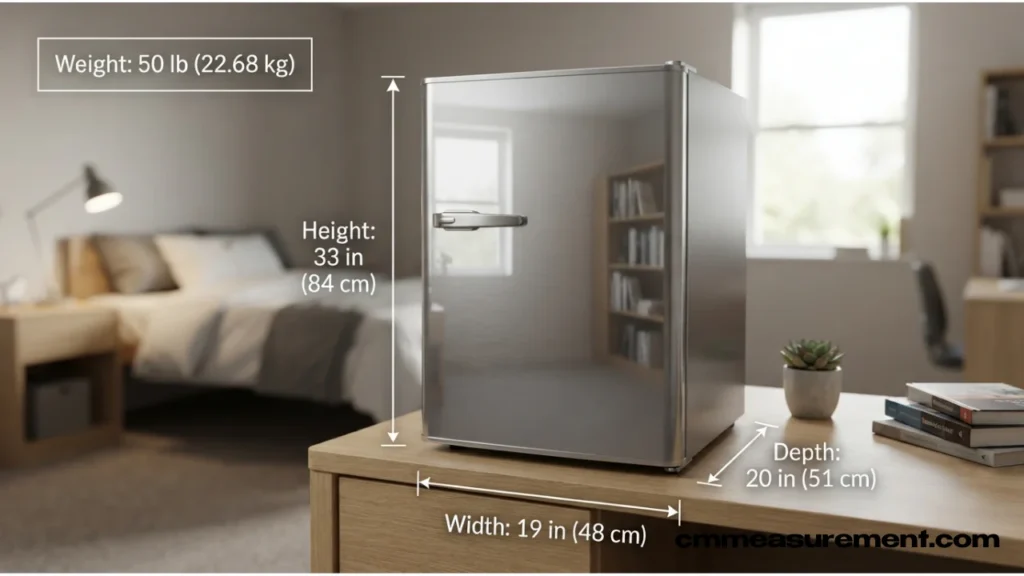
A mini fridge. Compact dorm-style refrigerators often land in the 46- to 50-pound range, making them a familiar benchmark for college movers.
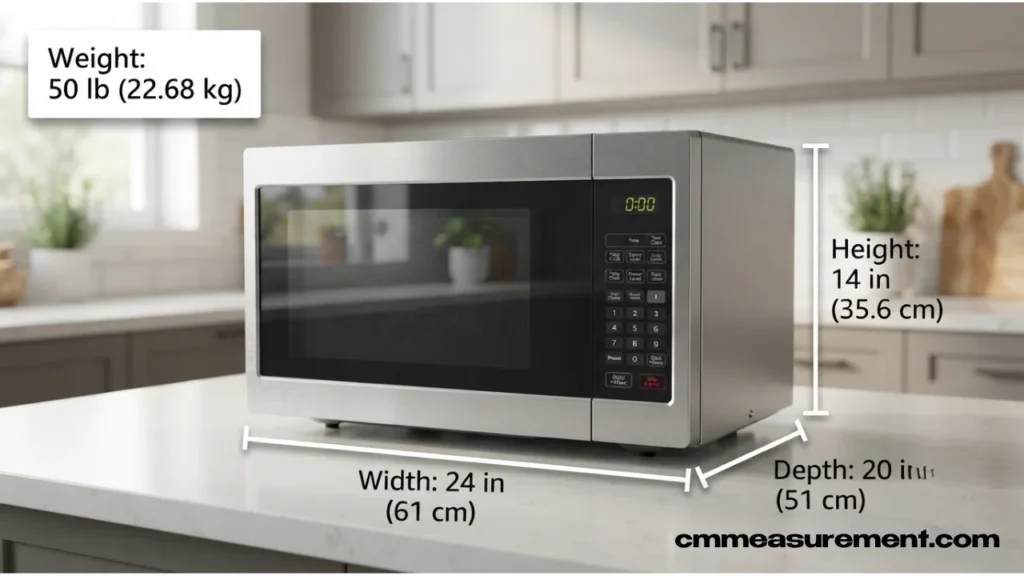
A large microwave oven. Bigger built-in or over-the-range models frequently weigh close to 50 pounds, mostly from the transformer and steel cabinet inside.
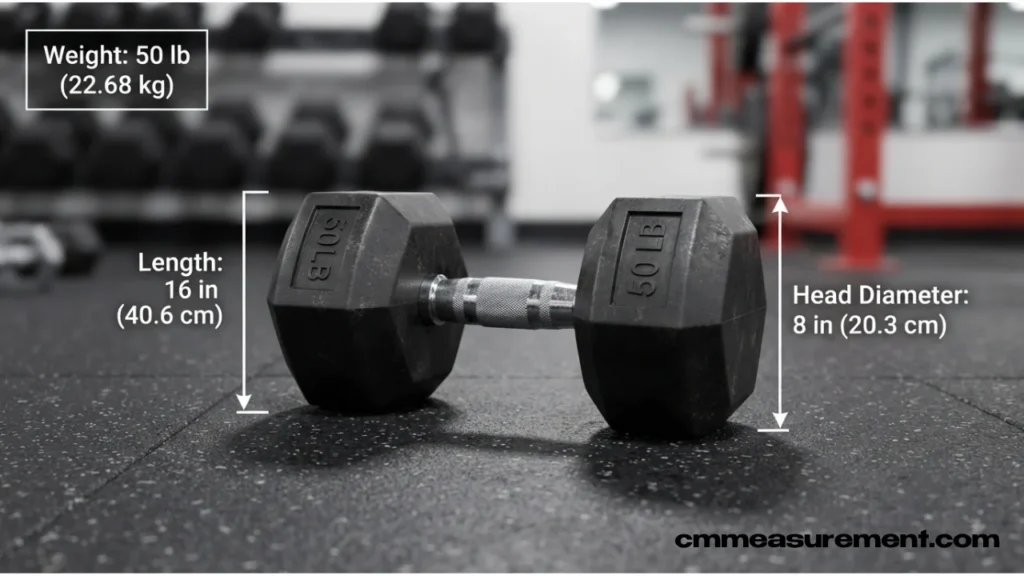
A 50-pound dumbbell or kettlebell. This is the most direct, hands-on way to feel exactly what 50 pounds means. Gyms across the country stock this weight as a standard strength benchmark.
A small rectangular hay bale. Farmers and ranchers know this weight well — a standard small bale typically falls between 40 and 55 pounds.

A 50-pound sack of rice or flour. Restaurants, bakeries, and warehouse stores sell these bulk bags regularly, and one sack alone can fill hundreds of servings.
A medium-sized dog breed. Bulldogs, Beagles, and Border Collies commonly weigh close to 50 pounds as adults, giving pet owners a living, breathing reference point.

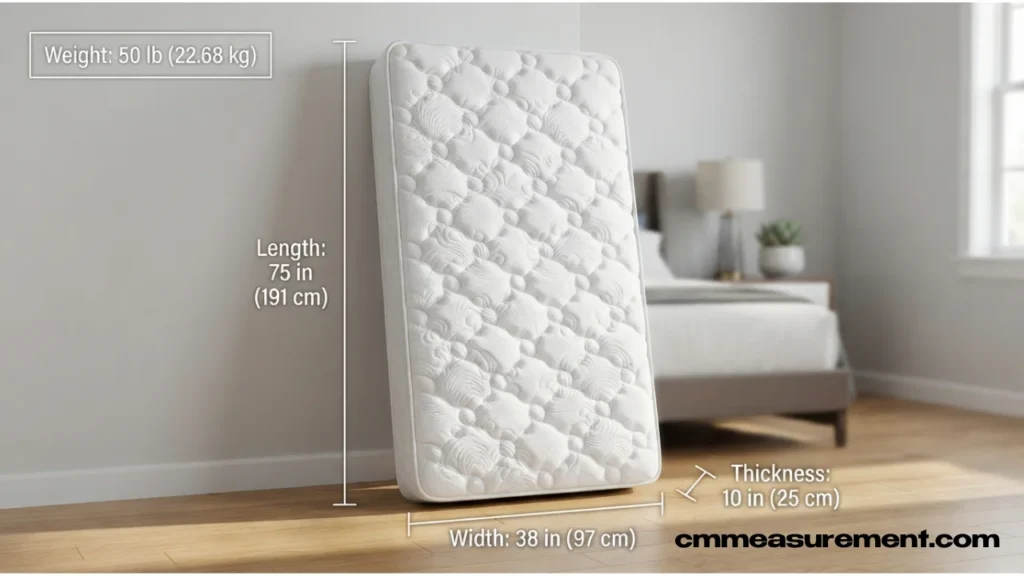
A twin or full-size mattress. These smaller mattress sizes typically weigh around 50 pounds, far lighter than queen or king sizes, which can climb past 100 pounds.
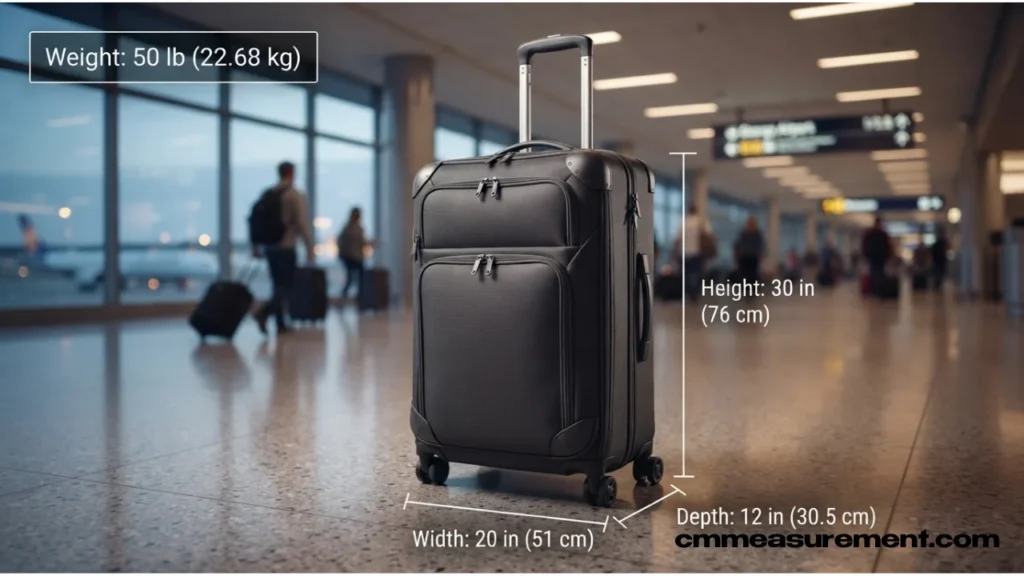
A fully packed large suitcase. This is exactly why airlines chose 50 pounds as their standard checked-baggage limit — it’s the natural weight a full suitcase reaches.
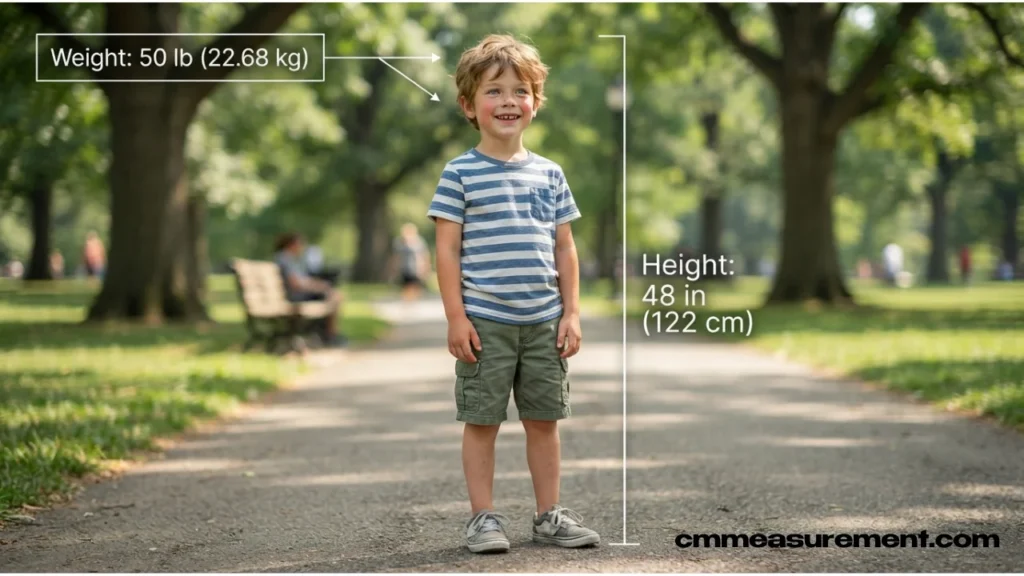
A young school-age child. Weight varies a lot by age and growth pattern, but many children in the early elementary years land close to this mark, according to CDC growth chart data — a helpful reference for parents lifting kids in and out of car seats.
Is 50 Pounds Heavy to Carry?
Yes, for most people, 50 pounds is genuinely heavy — not dangerous to lift once, but demanding enough to require good form.
The Revised NIOSH Lifting Equation, developed by the National Institute for Occupational Safety and Health, sets the maximum safe lift at 51 pounds under ideal conditions: close to the body, at waist height, with no twisting. That puts 50 pounds right at the edge of what’s considered safe for a single healthy adult to lift alone.
The moment those ideal conditions disappear — reaching overhead, twisting your spine, or lifting repeatedly through a shift — the real risk climbs fast, even though the number on the scale hasn’t changed.
Practical tip: bend at the knees, keep the load close to your torso, and avoid twisting while holding it. That habit protects your lower back far more than raw strength does.
What Does 50 Lbs of Weight Look Like?
Picture this: 50 pounds is roughly the size of a large suitcase packed to capacity, or a mid-size dog standing at your knee.
It’s dense enough that a 50-pound bag of cement looks almost small — maybe the size of a couch cushion — yet takes both arms and real effort to lift. Compare that to a 50-pound bag of dog food, which looks bulkier and softer but distributes weight more evenly across your arms.
This is the visual gap most people miss: the same 50 pounds can look completely different depending on whether the object is dense and compact or wide and loosely packed. Density, not size, decides how a given weight is carried and stored.
What Weighs 50 Pounds at Home?
Narrowing the list down to your own house, the most common 50 lb items are the mini fridge, a large microwave, a twin mattress, a full bag of dog food, and a 50-pound dumbbell if you keep home gym equipment.
Outside the main living space, a bag of water softener salt, a full 5-gallon paint bucket, or a stack of six one-gallon water jugs also land right around this weight — practical examples for anyone doing home maintenance or emergency water storage.
FAQs
What is an example of something that weighs 50 pounds?
A large bag of dog food, a bag of cement mix, six gallons of water, or a 50-pound dumbbell are all common, easy-to-picture examples of this weight.
Is 50 pounds heavy to carry?
Yes. It sits close to the NIOSH-recommended 51-pound safe lifting limit under ideal conditions, meaning most healthy adults can lift it once with good form, but repeated or awkward lifting raises injury risk.
What does 50 lbs of weight look like?
It looks different depending on density — a compact object like a cement bag looks smaller but feels heavier, while a bulkier object like a mattress or suitcase looks larger but distributes the weight more evenly.
What weighs 50 pounds at home?
Common household examples include a mini fridge, a large microwave, a twin-size mattress, a full bag of dog food, and a 50-pound dumbbell.
Conclusion
Fifty pounds shows up more often than people realize — from the dog food bag by the pantry to the suitcase at the airport counter. Knowing these real comparisons turns an abstract number into something you can actually picture, lift, and handle safely.

Timmy Zeeshan is the founder and lead editor of CM Measurement, where he writes and maintains a growing library of unit conversion tools and practical measurement guides. With a background in engineering and a long-standing interest in everyday math problems, Timmy started CM Measurement after growing frustrated with cluttered, ad-heavy converter websites that made simple conversions harder than they needed to be.