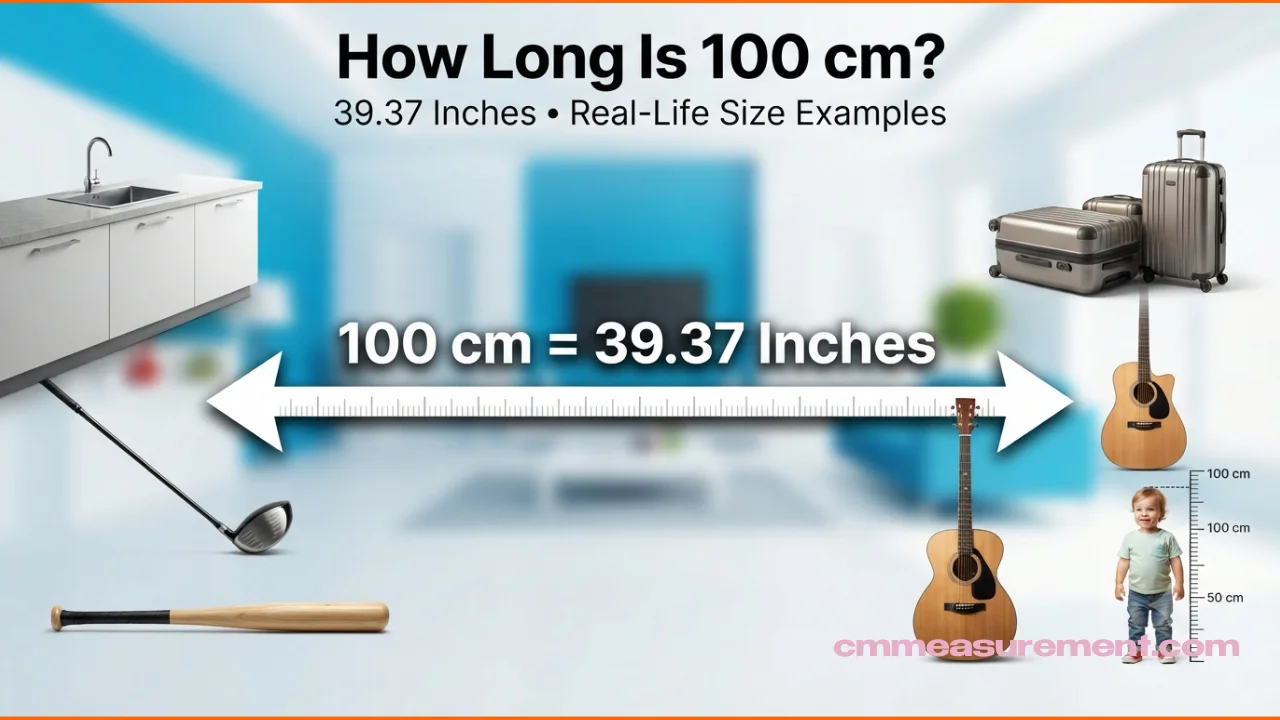
How Long Is 100 cm Trying to picture how long 100 cm actually is? You’re not alone. Centimeters show up on shipping labels, furniture listings, and fabric bolts, but most of us in the US think in feet and inches, not the metric system.
Here’s the short version: 100 cm equals 39.37 inches. Below, you’ll get the exact math, the feet-and-inches breakdown, and six real objects that show you exactly what that length looks like in daily life.
Quick Answer: 100 cm in Inches
100 cm in inches is 39.37 inches (more precisely, 39.3701 inches). This is one of the most searched length conversions online, and for good reason — 100 cm is a round, common measurement used for everything from curtain panels to countertop heights.
A quick way to remember it: 100 cm is just shy of one yard, since a yard is 36 inches and 100 cm comes in a little over 3 inches longer. If you are interested to see cm into feets then must try this tool.
What is the size of 100 cm in inches? It’s just over 39 inches — close enough to “40 inches” that many people round it that way for quick mental math, though the precise figure matters for sewing, construction, or furniture fit.
How to Convert 100 cm to Inches
The centimeter belongs to the metric system, used by nearly every country outside the US. The inch belongs to the US customary system, the standard for everyday measurement in America.
The conversion relies on one fixed number: 1 inch = 2.54 centimeters. This isn’t a rounded estimate — it’s the internationally agreed definition of the inch, set in 1959.
To convert centimeters to inches, you divide by 2.54:
100 cm ÷ 2.54 = 39.3701 inches
You can also flip the formula and multiply by the reciprocal: 1 cm = 0.3937 inches, so 100 × 0.3937 gives you the same result. Either method lands you at the same answer, just approached from a different direction.
100 cm in Feet and Inches
Is 100 cm 3 feet? Almost — but not quite. This is one of the more common mix-ups, since 100 cm feels like it should be a clean 3 feet.
Here’s the actual breakdown. A foot contains 12 inches, so to convert 39.37 inches into feet, divide by 12:
39.37 ÷ 12 = 3 feet, with 3.37 inches left over
So 100 cm equals 3 feet and 3.37 inches — roughly 3.28 feet in decimal form. That “extra” 3.37 inches is why 100 cm and 3 feet aren’t interchangeable, even though they’re close. If you’re measuring for something precise, like a doorway or a mounted shelf, that extra 3-plus inches matters.
What Does 100 cm Look Like? 6 Real-Life Size Examples
Numbers on a screen rarely mean much until you connect them to something physical. Here are six everyday items that measure close to 100 cm (about 39 inches), so you can visualize the length without pulling out a tape measure.
Must Visit: How Long Is 30 cm? 30 cm in Inches & 7 Real-Life Size Examples
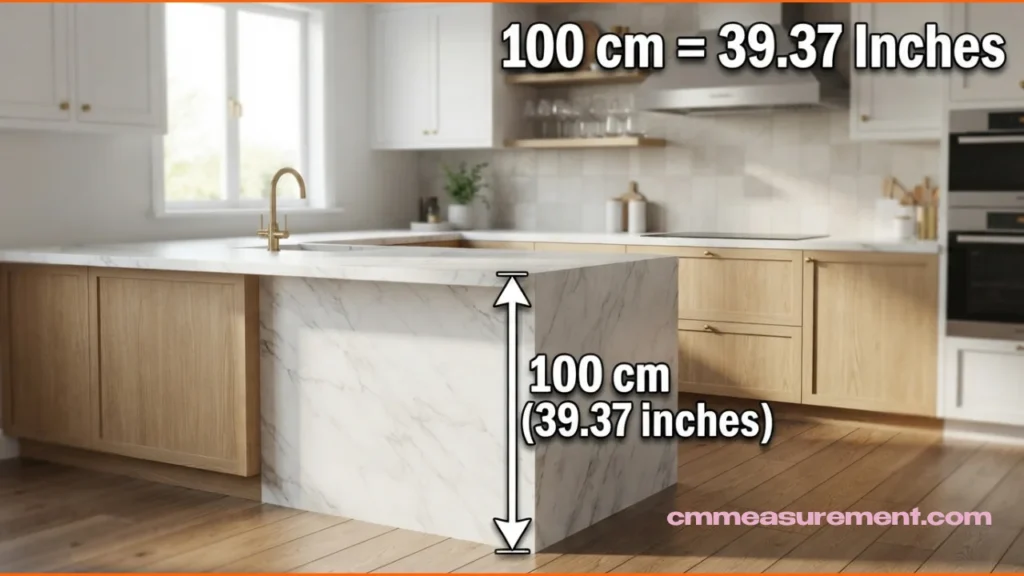
A standard kitchen counter height — Most US kitchen counters sit around 36 inches, just a few inches short of 100 cm, making this one of the closest household benchmarks people already interact with daily.
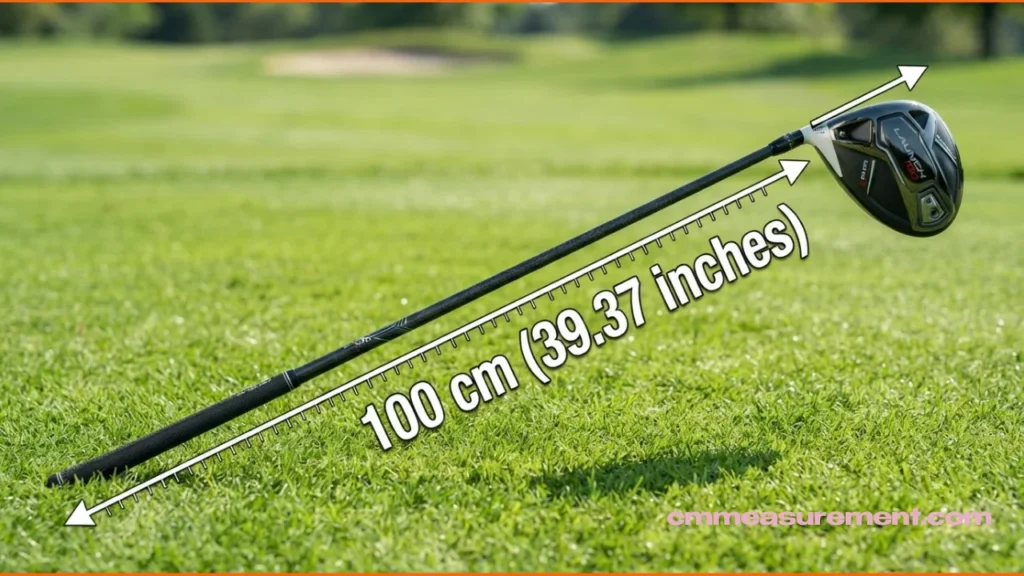
A golf driver — Standard golf drivers typically run between 45 and 46 inches, but many hybrid and fairway clubs land right around the 39-inch mark, giving golfers a familiar physical reference for this length.
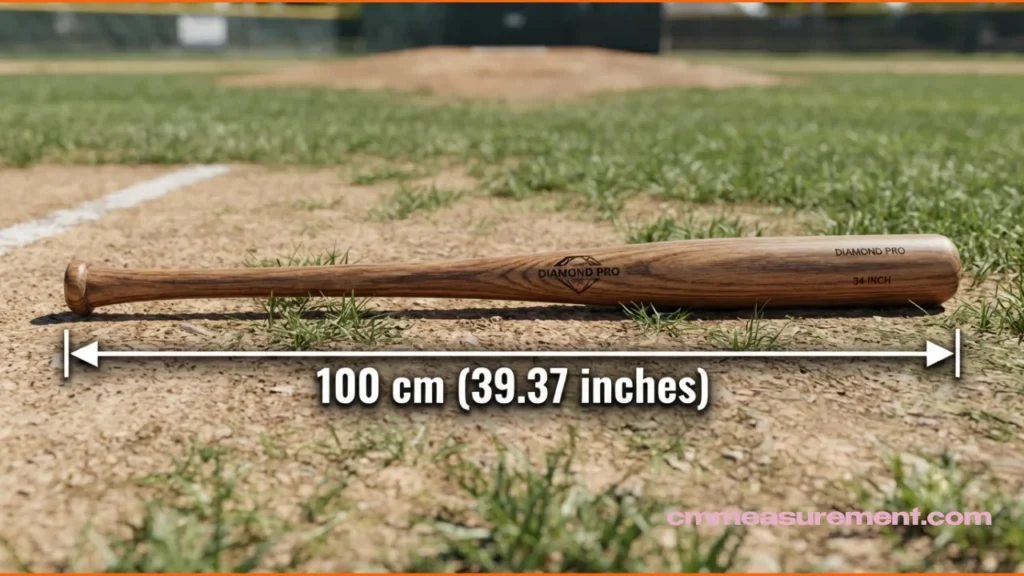
A baseball bat — Youth and adult bats commonly range from 32 to 34 inches, and when you add a bit of extension — like a bat held with an outstretched grip — you get close to the full 100 cm span.
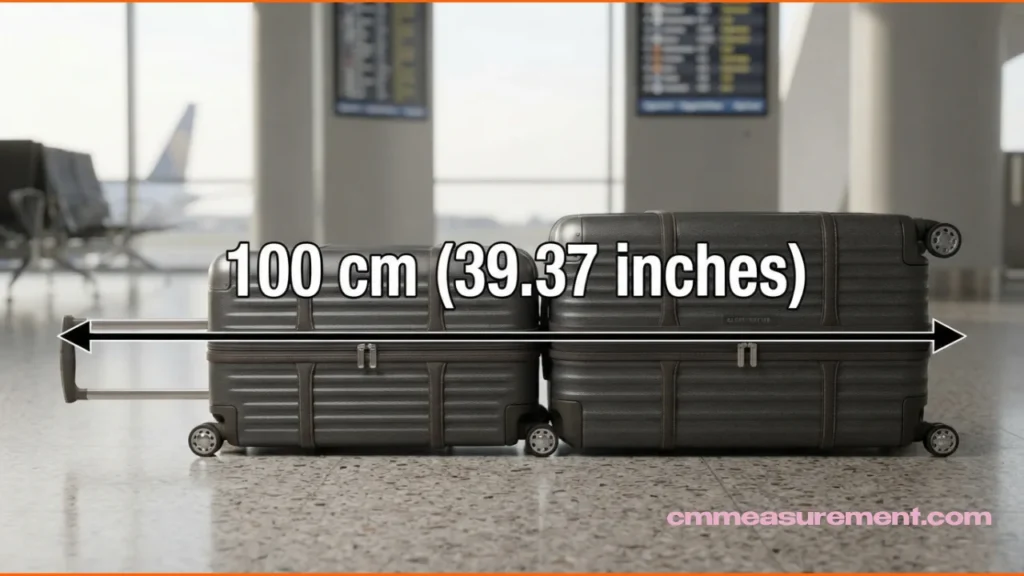
A large rolling suitcase — Big check-in luggage, the kind used for long international trips, often measures close to 30–32 inches tall; stand two carry-on bags end to end and you’re near the 100 cm mark.
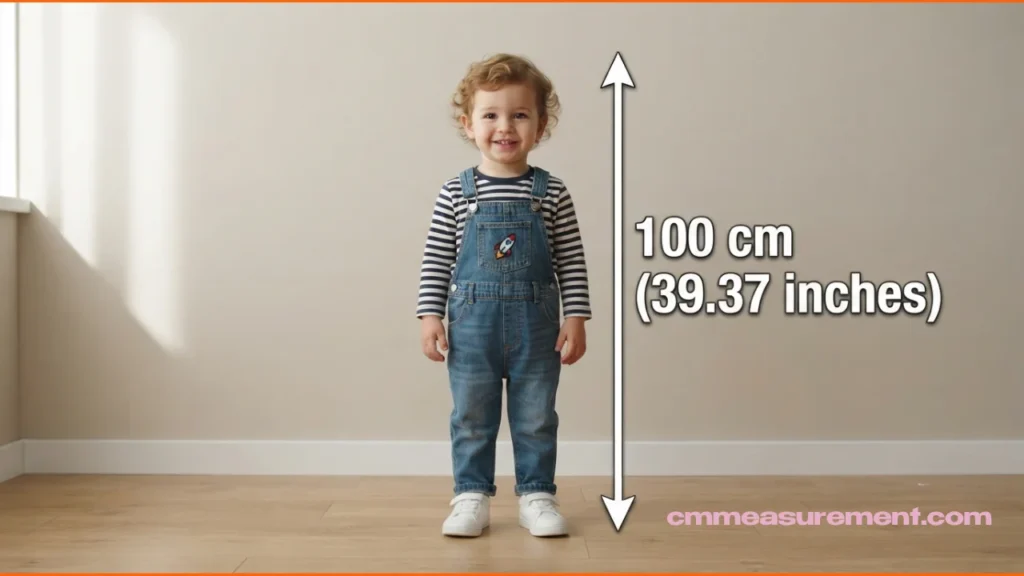
A toddler around 2–3 years old — Average toddler height at this age hovers close to 34–38 inches, making 100 cm a realistic stand-in for picturing a young child’s full height.
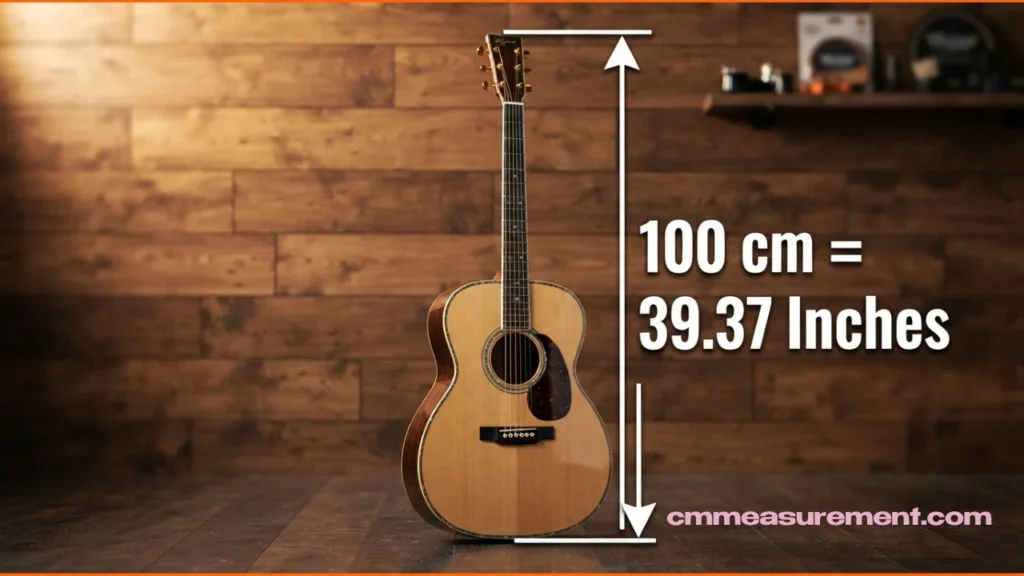
An acoustic guitar — A full-size dreadnought guitar typically measures about 40 inches from headstock to base, making it one of the most visually intuitive matches for 100 cm.
How long is a 100 cm example you can check at home? Grab a yardstick — 100 cm is just over one yardstick’s length (36 inches) plus a bit more than 3 extra inches.
How 100 cm Compares to the Human Body
How long is 100 cm compared to humans? It lands well below the average adult height but well above most body segments, which makes it a useful mid-range benchmark.
According to CDC measurement data collected between 2021 and 2023, the <cite index=”6-1″>average American man stands about 68.9 inches tall, while the average American woman measures about 63.5 inches</cite>. That means 100 cm (39.37 inches) is roughly 57% of an average adult male’s height and about 62% of an average adult female’s height — a little taller than waist height on most adults.
For context, that same CDC data set is drawn from actual physical exams rather than self-reported surveys, which makes it one of the more reliable sources on American body measurements available today.
If you’re picturing a child instead, 100 cm sits close to the height of an average 3-year-old, since toddlers at that age typically range between 34 and 38 inches. So while 100 cm is short for an adult, it’s essentially eye-level for a young child.
FAQs
What is 100cm in feet?
100 cm equals about 3.28 feet, or more precisely, 3 feet and 3.37 inches.
What is the size of 100 cm in inches?
100 cm equals 39.37 inches (39.3701 inches when carried out to four decimal places).
Is 100cm 3 feet?
No, not exactly. 100 cm is slightly longer than 3 feet — it’s 3 feet plus an extra 3.37 inches.
What does 100 cm look like?
100 cm looks like a full-size acoustic guitar, roughly two stacked carry-on suitcases, or a bit taller than a standard kitchen counter.
How long is a 100 cm example?
A yardstick (36 inches) plus about 3 more inches gives you 100 cm.
How long is 100 cm compared to humans?
100 cm is shorter than the average adult — about 57% of an average American man’s height and 62% of an average American woman’s height.
Conclusions
cm in inches comes out to 39.37 inches, or 3 feet and 3.37 inches when broken into feet. Once you connect that number to something tangible — a guitar, a suitcase, a countertop — it stops being an abstract figure and becomes something you can actually picture.
Whether you’re shopping for furniture, sewing a project, or just satisfying curiosity, that one fixed rate — 2.54 cm per inch — is all you need to convert confidently between the two systems.

Timmy Zeeshan is the founder and lead editor of CM Measurement, where he writes and maintains a growing library of unit conversion tools and practical measurement guides. With a background in engineering and a long-standing interest in everyday math problems, Timmy started CM Measurement after growing frustrated with cluttered, ad-heavy converter websites that made simple conversions harder than they needed to be.