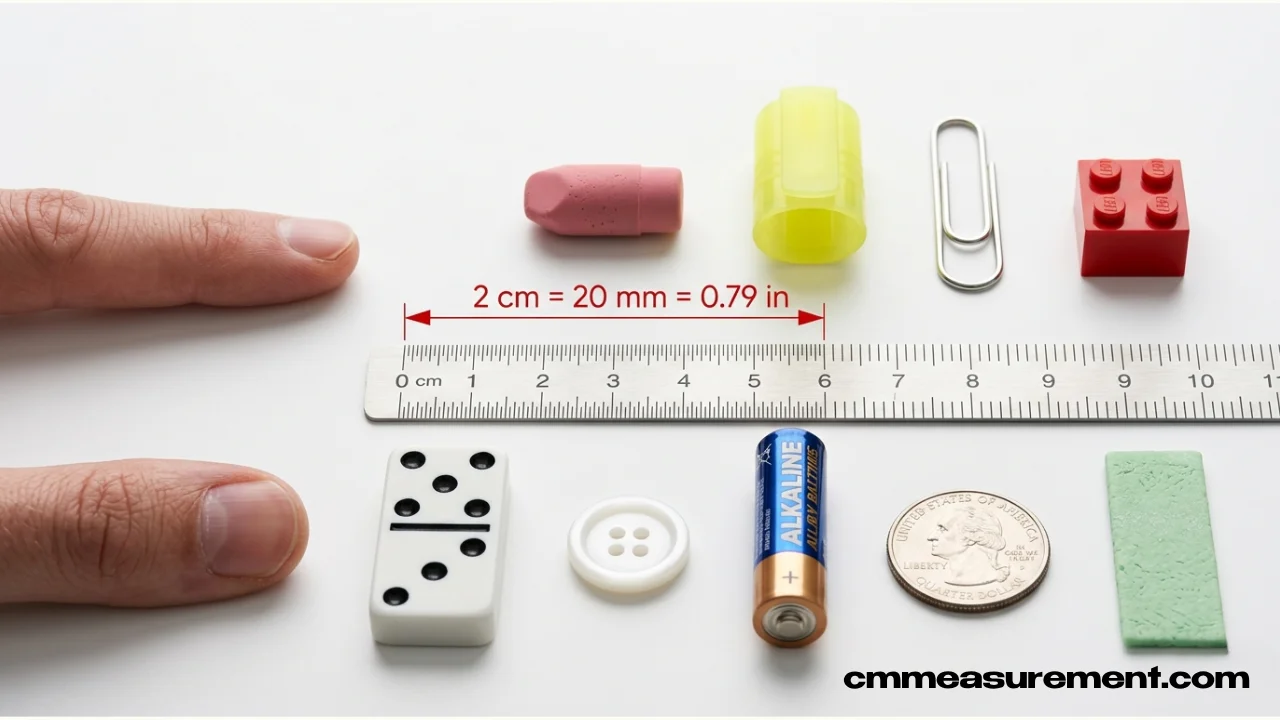
Ever stared at a 2cm measurement and had no clue what it actually looks like? You’re not alone. Most people can picture a foot or a yard, but small metric units like centimeters rarely stick in everyday memory.
Here’s the short version: 2cm equals 0.79 inches, or 20mm. That’s roughly the width of your thumbnail. Below, you’ll find real objects, quick tricks, and simple comparisons that make this number easy to picture — no ruler required.
How Long Is 2cm in Inches and MM?
2 centimeters equals 0.7874 inches, which most people round to 0.8 inches. In millimeters, that’s exactly 20mm, since one centimeter always equals ten millimeters.
The conversion formula is simple: multiply centimeters by 0.3937 to get inches. So 2 x 0.3937 = 0.7874. The National Institute of Standards and Technology (NIST) confirms this exact conversion factor as the U.S. legal standard for metric-to-imperial conversion (NIST reference).
To put it plainly: 2cm sits just under three-quarters of an inch. It’s small — smaller than a standard house key, but bigger than a grain of rice. If you are interested to see cm into feets then must try this tool.
11 Everyday Things That Are 2cm Long
Numbers alone don’t stick. Objects do. Here are 11 things you’ve probably touched today that measure close to 2 centimeters.
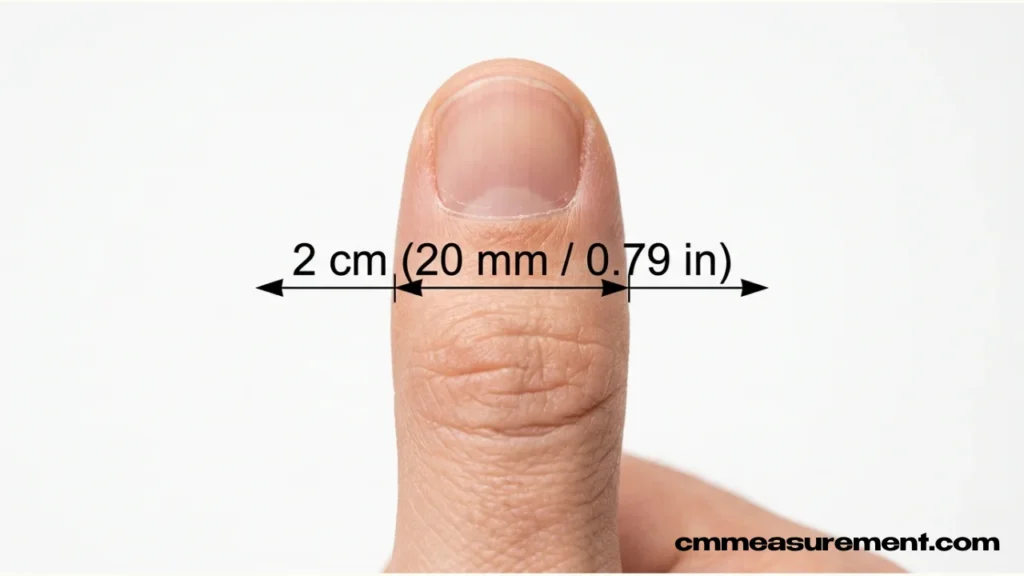
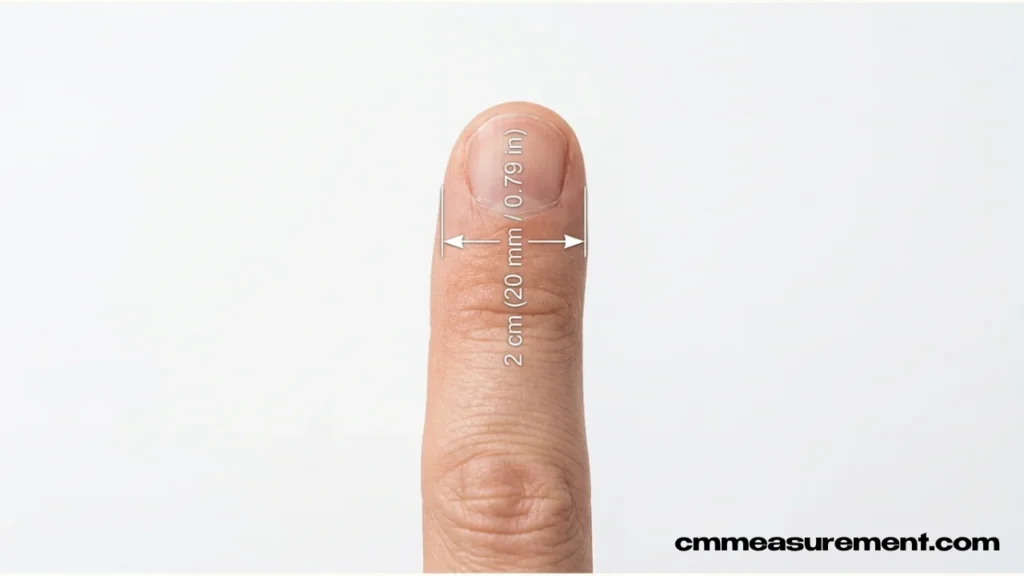
1. A thumbnail width Most adult thumbnails measure between 1.5cm and 2cm across. Hold up your thumb — that’s your built-in ruler for this exact size.
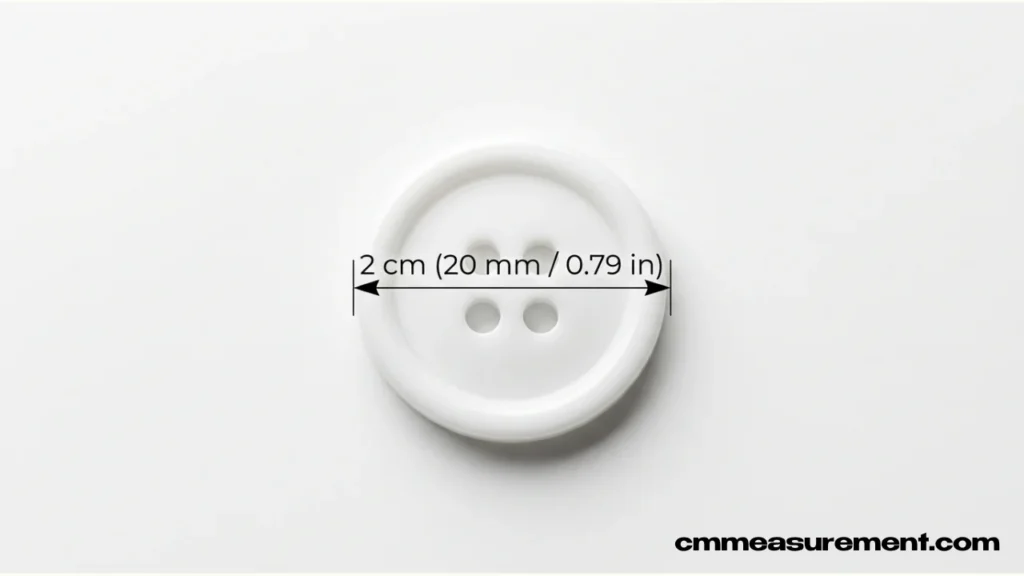
2. A standard shirt button Everyday shirt buttons typically run 1.8cm to 2cm in diameter. Check the buttons on any dress shirt and you’ll land close to this mark.
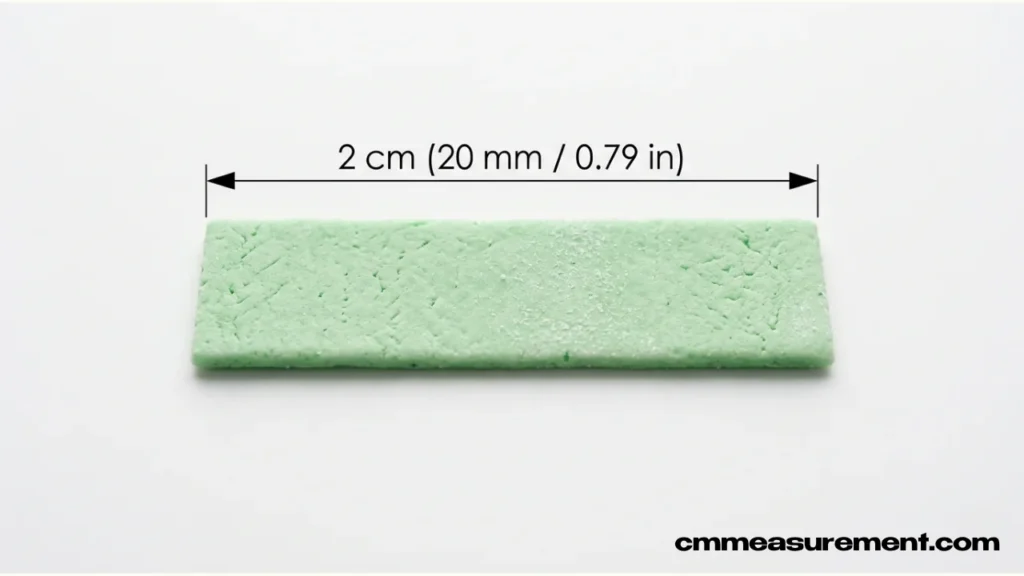
3. A stick of chewing gum A single stick of gum measures roughly 2cm in width, though length varies by brand. It’s a handy grab-and-check reference in your pocket or bag.
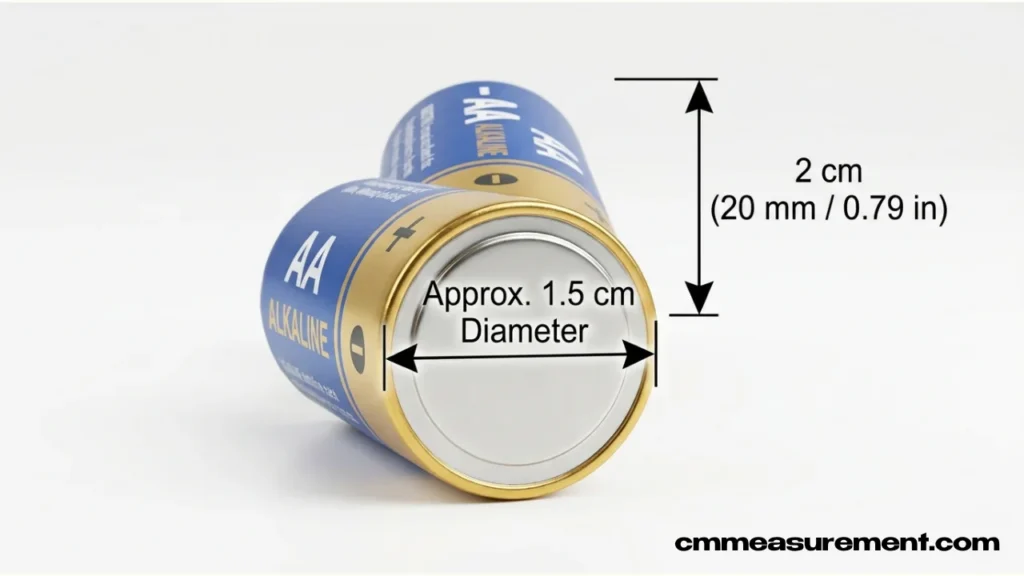
4. An AA battery’s diameter The round end of a standard AA battery measures about 1.4cm to 1.5cm across — close enough to visualize alongside 2cm when you picture it slightly wider.
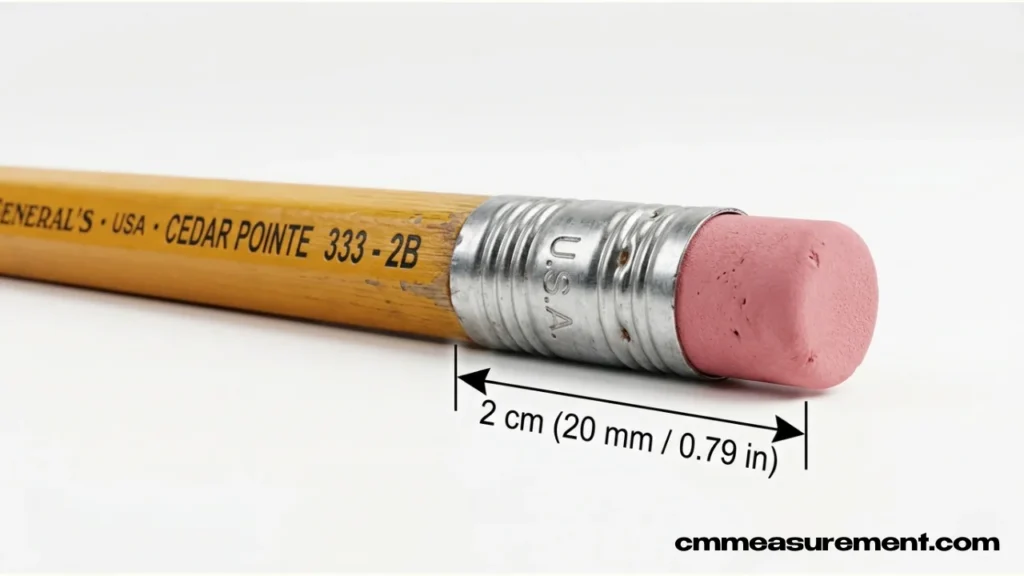
5. A pencil eraser (unsharpened) The pink eraser topping a standard pencil is typically 1.8cm to 2cm long, making it one of the most reliable visual anchors for this size.
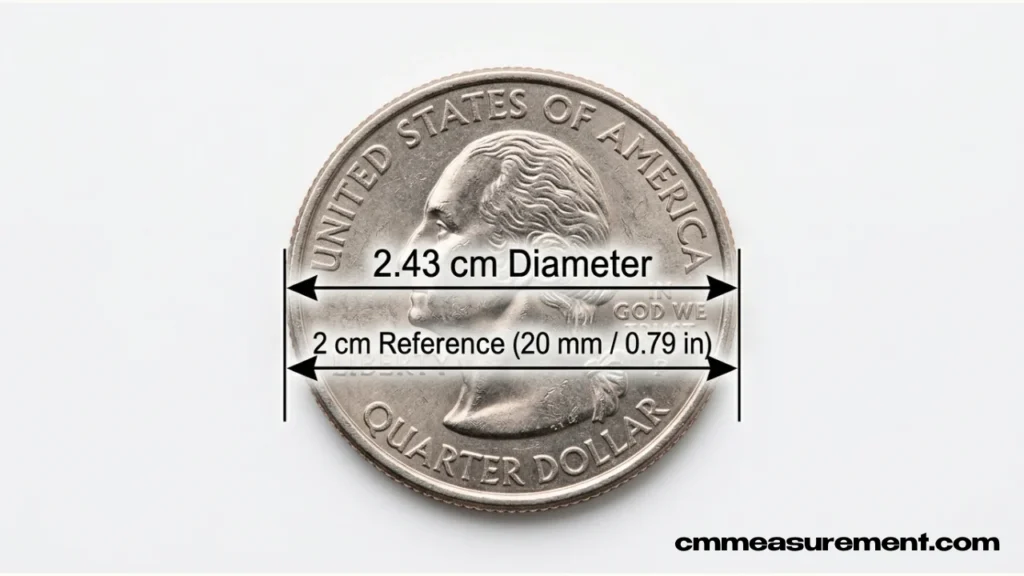
6. A U.S. quarter’s diameter A quarter measures 2.426cm across, according to the U.S. Mint (official specs). It’s slightly larger than 2cm, but close enough to use as a mental placeholder.
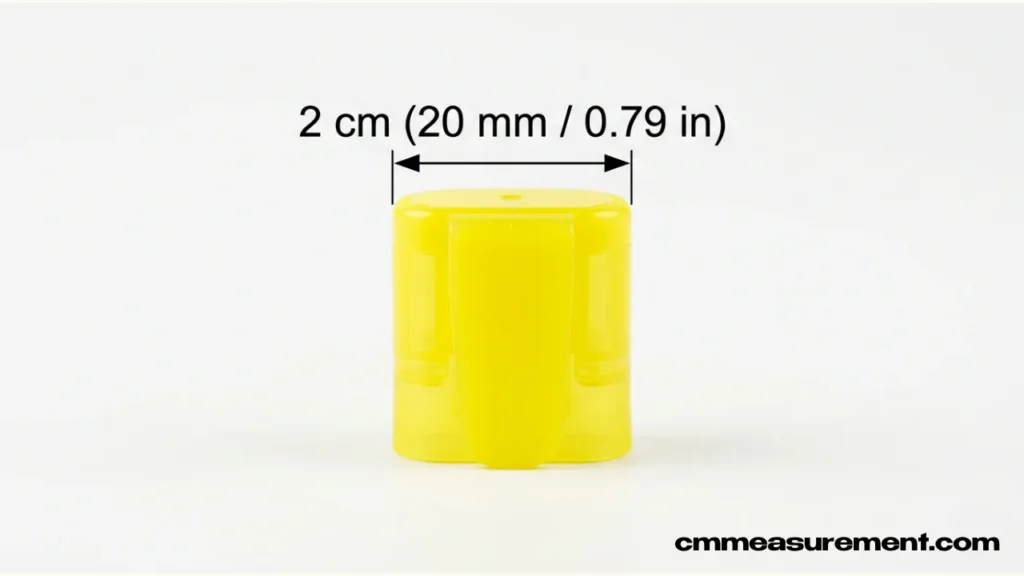
7. A highlighter cap The width of a typical highlighter cap sits around 2cm, making it another desk-side comparison you can check right now.
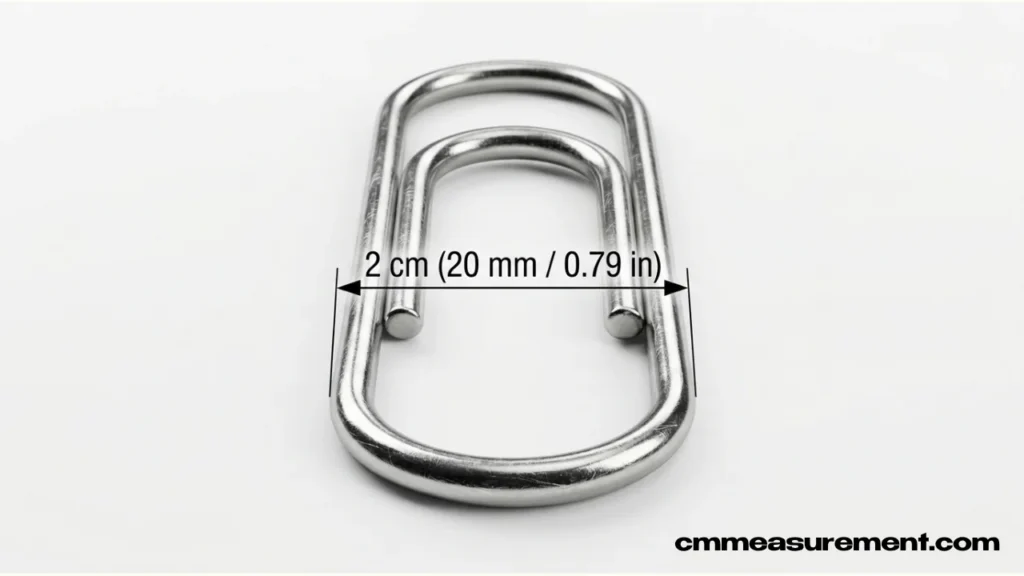
8. A large paperclip’s short edge The narrow width of a jumbo paperclip measures close to 2cm, while the standard paperclip runs slightly smaller.
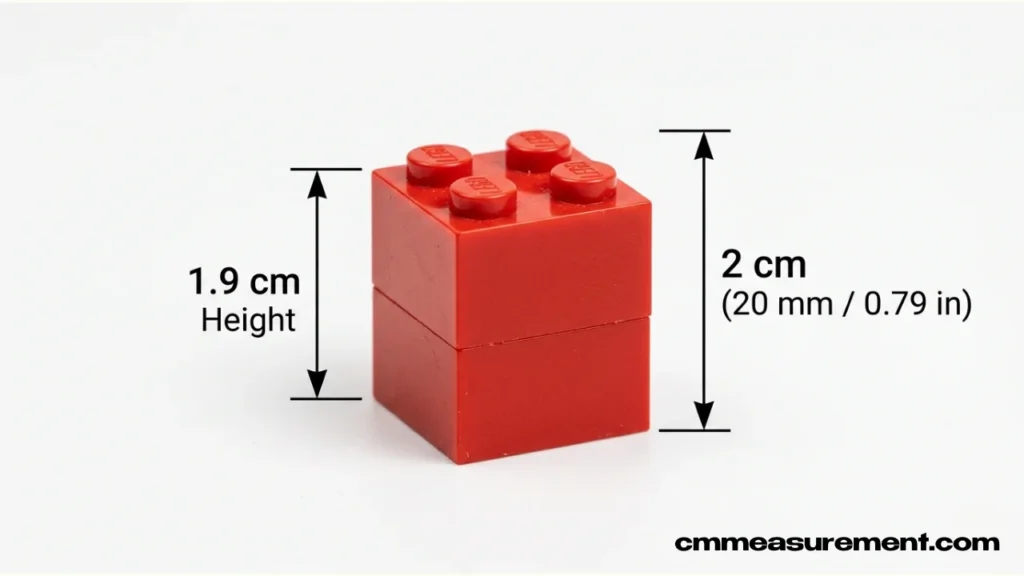
9. A Lego brick’s height A single-stud Lego brick stands 1.9cm tall — nearly an exact match for 2cm, and a favorite reference for parents explaining measurements to kids.
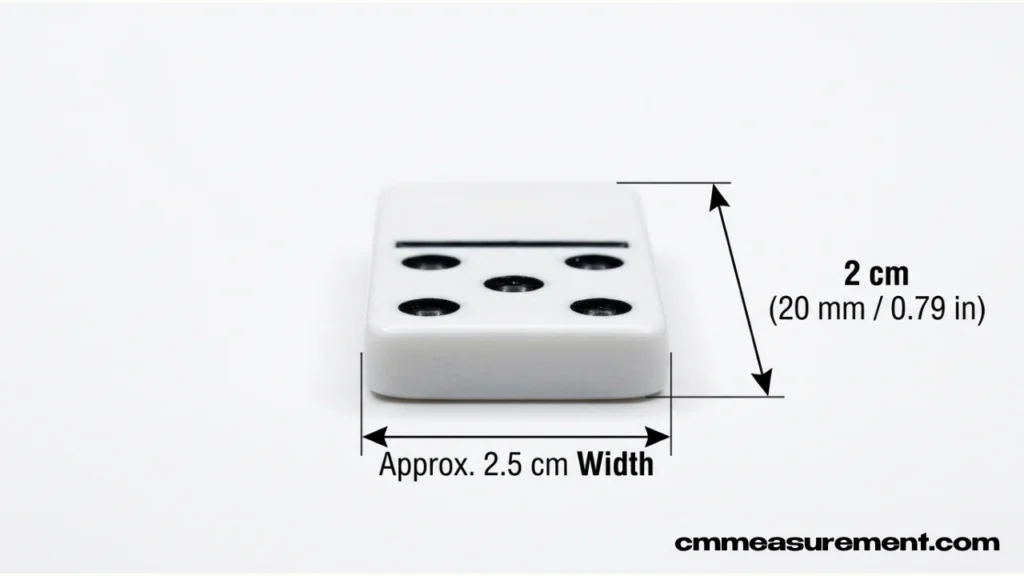
10. A domino tile’s width Standard dominoes measure about 2.5cm wide, just slightly over 2cm, making them a close visual cousin.
11. Your index fingertip (top segment) The very tip of an adult index finger, from the nail bed to the tip, commonly measures close to 2cm — another built-in reference you carry everywhere.
How to Estimate 2cm Without a Ruler
You don’t always have a measuring tape handy. Here’s how professionals and hobbyists eyeball small distances fast.
Use your thumbnail as a baseline. Since most adult thumbnails hover near 2cm in width, a quick glance often gets you close enough for casual tasks like crafting or gardening.
Try the fingertip trick. The top segment of your index finger — from the first knuckle to the tip — is a near-identical stand-in for 2cm on most adults.
Use your phone. Modern smartphones include built-in AR measuring tools (Apple’s Measure app and Android’s equivalent) that use the camera and depth sensors to estimate short distances with surprising accuracy. Apple’s own documentation notes these tools work best for objects under 3 meters (Apple support).
These tricks won’t replace precision tools for engineering or medical use, but they’re reliable enough for quick, everyday decisions.
2cm Compared to Other Common Sizes
Seeing 2cm next to nearby measurements helps lock in the scale.
| Measurement | Inches | Everyday Object |
|---|---|---|
| 1cm | 0.39 in | Width of a staple |
| 2cm | 0.79 in | Width of a shirt button |
| 3cm | 1.18 in | Width of a AA battery (length-wise segment) |
| 5cm | 1.97 in | Diameter of a golf ball |
| 1 inch (2.54cm) | 1.00 in | Width of a standard matchbox |
Notice how 2cm sits almost exactly halfway between a staple’s width and a golf ball’s diameter. That middle-ground scale is part of why it’s such a common unit in sewing, jewelry making, and small-parts manufacturing.
FAQs
How big is 2cm visually?
2cm looks about as wide as a shirt button or the top segment of your index finger. It’s small enough to sit comfortably on a fingertip but large enough to see clearly without squinting.
What is an example of 2 cm?
A pencil eraser, a highlighter cap, or a jumbo paperclip’s short edge are all close, everyday examples of 2cm.
How long is 2 cm on your finger?
On most adults, 2cm roughly matches the length of the top segment of the index finger, from the tip to the first knuckle crease.
What does 2 cm look like?
Picture a thumbnail-sized square or a shirt button — that’s the visual footprint of 2cm in both width and length.
How big is 2cm in size?
2cm equals 0.79 inches or 20mm. It’s about three-quarters of an inch, smaller than a standard house key.
What object is the size of 2 cm?
A standard pencil eraser, a large paperclip, or a Lego brick’s height are all close matches for 2cm.
Conclusion
2 cm equals 0.79 inches, or 20mm — roughly the width of a shirt button or your thumbnail. Instead of memorizing the number, anchor it to something physical: your fingertip, a pencil eraser, or the cap of a highlighter sitting on your desk right now.
Once you tie a measurement to a real object, you stop needing a ruler to picture it. That’s the whole point of learning length through everyday things — it turns an abstract number into something you can spot in seconds, anywhere you go.

Timmy Zeeshan is the founder and lead editor of CM Measurement, where he writes and maintains a growing library of unit conversion tools and practical measurement guides. With a background in engineering and a long-standing interest in everyday math problems, Timmy started CM Measurement after growing frustrated with cluttered, ad-heavy converter websites that made simple conversions harder than they needed to be.