A label that’s even a quarter-inch off looks wrong on the shelf. It buckles at the seam, leaves a gap, or hangs over the can’s curve. Most of the time, the problem isn’t the printer — it’s the beer can label dimensions used before anything went to press.
This guide breaks down the exact beer can label size for every common format, the simple math behind it, and how to design a label that fits right the first time.
Table of Contents
What Sets Beer Can Label Dimensions
Beer cans follow a sizing code, not a guess. Learn this one code, and every can label dimension in this article will make sense instantly.
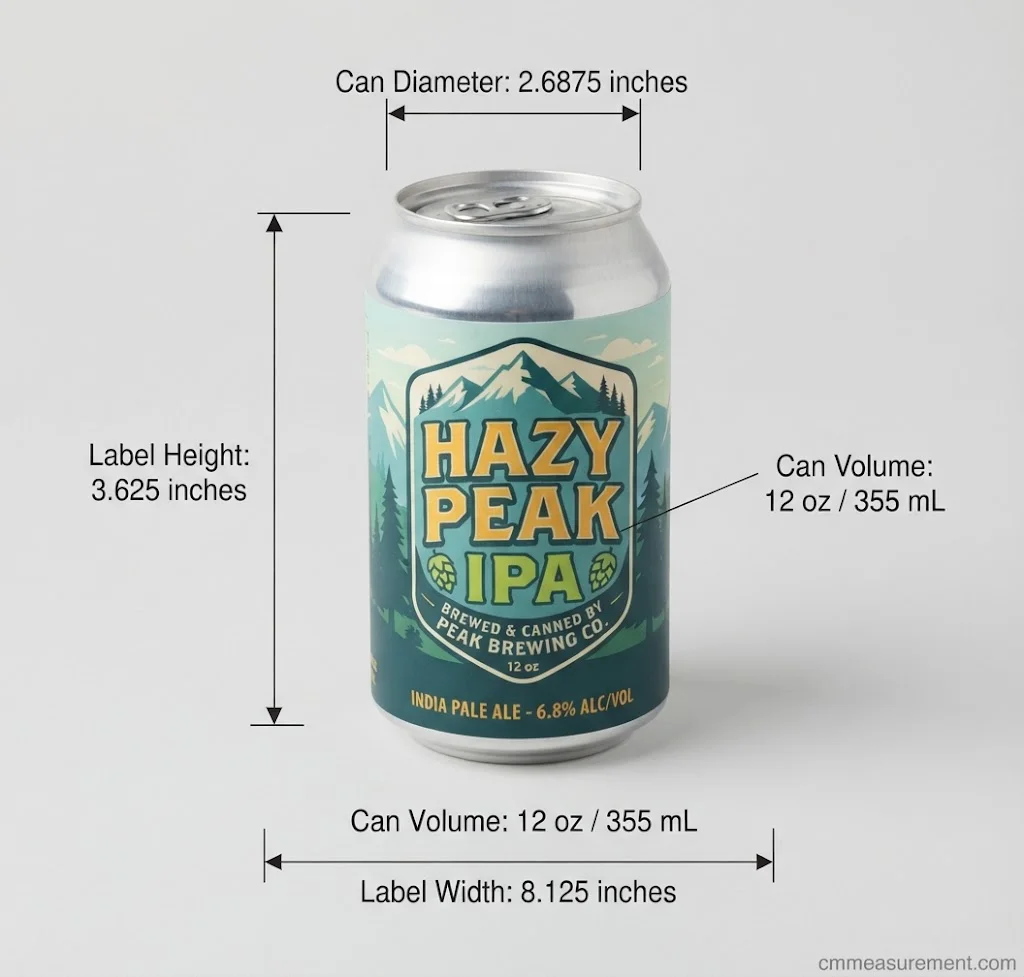
The 211 code is the starting point. Most 12 oz and 16 oz cans in the US share a body code of 211. Read it as two numbers: the first digit is whole inches, the next two are sixteenths. So 211 means 2 and 11/16 inches, or 2.6875 inches across the can’s body.
Diameter stays fixed; height changes. Breweries keep the same 211 diameter across volumes so they can run different can sizes on the same filling line. Height is the variable that grows to hold more liquid — a 12 oz can and a 16 oz tallboy share a nearly identical width, but the tallboy stands taller.
Circumference drives label width. This is the number that actually decides how wide your label needs to be. The formula is straightforward: diameter × pi (3.1416). For a 211 can, that’s 2.6875 × 3.1416, or about 8.44 inches. Printers trim that slightly for a clean seam, which is why most labels land closer to 8.125 inches.
Not every can is a 211, and that matters. Aluminum shortages in recent years pushed some can makers toward a narrower 207 body for 16 oz cans. A 207 can has a smaller diameter, so it’s taller to hold the same volume — and a label built for a 211 can will sit loose and leave an awkward gap on a 207. Always confirm the exact code stamped on your can stock before finalizing artwork.
Beer Can Label Dimensions by Size: 4 Standard Options
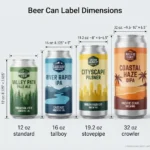
Here are the four most common beer can label sizes used across the US craft beer industry, based on standard 211 can bodies.
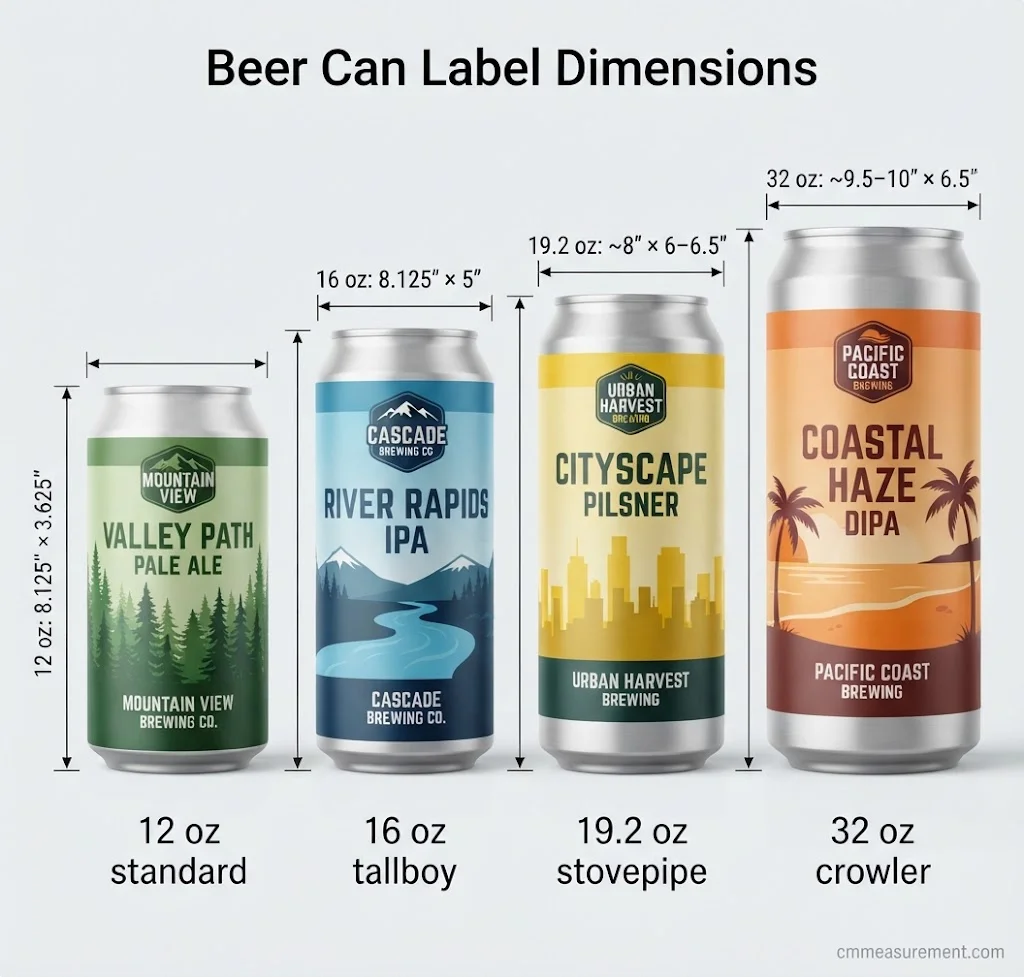
12 oz standard can — 8.125″ x 3.625″. This is the workhorse size. It’s what most six-packs use, and nearly every label printer keeps a pre-cut die ready for it, which keeps turnaround fast.
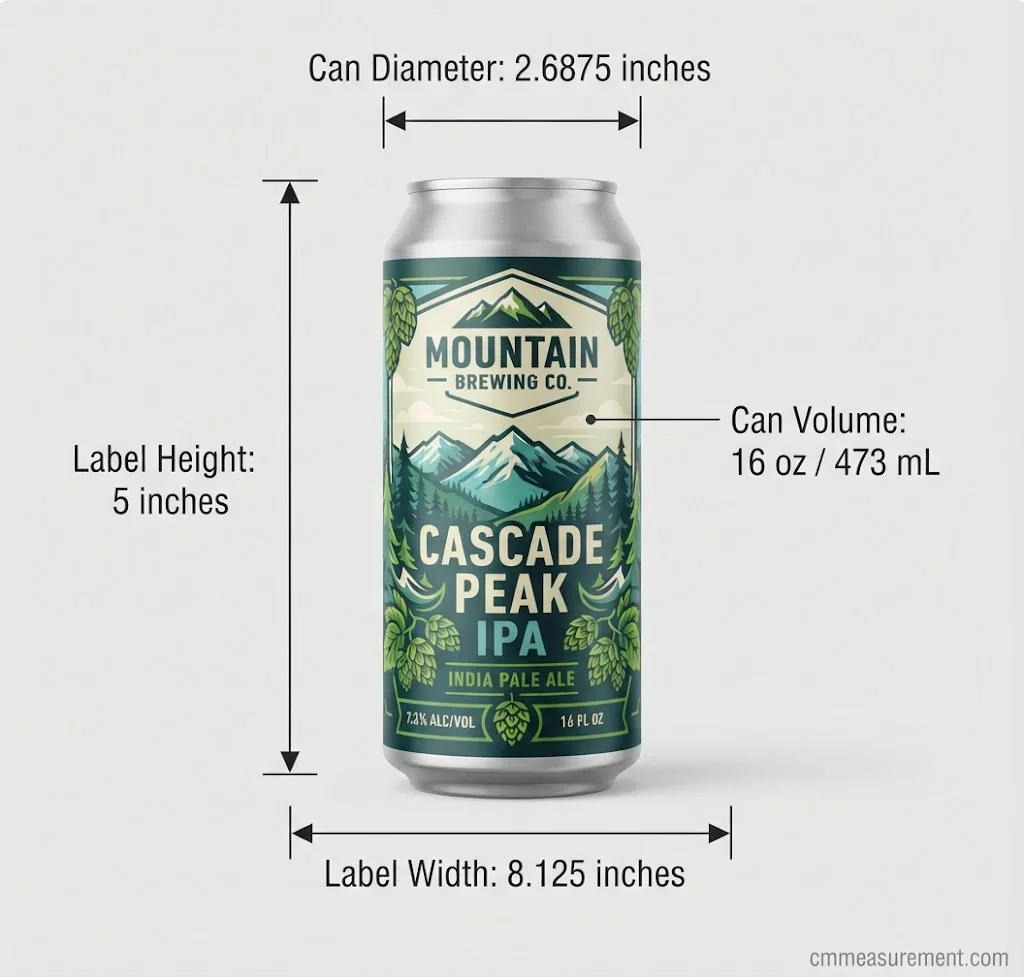
16 oz tallboy can — 8.125″ x 5″. The width barely changes from the 12 oz label since the diameter is the same. The extra 1.375 inches of height gives room for more artwork, ingredients, or story copy.
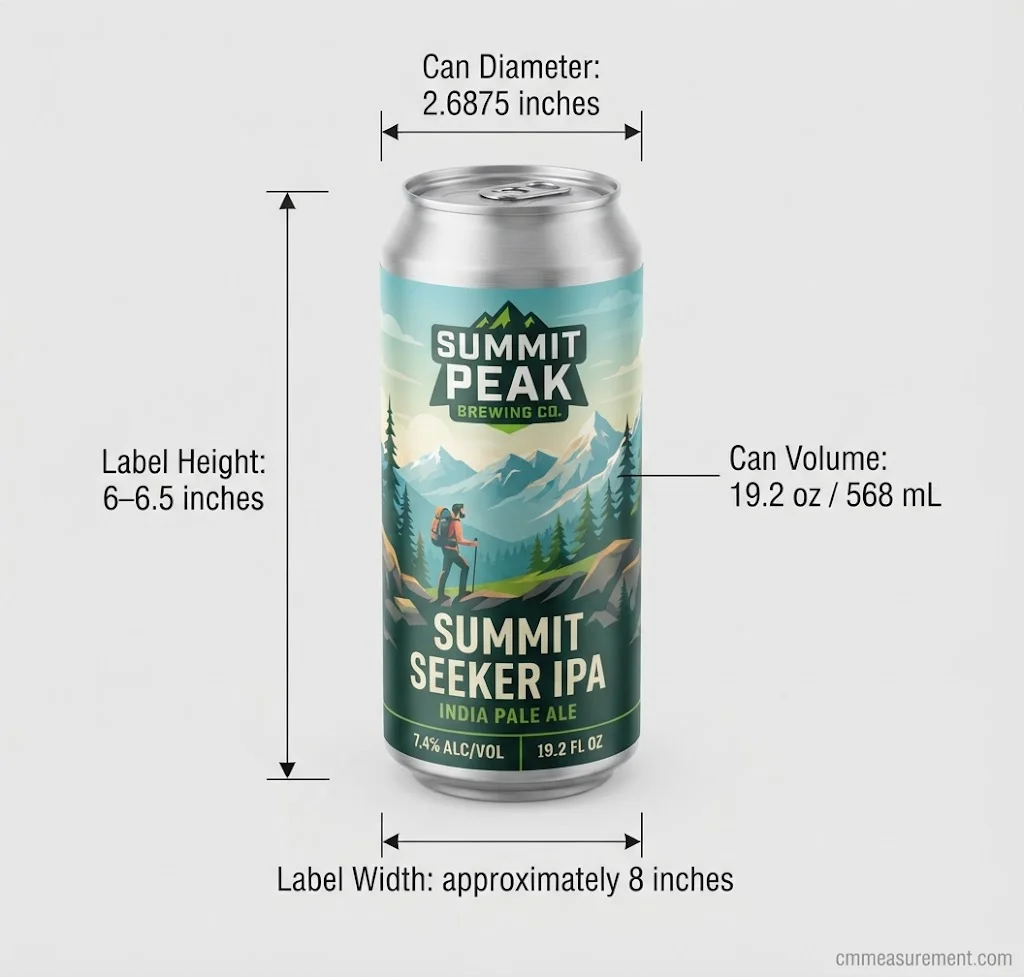
19.2 oz stovepipe can — roughly 8″ wide x 6 to 6.5″ tall. This format is less standardized across manufacturers, so height can shift more than with 12 oz or 16 oz cans. Measure the actual can before reusing a die from another size.
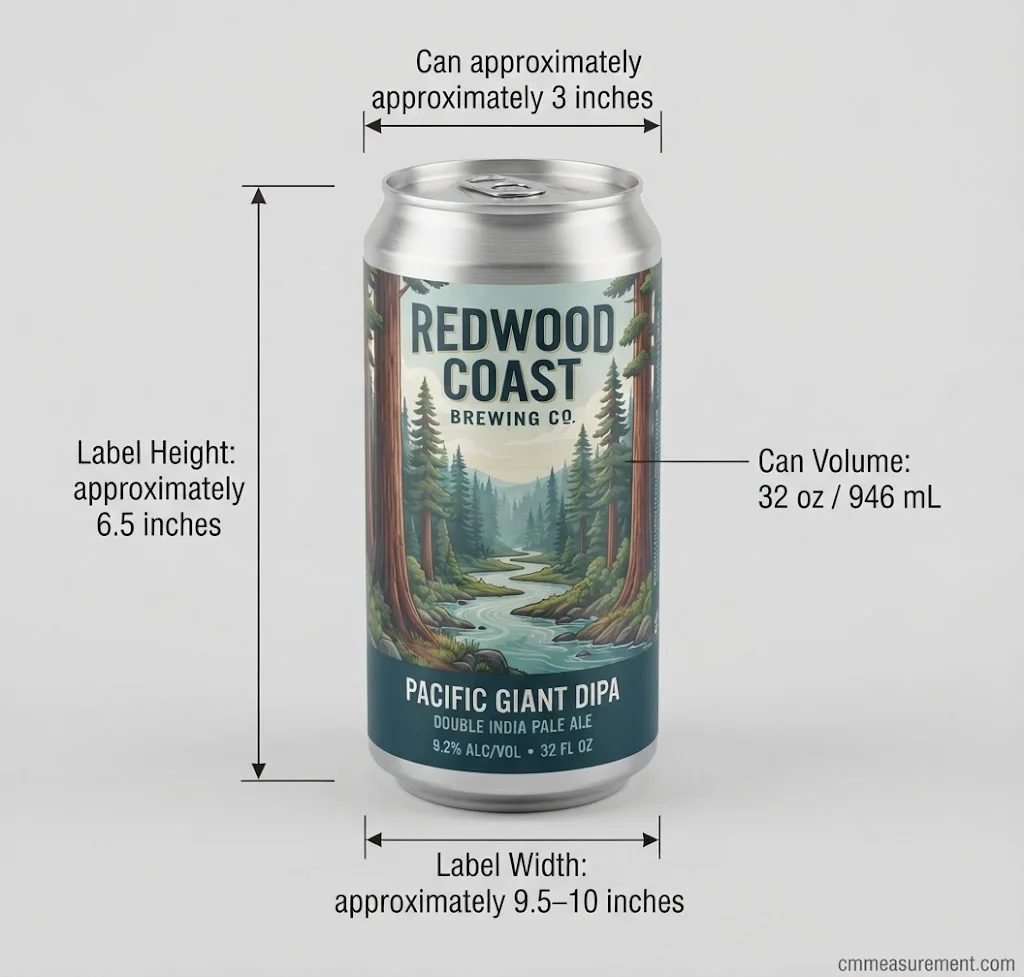
32 oz crowler — roughly 9.5″ to 10″ wide x 6.5″ tall. Crowlers have a wider diameter than standard cans, so don’t scale down a 16 oz label to fit one. The math changes because the circumference changes.
| Can size | Volume (mL) | Diameter | Full-wrap label (W x H) |
|---|---|---|---|
| 12 oz standard | 355 mL | 2.6875″ | 8.125″ x 3.625″ |
| 16 oz tallboy | 473 mL | 2.6875″ | 8.125″ x 5″ |
| 19.2 oz stovepipe | 568 mL | 2.6875″ | ~8″ x 6–6.5″ |
| 32 oz crowler | 946 mL | ~3″ | ~9.5–10″ x 6.5″ |
If your can is a slim (8 oz) or sleek (12 oz) body, note that the narrower diameter shrinks label width too — always measure rather than assume.
How to Calculate Beer Can Label Size
You don’t need to eyeball it. The math is simple, and it works for bottles too.
Width formula. Take your can’s diameter, multiply by pi (3.1416) to get circumference, then subtract a small gap allowance — usually 0.25 to 0.375 inches — so the label ends don’t collide at the seam.
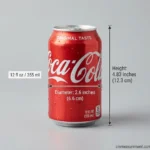
Must Visit: How Big Is a Coke Can?4 Coke Can Dimensions, Height, Width & Size Guide
Height measurement. Measure only the flat body of the can, from just above the base curve to just below the top curve. Subtract roughly 0.25 inches on each end so the label never wraps onto a seam, where it can peel or print unevenly.
The paper template trick. Cut a strip of paper to your calculated size and wrap it around a real can before sending anything to print. This costs nothing, takes two minutes, and catches a bad fit before it becomes an expensive reprint.
What about bottle labels? A standard 750 mL bottle — the size used for most wine and many craft beer bombers — typically takes a front label around 3.5″ x 4.5″ to 4″ x 5″, with a smaller back label between 3″ x 3″ and 3.5″ x 4″ for compliance text. Bottle labels usually split into front-and-back pieces rather than one full wrap, since bottle shoulders curve too sharply for a single label to sit flat. Wrap-around bottle labels are possible but need the bottle’s true circumference, measured the same way as a can.
Choosing a Label Format for Your Can Size
Once you know your beer can label dimensions, the next decision is how the label gets applied.
Full wrap, half wrap, or optimal wrap. A full wrap circles the entire can for maximum branding space — best for bold, story-heavy artwork. A half wrap covers less material and lets raw aluminum show through, a look many minimalist brands favor. An optimal wrap sits between the two, leaving a small intentional gap that makes hand application far easier.
Pressure-sensitive labels, shrink sleeves, or direct-printed cans. Pressure-sensitive (PS) labels are the most common — peel-and-stick, flexible on minimum order size. Shrink sleeves wrap the entire can in heat-shrunk film, hugging even the curved shoulders. Direct-printed cans skip the label altogether; the design prints straight onto the aluminum, though minimums for this method typically run higher, often in the 1,500 to 2,000-can range per design.
Each route trades off differently on cost, lead time, and minimum order quantity — worth confirming with your printer before locking in artwork.
Beer Can Label Design and Compliance Checklist
Getting the size right is only half the job. A print-ready file also needs proper margins and legal compliance built in.
Bleed and safe zone. Add roughly 0.125 inches of bleed past your cut line on every side, so no white edge shows after trimming. Keep logos and text at least 0.25 inches inside the trim edge as a safe zone, protecting them if the cut shifts slightly.
TTB Government Warning. The Alcohol and Tobacco Tax and Trade Bureau requires the Government Warning statement on every beer label sold in the US, with lettering at least 2 mm tall and the words “GOVERNMENT WARNING” in bold capitals. This isn’t optional — skipping it can hold up a release entirely.
File setup. Build artwork in CMYK, not RGB, since RGB files shift color when converted for press. Work at 300 DPI minimum for crisp print quality, and outline all fonts so type doesn’t reflow if the printer doesn’t have your exact typeface installed. Save as PDF, AI, or EPS with the die line marked as its own layer.
Material worth knowing about: aluminum cans remain the most recycled beverage container in the US, even as the national recycling rate dipped to 43% in 2023 — a reason more breweries are choosing low-residue, recyclable label stock that doesn’t contaminate the aluminum stream.
FAQs
What is the size of a beer can label?
It depends on the can, but the most common beer can label size is 8.125 inches wide by 3.625 inches tall for a 12 oz can, and 8.125 inches wide by 5 inches tall.
What are the dimensions of a can of beer?
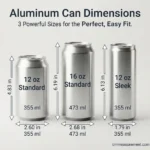
A standard 12 oz can measures about 4.83 inches tall with a 2.6875-inch diameter. A 16 oz tallboy keeps the same diameter but stretches to roughly 6.19 inches tall.
What are the dimensions of a label?
Label dimensions come from two numbers: the can’s circumference (diameter × pi) for width, and the flat body height minus small margin allowances.
What size label for 750 mL bottle?
A 750 mL bottle typically uses a front label around 3.5″ x 4.5″ to 4″ x 5″, with a smaller back label between 3″ x 3″ and 3.5″ x 4″ for required compliance text.
What are the dimensions of a 750 ml bottle?
A standard 750 mL bottle stands roughly 11.5 to 12 inches tall, depending on shape, with a body diameter around 3 to 3.2 inches at its widest point.
How to calculate label size?
Multiply your container’s diameter by pi (3.1416) to get circumference, then subtract a small gap allowance for width.
Conclusion
Every beer can label dimension comes down to two numbers: diameter and height. Get those right, measure your actual can rather than guessing, and build in bleed, safe zone, and TTB compliance from the start. A label that fits looks intentional — one that doesn’t looks like a mistake nobody caught in time.

Timmy Zeeshan is the founder and lead editor of CM Measurement, where he writes and maintains a growing library of unit conversion tools and practical measurement guides. With a background in engineering and a long-standing interest in everyday math problems, Timmy started CM Measurement after growing frustrated with cluttered, ad-heavy converter websites that made simple conversions harder than they needed to be.