Picking the right aluminum can dimensions can make or break your product’s shelf appeal. Too tall, and it won’t fit the cooler. Too wide, and it feels awkward in hand.
This guide breaks down the exact can dimensions brands actually use — in both inches and millimeters — so you can match the right size to your drink, your packaging line, and your customer’s hand.
Table of Contents
What Are Aluminum Can Dimensions?
Aluminum can dimensions refer to a can’s height, diameter, and fill volume. These three numbers decide how much liquid the can holds, how it sits on a shelf, and how it fits into filling and seaming equipment.
Every can also has an end size — a code like 202, 206, or 300 — which tells manufacturers the exact diameter of the lid needed to seal it. This number matters more than most people realize, because a mismatched end simply won’t seam onto the can body.
Cans are measured two ways: body diameter (the widest point of the can) and overall height (from the bottom to the top of the rim). Together, these define the can’s true footprint.
Standard Aluminum Can Dimensions — The 3 Most Popular Sizes
Three can formats dominate the U.S. beverage market. Each one solves a different packaging problem.
12 oz Standard Can Dimensions (355ml)
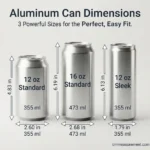
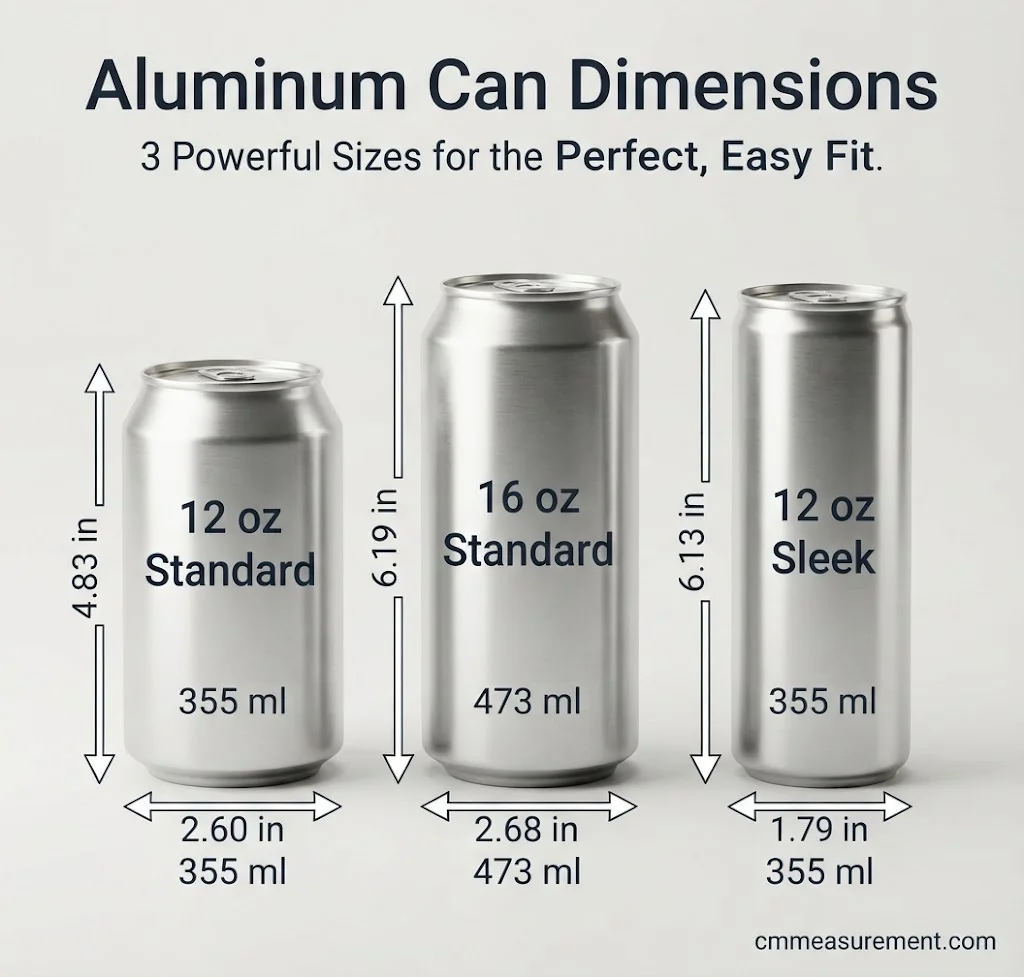
This is the workhorse of the industry. The classic 12 oz can measures roughly 4.83 inches tall and 2.6 inches in diameter, holding 355ml of liquid. It uses a 202 end size, the most common lid diameter in North America.
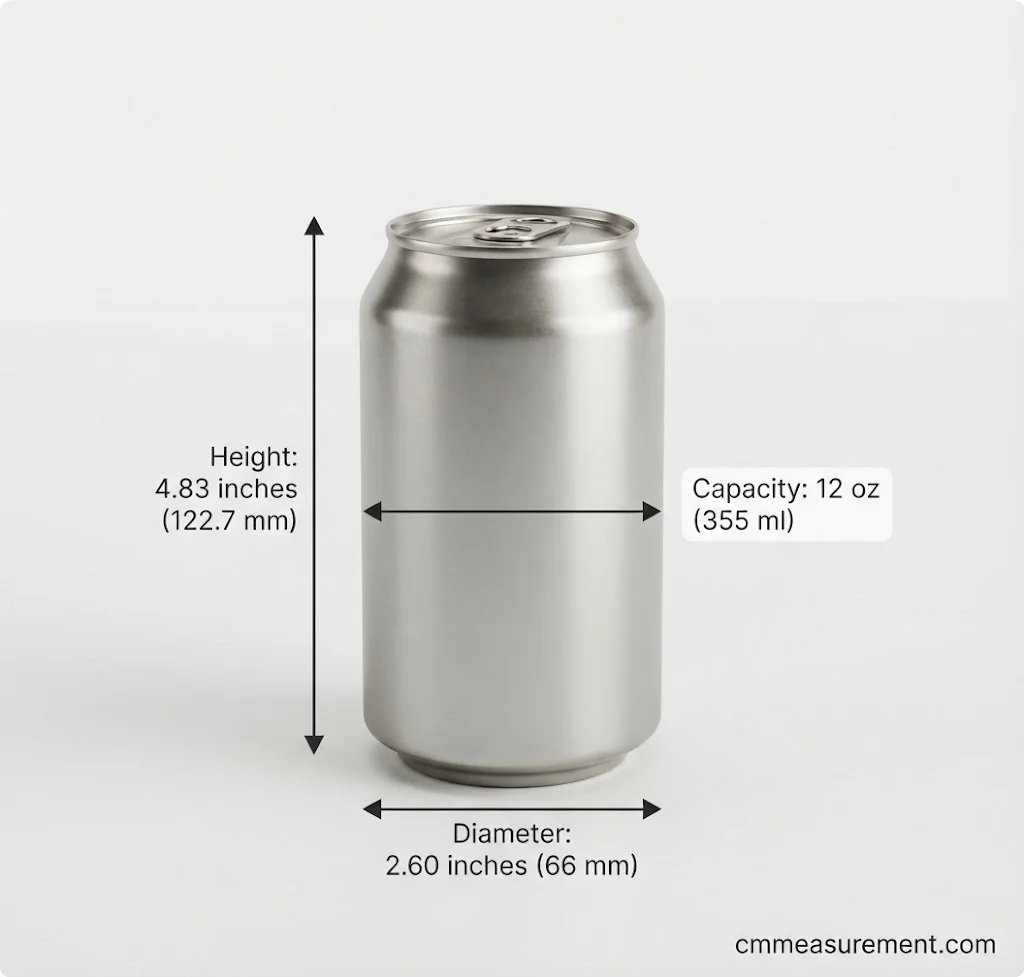
You’ll find this shape behind sodas, craft beer, hard seltzer, and flavored water. It’s the size most consumers picture when they think “soda can.”
16 oz Standard Can Dimensions (473ml)
Need more volume without changing the width? The 16 oz can keeps the same 2.68-inch diameter but stretches to about 6.19 inches tall, holding 473ml. It still pairs with a 202 end, so filling lines rarely need retooling.
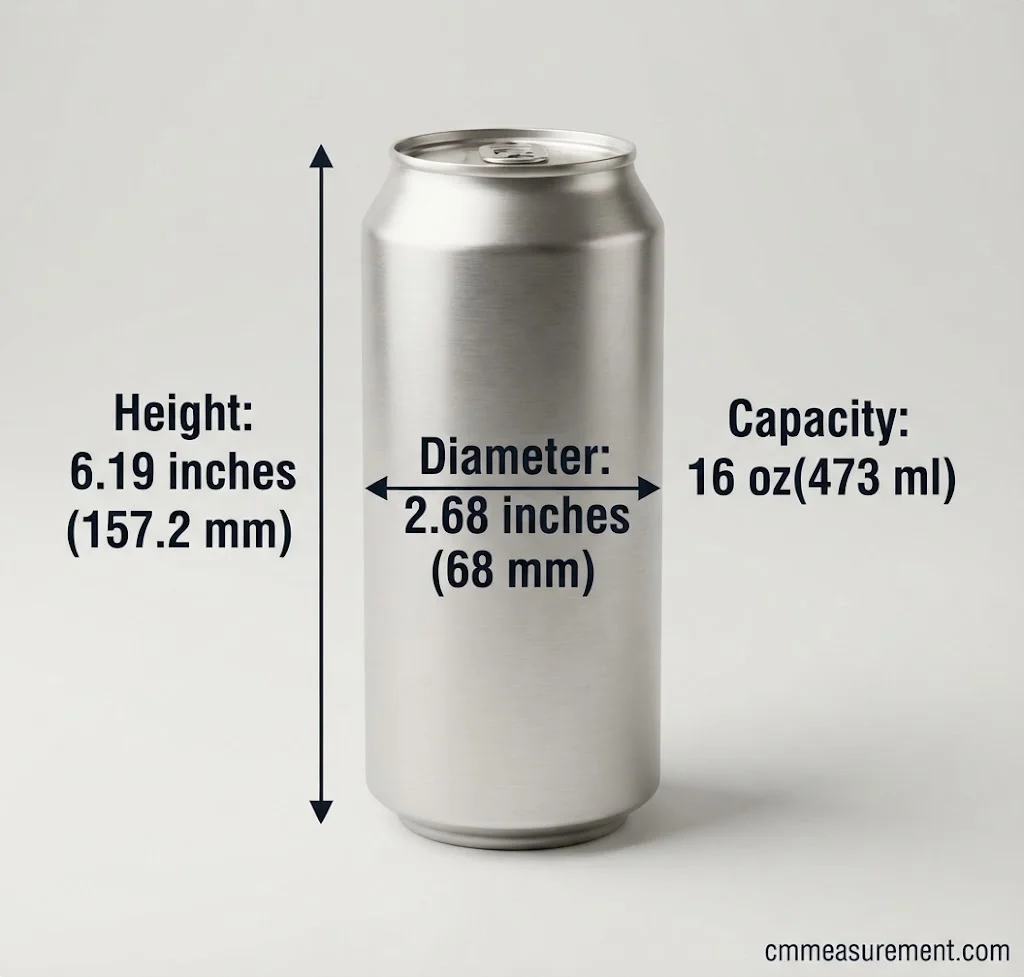
This taller profile is popular for energy drinks and craft beers that want extra shelf presence.
12 oz Sleek Can Dimensions (355ml)
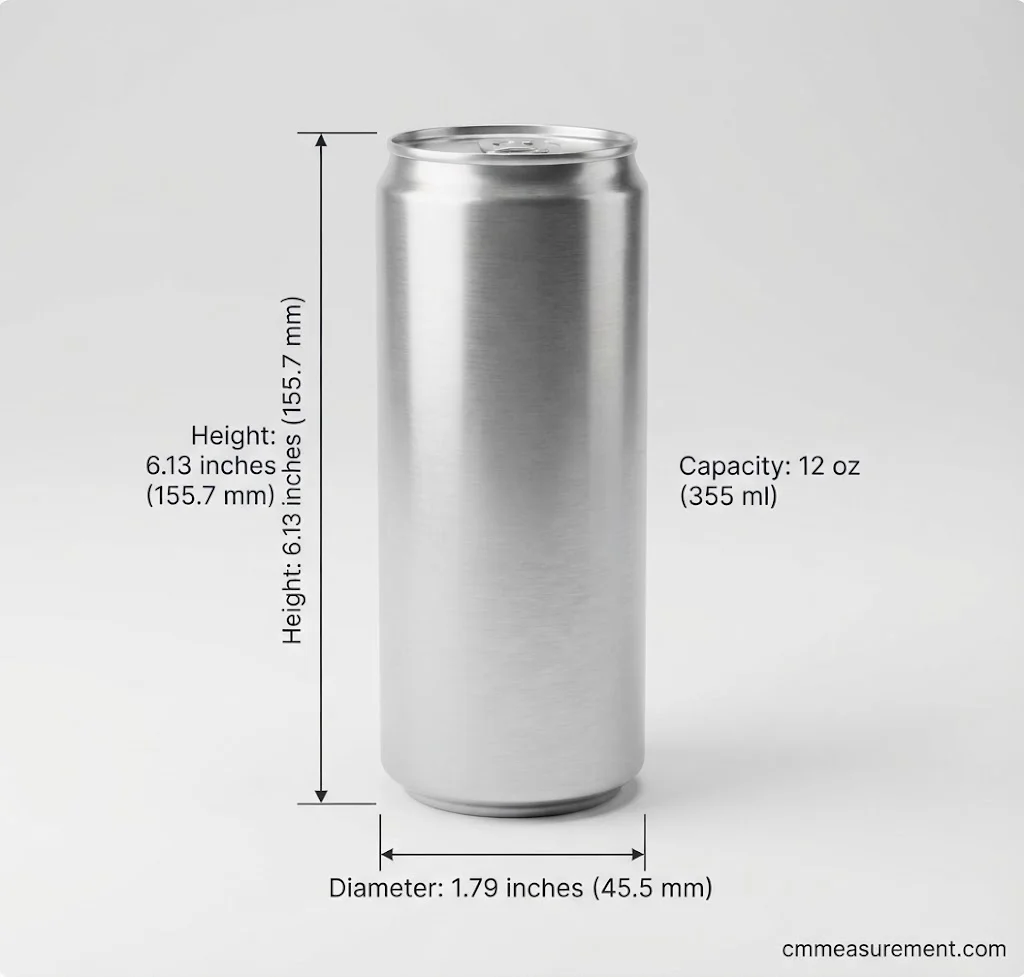
The sleek can holds the same 355ml as a standard can but wears a slimmer, taller silhouette — around 6.13 inches tall and just 1.79 inches in diameter. Brands use this shape to signal a premium feel, which is why you’ll spot it on hard seltzers and boutique sodas.
Aluminum Can Dimensions in Milliliters (200ml, 250ml, 330ml, 500ml)
Most U.S. content skips metric can sizes entirely. But if you’re sourcing globally, importing, or selling in international markets, ml-based sizing is essential.
200ml can — A slim, compact can around 4.1 inches tall and 2.1 inches wide. Common for single-serve spirits mixers and energy shots.
250ml can — Roughly 5.3 inches tall with a 2.1-inch diameter. This is the well-known energy-drink size, prized for its narrow, grip-friendly shape.
330ml can — The standard European lager can. It measures close to 4.5 inches tall and 2.6 inches wide — shorter and wider than its U.S. counterparts.
500ml can — A tall format at roughly 6.6 inches with a 2.6-inch diameter. Common across UK and EU beer markets, this size delivers nearly a full pint per can.
Dimensions can shift slightly between can makers, so always confirm exact specs with your filler before finalizing packaging artwork.
Must Visit: Can Koozie Dimensions: 3 Powerful Size Guide for the Perfect, Easy Fit
Aluminum Can Dimensions Chart (Quick Reference Comparison)
| Can Size | Volume | Height | Diameter | Common Use |
|---|---|---|---|---|
| 200ml | 6.7 fl oz | ~4.1 in | ~2.1 in | Spirits mixers, shots |
| 250ml | 8.4 fl oz | ~5.3 in | ~2.1 in | Energy drinks |
| 12 oz Standard | 355ml | ~4.83 in | ~2.6 in | Soda, beer, seltzer |
| 330ml | 11.2 fl oz | ~4.5 in | ~2.6 in | European lager |
| 16 oz Standard | 473ml | ~6.19 in | ~2.68 in | Energy drinks, craft beer |
| 500ml | 16.9 fl oz | ~6.6 in | ~2.6 in | UK/EU beer |
Save this table — it’s the fastest way to cross-check can dimensions without digging through separate spec sheets.
How to Choose the Right Aluminum Can Size for Your Product
The right can size depends on your drink category, not just personal preference.
Carbonated sodas and traditional beers almost always land on the 12 oz standard. It’s familiar, cost-efficient, and fits standard cooler shelving without wasted space.
Energy drinks and specialty beverages tend to favor taller, narrower cans like the 250ml or sleek format. The elongated shape reads as premium and stands out in a crowded cooler.
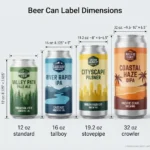
Craft breweries selling draft-style pours often reach for 32 oz crowlers, which use a wider 300 end size built for bigger fills.
Don’t confuse cans with jars, either. A 250ml jar is a completely different product — glass, wide-mouthed, and used for foods like honey or spices, not beverages. Jars aren’t standardized the way cans are, so dimensions vary widely by manufacturer and shape.
Label real estate matters too. A cylindrical can gives you 360-degree branding space, something flat packaging simply can’t match — a factor worth weighing alongside pure size.
FAQs
What are the dimensions of a 500ml can?
A 500ml can typically stands around 6.6 inches tall with a 2.6-inch diameter. This size is common in UK and European beer packaging, delivering close to a full pint per can.
What are the dimensions of a 330ml can?
A 330ml can usually measures about 4.5 inches tall and 2.6 inches wide. It’s the standard size for European lagers and is shorter and wider than the U.S. 12 oz can.
What are the dimensions of a 250ml can?
A 250ml can measures roughly 5.3 inches tall with a 2.1-inch diameter. This narrow, tall shape is best known as the standard energy-drink format.
What are the dimensions of a 200ml can?
A 200ml can is compact, standing around 4.1 inches tall with a 2.1-inch diameter. It’s typically used for single-serve mixers and small-format beverages.
What are the dimensions of a can?
There’s no single answer, since can dimensions vary by volume. The most common U.S.
What are the dimensions of a 250ml jar?
A 250ml jar generally measures around 3.5 to 4 inches tall with a 2.5 to 3-inch diameter, though this varies a lot by shape and manufacturer.
Conclusion
Aluminum can dimensions aren’t just numbers on a spec sheet — they shape how your product fits shelves, coolers, and customer hands. Whether you’re working in ounces or milliliters, matching the right size to your beverage sets the foundation for good packaging.

Timmy Zeeshan is the founder and lead editor of CM Measurement, where he writes and maintains a growing library of unit conversion tools and practical measurement guides. With a background in engineering and a long-standing interest in everyday math problems, Timmy started CM Measurement after growing frustrated with cluttered, ad-heavy converter websites that made simple conversions harder than they needed to be.