Trying to match a recipe, a label, or a shipping box to the right can? Food can dimensions aren’t random — they follow a system, and once you know it, guesswork disappears.
This guide breaks down real food can sizes in plain numbers, from the small tin on your pantry shelf to the bulk can used in restaurant kitchens.
Table of Contents
Food Can Dimensions at a Glance
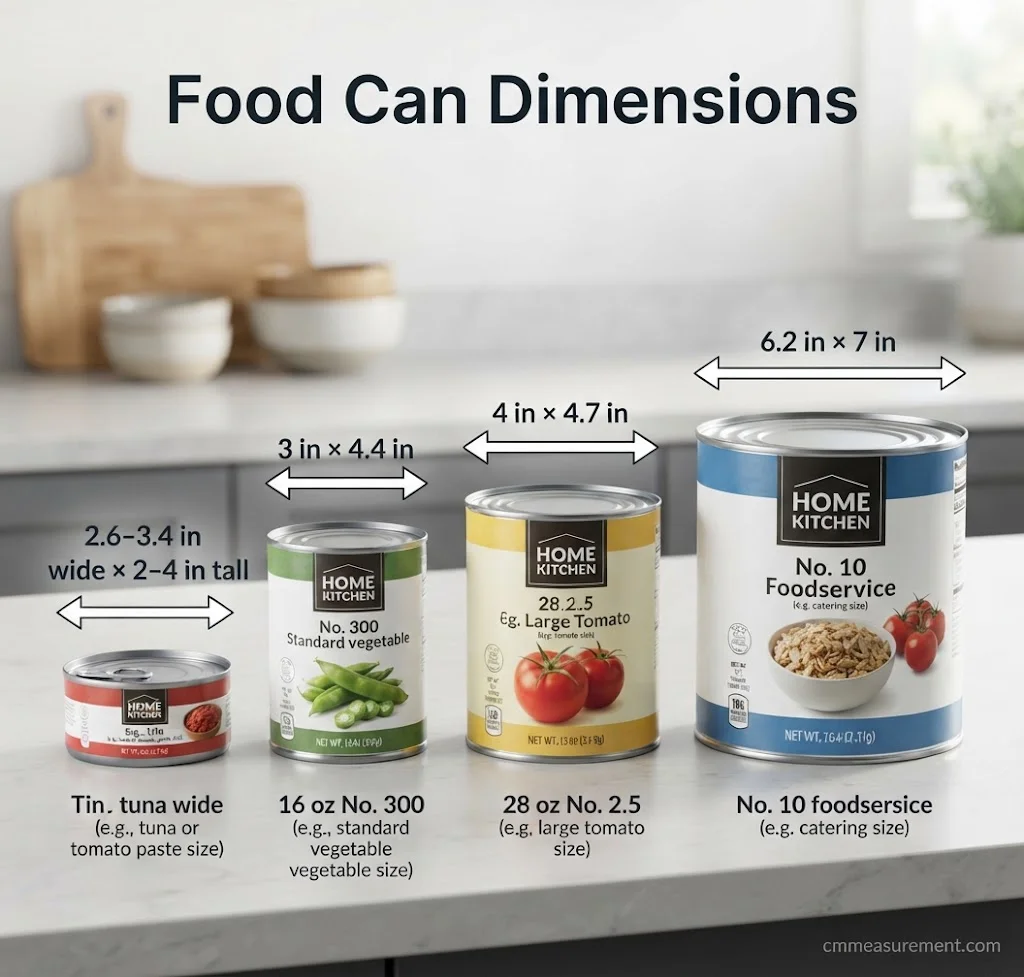
Here’s the short answer: most U.S. food cans range from about 2.6 inches to 6.2 inches in diameter and 2 inches to 7 inches tall, depending on the size code.
The USDA’s Food Buying Guide confirms the most common codes: No. 300 (14–16 oz), No. 2 (18–20 oz), and No. 10 (96–117 oz), each tied to a specific diameter and height in inches.
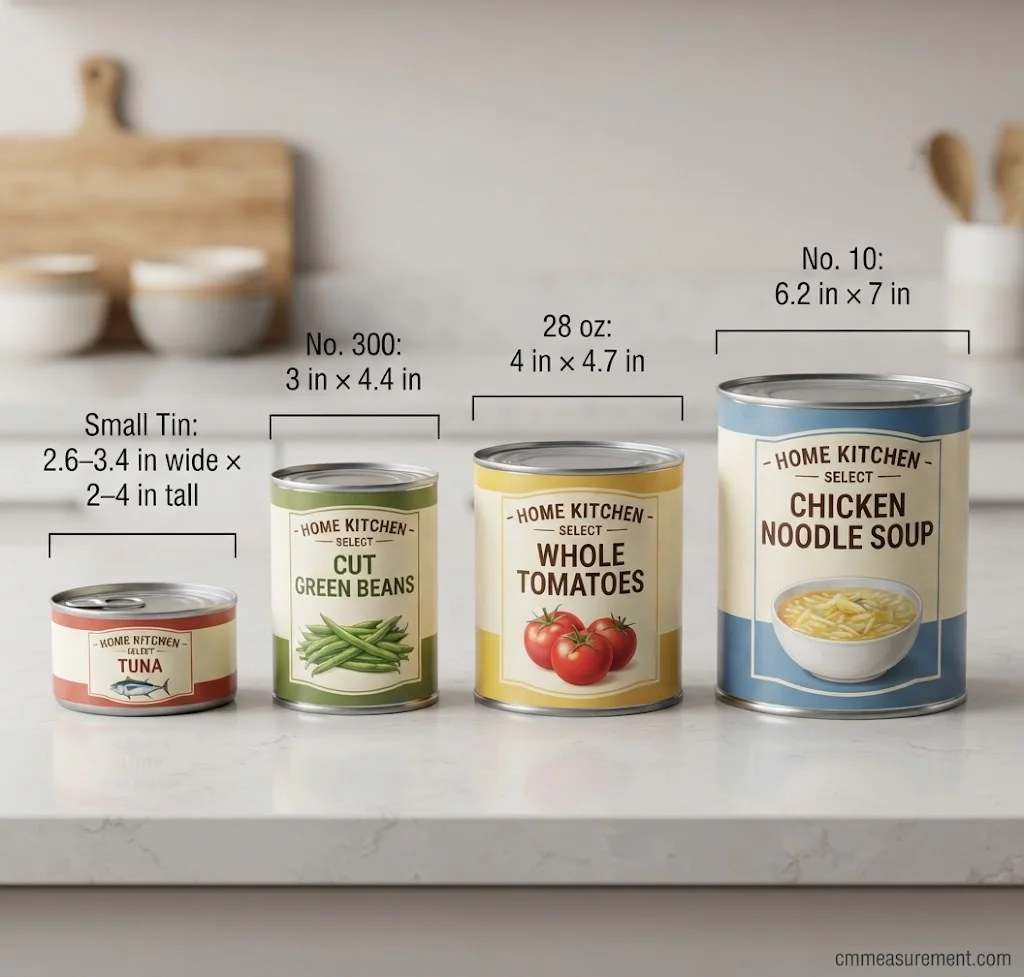
Household-size cans — No. 2, No. 300, No. 303 — sit between 3 and 3.4 inches wide and 4 to 4.6 inches tall. Bulk foodservice cans, like the No. 10, jump to roughly 6.2 inches wide and 7 inches tall.
In metric terms, common food can bodies run close to 73mm, 84mm, and 99mm in diameter, with larger institutional formats reaching 153mm or more. These metric sizes matter if you’re sourcing cans internationally or comparing specs across suppliers.
How Food Can Size Codes Work
Ever seen a code like 307 x 409 on a spec sheet? It’s not arbitrary. It’s the shorthand the canning industry uses for can dimensions.
The first number is the diameter. The digits following it show inches and sixteenths. So “307” means 3 and 7/16 inches across.

The second number is the height, using the same logic. “409” means 4 and 9/16 inches tall.
Here’s a detail most size charts skip: canners often distinguish between the open-can height (before the lid is sealed) and the finished height (after seaming). Seaming folds a bit of metal at the top and bottom, so the finished can is slightly shorter than the raw body. If you’re ordering equipment or cans, always confirm which measurement — open or seamed — your supplier’s spec sheet, or dieline, is quoting.
Food Can Dimensions in Inches by Size
People rarely search using a can code. They search “can dimensions in inches” or “what’s the standard size of a tin can.” Here’s the direct answer.
28 oz can: This lands in the No. 2.5 range. Expect a diameter close to 4 inches and a height near 4.7 inches. It’s a common size for tomatoes, beans, and thick sauces.
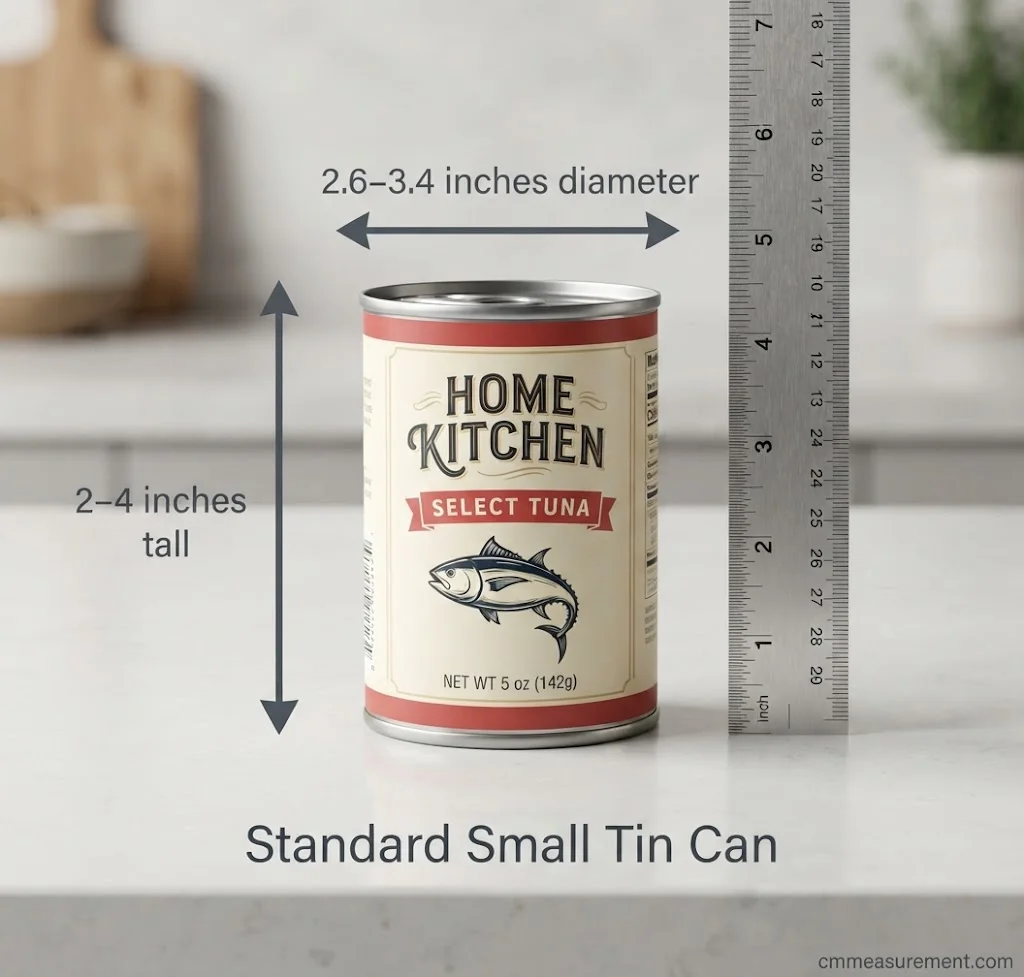
Standard tin can: The classic small “tin,” often used for tuna, tomato paste, or spices, typically measures about 2.6 to 3.4 inches wide and 2 to 4 inches tall, depending on the product it holds. Tuna cans specifically often use an 84mm diameter format, a size shared across many three-piece tin cans worldwide.
Must Visit: Can Koozie Dimensions: 3 Powerful Size Guide for the Perfect, Easy Fit
Quick inches reference:
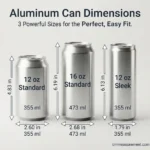
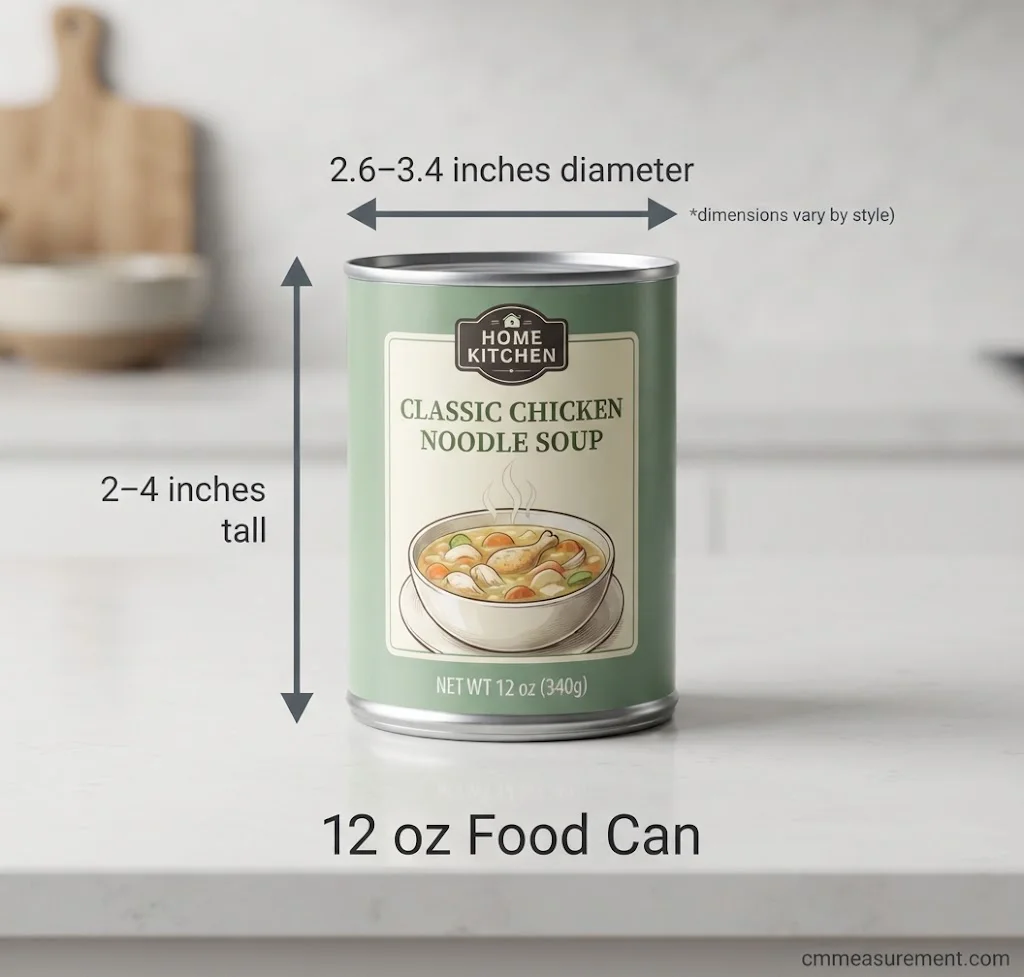
- 12 oz can: about 2.6–3.4 inches wide, 2–4.8 inches tall (varies by beverage vs. food style)
- 16 oz can: about 3 inches wide, 4.4 inches tall
- 28 oz can: about 4 inches wide, 4.7 inches tall
- No. 10 can: about 6.2 inches wide, 7 inches tall
Food Can Materials and Construction
Dimensions only tell half the story. The material and build behind a can shapes how it performs — and even how tightly its dimensions hold.
Steel and tin-plated steel dominate U.S. food canning. Steel handles the heat of retort sterilization well, and a thin tin coating adds corrosion resistance, especially for acidic foods like tomatoes.
Aluminum shows up mostly in two-piece cans. It’s lighter, naturally corrosion-resistant, and common in beverages and some low-acid foods.
Two-piece cans are drawn from a single sheet of metal, with no side seam — just a lid added after filling. Three-piece cans use a rolled body with a welded seam plus two separate ends. Two-piece construction tends to hold tighter dimensional tolerances since there’s one less seam to account for; three-piece cans are cheaper to produce and easier to size for solid foods.
Choosing the Right Food Can Size
Matching the can to the actual job saves money and prevents waste — this part rarely gets skipped, but it’s worth doing right.
For home cooks: Older recipes often list a can code instead of ounces. Match the code to today’s label using the size chart above before you start cooking.
For small food brands: A No. 300 or No. 2 can usually fits standard shelf spacing and keeps case weight manageable. Case-pack counts (cans per carton) also affect freight cost — smaller cans typically ship 24 per case, while No. 10 cans ship 6 per case.
For foodservice kitchens: The No. 10 can remains the workhorse, holding close to 12 cups per can — enough to replace roughly seven retail-size cans in one container.
FAQs
What are the dimensions of a can of food?
Most food cans measure between 2.6 and 6.2 inches in diameter and 2 to 7 inches tall, depending on the size code and contents.
What is the standard size of a can?
The most common U.S. food can, the No. 300, holds 14 to 16 ounces and measures about 3 inches wide by 4.4 inches tall, based on USDA data.
What are the dimensions of a 28 oz can?
A 28 oz can, the No. 2.5 size, measures roughly 4 inches in diameter and 4.7 inches tall.
What is the standard size of a tin can?
A standard small tin can measures about 2.6 to 3.4 inches wide and 2 to 4 inches tall, with tuna-style tins often built to an 84mm diameter.
What are the dimensions of a tin?
Tin dimensions vary by product, but most fall between 2 and 4.4 inches tall and 2.6 to 3.4 inches wide.
Can dimensions in inches?
Standard food can codes translate directly to inches: the first digits give the diameter, the last give the height, both measured in sixteenths of an inch.
Conclusion
Food can dimensions follow a clear system once you know the code. Match the ounce count or code to the right diameter and height, factor in the material and construction, and pick the size that actually fits your kitchen, your brand, or your shelf. That’s the whole system.

Timmy Zeeshan is the founder and lead editor of CM Measurement, where he writes and maintains a growing library of unit conversion tools and practical measurement guides. With a background in engineering and a long-standing interest in everyday math problems, Timmy started CM Measurement after growing frustrated with cluttered, ad-heavy converter websites that made simple conversions harder than they needed to be.