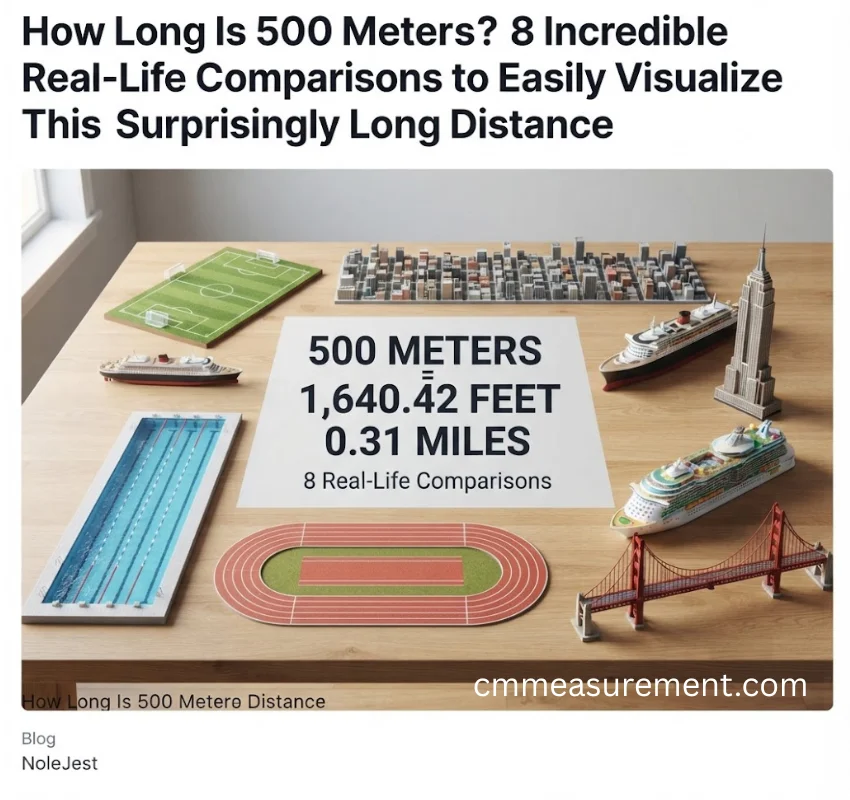
500 meters equals 1,640.42 feet, or about 0.31 miles. That number alone is hard to picture, so this guide turns it into things you already know: football fields, city blocks, a six-minute walk, and more.
Here is exactly how long 500 meters is, in every format you will actually need.
Table of Contents
How Long Is 500 Meters in Feet, Yards, and Miles
500 meters equals 1,640.42 feet, 546.81 yards, and 0.31 miles. In plain English, that is just under a third of a mile, or half a kilometer exactly.
| Unit | Value |
|---|---|
| Feet | 1,640.42 ft |
| Yards | 546.81 yd |
| Miles | 0.31 mi |
| Kilometers | 0.5 km |
Runners and swimmers already have a shortcut for this: 500 meters sits almost exactly between a 400-meter track lap and a half-mile. That single reference point makes the rest of this guide click faster.
What Is 500 Meters? Understanding the Measurement
A meter (m) is the base unit of length in the International System of Units (SI). Since 1983, it has been defined by the speed of light, covering the distance light travels in a vacuum in 1/299,792,458 of a second.
A foot (ft) and mile (mi) belong to the US customary system, the measurement system most Americans use daily.
The formula bridging the two is fixed: 1 meter equals 3.280839895 feet. To convert, multiply meters by that number. For 500 meters, the math looks like this: 500 × 3.280839895 = 1,640.42 feet.
What is an example of 500 meters? A standard 400-meter running track plus one straightaway covers almost exactly this distance, making it one of the cleanest real-world examples of 500 meters in action.
How Long Is 500 Meters Visually? 8 Real-Life Comparisons
Numbers stick better once you attach them to something visual. Here are eight comparisons that show what 500 meters looks like in familiar terms.
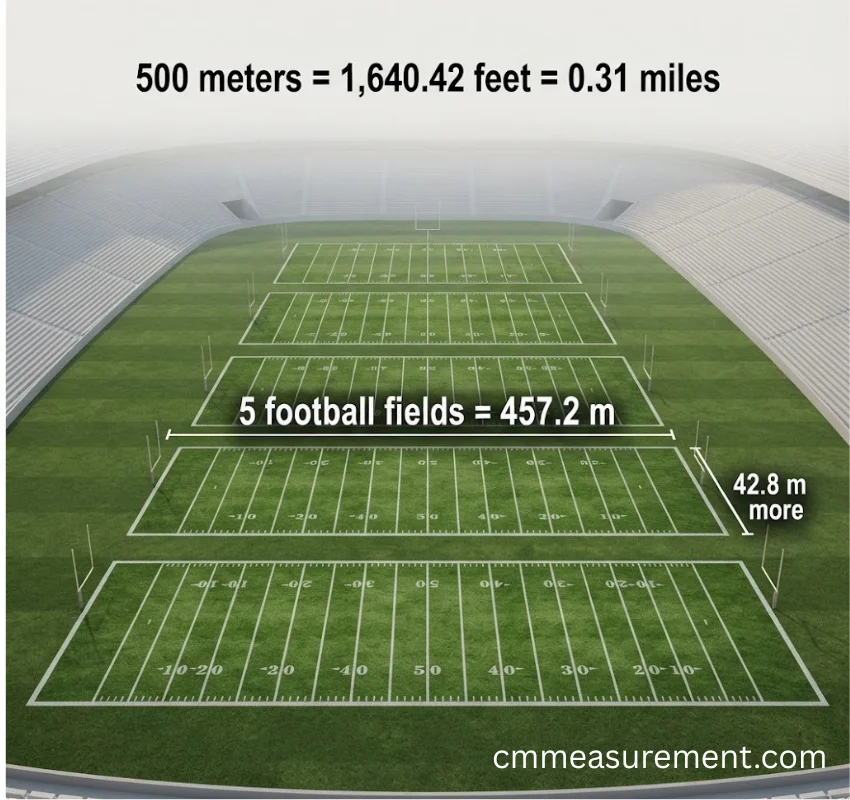
Just over 5 football fields. An NFL field of play, goal line to goal line, measures 91.44 meters. Line up five of them and you have covered 457.2 meters, just 43 meters short of the full 500. This directly answers how far 500 meters is in football fields: just over five, or about four and a half if you count the end zones too.
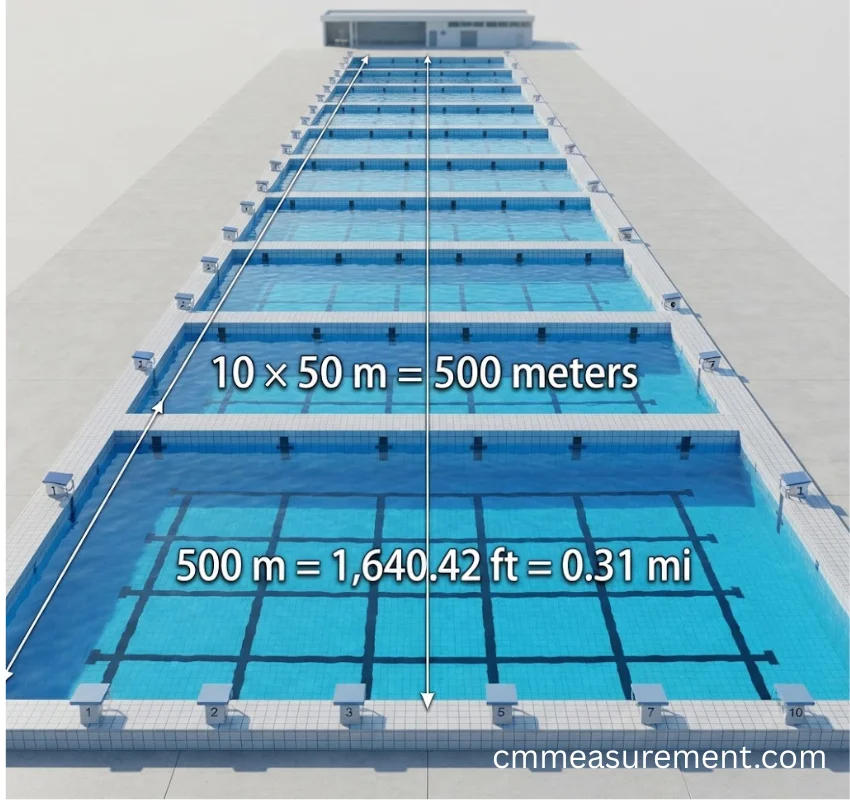
10 Olympic swimming pools end to end. A regulation Olympic pool measures exactly 50 meters. Ten of them laid in a row equal 500 meters on the nose, a comparison swimmers use constantly for pacing.
1.25 laps around a standard track. Most high school and college running tracks measure 400 meters per lap. 500 meters is one full lap plus a quarter more, roughly the distance from the start line to the far straightaway a second time.
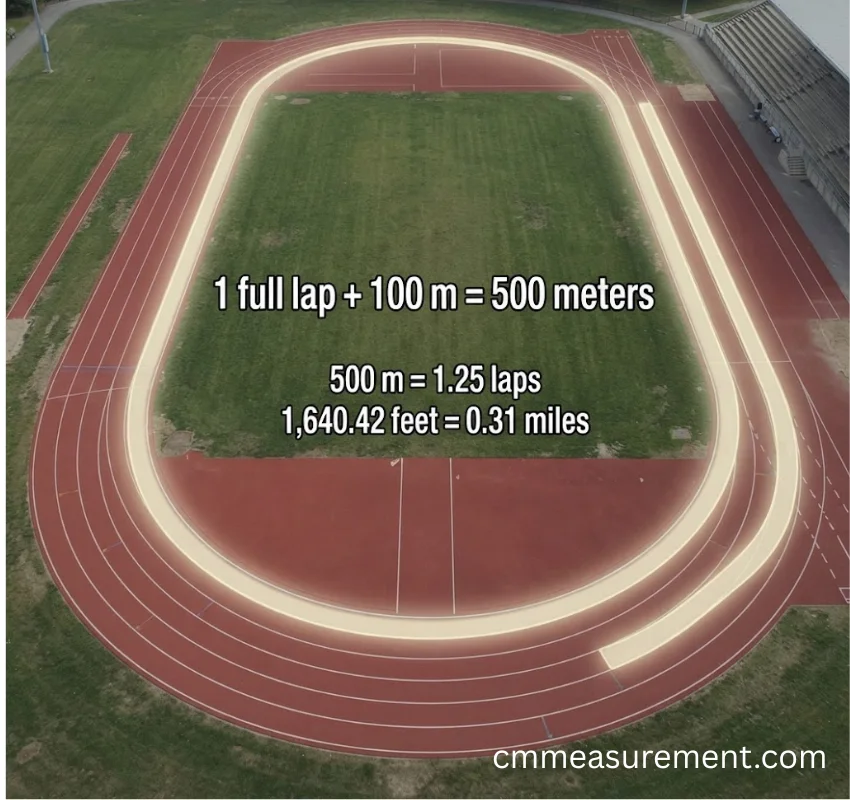
About 5 to 6 average city blocks. A typical American city block runs close to 300 feet, or 91 meters. Walk past five or six of them and you have covered roughly 500 meters, depending on the city’s grid.
Must Visit: How Long Is 100 mm? 7 Real-Life Examples (Explained for US Readers)
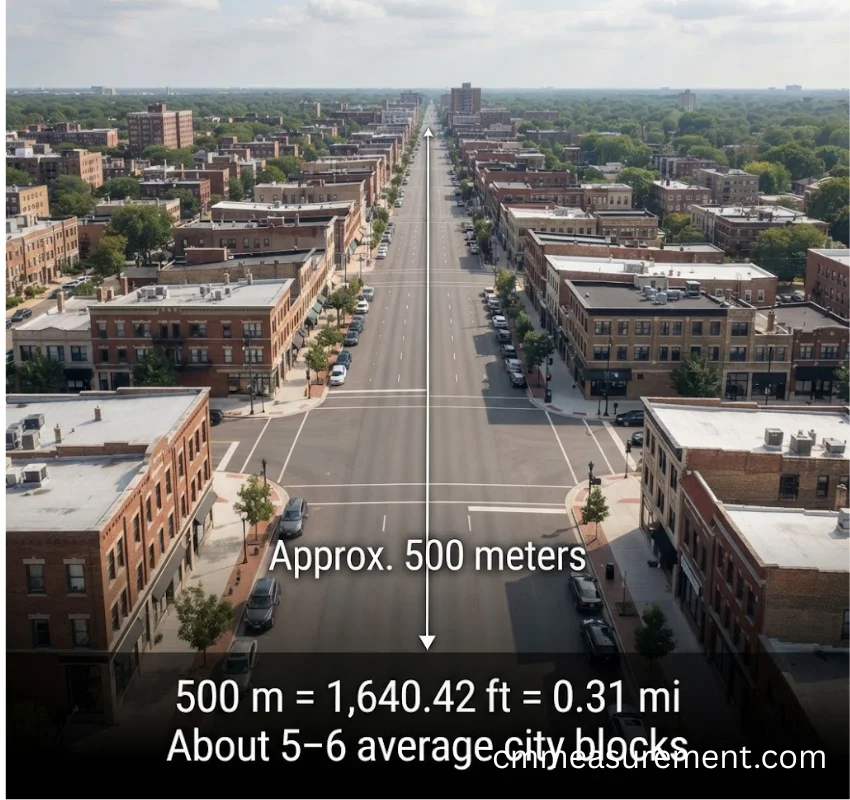
Nearly twice the length of the Titanic. The famous ocean liner measured 269 meters stem to stern. 500 meters stretches almost two Titanics laid end to end.
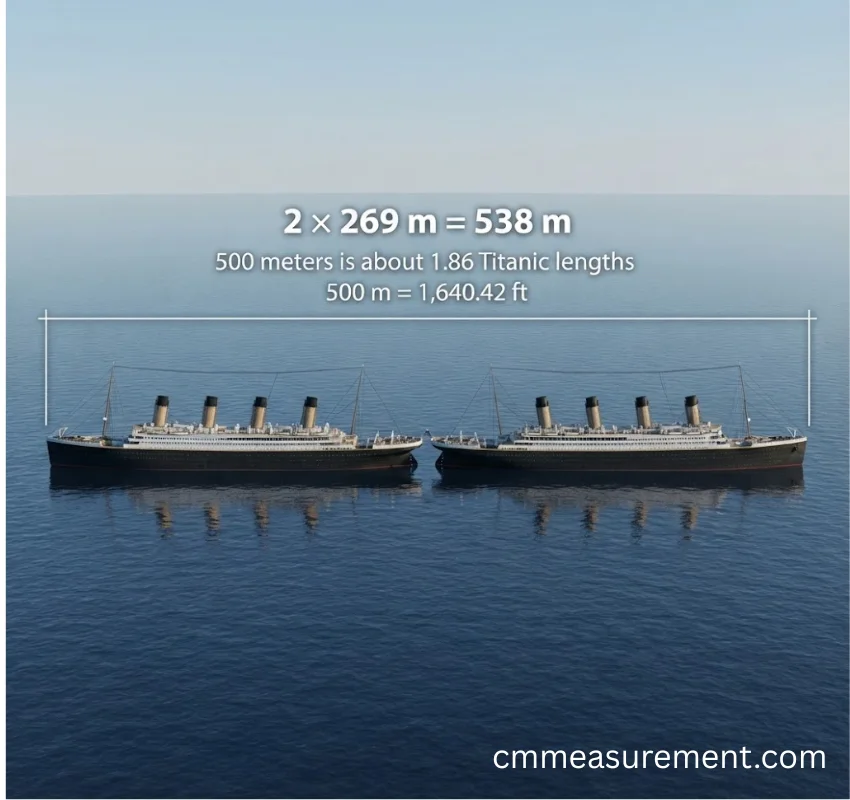
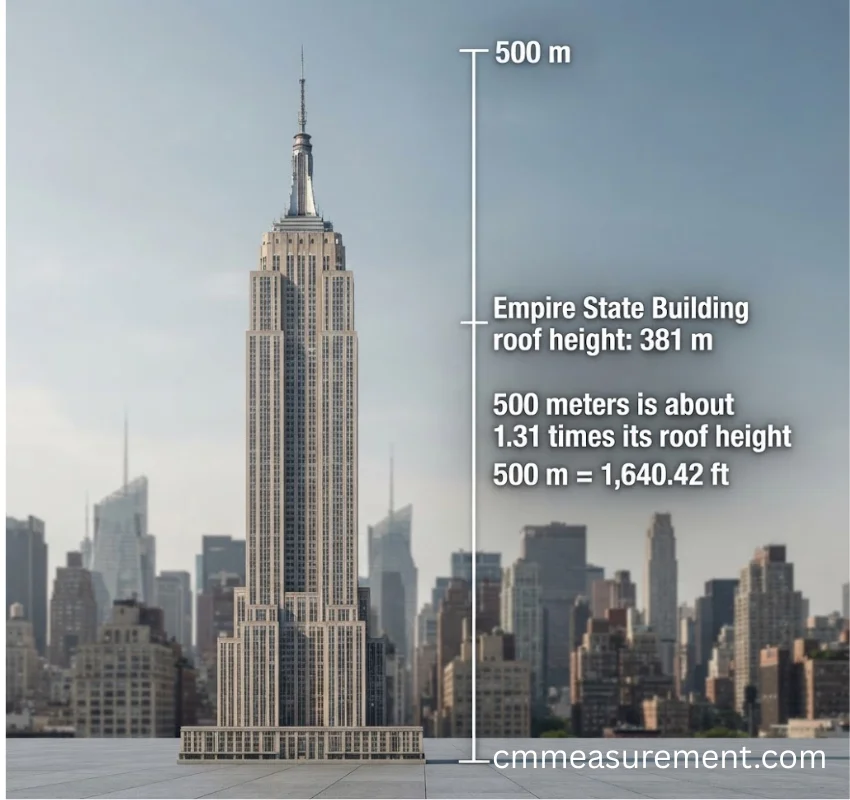
About 1.3 times taller than the Empire State Building. The building’s roof sits at 381 meters. If you tipped it on its side, 500 meters would stretch about 30 percent past its full length.
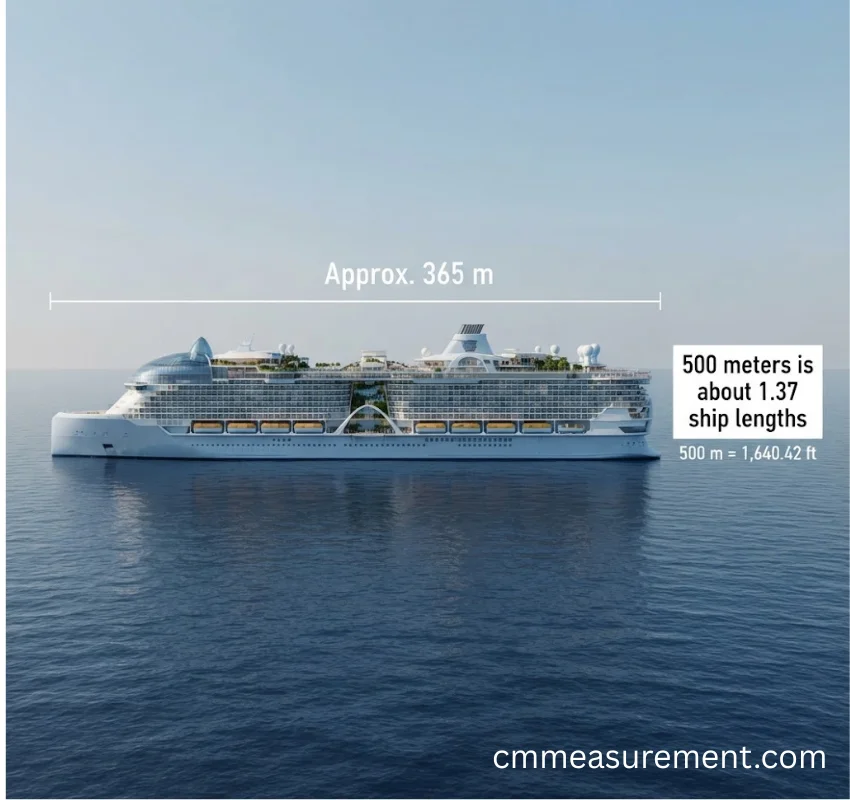
Around 1.4 times the length of the world’s largest cruise ship. The Icon of the Seas measures roughly 365 meters. 500 meters covers that entire ship plus almost another third of its length again.
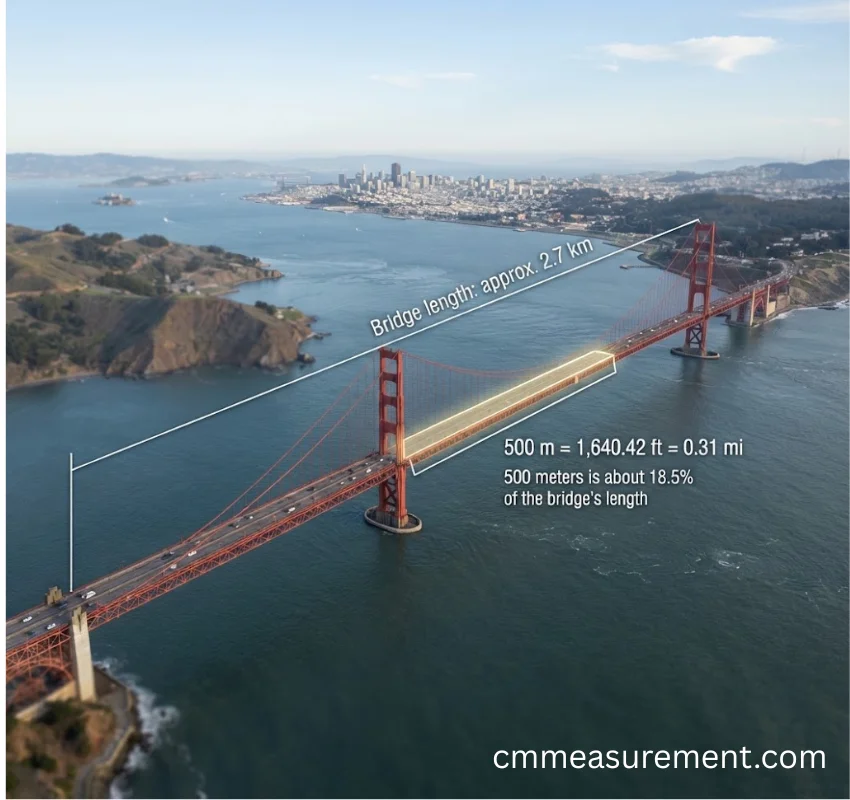
Just under one-fifth of the Golden Gate Bridge. The bridge spans about 2.7 kilometers total. 500 meters covers close to 20 percent of that famous crossing.
How Long Does It Take to Walk 500 Meters
Walking 500 meters takes about 6 minutes at an average adult pace of roughly 3.1 miles per hour, or 1.4 meters per second. That is the direct answer to how long is 500 meters to walk.
Pace changes this number quickly. A brisk walk can cut it closer to 5 minutes, while a relaxed stroll might stretch it to 7 or 8 minutes. Jogging covers the same ground in about 2 to 3 minutes.
How many steps is 500 meters to walk? Based on an average adult step length of 2.2 to 2.5 feet (0.67 to 0.76 meters), walking 500 meters takes roughly 650 to 700 steps. Taller people with longer strides land closer to the lower end; shorter strides push the count higher.
500 Meters Conversion Chart
Nearby values help confirm you are reading the right number, especially when a race distance or spec sheet rounds up or down.
| Meters | Feet | Yards | Miles |
|---|---|---|---|
| 400 m | 1,312.34 ft | 437.45 yd | 0.25 mi |
| 450 m | 1,476.38 ft | 492.13 yd | 0.28 mi |
| 500 m | 1,640.42 ft | 546.81 yd | 0.31 mi |
| 550 m | 1,804.46 ft | 601.49 yd | 0.34 mi |
| 600 m | 1,968.50 ft | 656.17 yd | 0.37 mi |
FAQs
How long is 500 meters to walk?
Walking 500 meters takes about 6 minutes at an average pace of 3.1 miles per hour. Faster walkers finish closer to 5 minutes, while a slower stroll can take up to 8 minutes.
How long is 500 meters visually?
500 meters looks like just over 5 football fields laid end to end, or 10 Olympic swimming pools in a row. Both give an accurate sense of the distance without needing a measuring wheel.
What is 500 meters compared to?
500 meters compares closely to 1.25 laps around a standard 400-meter track, or roughly 5 to 6 average American city blocks walked back to back.
What is an example of 500 meters?
A standard 400-meter track plus one extra straightaway is a clean real-world example of 500 meters. So is the length of ten Olympic swimming pools placed end to end.
How many steps is 500 m to walk?
Walking 500 meters takes roughly 650 to 700 steps for the average adult, based on a typical step length of 2.2 to 2.5 feet. Step count varies with height and stride.
How far is 500 meters in football fields?
500 meters equals just over 5 football fields, measuring the field of play only at 91.44 meters each. Counting the end zones, it works out to about 4.5 full fields.
Calculation
500 meters converts to 1,640.42 feet, or 0.31 miles, a distance you can now picture as five football fields, ten Olympic pools, or a brisk six-minute walk. Keep the 3.28-feet-per-meter conversion in mind and every future distance in meters becomes just as easy to visualize.

Timmy Zeeshan is the founder and lead editor of CM Measurement, where he writes and maintains a growing library of unit conversion tools and practical measurement guides. With a background in engineering and a long-standing interest in everyday math problems, Timmy started CM Measurement after growing frustrated with cluttered, ad-heavy converter websites that made simple conversions harder than they needed to be.