A recipe calls for 10 grams of yeast. A jeweler weighs a gemstone. A shipping app asks for package weight in grams. But what does 10 grams actually feel like?
This guide answers how heavy 10 grams really is, using 15 small, familiar objects. No scale required to picture it.
Table of Contents
How Heavy Is 10 Grams? (Quick Conversion Facts)
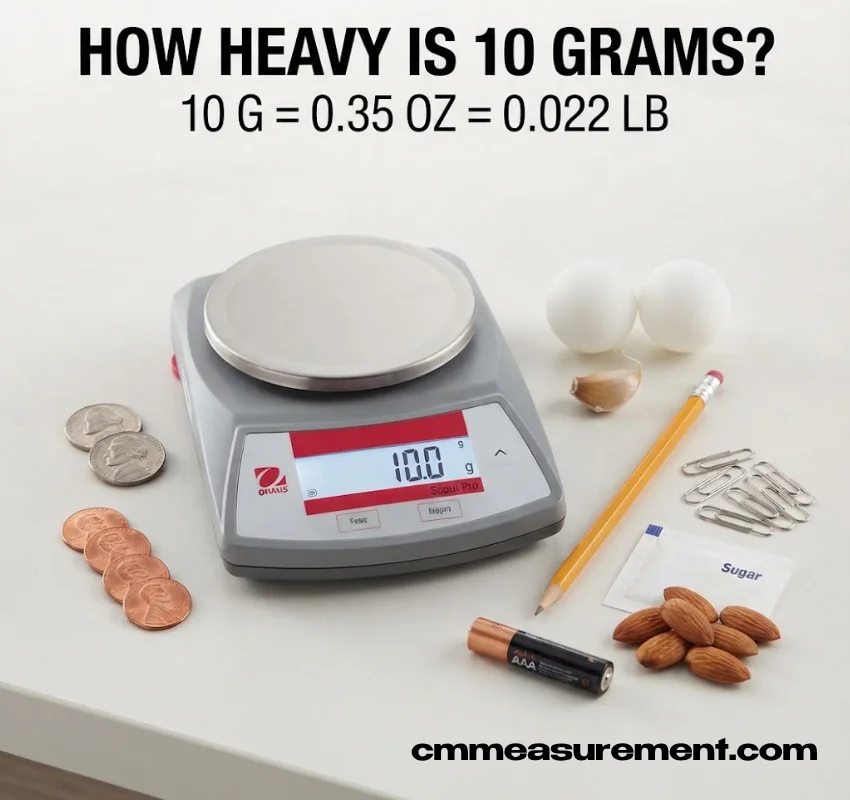
10 grams equals 0.01 kilograms, 0.35 ounces, and 0.022 pounds.
That’s the technical side. Here’s the physical one.
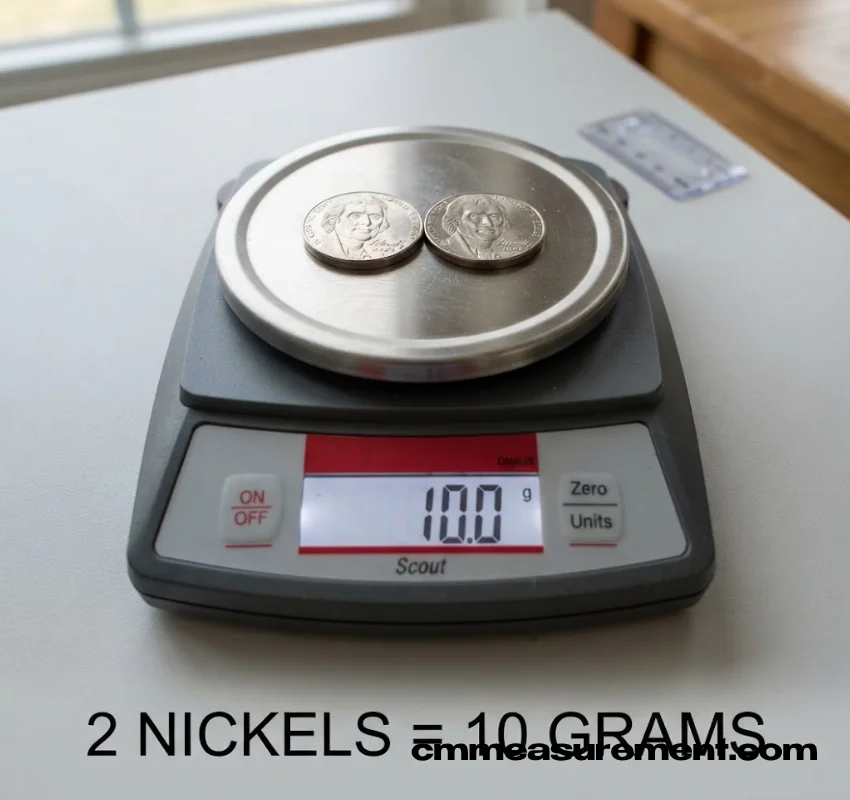
Hold two nickels in your palm. That light, almost forgettable pressure — that’s 10 grams. It’s barely noticeable weight, the kind you’d overlook if it slipped into your pocket unnoticed.
In jewelry and gemology, 10 grams equals exactly 50 carats, since one carat is fixed at 0.2 grams. This is why carats matter so much when weighing small, valuable items like stones and precious metals.
Quick reference:
- 10 grams = 0.01 kilograms
- 10 grams = 0.35 ounces
- 10 grams = 0.022 pounds
- 10 grams = 50 carats
- 10 grams = 10,000 milligrams
What does 10 grams feel like in your hand? Think of it as a whisper-light weight — noticeable only if you’re paying attention, and easy to lose track of if you’re not.
15 Real-Life Examples of 10 Grams
Small numbers need small, familiar objects. Here are 15 things that weigh close to 10 grams, grouped for easy scanning.
Everyday Household & Office Items
Two US nickels weigh exactly 10 grams. Each nickel is minted to a strict 5-gram standard, making this the most reliable no-scale reference around.
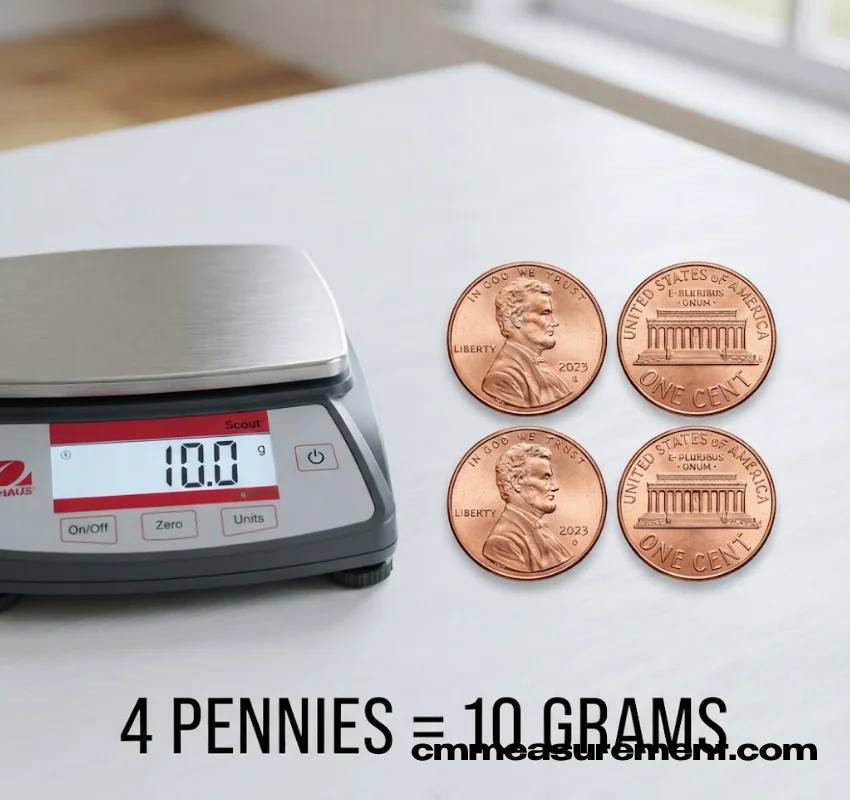
Four US pennies also equal 10 grams, since each modern penny — copper-plated zinc since 1982 — weighs precisely 2.5 grams.
Must Visit: How Heavy Is 100 Grams? 20 Amazing & Powerful Real-Life Examples
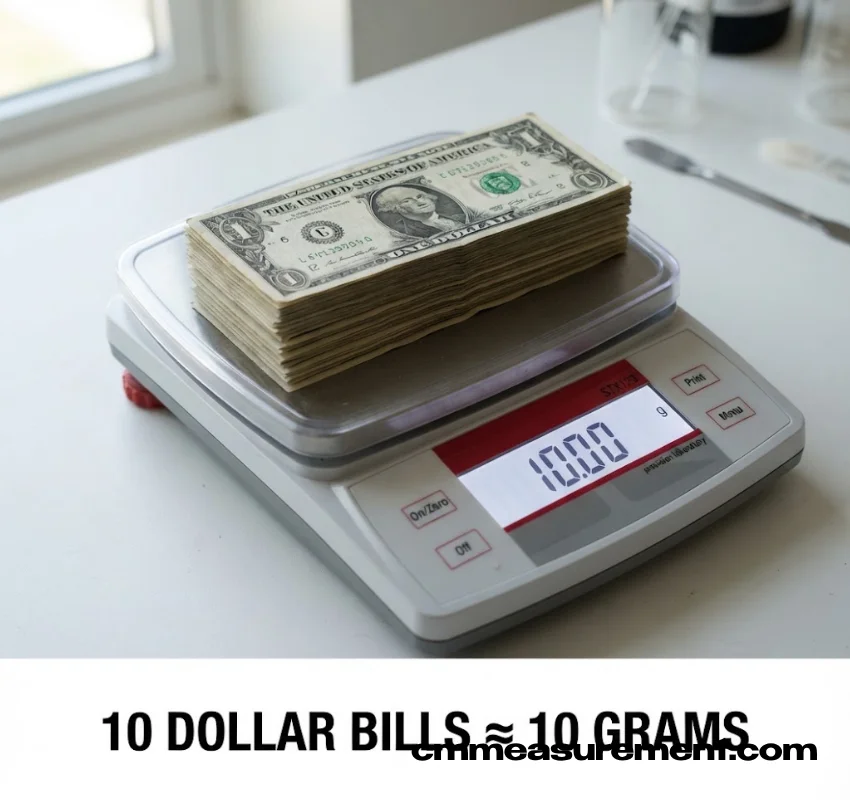
Ten US dollar bills weigh close to 10 grams total. Each bill, made from a cotton-linen blend rather than standard paper, weighs about 1 gram.
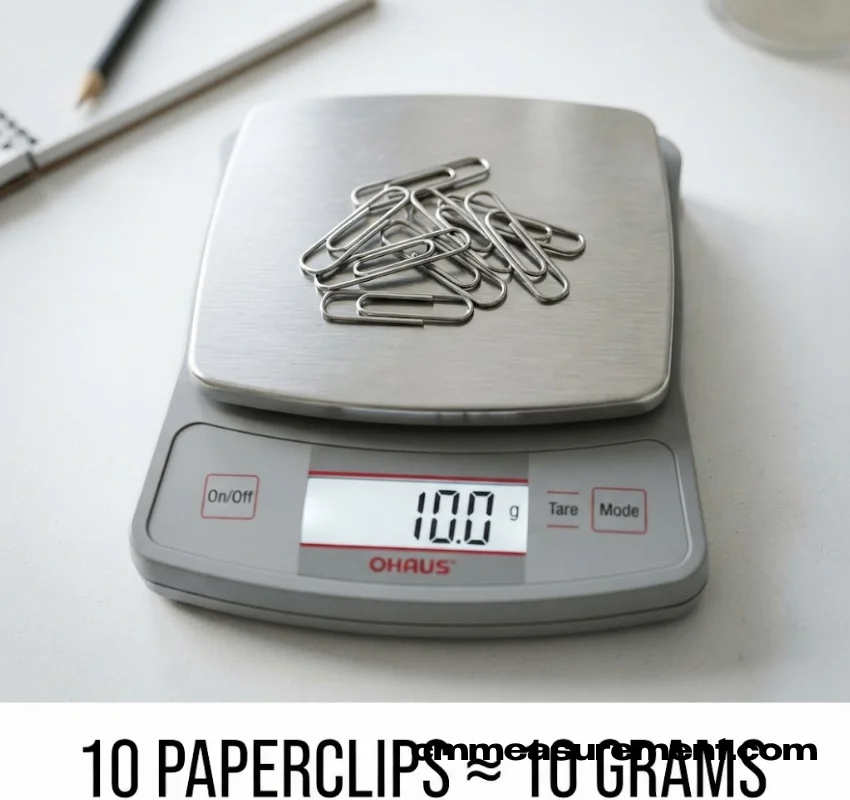
Ten standard paperclips weigh close to 10 grams combined, since each metal clip runs about 1 gram.
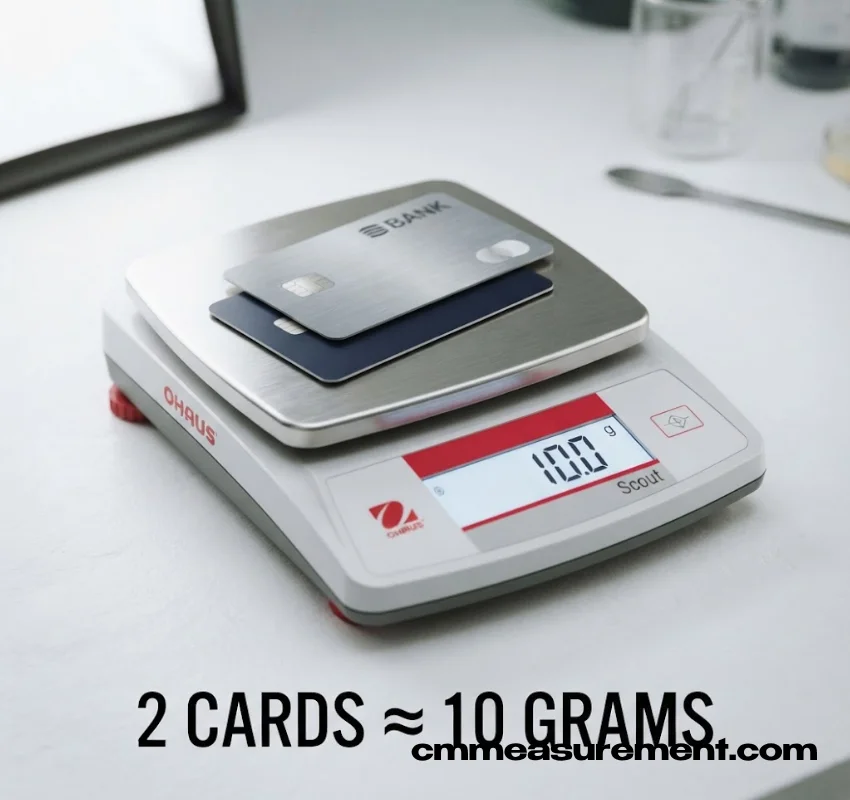
Two credit or debit cards together weigh close to 10 grams, with each card — made from PVC or polyester resin — weighing about 5 grams.
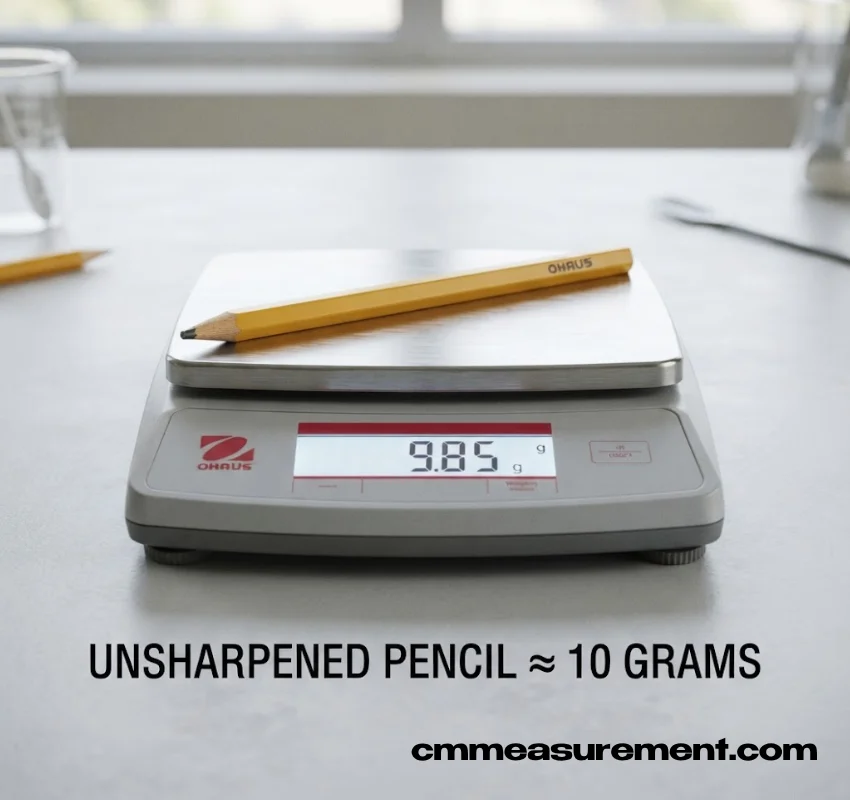
One unsharpened graphite pencil weighs between 7 and 10 grams, making it a close, familiar reference for students and office workers alike.
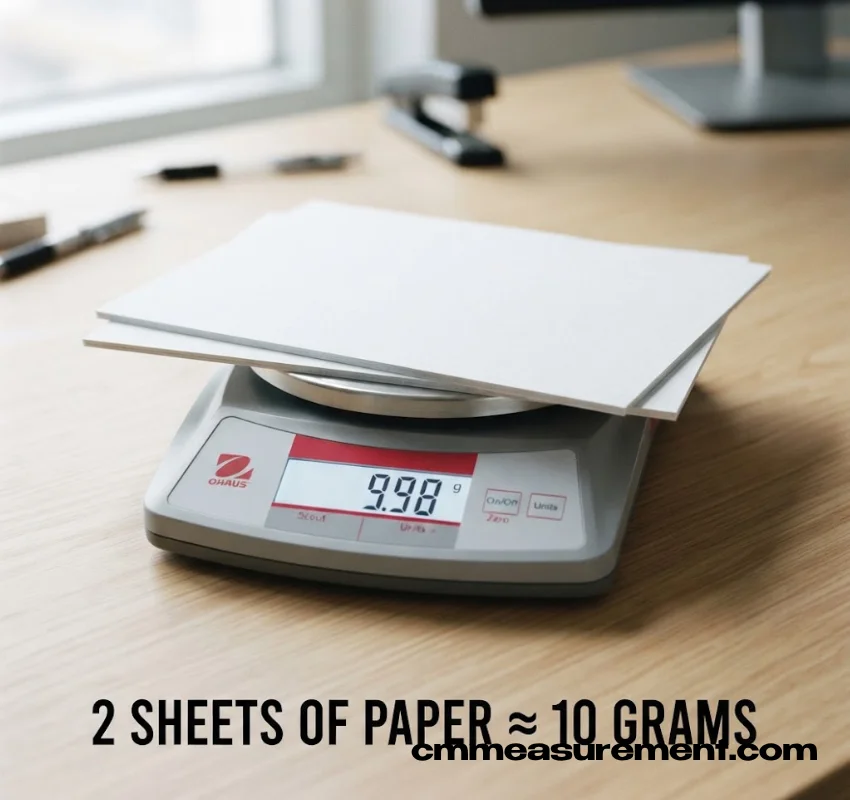
Two sheets of standard printer paper weigh close to 10 grams together, based on the common 80 gsm (grams per square meter) paper weight used in most offices.
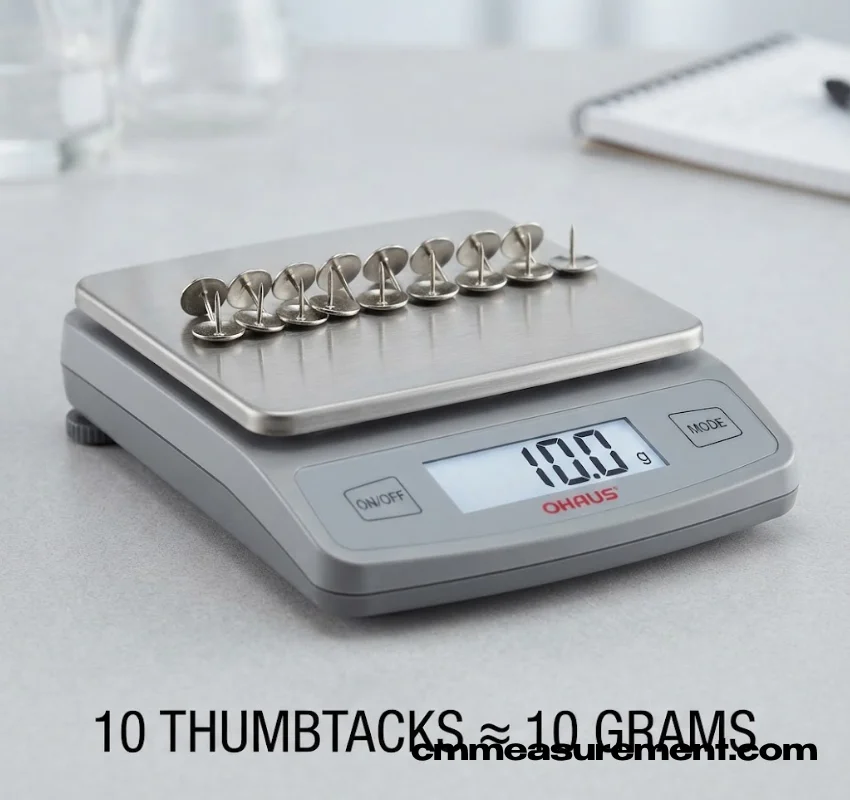
Ten metal thumbtacks weigh close to 10 grams, since each tack runs about 1 gram — nearly identical to a paperclip.
Food & Kitchen Examples of 10 Grams
Two level teaspoons of granulated sugar weigh close to 10 grams, a useful benchmark for baking accuracy.
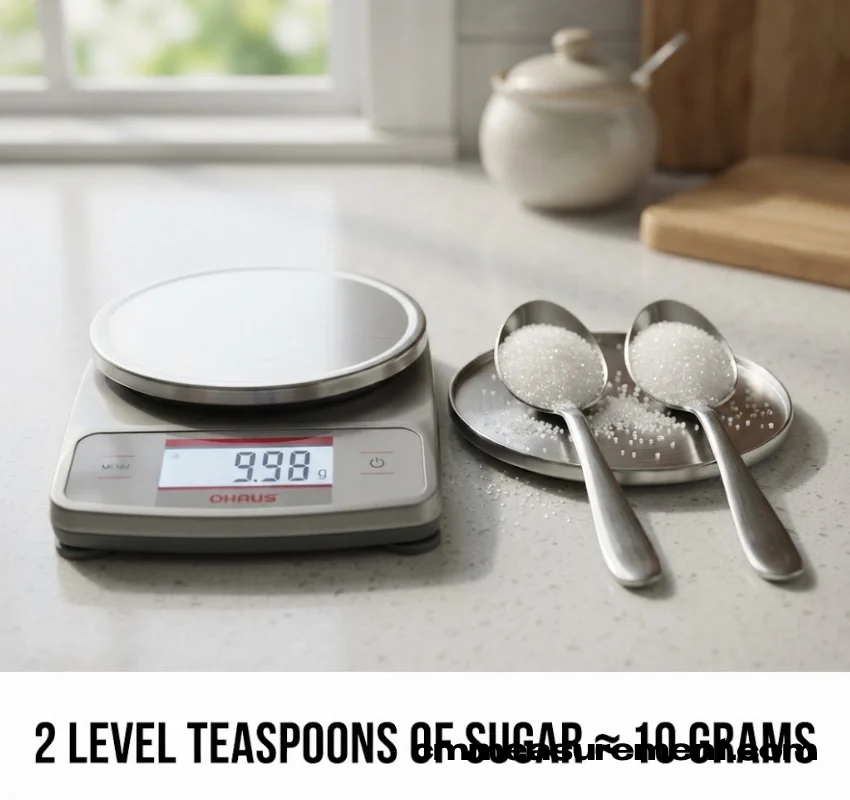
One tablespoon of all-purpose flour weighs about 8 grams, landing just under the 10-gram mark.
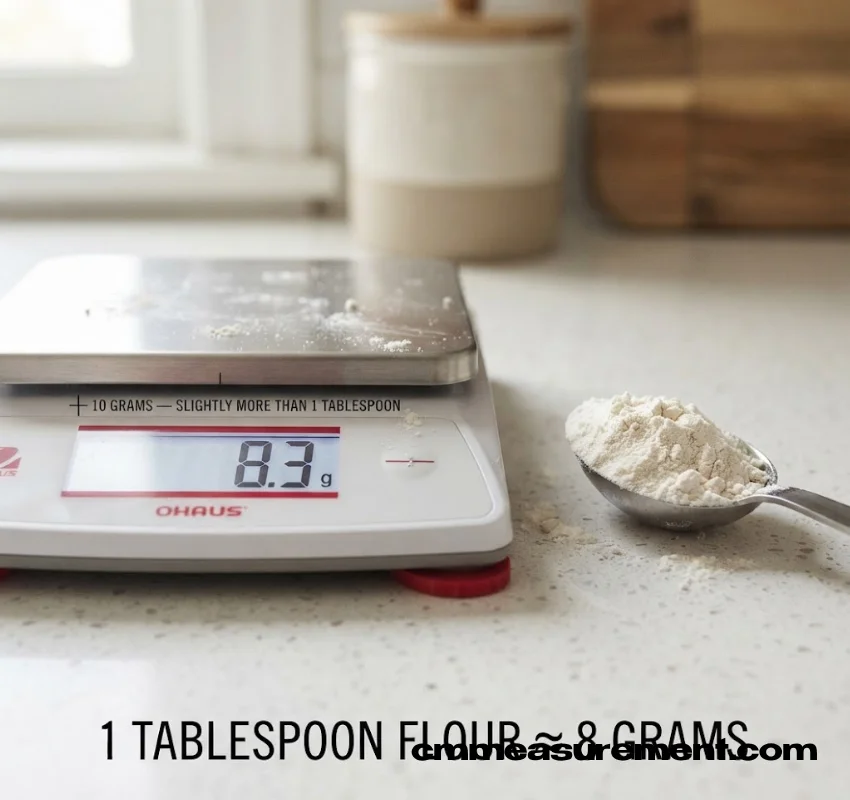
Seven to ten whole almonds add up to roughly 10 grams, since each almond weighs between 1 and 1.5 grams.
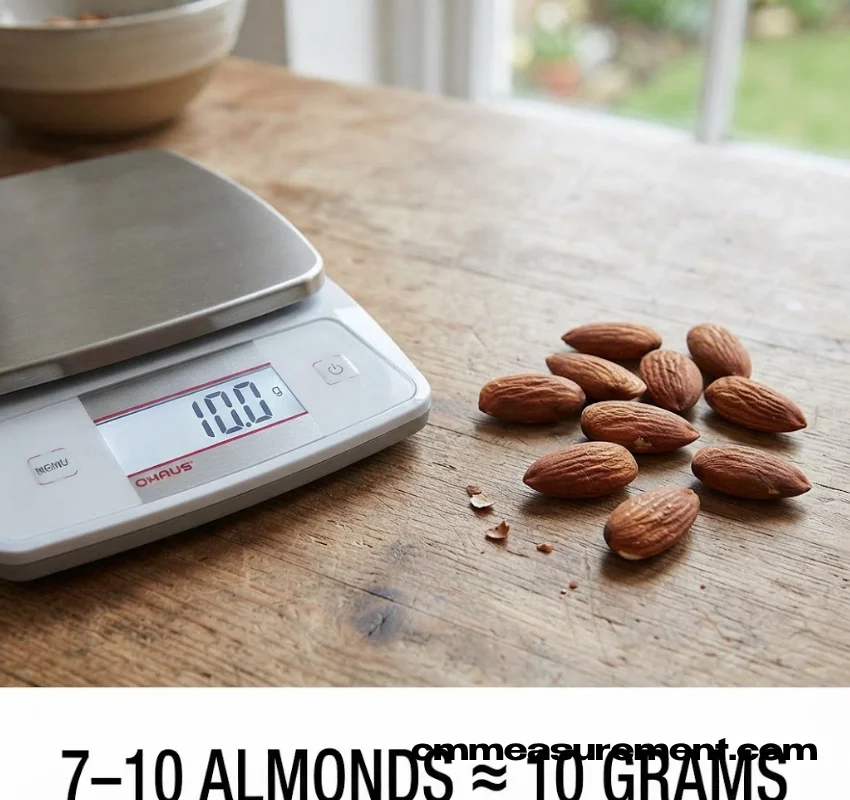
A small packet of sugar from a coffee shop typically weighs close to 10 grams — a portion you’ve likely torn open without ever noticing the weight.
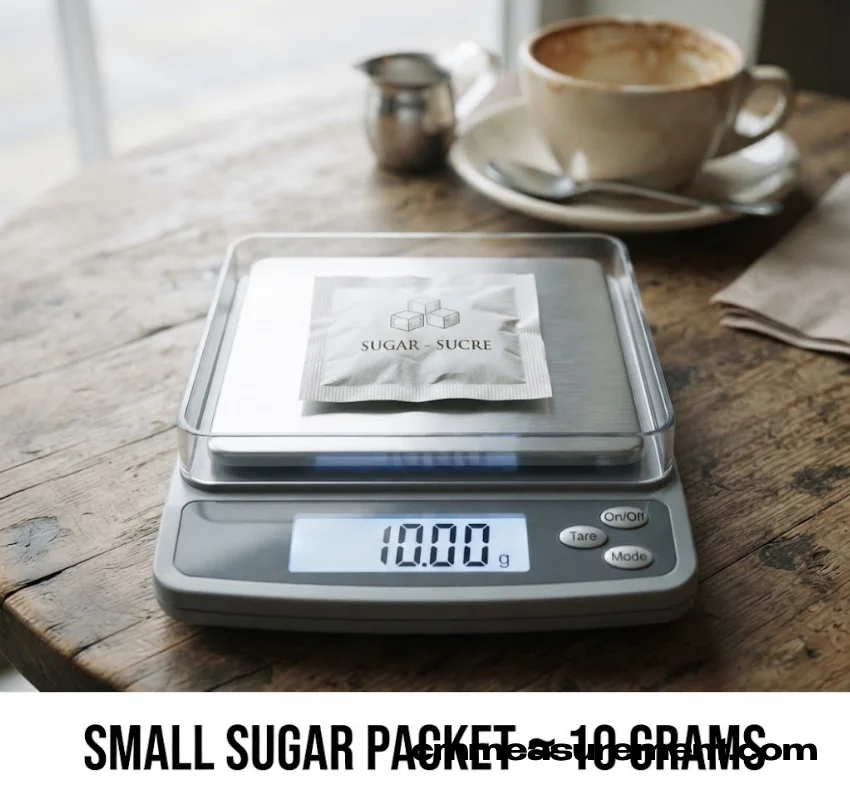
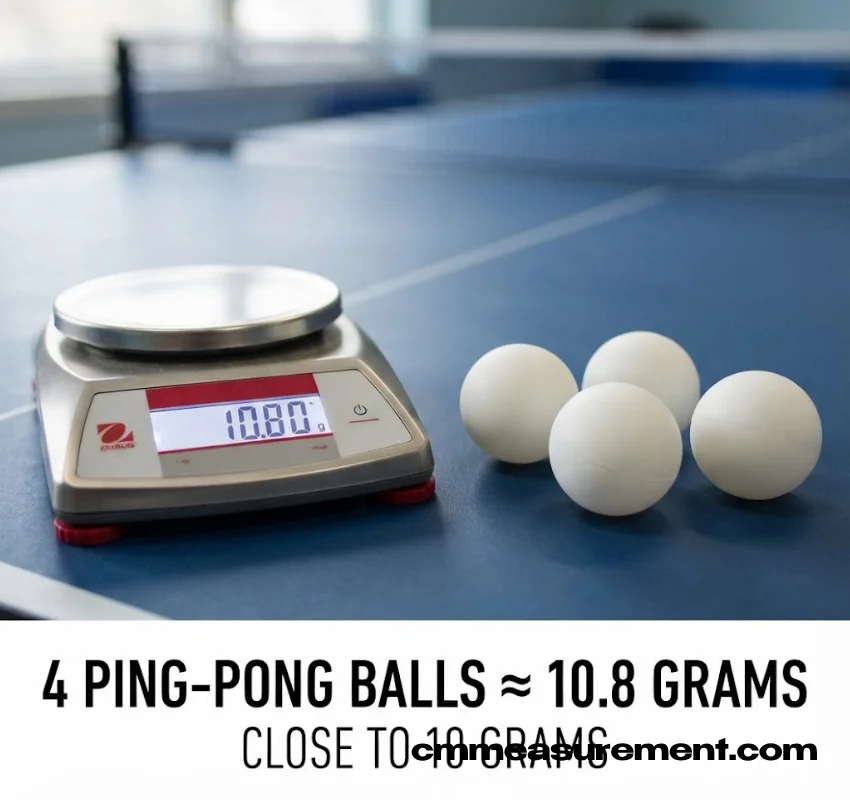
Four regulation ping-pong balls weigh close to 10.8 grams combined, since each ball, built to 40mm official standards, weighs 2.7 grams.
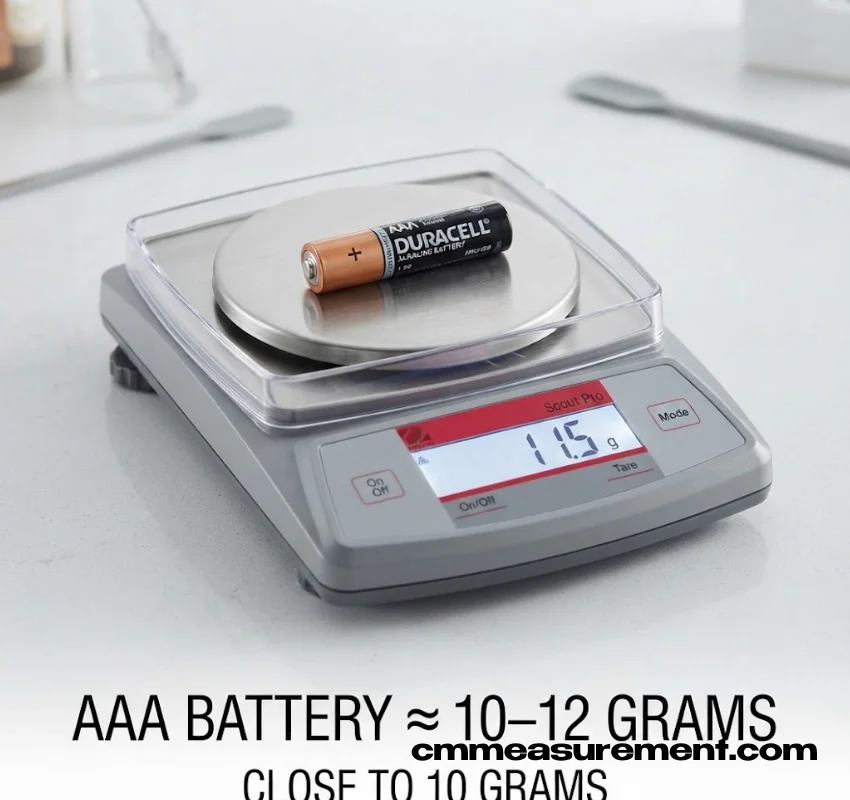
A single AAA battery weighs close to 10 to 12 grams, noticeably lighter than its AA counterpart.
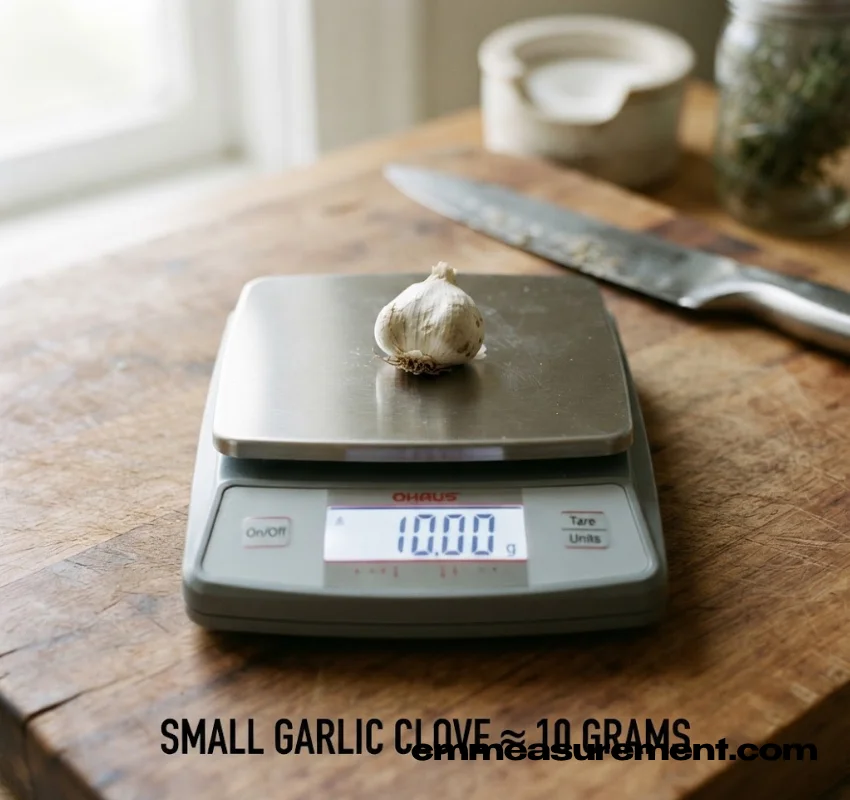
A small garlic clove typically weighs close to 10 grams — a handy kitchen-adjacent reference for cooks measuring by feel.
Together, these 15 items build a full mental toolkit — the next time something feels this light, you’ll instantly know it’s near 10 grams.
How Much Is 10 Grams Visually?
Weight and visual size don’t always line up. A cotton ball can look huge yet weigh almost nothing; a small coin looks tiny but carries real heft. This mismatch comes down to density — how tightly packed the material is.
Picture a short stack of two nickels, barely taller than a fingernail. Or a single unsharpened pencil, thin and unassuming on a desk. Both represent roughly 10 grams, yet neither looks impressive to the eye.
Compare that to a small sugar packet — flat, papery, and easy to overlook — sitting next to four ping-pong balls, which take up far more visual space for a nearly identical weight. This is exactly why visual comparison beats raw numbers: your brain remembers shapes and objects, not decimals.
How to Weigh 10 Grams Without a Scale
No digital scale nearby? A few dependable low-tech methods get you close.
Coins and bills offer the most precise results. Two nickels, four pennies, or ten dollar bills all land at exactly 10 grams — a trick that works because US currency and coinage follow strict minting standards.
Kitchen spoons work for dry ingredients, though volume and weight aren’t the same thing. Two level teaspoons of sugar get you close to 10 grams, but always level the spoon with a straight edge instead of scooping and packing — a habit that throws off accuracy in baking.
A makeshift balance scale — a ruler balanced on a pencil as the fulcrum — can compare an unknown object against a known 10-gram reference, like two nickels, until both sides even out.
A digital kitchen scale remains the most accurate method available. Place an empty container on the scale, press the tare button to zero it out, then add your ingredient until the display reads exactly 10 grams. This removes any guesswork caused by ingredient density or measuring technique.
What Is 10 Grams Equivalent To?
Numbers make more sense next to other numbers. Here’s how 10 grams compares to weights you already know.
10 grams versus an ounce: one ounce equals 28.35 grams, so 10 grams is roughly one-third of an ounce — noticeably lighter than most people assume when they picture “an ounce” of something.
10 grams versus a pound: a pound equals 453.6 grams, meaning 10 grams is just over 2% of a pound — a tiny fraction by comparison.
10 grams versus 100 grams: this weight is exactly one-tenth of the more commonly referenced 100-gram benchmark used on nutrition labels worldwide.
In real-world situations, 10 grams shows up more than most people realize — a pinch of spice in cooking, a small gemstone’s weight in jewelry (50 carats), or a lightweight envelope that barely nudges a postal scale.
FAQs
What things weigh 10 grams?
Two US nickels, four pennies, ten dollar bills, an unsharpened pencil, two teaspoons of sugar, and seven to ten almonds all weigh close to 10 grams.
How much is 10 grams visually?
About the size of a short stack of two coins, a single pencil, or a small sugar packet — compact enough to disappear in a closed fist.
What does 10 grams feel like?
A whisper-light weight, similar to holding two nickels — noticeable, but easy to overlook if you’re not paying close attention.
What is 10 grams equivalent to?
Roughly one-third of an ounce, just over 2% of a pound, or exactly 50 carats in jewelry measurement terms.
Conclusion
Ten grams sounds tiny on paper, but it’s tied to things you already touch daily — a couple of coins, a pencil, a spoonful of sugar. Next time a recipe, a scale, or a shipping label mentions 10 grams, you’ll know exactly how light that really is.

Timmy Zeeshan is the founder and lead editor of CM Measurement, where he writes and maintains a growing library of unit conversion tools and practical measurement guides. With a background in engineering and a long-standing interest in everyday math problems, Timmy started CM Measurement after growing frustrated with cluttered, ad-heavy converter websites that made simple conversions harder than they needed to be.