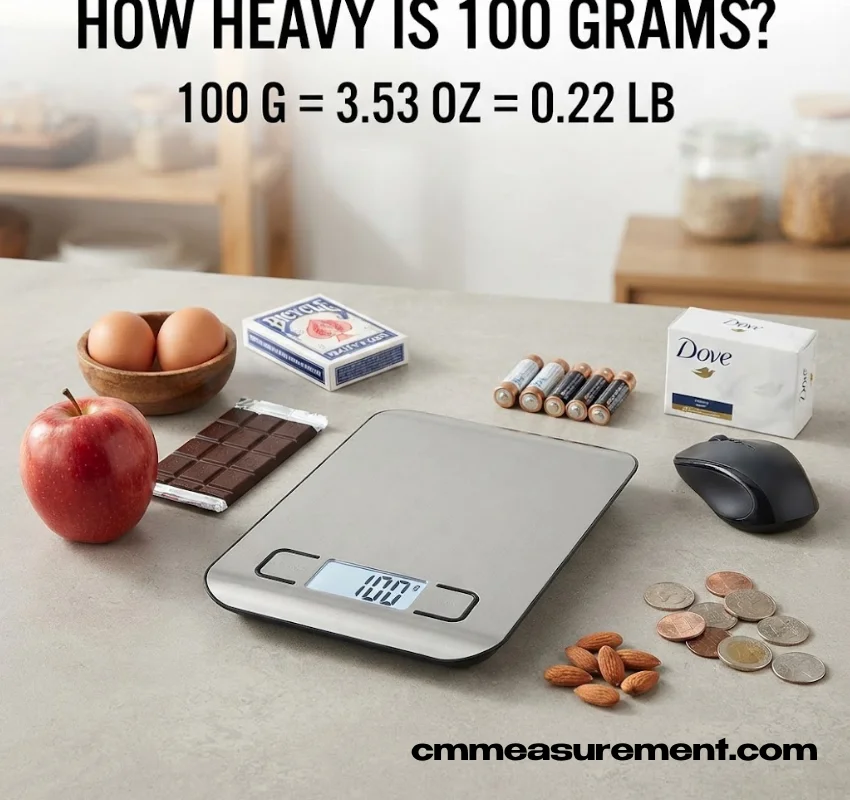
A recipe calls for 100 grams of flour. A shipping label lists 100 grams. Your fitness app tracks 100 grams of protein. But what does that actually feel like in your hand?
This guide answers how heavy 100 grams really is, using 20 everyday objects you already know. No scale needed to understand it.
Table of Contents
How Heavy Is 100 Grams? (Quick Conversion Facts)
100 grams equals 0.1 kilograms, 3.53 ounces, and 0.22 pounds.
That’s the technical answer. Here’s the physical one.
Hold a medium apple in your palm. That gentle, solid weight pressing into your hand — that’s roughly 100 grams. It’s noticeable, but it won’t tire your arm. Think of it as a light, compact weight — heavier than a sheet of paper, lighter than a can of soda.
In metric terms, 100 grams sits at exactly one-tenth of a kilogram, which is why it’s such a common benchmark on nutrition labels worldwide. Most packaged food outside the US lists calories and nutrients “per 100g” for this exact reason.
Quick reference:
- 100 grams = 0.1 kilograms
- 100 grams = 3.53 ounces
- 100 grams = 0.22 pounds
- 100 grams = 100,000 milligrams
Knowing these conversion units helps whether you’re reading a US nutrition label, an imported product, or a digital kitchen scale set to grams.
20 Real-Life Examples of 100 Grams
Numbers alone don’t stick. Objects do. Here are 20 things that weigh close to 100 grams, split into two easy groups.
Everyday Household & Office Items
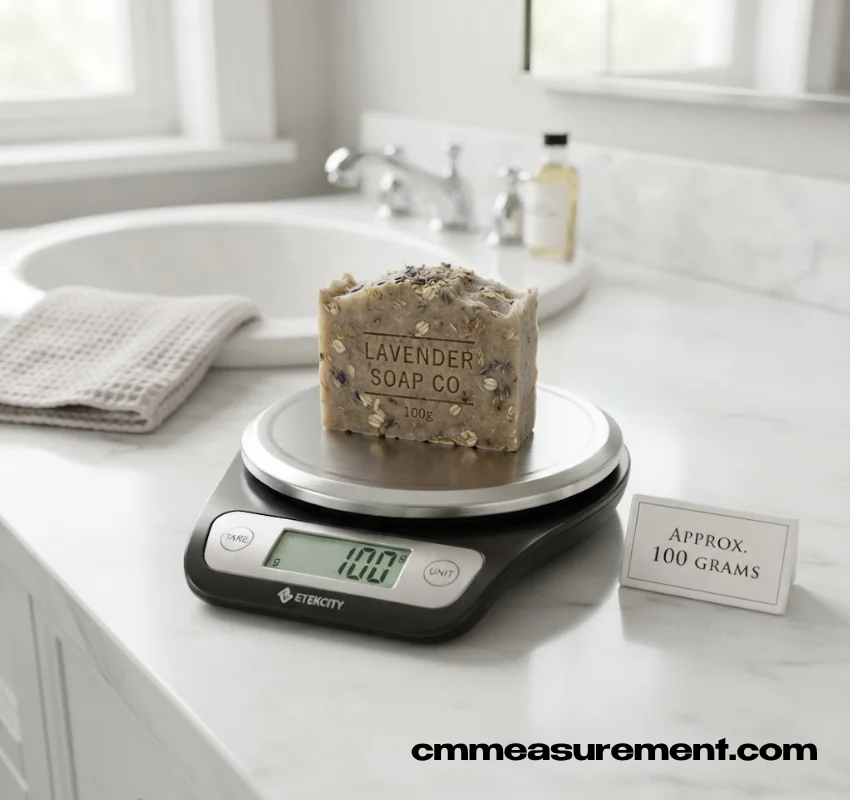
A bar of soap typically weighs 100 to 150 grams, roughly 3 inches by 2 inches — a size you already handle daily.
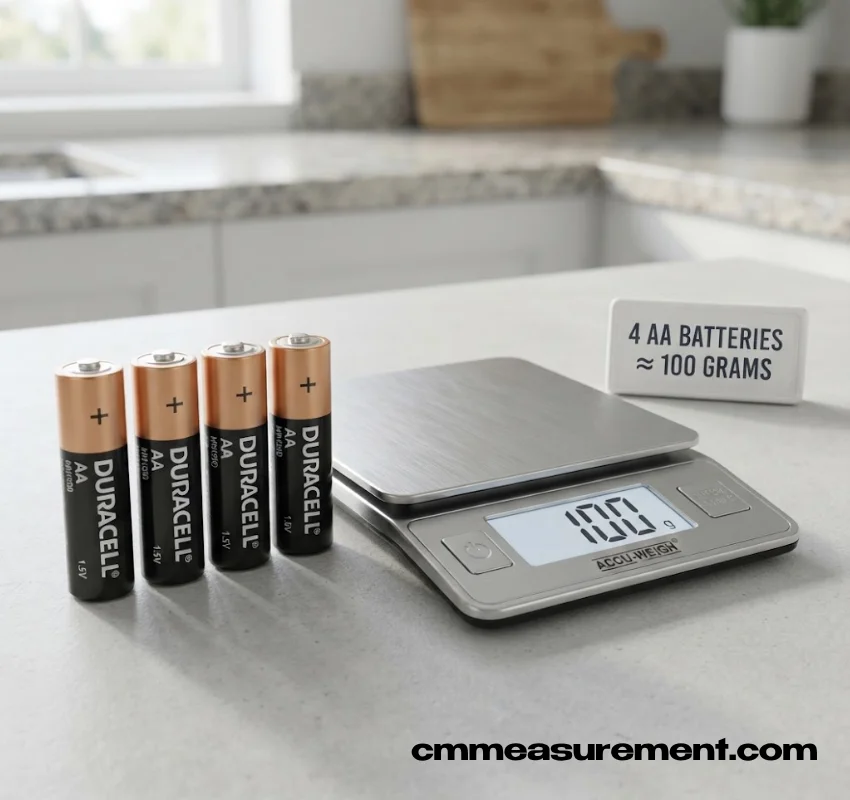
Four AA batteries together weigh close to 100 grams, since each alkaline battery runs about 25 grams. Grab four from a junk drawer for an instant check.
Twenty US nickels weigh exactly 100 grams. Each nickel is minted to a precise 5-gram standard, making this the most accurate no-scale method available.
Must Visit: How Long Is 16 Inches? 13 Helpful Real-Life Examples
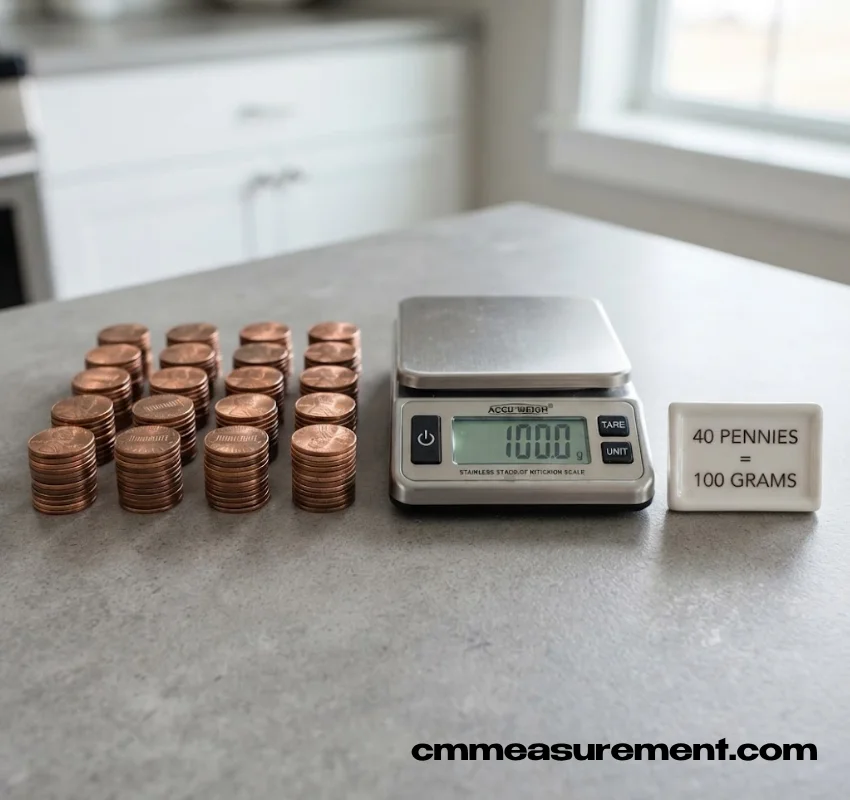
Forty US pennies also equal 100 grams. Modern pennies, made of copper-plated zinc since 1982, weigh 2.5 grams each.
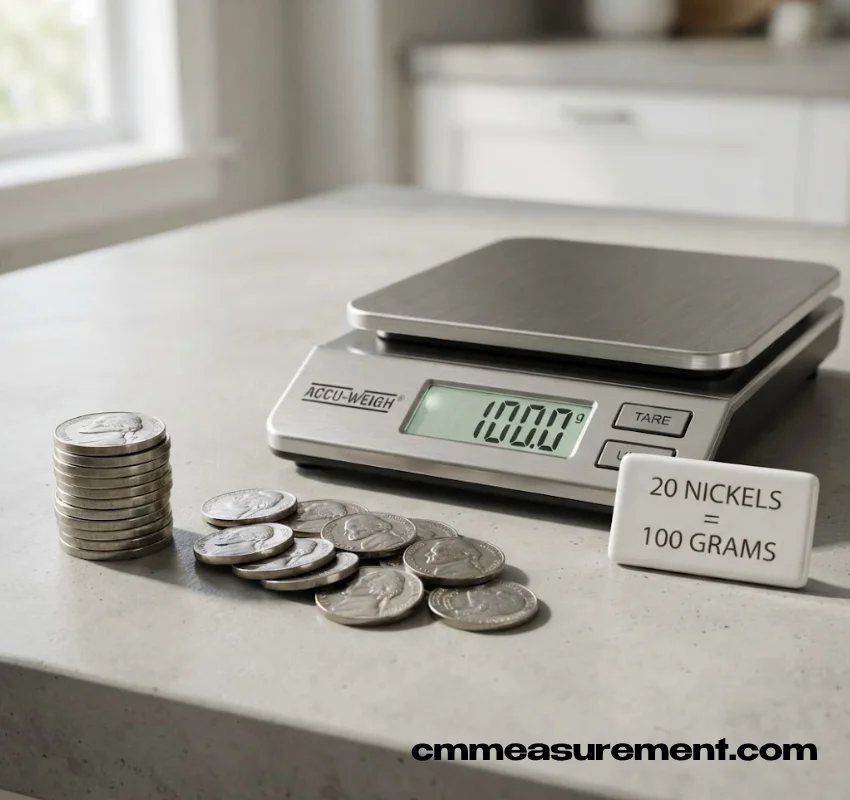
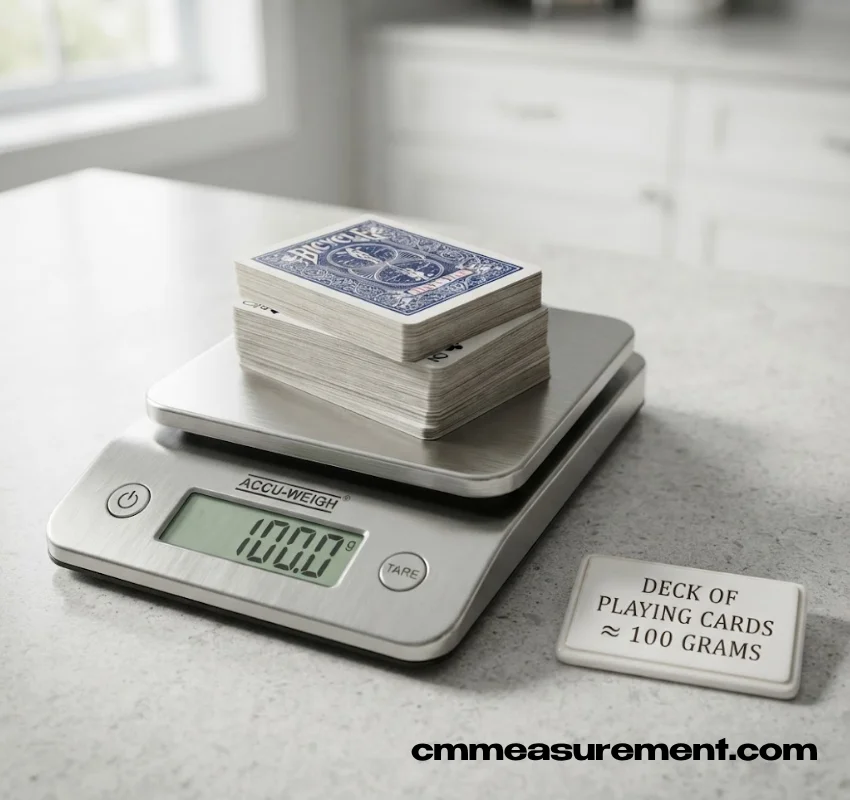
A deck of playing cards, including the two jokers, weighs approximately 100 grams — a classic reference used by nutritionists for portion sizing.
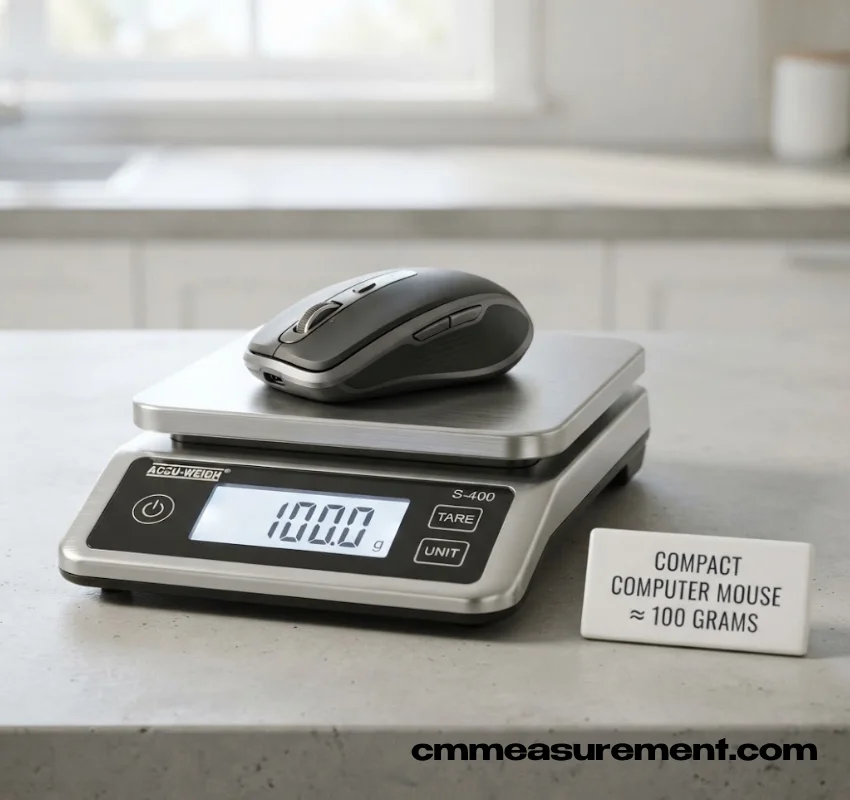
A small computer mouse, like the Apple Magic Mouse, weighs almost exactly 100 grams — a detail tech reviewers mention often when comparing ergonomics.
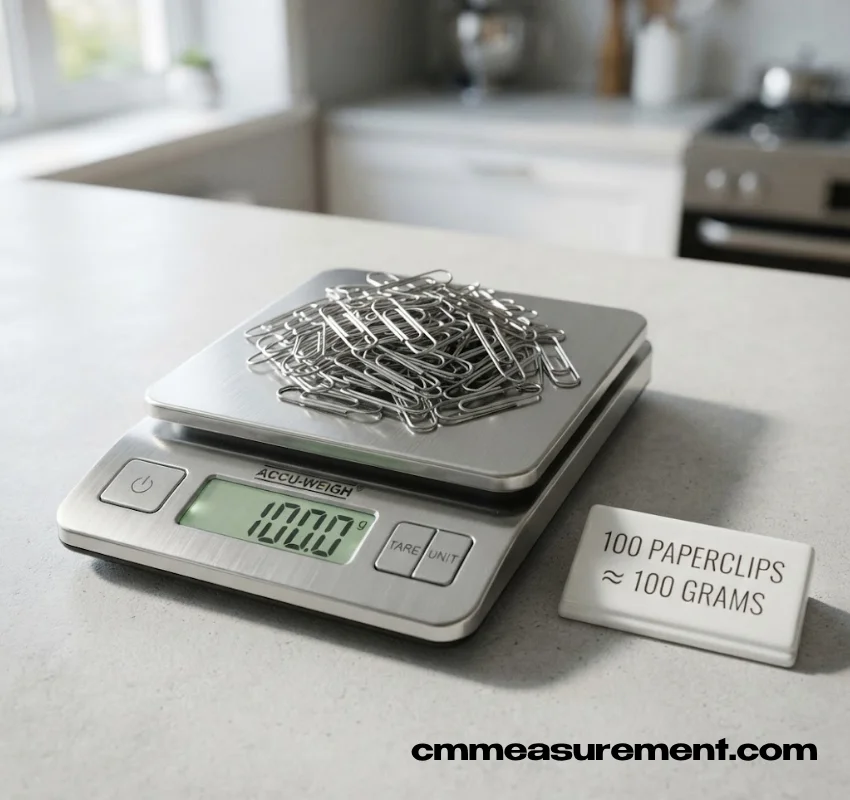
One hundred standard paperclips weigh close to 100 grams combined, since each clip runs about 1 gram.
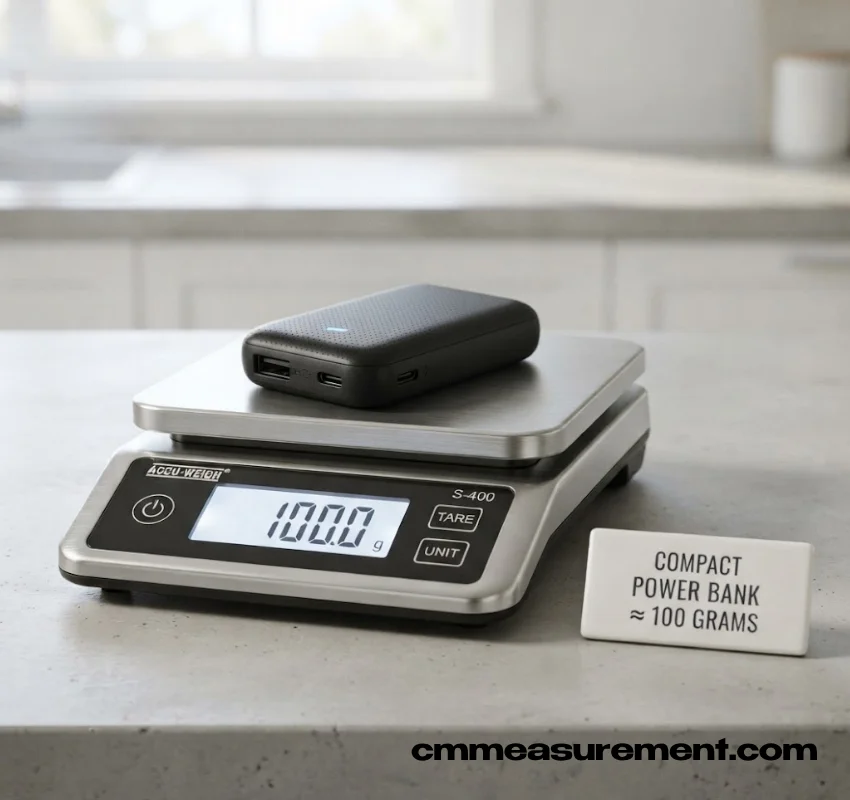
A smartphone power bank in the compact/travel category often lands near 100 grams, giving tech users a familiar handheld comparison.
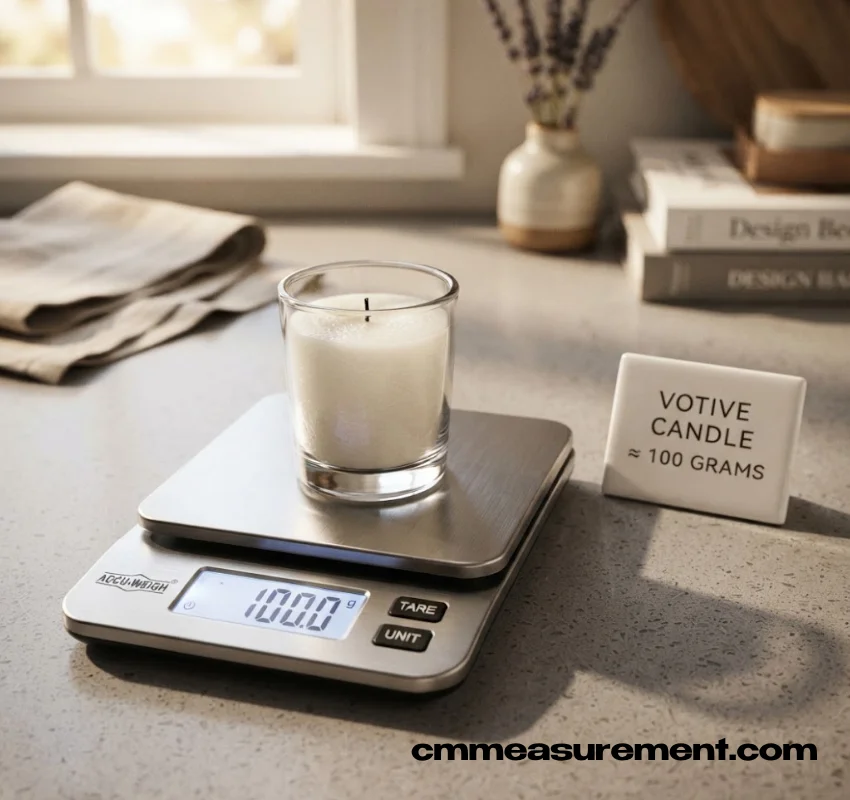
A votive candle, the small kind used in home decor, commonly weighs close to 100 grams before the wax burns down.
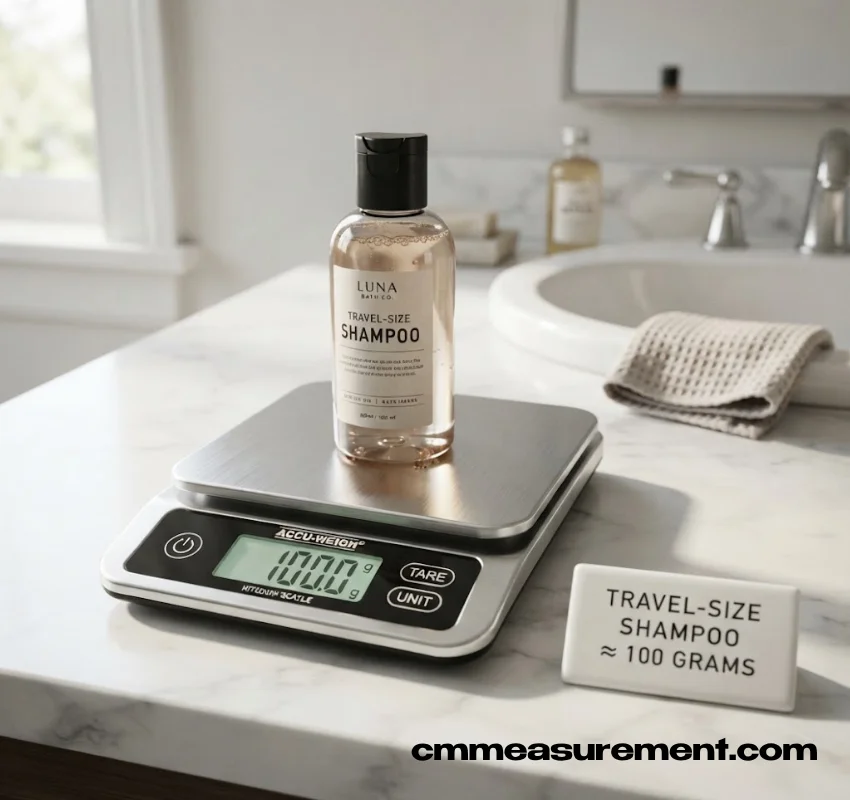
A standard bar of hotel soap or a travel-size shampoo bottle frequently sits in the 90–110 gram range.
Food & Kitchen Examples of 100 Grams
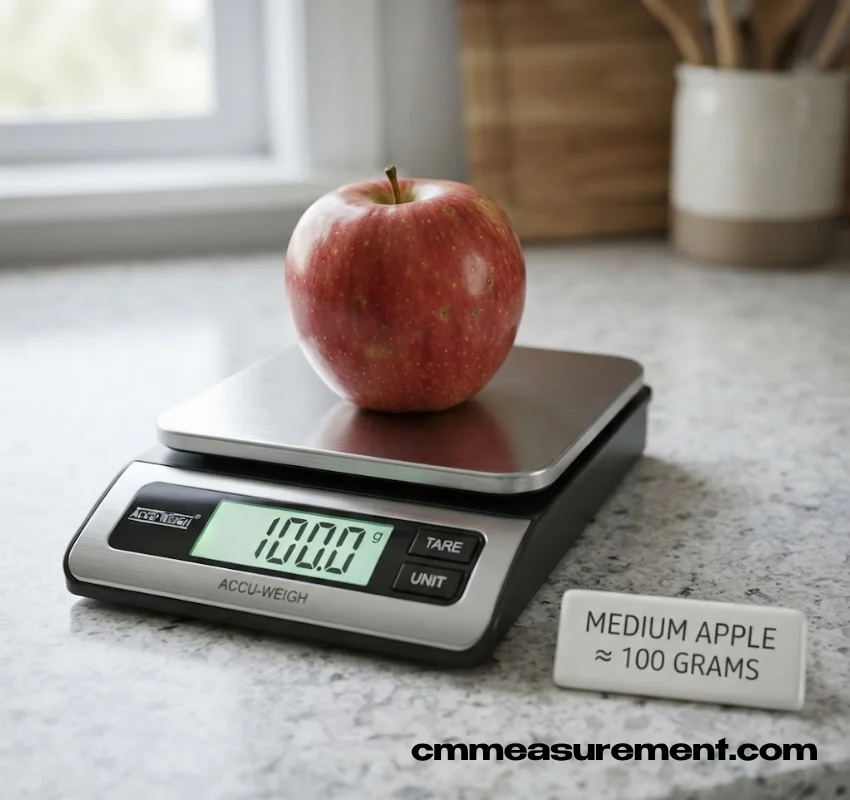
A medium apple weighs 100 to 200 grams, with most landing right around the 100-gram mark — a natural, grab-and-go reference.
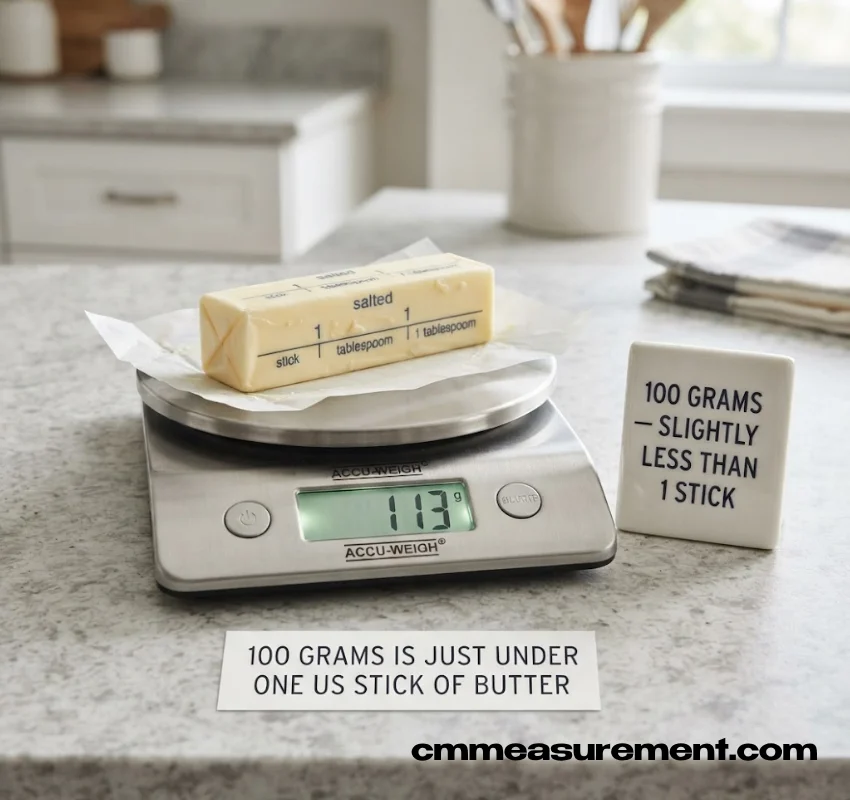
One stick of US butter weighs 113 grams, just slightly over 100g, and comes with measurement lines on the wrapper for easy division.
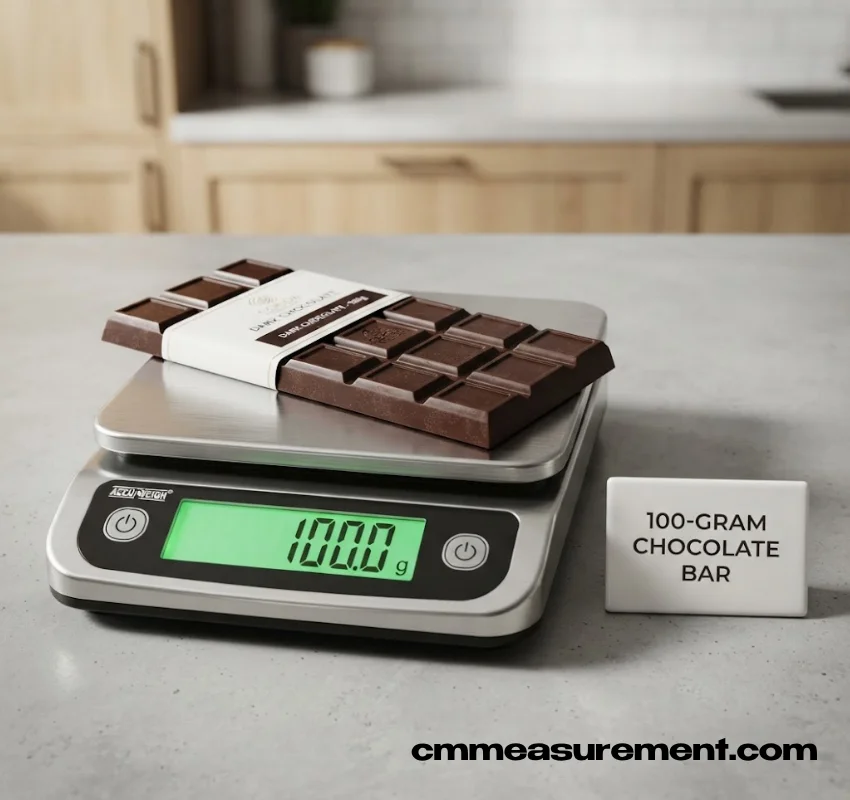
A standard chocolate bar is often packaged at exactly 100 grams, making it one of the most precise food-based references available.
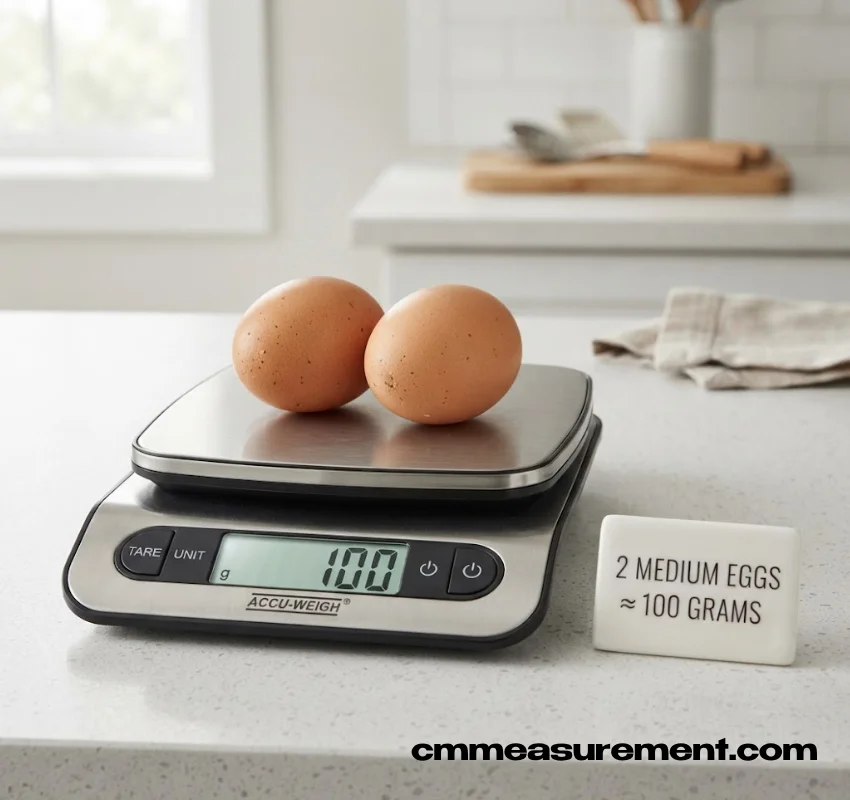
Two medium eggs together weigh close to 100 grams, since each egg runs about 50 grams raw or boiled.
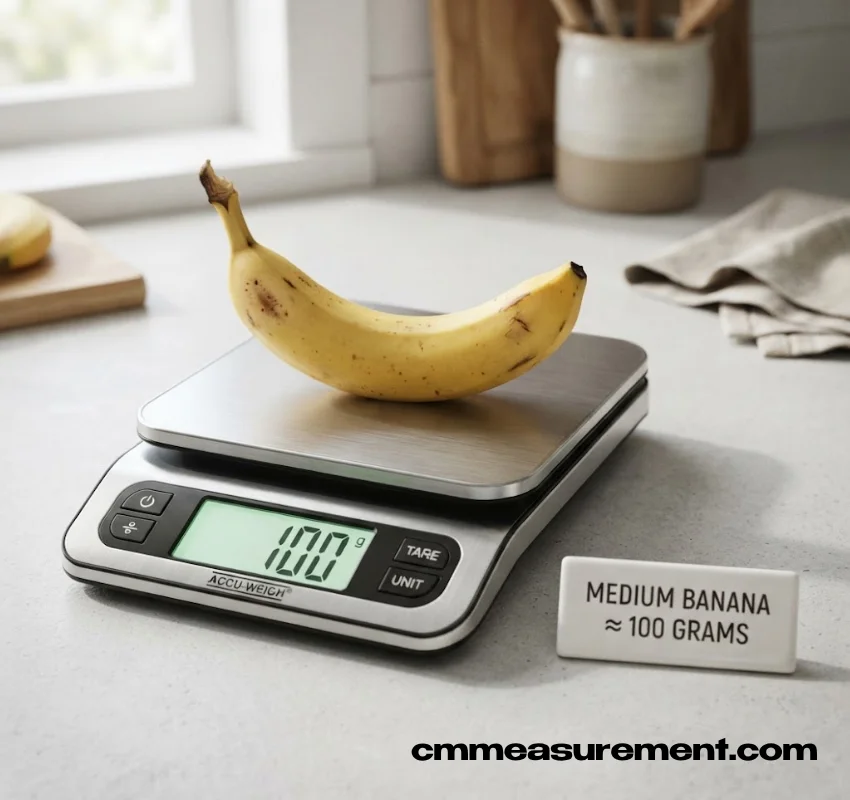
A medium banana, roughly 7 to 8 inches long, weighs 100 to 150 grams — a portable weight reference found in almost any kitchen.
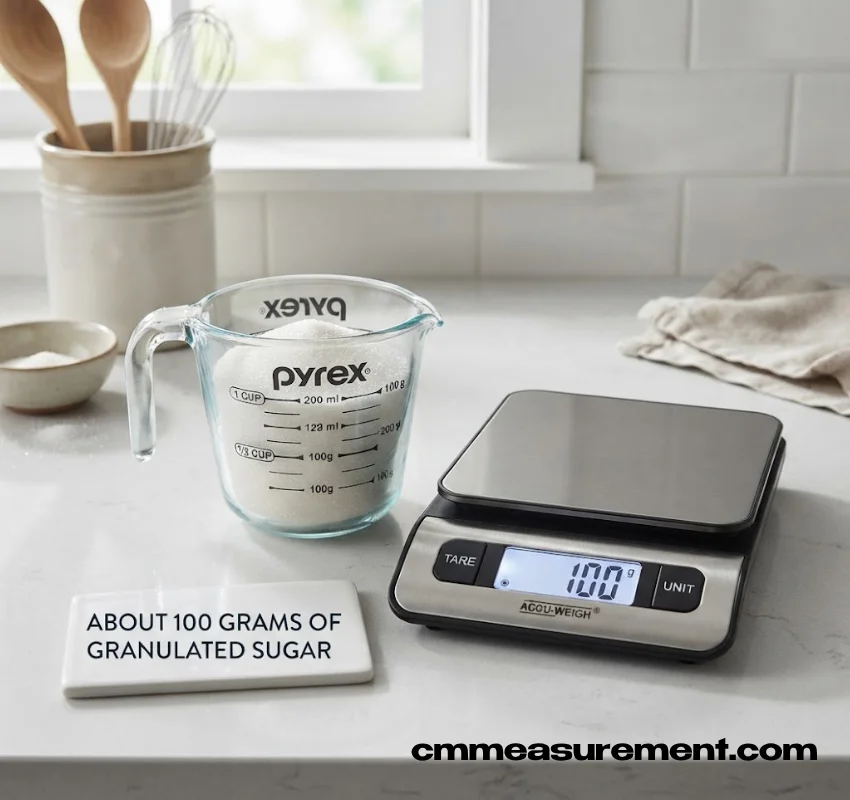
Half a cup of granulated sugar or table salt weighs close to 100 grams, useful for bakers eyeballing a recipe.
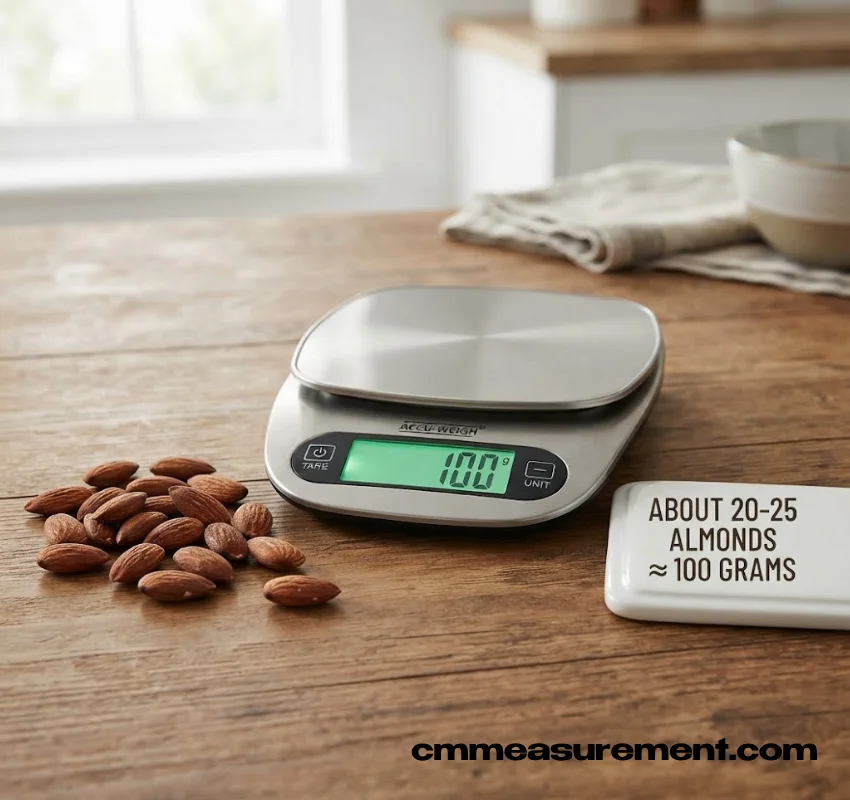
About 20 to 25 whole almonds add up to roughly 100 grams, or about a small handful.
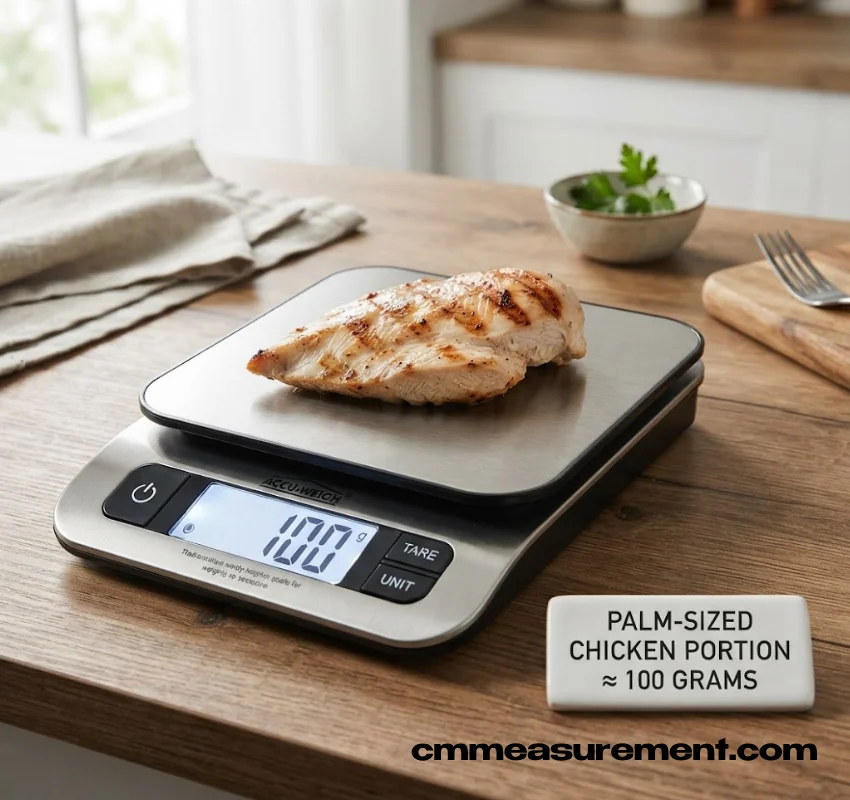
A cooked chicken breast portion the size of your palm — not counting fingers — weighs close to 100 grams, a benchmark used widely for protein tracking.
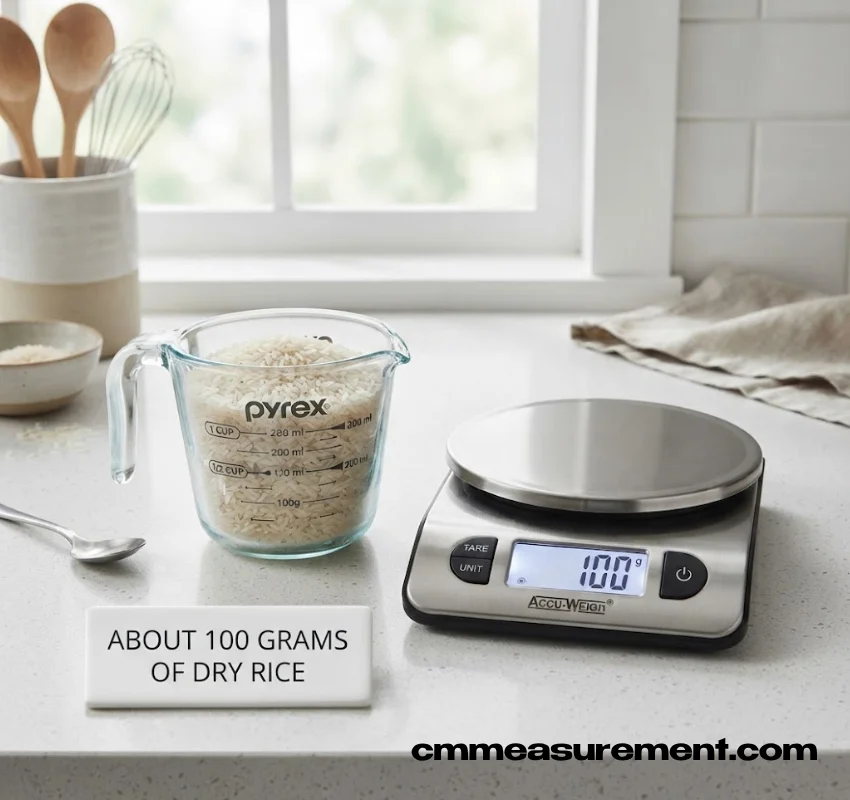
Half a cup of dry, uncooked rice weighs close to 100 grams before cooking, expanding significantly once boiled.
A medium tomato typically weighs close to 100 grams, making it a reliable produce-based reference in the kitchen.
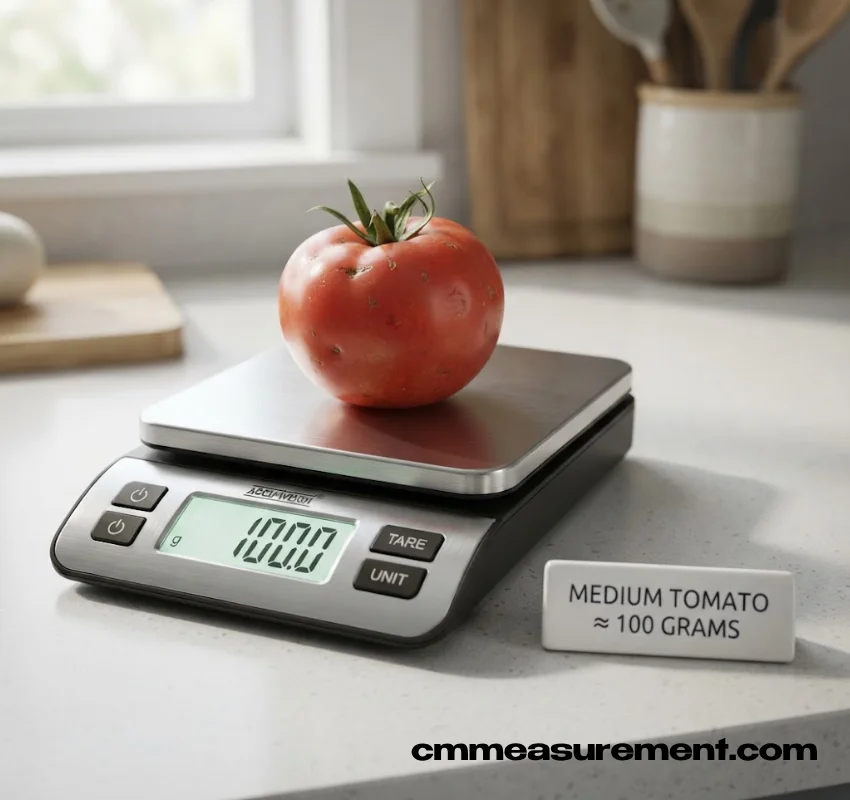
Together, these 20 items give you a full mental library — grab any one, and you instantly know what 100 grams feels like.
How Much Does 100 Grams Look Like?
Weight and size don’t always match. A 100-gram sponge looks huge; 100 grams of lead looks tiny. That’s density at work — how tightly packed the material is.
For most everyday solids, though, 100 grams looks like something you can comfortably close your hand around. A deck of cards is the clearest visual: same footprint, same rough thickness, same in-hand feel as many 100-gram foods and objects.
Compare it to a medium apple next to a small smartphone. Both land near 100 grams, yet one is round and juicy while the other is flat and rigid. This is exactly why visual comparison works better than imagining a number — your brain remembers shapes and textures, not digits.
How to Weigh 100 Grams Without a Scale
No kitchen scale nearby? A few reliable, low-tech methods get you close.
The coin method offers the best accuracy. Twenty nickels or forty pennies, placed in a bag or cup, hit 100 grams almost exactly — a trick bakers and hobbyists use to calibrate digital scales.
Measuring cups work for dry kitchen staples. Roughly three-quarters of a cup of flour, or half a cup of sugar, lands close to 100 grams. Spoon ingredients loosely into the cup instead of packing them down for a more accurate result.
Known food items double as reference weights. Two medium eggs, a stick of butter, or a medium apple — weigh one once on any scale you have access to, and you’ll remember the feel for next time.
Can I weigh grams on my phone? Yes, to an extent. Some newer smartphones include pressure-sensitive sensors or apps that estimate weight using the screen’s touch sensitivity, though accuracy varies and these apps work best for rough estimates rather than precise cooking or shipping needs. For anything requiring true precision, a digital kitchen scale remains the more reliable tool.
Why Knowing 100 Grams Matters
This isn’t just trivia — it has daily, practical value.
Cooking and baking often demand precision. A recipe listing “100g flour” instead of cups exists because weight is far more accurate than volume, especially for ingredients that compress or settle, like flour or brown sugar.
Nutrition tracking relies heavily on the 100-gram standard. Most food labels worldwide list calories, protein, and fat per 100 grams, making this number essential for anyone counting macros or managing a diet.
Shipping and postage costs often shift at specific weight thresholds. Knowing what 100 grams feels like helps you estimate a package’s weight before it ever touches a scale.
Portion control for meals — especially protein — uses 100-gram servings as a common benchmark size, roughly matching a palm-sized piece of meat or fish.
FAQs
How heavy do 100 grams feel?
About as heavy as a medium apple or a bar of soap resting in your palm — noticeable, but light enough to hold with one hand comfortably.
How much does 100 grams look like?
Roughly the size and footprint of a deck of playing cards, or a small computer mouse — compact enough to fit in one closed hand.
What is an example of 100 grams?
A medium apple, a standard chocolate bar, 20 US nickels, or a stick of butter all weigh close to 100 grams.
How can I weigh 100 grams at home?
Use 20 nickels or 40 pennies for near-exact accuracy, or measure ¾ cup of flour or ½ cup of sugar using standard measuring cups.
What food weighs 100g?
A medium apple, a medium banana, two eggs, a chicken breast portion the size of your palm, and half a cup of dry rice all weigh close to 100 grams.
Can I weigh grams on my phone?
Some smartphone apps offer rough weight estimates using touch-sensor pressure, but they lack the accuracy of a real digital scale for cooking or shipping purposes.
Conclusion
A hundred grams stops being an abstract number once it’s tied to things you already touch — an apple, a soap bar, a stack of playing cards. Next time a recipe, a label, or a package says 100 grams, you’ll know exactly what that means in your hand.

Timmy Zeeshan is the founder and lead editor of CM Measurement, where he writes and maintains a growing library of unit conversion tools and practical measurement guides. With a background in engineering and a long-standing interest in everyday math problems, Timmy started CM Measurement after growing frustrated with cluttered, ad-heavy converter websites that made simple conversions harder than they needed to be.