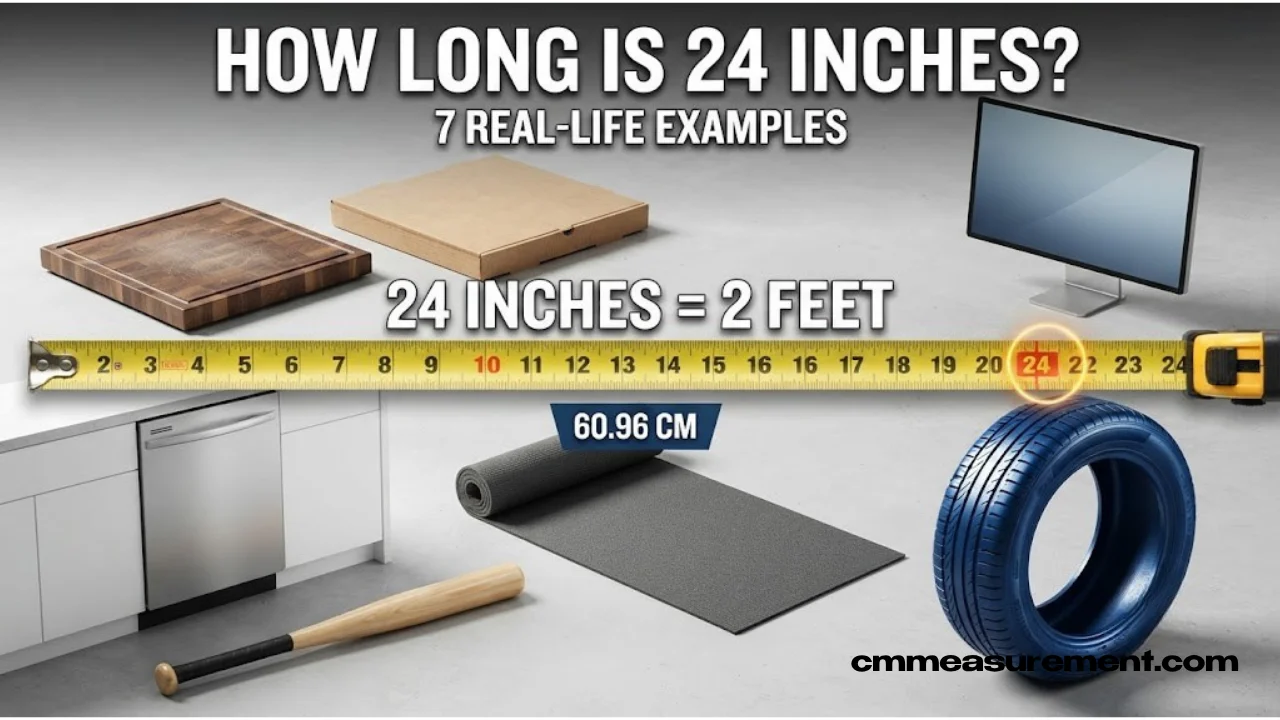
Twenty-four inches sounds like a big number until you try to picture it. Most people can’t.
This guide fixes that. You’ll get the exact conversion, 7 objects that measure this size, and a way to check it using nothing but your body.
Table of Contents
How Long Is 24 Inches? (Quick Answer)
24 inches equals exactly 2 feet. No rounding, no estimating — it’s a clean, even split.
In the metric system, 24 inches converts to 60.96 centimeters, or roughly 0.61 meters. In yards, that’s 0.67 yards, just over two-thirds of one.
| Unit | Value |
|---|---|
| Feet | 2 ft |
| Centimeters | 60.96 cm |
| Millimeters | 609.6 mm |
| Yards | 0.67 yd |
Here’s the simplest way to picture it: two standard 12-inch rulers placed end to end. That’s 24 inches, exactly. This measurement shows up constantly in American homes — appliance widths, luggage sizing, monitor screens, and furniture clearances all lean on this number (ANSI standard sizing guidelines).
7 Real Life Examples of Things That Are 24 Inches Long
Numbers alone don’t stick. Objects do. Below are 7 things that measure close to 24 inches, mixing familiar household items with a few most guides skip entirely.
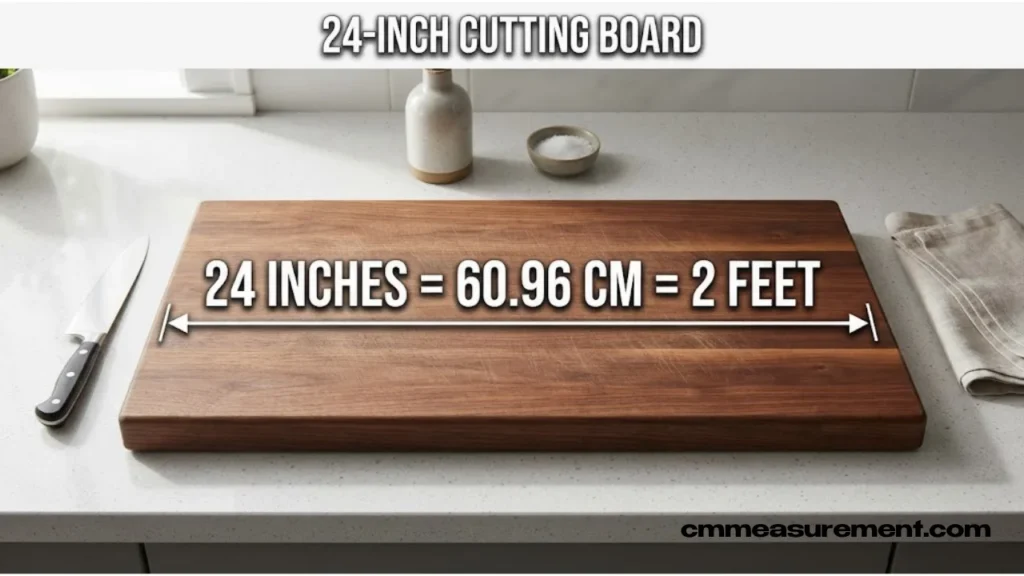
A Large Kitchen Cutting Board Professional-style cutting boards often run close to 24 inches long. Chefs favor this size because it gives enough surface area to break down a whole chicken or slice several vegetables without crowding the workspace.
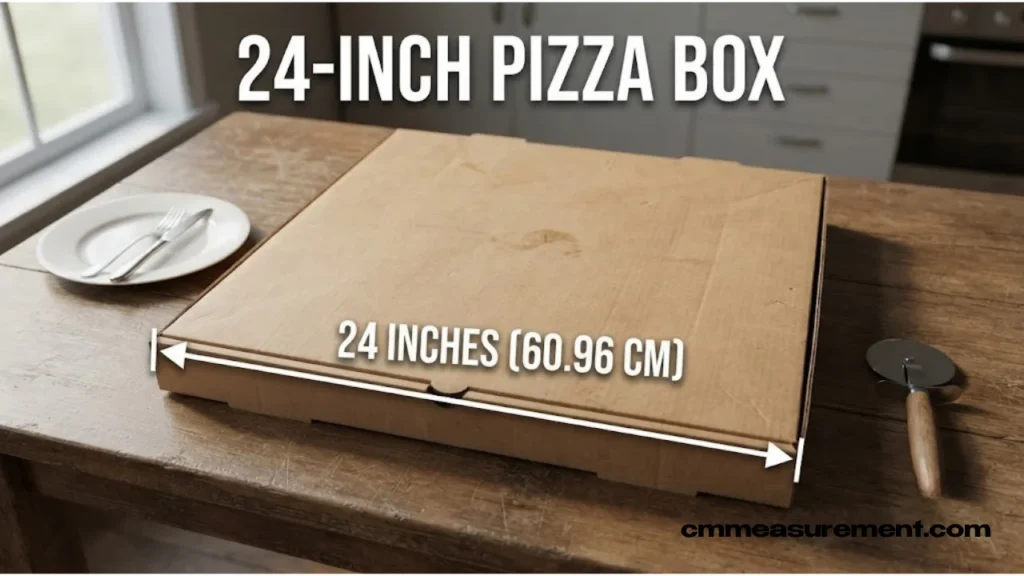
An Extra-Large Pizza Box Pizza chains size their largest boxes around 24 inches across to fit pies in the 20 to 22-inch diameter range, plus room for crust expansion. Next time a family-size order shows up at your door, you’re holding a near-perfect 24-inch reference.
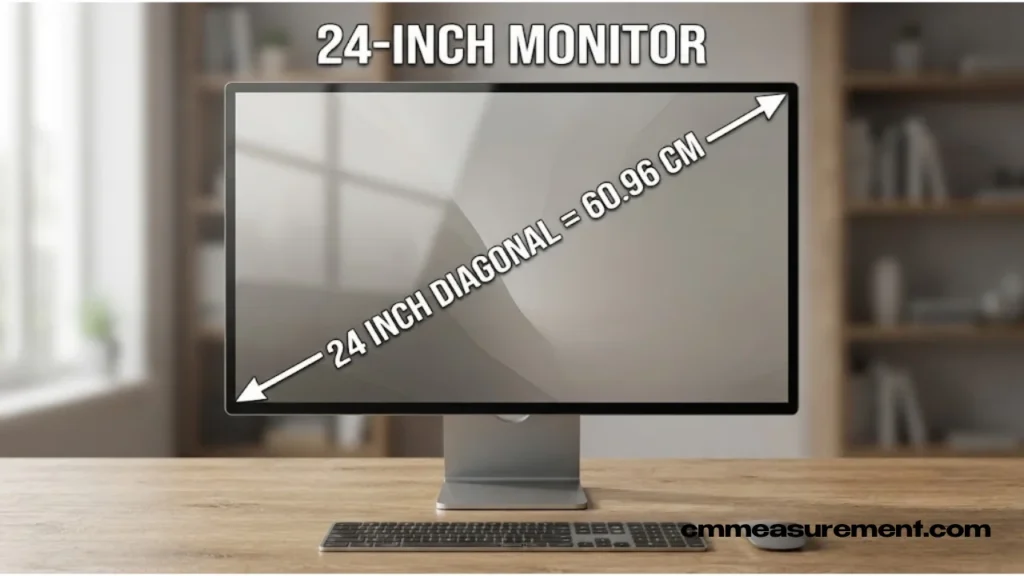
A 24-Inch Computer Monitor This one comes with a catch. The “24-inch” label refers to the diagonal measurement, not the width. The actual screen width usually falls between 20 and 21 inches, with a height around 12 to 13 inches. Knowing this distinction matters if you’re shopping for desk space — a 24-inch monitor takes up far less width than the name implies.
Must Visit: How Long Is 2 Inches? 13 Useful Real Life Examples
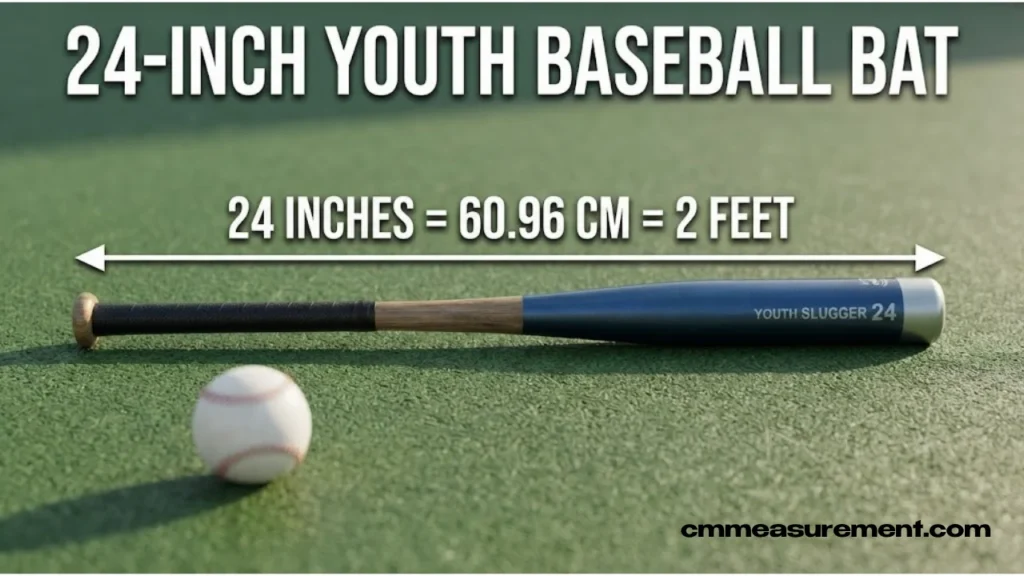
A Youth Baseball Bat Bats sized for players around ages 7 to 8 typically measure 24 inches. Little League guidelines scale bat length to a player’s age and height, and this size strikes a balance between control and swing power for younger athletes.
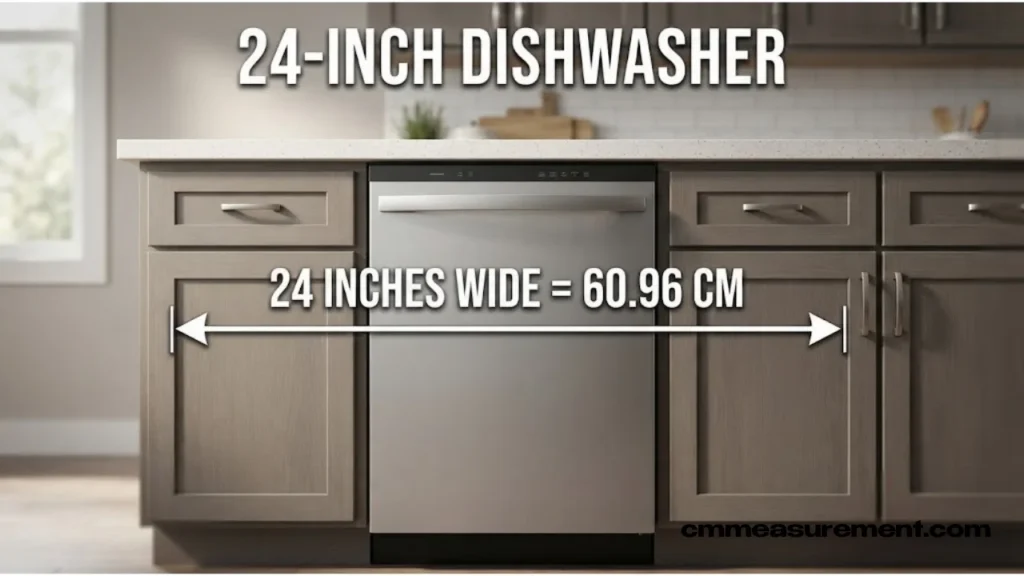
A Standard Dishwasher Nearly every built-in dishwasher sold in the United States measures 24 inches wide. This isn’t a coincidence — kitchen cabinet openings are manufactured around this exact width, which is why replacing a dishwasher rarely requires reworking your cabinetry.
A Yoga Mat’s Width Most standard yoga mats measure 24 inches across, with lengths stretching between 68 and 72 inches. This width gives enough room for shoulder-width stances during poses like downward dog, without wasting floor space.
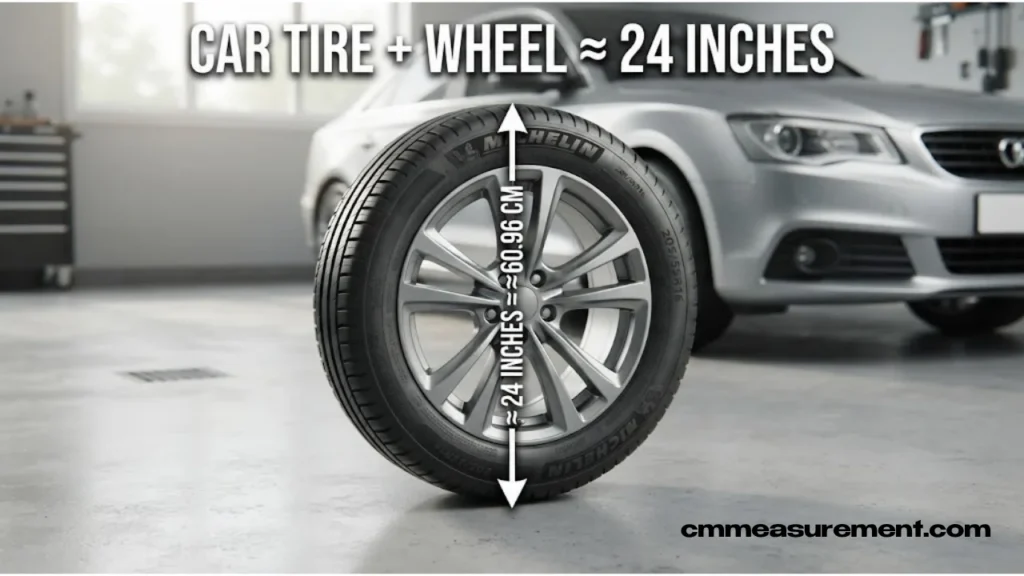
A Passenger Car Tire and Wheel Many sedan wheel-and-tire combinations measure close to 24 to 25 inches in total diameter. Next time you’re parked next to your car, glance at a front tire — you’re looking at roughly this length standing on end.
How Long Is 24 Inches on a Person?
Body measurements make size feel personal, and this is a gap most guides skip.
A 24-inch waist falls in the range of a US women’s size 0 to 2, depending on the brand’s sizing chart. This number shows up often in clothing descriptions, so knowing it helps when shopping online without trying anything on first.
Compare that to your own arm: for most adults, the distance from elbow to fingertip runs around 18 to 20 inches. That means 24 inches stretches noticeably longer than a forearm — about the length of a forearm plus a hand.
Body-based estimates are useful but rougher than object comparisons, since hand and arm length vary quite a bit between individuals. That’s exactly why the next method works better when precision counts.
How to Measure 24 Inches Without a Tool
No tape measure nearby? Here’s a trick using something almost everyone has.
Grab two sheets of standard printer paper. Each sheet measures 11 inches on the long side. Lay them end to end, and you’ll land at 22 inches — add a small two-inch gap or a third sheet folded in half, and you’re at 24 inches.
Another option: stack a shoebox on its side. Most shoebox lengths run close to 12 inches, so two of them lined up gets you there fast.
These tricks work fine for casual estimates — checking if a box fits in a closet, or eyeballing furniture placement. For anything that needs precision, like installing an appliance or ordering custom blinds, a real tape measure is worth the extra minute.
FAQs
How big is 24 inches visually?
Picture two 12-inch rulers placed end to end, or a large cutting board laid flat on a counter. Both give an accurate visual for this length.
Is 24 inches 2 feet tall?
Yes. 24 inches equals exactly 2 feet, whether you’re measuring height, width, or length. The math is simple: divide inches by 12 to get feet.
How long is 24 inches on a person?
It’s close to a 24-inch waist measurement, or roughly the length of a forearm plus an open hand. Individual body proportions vary, so treat this as a rough guide rather than an exact one.
What item is 24 inches long?
A standard built-in dishwasher, a large cutting board, or an extra-large pizza box all measure close to 24 inches. These make reliable, everyday references.
What does 24 inches look like on a ruler?
On a standard 12-inch ruler, 24 inches is double the full length — you’d need to measure the same ruler twice, end to end. On a 36-inch yardstick, 24 inches marks two-thirds of the way down.
What household objects are 1 inch long?
Common one-inch items include a US quarter’s diameter (0.955 inches, very close to 1 inch), a large paperclip, or the width of an adult thumb. For scale, a 24-inch object measures about 24 times that length.
Conclusion
Twenty-four inches stops being abstract once you connect it to things you already know — a dishwasher’s width, a pizza box, or two rulers laid flat. Keep a couple of these references in mind, and you’ll never need to search for a tape measure again to picture this size accurately.

Timmy Zeeshan is the founder and lead editor of CM Measurement, where he writes and maintains a growing library of unit conversion tools and practical measurement guides. With a background in engineering and a long-standing interest in everyday math problems, Timmy started CM Measurement after growing frustrated with cluttered, ad-heavy converter websites that made simple conversions harder than they needed to be.